
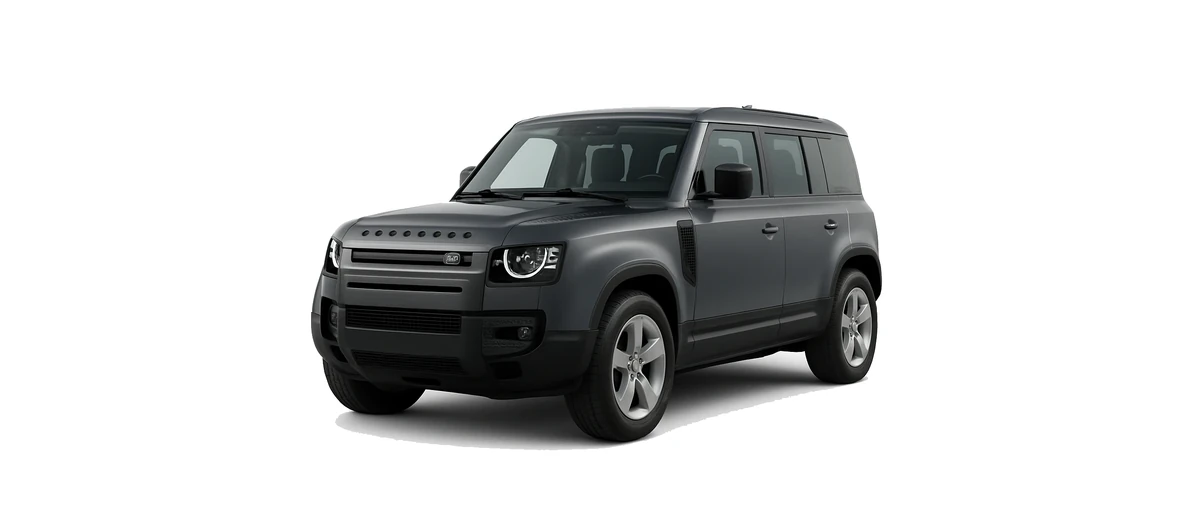
The Land Rover Defender is a little different from many vehicles covered in EV charging guides because not every Defender plugs in. In the UK, the current plug-in hybrid model is listed for the Defender 110 P300e Petrol Plug-in Electric Hybrid, while many Defender 90, 110, 130 and Hard Top versions are petrol, diesel mild hybrid or V8 models with no charging socket at all. Older used examples may be badged Defender 110 P400e PHEV.
This guide focuses on the plug-in hybrid Defender 110 P300e and, where useful, explains how older P400e information differs. The key points are that the Defender PHEV uses Type 2 AC charging, is limited to around 7 kW on AC, and current UK technical data lists DC rapid charging capability. It is not a pure electric vehicle, so its electric range is PHEV-sized and intended mainly for local journeys, commuting, low-speed driving and regular top-ups rather than long electric-only road trips.
View Land Rover Defender Charging Cables
Land Rover Defender Battery and Charging Specifications
For the current UK Defender 110 P300e Petrol Plug-in Electric Hybrid, Land Rover’s 2025 technical specification lists a 19.2 kWh total battery capacity, with 15.4 kWh usable. That is substantial for a plug-in hybrid, but much smaller than the battery in a full battery-electric SUV. The petrol engine remains central to longer journeys, towing and mixed driving, while the battery allows shorter trips to be completed with reduced or no tailpipe emissions when there is sufficient charge.
| Specification | Current UK Defender 110 P300e PHEV |
|---|---|
| Vehicle type | Petrol plug-in hybrid, not a BEV |
| Battery capacity | 19.2 kWh gross / 15.4 kWh usable |
| AC charging | Up to 7 kW |
| 7 kW wallbox charging time | 0-100% in around 2 hours 30 minutes |
| Domestic plug charging time | 0-100% in around 9 hours 12 minutes at 2.3 kW |
| DC rapid charging | Current UK technical specification lists 40 kW DC |
| DC rapid charging time | 0-80% in around 30 minutes |
| WLTP electric range | 32-27 miles, depending on specification |
| Expected real-world electric range | Land Rover gives up to 24 miles |
Battery Options
The UK plug-in hybrid Defender is currently best understood in two contexts. The current Land Rover UK technical specification refers to the Defender 110 P300e, with a 19.2 kWh gross battery and 15.4 kWh usable capacity. This is the most relevant data for new UK buyers and current-model charging advice.
Used-market vehicles may be listed as Defender 110 P400e PHEV. Land Rover’s earlier launch material for the P400e also referred to a 19.2 kWh battery, so the broad home-charging cable advice is similar. However, some charging figures quoted for older P400e material differ from current P300e technical data, particularly around DC rapid charging peak power. If you own a used P400e, it is worth checking the owner’s handbook, the charging flap label and the vehicle’s actual connector before buying accessories or planning rapid charging stops.
AC Charging Speed
For home charging and most destination charging, the Defender PHEV uses AC charging through a Type 2 connection. The current UK specification lists a maximum AC charging rate of 7 kW, with a 0-100% charge taking around 2 hours 30 minutes from a 7 kW wallbox.
This is an important detail when choosing a cable or using public AC posts. A 22 kW public AC charger will not make the Defender charge at 22 kW; the vehicle’s onboard charger is the limiting factor. In practice, a 7 kW supply is already enough to refill the usable battery in a short parking session, making home charging, workplace charging and hotel or leisure destination charging very practical.
Land Rover’s UK PHEV charging guidance confirms Type 2 connectors for home chargers, public AC charge points and domestic charging equipment. For most UK owners, a Type 2 charging cable is therefore the key cable to have for untethered home wallboxes and public AC charge points.
DC Rapid Charging Speed
Unlike many plug-in hybrids, the Defender PHEV supports DC rapid charging in current UK technical data. Land Rover’s 2025 UK technical specification lists 40 kW DC charging and around 30 minutes to charge to 80%. Third-party Defender PHEV charging guides identify the rapid charging connector as CCS2, although the current UK specification accessed for this guide confirms DC charging capability without visibly naming the connector.
There is a model-year point to note. Older P400e launch material and some current marketing-page wording have referred to 50 kW rapid charging, while the current 2025 UK P300e technical specification lists 40 kW. For a current UK P300e guide, 40 kW is the safer figure to use. If you own an older P400e, check vehicle-specific documentation rather than assuming every Defender PHEV uses the same peak DC figure.
Even where DC rapid charging is available, the Defender PHEV will not charge like a large-battery electric SUV. Ultra-rapid chargers are designed for BEVs capable of much higher charging rates, so the Defender will only take the power it can accept. DC charging can still be useful on a longer day if you want to restore electric running quickly, but many owners will rely mainly on AC charging at home.
Range and Efficiency
The official 2025 UK technical specification lists the Defender 110 P300e electric range at 32-27 miles WLTP, depending on specification. Land Rover’s current electric Defender page gives a simpler summary of up to 30 miles WLTP and up to 24 miles expected real-world electric range.
Real-world electric range can vary significantly. Cold weather, motorway speeds, off-road use, heavy accessories, roof loads, towing, terrain and heating demand can all reduce how far the Defender travels on battery power alone. The most realistic ownership expectation is that the PHEV battery can cover many local journeys and short commutes if charged regularly, while the petrol engine provides flexibility when the battery is depleted or the route is longer.
Charging at Home
A dedicated home wallbox is the most convenient charging solution for a Defender PHEV owner. With a 7 kW wallbox, the current P300e can charge from empty to full in around 2 hours 30 minutes, so it is straightforward to top up in the evening, between journeys or overnight. Because the battery is modest compared with a BEV battery, frequent short charging sessions can be enough to keep the car ready for electric local driving.
If your wallbox is untethered, you will need a Type 2 cable suitable for the vehicle and the charge point. If your wallbox is tethered, it will already have a cable attached, but you may still want a separate Type 2 cable for public AC charging.
Land Rover also lists domestic plug charging at 2.3 kW, with a 0-100% time of around 9 hours 12 minutes. A 3-pin charger is generally best suited as a backup or occasional charging solution, but can be used regularly if a qualified electrician has confirmed the socket and electrical installation are suitable for sustained EV charging. EV charging places a continuous load on the circuit for several hours, so an old socket, extension lead or unsuitable wiring should not be treated as a normal long-term charging setup.
Public Charging
For public AC charging, use Type 2 charge points. Many public AC posts in the UK are untethered, which means you need to bring your own cable. The Defender’s 7 kW AC limit means a higher-rated public AC post may not reduce charging time, but it can still be useful if it is conveniently located while you shop, work or stop for a meal.
For rapid public charging, use CCS rapid chargers only where your Defender PHEV has the correct CCS inlet. The current UK specification lists DC capability, but owners should still confirm their vehicle’s charging socket and handbook details, particularly on used imports or older P400e examples. On DC, the current P300e figure of around 30 minutes to 80% is quick for a PHEV, but the small battery means rapid charging is more of an occasional convenience than a replacement for regular home charging.
Vehicle-Specific Features
The most important vehicle-specific feature is the Defender’s mixed model range. A Defender badge does not automatically mean the vehicle is a plug-in hybrid. Before selecting a cable, confirm that your vehicle is a Defender 110 P300e or an older Defender 110 P400e PHEV, and that it has a charge port. Mild-hybrid petrol and diesel Defenders are not plug-in vehicles and do not use EV charging cables.
Another notable point is towing. The official 2025 UK specification lists PHEV towing capacity at 3,000 kg, which is lower than some non-PHEV Defender versions. Towing and heavy-load use can also reduce electric range, so drivers planning to use the Defender for work, trailers or long-distance touring should treat the electric range figure as a best-case guide rather than a guaranteed distance.
Charging Tips
- Confirm your model first: not every Defender has a plug-in socket. Check for P300e or P400e PHEV badging and the charge port.
- Choose Type 2 for AC charging: the Defender PHEV uses Type 2 for home and public AC charging.
- Do not expect 22 kW AC: even on a 22 kW public AC post, the current P300e is limited to around 7 kW AC.
- Use rapid charging selectively: DC charging can be useful, but the Defender PHEV is not designed for long electric-only journeys in the way a BEV is.
- Top up little and often: charging at home after local trips helps maximise electric running.
- Check P400e details carefully: older P400e information may quote different DC peak figures from the current P300e technical specification.
Frequently Asked Questions
Is the Land Rover Defender a fully electric car?
No. The UK plug-in Defender is a petrol plug-in hybrid. It has a rechargeable traction battery and can drive on electric power for shorter journeys, but it also has a petrol engine. It is not a BEV.
Do all Land Rover Defenders need a charging cable?
No. Only plug-in hybrid Defender variants use EV charging cables. Many Defender models are petrol, diesel mild hybrid or V8 versions with no external charging capability.
What charging cable does the Defender PHEV use?
For AC charging, the Defender PHEV uses a Type 2 connection. This is the cable type normally needed for untethered home wallboxes and public AC charging posts in the UK.
How long does the Defender P300e take to charge at home?
Land Rover’s current UK technical data lists around 2 hours 30 minutes for a 0-100% charge using a 7 kW wallbox. A 2.3 kW domestic plug charge is listed at around 9 hours 12 minutes.
Can the Defender PHEV use rapid chargers?
Current UK P300e technical data lists DC rapid charging at 40 kW, with around 30 minutes to 80%. Third-party charging guides identify the rapid connector as CCS2, but owners should confirm the inlet on their specific vehicle, especially for older P400e examples.
What This Means for Drivers
The Defender PHEV is at its best when it is charged regularly. With a 7 kW wallbox, the battery can be replenished quickly enough that daily top-ups are easy, helping owners use electric power for school runs, commuting, town driving and short rural journeys. Public AC charging is useful when parked for a few hours, while DC rapid charging adds flexibility when available and compatible.
The key buying decision is not whether to choose a high-power cable for faster charging, but whether you have the correct Type 2 cable for AC charging and the right length and rating for how you park and charge. The car, not the cable or charge post, determines the maximum AC charging speed.
Looking for a Charging Cable for Land Rover Defender?
If you have confirmed that your Land Rover Defender is a plug-in hybrid P300e or P400e, We can help you choose a suitable Type 2 charging cable for home and public AC charging. Always check your exact vehicle, charge point and cable requirements before ordering.
View Land Rover Defender Charging Cables
Please note that this information is intended as a guide. Charging specifications may change due to model and year of manufacture. For precise information, always refer to your vehicle user manual.

