
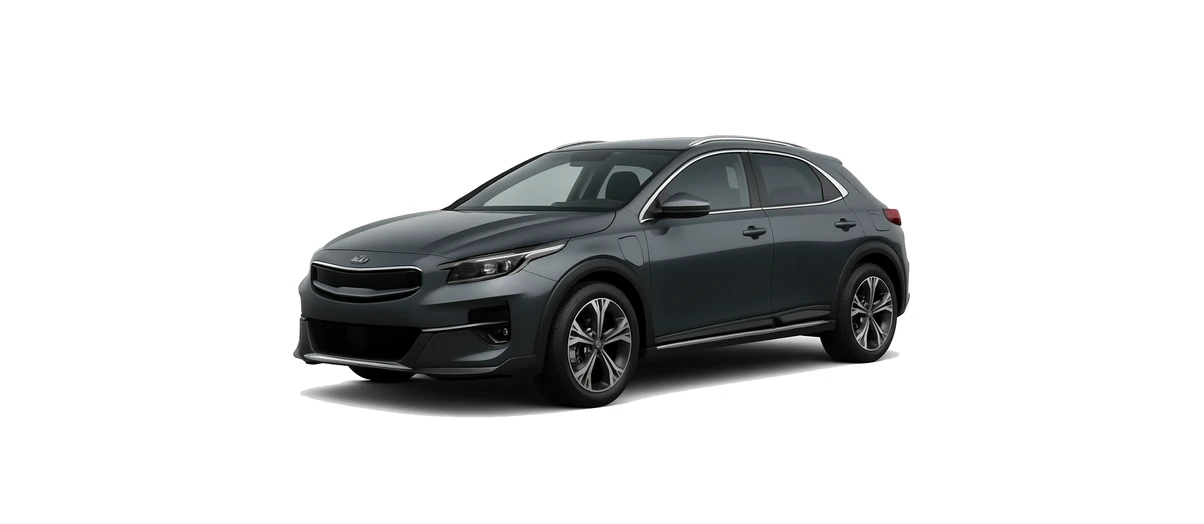
The Kia XCeed is a compact crossover hatchback from the wider Ceed family. For UK charging purposes, the important distinction is that only the Kia XCeed 1.6 GDi Plug-in Hybrid needs an EV charging cable. Current UK XCeed models are petrol or 48V mild-hybrid models and do not plug in, so this guide is aimed specifically at owners and used-car buyers of the earlier XCeed Plug-in Hybrid sold in the UK around 2020-2024.
The XCeed Plug-in Hybrid is not a full battery-electric vehicle. It combines a petrol engine with a small rechargeable battery, giving useful electric-only driving for shorter journeys while retaining petrol flexibility for longer trips. Charging regularly at home or at work is the best way to benefit from the plug-in hybrid system, reduce petrol use on local journeys and make the most of the official electric range.
View Kia XCeed Charging Cables
Kia XCeed Battery and Charging Specifications
The UK-market chargeable XCeed is the Kia XCeed 1.6 GDi Plug-in Hybrid. Kia UK specification material lists an 8.9kWh lithium-ion polymer battery and a 3.3kW AC charging capability. The official WLTP EAER combined electric range is listed as 29.8 miles for the referenced UK PHEV specification, with an EAER city figure of 36.6 miles.
Charging is via a Type 2 AC inlet, which is the standard connector used by most UK and European AC charge points. This is the same connector style used for many full electric cars, but the XCeed PHEV’s onboard charger is much smaller than those found in most BEVs. In practical terms, this means a faster wallbox or public AC post will not make the car charge faster than its own onboard limit.
Key charging points for the XCeed Plug-in Hybrid are:
- Vehicle type: plug-in hybrid, not a full electric car
- Battery size: 8.9kWh gross, according to Kia UK specification data
- Charging connector: Type 2 AC
- Maximum AC charging rate: around 3.3kW
- Typical full recharge time: about 2 hours 15 minutes on a suitable AC charge point
- DC rapid charging: not supported on this model
Battery Options
For UK buyers, the chargeable XCeed covered here is the 1.6 GDi Plug-in Hybrid, including the UK specification often referred to as the XCeed ‘3 PHEV’. Kia UK documentation lists an 8.9kWh lithium-ion polymer battery for this version. A confirmed usable battery capacity was not identified in the official UK sources used for this guide, so it is better to use Kia’s published gross battery figure rather than assume a separate usable figure.
Because the battery is relatively small compared with a full EV battery, charging little and often is the most practical ownership pattern. Many drivers will be able to recover a large part of the battery during a short home or workplace charging session, rather than needing long charging stops.
If you are buying a used XCeed, check that it is definitely the Plug-in Hybrid version before ordering a charging cable. The current UK XCeed line-up does not list a plug-in hybrid variant, and petrol or mild-hybrid XCeed models do not have an external charging port.
AC Charging Speed
The Kia XCeed Plug-in Hybrid uses AC charging through a Type 2 connector. Kia UK specification data states a 3.3kW AC charging rate and gives a full charging time of 2.15 hours, which is approximately 2 hours 15 minutes.
This is an important point when choosing a home charging setup. A 7kW wallbox is still convenient, safe and suitable, especially because it gives a proper dedicated EV charging point and can also be useful for future vehicles. However, the XCeed PHEV will not charge at 7kW. The car’s onboard charger is the limiting factor, so it will draw around 3.3kW from a suitable AC supply.
For cable selection, a Type 2 to Type 2 charging cable is the usual choice for untethered home chargers and public AC charge points. You do not need to buy a cable on the basis that the XCeed can use 7kW or 11kW charging, because the car itself is limited to around 3.3kW AC. However, choosing a good-quality Type 2 cable remains worthwhile because it will be used frequently if you want to make full use of the PHEV battery.
DC Rapid Charging Speed
The Kia XCeed Plug-in Hybrid does not appear to support DC rapid charging, and no CCS rapid-charging port is identified for the UK XCeed PHEV. It should therefore be treated as an AC-only plug-in hybrid for charging purposes.
That means there is no meaningful 10-80% rapid-charging time to quote for this model. Unlike many full electric cars, the XCeed PHEV is not designed around motorway rapid-charging stops. Instead, it is designed to be topped up from home, workplace and public AC charging points, then supported by the petrol engine when the battery is depleted or when longer journeys require it.
If you arrive at a charging hub with CCS rapid chargers, they are not the right equipment for the XCeed Plug-in Hybrid. Look instead for a Type 2 AC socket or tethered Type 2 AC charge point, where available.
Range and Efficiency
Kia UK specification data lists a WLTP EAER combined electric range of 29.8 miles for the referenced XCeed PHEV specification, with an EAER city figure of 36.6 miles. The city figure is not the universal combined range; it reflects a different WLTP measurement context. For general planning, the combined figure is the more appropriate reference point.
Real-world electric range will vary with temperature, speed, route, driving style, tyre condition, use of heating or air conditioning and how much acceleration is demanded. As with most plug-in hybrids, electric range is usually at its best on lower-speed urban and suburban journeys, where regenerative braking and gentle acceleration can help preserve battery charge.
The small battery means the XCeed PHEV is well suited to commuting, school runs, shopping trips and local journeys if it is charged regularly. If the car is rarely plugged in, it becomes much more like a conventional hybrid using petrol more often, so the main benefits of the plug-in system are reduced.
Charging at Home
Home charging is likely to be the most convenient way to run a Kia XCeed Plug-in Hybrid. Because a full charge takes roughly 2 hours 15 minutes from a suitable AC charge point, it is easy to top up in the evening, overnight or between journeys. Even a short charging session can add a useful amount of electric driving range because the battery is modest in size.
A dedicated home wallbox is generally the preferred solution for regular charging. Although the XCeed PHEV only draws around 3.3kW, a properly installed wallbox provides a robust charging arrangement, may include scheduling features and avoids relying on a domestic socket for everyday use.
A 3-pin charger is generally best suited as a backup or occasional charging solution, but can be used regularly if a qualified electrician has confirmed the socket and electrical installation are suitable for sustained EV charging. This is especially important because EV charging places a continuous load on a circuit for a longer period than many household appliances.
If your home charger is untethered, you will need a Type 2 charging cable. If it is tethered with a Type 2 plug, the cable is already attached to the unit. Either arrangement can work well for the XCeed PHEV, provided the connector is Type 2 and the installation is suitable.
Public Charging
Public charging for the Kia XCeed PHEV is best thought of as an opportunity to top up while parked, rather than a rapid en-route charging strategy. Supermarkets, town-centre car parks, hotels, workplaces and destination chargers are often more useful than motorway rapid chargers for this model.
Many public AC charge points in the UK are untethered, meaning they provide a socket rather than a permanently attached cable. In these cases, you will need your own Type 2 cable. Some destination chargers have a tethered Type 2 lead, in which case you can simply plug the attached cable into the car.
Because the XCeed’s onboard charger is limited to around 3.3kW, a higher-rated AC post will not dramatically reduce the charging time. For example, plugging into a 7kW or 22kW AC post does not mean the XCeed PHEV will charge at those speeds. The car will take only what it can accept.
When using public charging, it is good etiquette to move the car once charging is complete, especially because the XCeed can complete a full recharge relatively quickly compared with many larger-battery EVs.
Vehicle-Specific Features
The Kia XCeed Plug-in Hybrid has several features that make it straightforward to use as a daily PHEV. Kia brochure material describes a dashboard charging indicator with three LEDs visible from outside the vehicle, helping you see charging progress at a glance without entering the cabin.
The charging socket is described as integrated for home or public AC charging, and specialist charging references place the inlet on the left front side of the vehicle. As with any used car, it is sensible to inspect the charge flap, connector pins and charging cable condition before purchase.
The XCeed PHEV uses a parallel plug-in hybrid drivetrain based around the 1.6 GDi petrol engine and electric assistance. It is not based on Kia’s dedicated E-GMP electric vehicle platform, and its charging behaviour is therefore very different from larger Kia electric cars that support higher AC rates and DC rapid charging.
Charging Tips
- Charge regularly: the XCeed PHEV works best when the battery is topped up often, especially before shorter daily journeys.
- Use a Type 2 cable: this is the correct cable type for untethered AC charging points and untethered home wallboxes.
- Do not rely on rapid chargers: the XCeed PHEV is an AC-only charging vehicle and is not suitable for CCS rapid charging.
- Remember the 3.3kW limit: a 7kW wallbox is useful, but the vehicle will still charge at around its onboard AC limit.
- Plan charging around parking time: because a full charge takes about 2 hours 15 minutes, charging while shopping, working or eating can be practical.
- Check used-car equipment: if buying used, confirm whether the vehicle includes its original charging leads and that they match your charging needs.
Frequently Asked Questions
Is the Kia XCeed a fully electric car?
No. The chargeable UK XCeed is a plug-in hybrid with a petrol engine and a rechargeable battery. It can drive on electric power for shorter journeys, but it is not a battery-electric vehicle.
Do all Kia XCeed models need a charging cable?
No. Only the XCeed Plug-in Hybrid needs a charging cable. Current UK XCeed petrol and 48V mild-hybrid models do not plug in and do not require an EV charging cable.
What charging cable does the Kia XCeed Plug-in Hybrid use?
The XCeed PHEV uses a Type 2 AC charging connection. A Type 2 to Type 2 cable is the usual choice for public AC sockets and untethered home wallboxes.
Will a 7kW home charger make the XCeed PHEV charge faster?
Not beyond the car’s own limit. A 7kW wallbox is suitable and convenient, but the XCeed PHEV’s onboard charger is rated at around 3.3kW, so a full recharge remains roughly 2 hours 15 minutes.
Can the Kia XCeed Plug-in Hybrid use DC rapid charging?
No CCS or DC rapid-charging capability is identified for the UK XCeed PHEV. Use Type 2 AC charging instead.
What is the official electric range?
Kia UK specification data lists a WLTP EAER combined electric range of 29.8 miles for the referenced XCeed PHEV specification. The listed EAER city range is 36.6 miles, but that should not be treated as the general combined figure.
What This Means for Drivers
The Kia XCeed Plug-in Hybrid is best understood as a used plug-in hybrid that rewards regular, simple charging. It does not need high-power charging infrastructure, and it cannot use DC rapid charging, but it can be very convenient if you have access to a home wallbox, workplace charger or regular public AC charging.
For many owners, the ideal routine is to plug in whenever the car is parked for a couple of hours. With an official combined electric range just under 30 miles and a full charge time of around 2 hours 15 minutes, the XCeed PHEV can cover many local journeys on electric power when charged consistently. The key is to choose the right Type 2 cable, understand the 3.3kW charging limit and avoid comparing it directly with full EVs designed for rapid charging.
Looking for a Charging Cable for Kia XCeed?
If you own the Kia XCeed Plug-in Hybrid, We can help you choose a suitable Type 2 charging cable for home and public AC charging. Always confirm that your vehicle is the plug-in hybrid version before ordering, as petrol and 48V mild-hybrid XCeed models do not require an EV charging cable.
View Kia XCeed Charging Cables
Please note that this information is intended as a guide. Charging specifications may change due to model and year of manufacture. For precise information, always refer to your vehicle user manual.

