
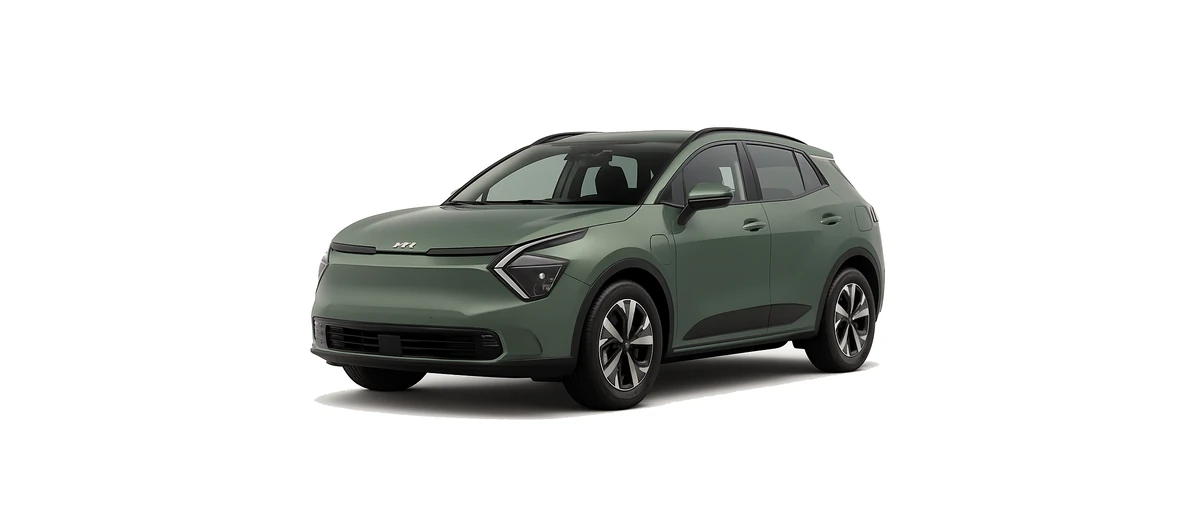
The Kia Sportage is one of the UK’s best-known mid-size family SUVs, offered with petrol, hybrid and plug-in hybrid powertrains. For charging-cable purposes, the important model is the Kia Sportage 1.6 T-GDi Plug-In Hybrid AWD. It is not a fully electric vehicle; instead, it combines a petrol engine with a rechargeable battery and electric motor so that many shorter journeys can be completed using electric power, while longer trips can still rely on petrol when required.
This guide focuses on the UK Sportage Plug-In Hybrid and explains what you need to know about home charging, public charging and cable choice. The charging figures below are based on Kia UK and Kia Europe information for the fifth-generation Sportage PHEV, including the 13.8 kWh battery, Type 2 AC charging and official electric range of up to 43 miles. Kia UK’s current public information for the refreshed Sportage has indicated that the PHEV variant will be available soon, so exact current-order specifications should be confirmed with Kia UK or a Kia dealer before purchase.
View Kia Sportage Charging Cables
Kia Sportage Battery and Charging Specifications
The chargeable Kia Sportage in the UK is the plug-in hybrid version, commonly listed as the Sportage 1.6 T-GDi PHEV AWD. It uses a 1.6-litre turbocharged petrol engine, an electric motor and a lithium-ion polymer battery pack. Kia UK documentation for the pre-facelift fifth-generation model lists a 13.8 kWh battery, Type 2 AC charging at up to 7.2 kW, and an official electric driving range of up to 43 miles.
The Sportage PHEV is designed around regular AC top-ups rather than rapid-charging stops. That makes it different from a full battery electric vehicle, where drivers may plan longer journeys around high-power public chargers. With the Sportage PHEV, the most useful routine is usually simple: charge at home or at a destination, use electric power for local journeys, and let the petrol-hybrid system take over when the battery is low or the journey is longer.
Battery Options
The confirmed UK/EU Sportage PHEV battery figure found in Kia documentation is a 13.8 kWh lithium-ion polymer battery pack. A usable battery capacity was not identified in the official UK material used for this guide, so it is best not to compare it directly with the usable capacity figures often published for fully electric cars.
For day-to-day ownership, the key point is that the battery is large enough to cover many school runs, commutes, shopping trips and local journeys using electric power, provided it is charged regularly. It is not intended to provide hundreds of miles of electric-only range. Once the battery’s electric driving range is depleted, the Sportage continues as a hybrid SUV, using its petrol engine and electric assistance depending on driving conditions.
AC Charging Speed
Kia UK specification data lists the Sportage PHEV with Type 2 AC charging at up to 7.2 kW. Kia also lists a 10–100% AC charge time of around 1 hour 45 minutes when using a suitable 7.2 kW Type 2 charger. This is a strong fit for typical UK home wallboxes, which are commonly rated at around 7 kW or 7.4 kW on a single-phase domestic supply.
The onboard charger is the limiting factor. If you connect the Sportage PHEV to a faster public AC post, such as a 22 kW three-phase unit, the car will not charge at 22 kW. It will charge at up to the rate supported by the vehicle, subject to the charger, cable, battery state and conditions. For this reason, a normal Type 2 to Type 2 cable suitable for 7 kW charging is the practical choice for most UK Sportage PHEV drivers.
Kia UK figures also list a 3-pin charging time of about 5 hours 27 minutes from 10–100%. A 3-pin portable charger is generally best suited as a backup or occasional charging solution, but can be used regularly if a qualified electrician has confirmed the socket and electrical installation are suitable for sustained EV charging.
DC Rapid Charging Speed
The UK Sportage PHEV information reviewed for this guide lists Type 2 AC charging and 3-pin AC charging. A confirmed DC rapid-charging rate was not found in the reliable UK/EU sources used here. Owners should therefore not plan motorway stops around rapid DC charging unless the owner’s manual, Kia UK or a Kia dealer confirms otherwise for the exact model year and vehicle specification.
In practice, this is not a major drawback for the Sportage PHEV’s intended use. Plug-in hybrids generally provide their best efficiency when charged little and often, especially before short journeys where the electric range can do the most work. On a long motorway journey, it will often be more convenient to drive the car as a hybrid once the plug-in charge has been used, rather than seeking out charging stops.
Range and Efficiency
Kia UK documentation for the Sportage PHEV lists an official electric range of up to 43 miles. Kia Europe has also quoted WLTP figures of up to 70 km combined and 78 km city for the Sportage Plug-in Hybrid. These are official test-cycle figures rather than a guarantee of what every driver will see on every journey.
Real-world electric range depends on temperature, speed, traffic, route, load, tyre condition, driving style and cabin-heating demand. Gentle town and suburban driving is usually where a PHEV like the Sportage can make best use of its electric range. Fast A-road or motorway driving, cold weather and heavy acceleration can reduce electric-only distance and may also encourage the petrol engine to start sooner.
For best fuel economy, the key is to plug in regularly. If the Sportage PHEV is driven with a charged battery, it can cover many local miles electrically. If it is rarely charged, it will behave more like a conventional hybrid SUV and use more petrol, reducing the benefit of choosing the plug-in version.
Charging at Home
Home charging is the simplest way to run a Sportage PHEV efficiently. A 7 kW or 7.4 kW home wallbox is enough to reach the car’s stated maximum AC charging rate of 7.2 kW, so there is no need to install a higher-output charger specifically for this vehicle unless you are planning for another EV as well.
Many owners will find that the Sportage PHEV can be recharged overnight with ease, or topped up during the evening after work. Because the battery is far smaller than that of a full electric car, a full AC charging session is relatively short when compared with a long-range BEV. Kia’s listed 10–100% Type 2 charging time of around 1 hour 45 minutes makes daily top-ups realistic, even if the car has been used during the day.
If your home charger is untethered, you will need your own Type 2 to Type 2 cable. If your home charger is tethered, the cable is permanently attached to the unit, but you may still want a separate Type 2 cable for public AC charging. A cable of suitable length can also make parking easier on driveways where the charge point is not directly next to the vehicle’s charging port.
Public Charging
Public charging for the Kia Sportage PHEV is mainly about AC destination charging. Suitable places can include supermarkets, hotels, workplaces, leisure centres, car parks and town-centre charging bays. These are locations where the car can be left for an hour or two while you do something else, allowing the battery to recover useful electric range.
Most UK public AC posts use a Type 2 socket rather than a permanently attached cable. For those chargers, the Sportage PHEV driver will need a Type 2 to Type 2 charging cable. This is the standard cable type for UK and European AC charging and is the most important cable to keep in the car if you use public AC points.
A 22 kW public AC charger can still be useful, but it will not make the Sportage PHEV charge at 22 kW. The car’s onboard AC charging capability is the limiting factor, so charging will be closer to the vehicle’s supported maximum when conditions allow. The benefit of using public AC is convenience rather than high-speed long-distance charging.
Vehicle-Specific Features
The Sportage PHEV combines a 1.6-litre T-GDi petrol engine with a 66.9 kW electric motor and 13.8 kWh battery pack. UK PHEV specification information lists all-wheel drive and a 6-speed automatic transmission. This makes it a practical family SUV with the added benefit of plug-in electric running for shorter journeys.
Kia’s Sportage PHEV information describes EV and HEV driving modes. In EV mode, the car prioritises electric driving where conditions allow. However, as with many plug-in hybrids, the petrol engine may still start in certain situations, such as strong acceleration demand, low battery state of charge or cabin-heating requirements. That behaviour is normal and does not necessarily indicate a fault.
One practical point to note is boot space. Kia UK specification data lists the PHEV with 540 litres of seats-up boot capacity, compared with 587 litres for the HEV in the same table. The difference is worth considering if maximum luggage space is a priority, although the PHEV remains a family-sized SUV with a useful load area.
Charging Tips
- Use a Type 2 to Type 2 cable for public AC charging. This is the key cable for UK public AC posts and many untethered home wallboxes.
- Install or use a 7 kW home charger where possible. A 7 kW or 7.4 kW wallbox is well matched to the Sportage PHEV’s stated 7.2 kW AC charging capability.
- Do not expect faster charging from a 22 kW AC post. The car’s onboard charger limits the rate, even if the post can provide more power.
- Charge regularly for best efficiency. The Sportage PHEV rewards frequent top-ups, especially before local journeys.
- Keep 3-pin charging for appropriate situations. It is slower than Type 2 charging and should be used only where the socket and installation are suitable for sustained EV use.
- Check exact model-year data. If buying a refreshed or current-order Sportage PHEV, confirm charging specifications with Kia UK or your dealer.
Frequently Asked Questions
Is the Kia Sportage a fully electric car?
No. The UK chargeable Sportage is a plug-in hybrid, not a full battery electric vehicle. It has a petrol engine, an electric motor and a rechargeable battery.
What charging cable does the Kia Sportage PHEV use?
The Sportage PHEV uses Type 2 AC charging. For most UK public AC charge points and untethered home wallboxes, you will need a Type 2 to Type 2 cable.
How fast can the Kia Sportage PHEV charge?
Kia UK specification data lists Type 2 AC charging at up to 7.2 kW, with a 10–100% charging time of around 1 hour 45 minutes on a suitable charger.
Can the Kia Sportage PHEV use a rapid charger?
The UK information reviewed for this guide lists AC charging only. Do not plan around rapid DC charging unless Kia UK, your dealer or the owner’s manual confirms support for your exact vehicle.
What is the official electric range?
Kia UK documentation lists up to 43 miles of electric range for the Sportage PHEV. Real-world range varies depending on route, speed, temperature, driving style and vehicle use.
What This Means for Drivers
The Kia Sportage PHEV makes most sense for drivers who can charge at home, at work or at regular destinations. Its 13.8 kWh battery and official electric range of up to 43 miles are well suited to short daily journeys, but the car depends on regular charging to deliver its best fuel-saving benefits.
A 7 kW home wallbox and a Type 2 to Type 2 cable are the sweet spot for most owners. They allow the Sportage PHEV to use its stated AC charging capability without overcomplicating the charging setup. Public AC charging can also be worthwhile during longer stops, but the Sportage PHEV should be viewed as a plug-in hybrid for frequent top-ups, not as a rapid-charging electric car.
Looking for a Charging Cable for Kia Sportage?
If you need a suitable Type 2 cable for the Kia Sportage Plug-In Hybrid, We offer Kia Sportage charging cables for home wallboxes and UK public AC charging points.
View Kia Sportage Charging Cables
Please note that this information is intended as a guide. Charging specifications may change due to model and year of manufacture. For precise information, always refer to your vehicle user manual.

