
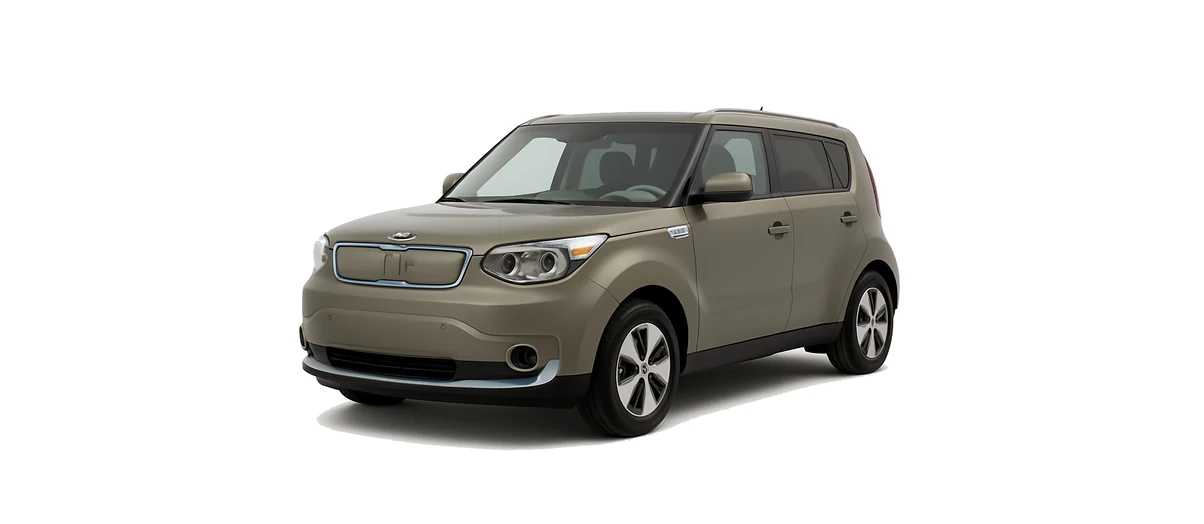
The first-generation Kia Soul EV is a distinctive used electric car choice: practical, upright, easy to drive and fitted with charging hardware that is different from many newer UK EVs. If you are buying, running or borrowing a Kia Soul EV built in the early Type 1 era, the most important point is not to confuse it with the later Soul EV/e-Soul models that use Type 2 AC and CCS rapid charging.
This guide focuses on the UK and European first-generation Kia Soul EV, including models commonly described as Kia Soul EV models to 2018. These cars are battery-electric vehicles, not plug-in hybrids. Petrol and diesel Kia Soul models are not externally chargeable and do not use EV charging cables.
View Kia Soul EV Models to 2018 Charging Cables
Kia Soul EV Models to 2018 Battery and Charging Specifications
The early Kia Soul EV uses two separate charging connections behind a flap in the front grille area. For AC charging, it uses a Type 1 / SAE J1772 inlet. For DC rapid charging, it uses CHAdeMO. This is the key distinction from later Kia electric models, many of which moved to Type 2 and CCS.
For UK drivers, the usual cable for home untethered wallboxes and public AC charge points is a Type 1-to-Type 2 cable. A Type 2-to-Type 2 cable will not plug into these earlier Soul EV models. Rapid charging is different: CHAdeMO rapid chargers have a tethered cable already attached, so you do not normally bring your own rapid charging cable.
The Soul EV covered here was sold in more than one specification period. Early cars are commonly associated with a 27 kWh usable battery, while later first-generation cars, including many 2018 examples, may have the updated 30 kWh usable pack. Because registrations, model years and imports can overlap, it is worth checking the individual car rather than relying only on the registration year.
Battery Options
There are two main battery versions to be aware of when looking at first-generation Kia Soul EV models in the UK and Europe.
2014 to late-2017 Soul EV: early cars are generally listed with a 27 kWh usable battery. Kia’s European launch material described the car as using a 27 kWh lithium-ion polymer battery pack. EV Database lists this version with an estimated 30.5 kWh nominal battery and 27.0 kWh usable capacity.
Late-2017 to 2019 updated Soul EV: the later version increased usable battery capacity to around 30 kWh. EV Database lists an estimated 33.0 kWh nominal battery and 30.0 kWh usable capacity. Kia France also described the update as an increase from 27 kWh to 30 kWh.
For a used buyer, this matters because two cars registered close together may not have identical range expectations. A 2018 registration is not, by itself, enough to confirm the battery version. Check the vehicle documents, build information, charge screen, Kia service history or VIN details where possible.
AC Charging Speed
AC charging speed on the early Kia Soul EV needs careful wording because not every first-generation car should be assumed to charge at the same rate. EV Database lists Type 1 AC charging and shows some earlier 2014-2017 cars with a 3.6 kW onboard charger, with a 6.6 kW charger available in some specifications or markets. The updated 30 kWh version is commonly listed at 6.6 kW AC.
In practice, a 7 kW home wallbox is a sensible match for this car, but the Soul EV will only draw what its onboard charger can accept. If your car has a lower-rated onboard charger, it will not use the full 7 kW available from the wallbox. If it has the higher-rated charger, a near-full charge from low state of charge may take roughly several hours rather than overnight, depending on the battery version and starting percentage.
The safest approach is to confirm the exact onboard charger specification for your car. The owner’s manual, vehicle settings, charge screen, original sales paperwork or a Kia dealer check may help. This is especially important for used imports or cars with incomplete histories.
DC Rapid Charging Speed
For rapid charging, the Kia Soul EV models covered here use CHAdeMO, not CCS. The DC rapid inlet sits alongside the Type 1 AC inlet behind the front charging flap. A compatible CHAdeMO rapid charger may provide up to around 50 kW, although the actual charging rate will vary with battery temperature, state of charge, charger output and battery condition.
Sources for these cars commonly quote around 30 to 33 minutes for an 80% style rapid top-up under suitable conditions. Treat that as an indicative figure rather than a guaranteed time, particularly on an older vehicle. Charging speed usually tapers as the battery fills, so a quick stop from low to mid charge is often more efficient than waiting for the final few percent.
When planning public charging, filter specifically for CHAdeMO. Many newer rapid charging sites are increasingly CCS-focused, and some may have only one CHAdeMO connector or none at all. CCS-only rapid chargers will not connect to this car without specialist third-party equipment, and compatibility should not be assumed.
Range and Efficiency
Official WLTP figures are not the most useful reference point for these early Type 1-era Soul EV models, as many available figures are based on NEDC, EPA or real-world estimates. For the 27 kWh usable version, EV Database lists around 95 miles of real-world range, while the original NEDC figure was higher. For the 30 kWh usable version, EV Database lists around 105 miles of real-world range and a 155-mile NEDC figure.
Real range will vary significantly with age and use. Battery state of health, outside temperature, speed, hills, tyre condition and cabin heating all make a difference. Motorway driving in winter can reduce range noticeably, while urban and suburban driving at moderate speeds is usually kinder to efficiency.
The Soul EV’s upright body is practical but not as aerodynamic as some lower EV hatchbacks. On the positive side, Kia included efficiency-focused features such as a heat pump and driver-only climate control on these early Soul EVs, which can help reduce heating demand compared with a basic resistance-heater setup.
Charging at Home
For most owners, home charging will be the easiest and cheapest way to run a Kia Soul EV. If you have an untethered home wallbox, you will usually need a Type 1-to-Type 2 cable. The Type 2 end plugs into the wallbox, while the Type 1 end plugs into the car.
A 7 kW wallbox is appropriate for home use, even if the car’s onboard charger is rated below that. The car controls how much AC power it accepts, so a higher-capacity wallbox will not force too much power into the vehicle. The main difference is that a 3.6 kW onboard charger will take longer to refill the battery than a 6.6 kW one.
A 3-pin charger is generally best suited as a backup or occasional charging solution, but can be used regularly if a qualified electrician has confirmed the socket and electrical installation are suitable for sustained EV charging. Older sockets, extension leads and shared circuits can be unsuitable for long-duration EV charging, so do not treat a normal household socket as automatically ready for daily use.
The Soul EV also supports scheduled charging, which is useful if you have an off-peak electricity tariff. Setting the car or charger to charge overnight can reduce running costs and help ensure the car is ready in the morning.
Public Charging
Public charging depends on the type of charger. For slower and fast AC posts, such as many 7 kW and 22 kW public charge points, you normally need to bring your own cable. For the first-generation Soul EV, that cable should be Type 1-to-Type 2.
Even if a public AC post is rated at 22 kW, the Soul EV will not charge at 22 kW AC. It will be limited by its single-phase onboard charger, which may be around 3.6 kW on some cars or up to around 6.6 kW on later or suitably specified examples. A high-powered AC post is still usable, but it will not make the car charge like a three-phase EV.
For rapid charging, look for CHAdeMO. The cable is attached to the charger, so the process is different from using an AC post. Open the front charge flap, connect the CHAdeMO plug, follow the charger’s instructions and check that the session has started correctly. Because CHAdeMO availability varies by area, it is wise to check a live charging map before longer journeys.
Vehicle-Specific Features
The early Soul EV has several useful charging and efficiency features, but it is important to describe them accurately. Scheduled charging and scheduled cabin ventilation or pre-heating were available, which can make the car more convenient for commuting. Pre-heating the cabin while plugged in can also reduce the amount of battery energy needed at the start of a journey.
Kia described a battery heating system for sub-zero conditions, and the car was notable for its heat-pump system. However, this should not be confused with modern route-based battery preconditioning for rapid charging. EV Database lists battery preconditioning as not available for these models.
The early Soul EV does not support Vehicle-to-Load, Vehicle-to-Home or Vehicle-to-Grid functions. If you have seen these features discussed on newer EVs, they should not be assumed to apply to this generation of Kia Soul EV.
Charging Tips
- Check the inlet before buying a cable: first-generation UK/European Soul EV models use Type 1 AC and CHAdeMO DC, not Type 2 and CCS.
- Confirm the battery version: early cars are typically 27 kWh usable, while later first-generation cars may be 30 kWh usable.
- Confirm the onboard charger: AC charging may be around 3.6 kW or up to around 6.6 kW depending on specification.
- Plan rapid charging around CHAdeMO: do not assume every rapid charging hub has a suitable connector.
- Use scheduled charging: overnight charging can be convenient and may be cheaper on the right electricity tariff.
- Check battery health: as these are older EVs, state of health can have a noticeable effect on range and charging behaviour.
- Avoid later Soul EV figures: charging data for 39.2 kWh or 64 kWh Soul EV/e-Soul models does not apply to this Type 1/CHAdeMO generation.
Frequently Asked Questions
What charging cable does a Kia Soul EV to 2018 need?
For UK public AC charge points and untethered home wallboxes, the first-generation Kia Soul EV normally needs a Type 1-to-Type 2 charging cable. The car end is Type 1, while the charger end is Type 2.
Does the Kia Soul EV use CCS rapid charging?
No, the early Kia Soul EV models covered by this guide use CHAdeMO for DC rapid charging. Later Kia EVs may use CCS, but that should not be assumed for these Type 1-era Soul EVs.
Can I use a Type 2-to-Type 2 cable?
No. A Type 2-to-Type 2 cable will not fit the Type 1 AC inlet on the early Soul EV. You need a Type 1-to-Type 2 cable for AC charging from modern UK sockets and posts.
How fast will it charge at home?
That depends on the onboard charger fitted to the individual car. Some early cars may charge at around 3.6 kW AC, while later or suitably specified cars may charge at up to around 6.6 kW. A 7 kW wallbox is still suitable, but the car sets the charging limit.
Is a 2018 Kia Soul EV the larger battery version?
Many 2018 cars may have the updated 30 kWh usable battery, but registration year alone is not a perfect guide. Check the exact car’s build details, service records or vehicle information before relying on the larger-battery assumption.
What This Means for Drivers
The first-generation Kia Soul EV can still make a practical used EV for local commuting, school runs and regular short-to-medium journeys, provided its range suits your driving. Its charging setup is straightforward once you understand the distinction: Type 1-to-Type 2 for AC charging, and CHAdeMO for rapid charging.
The main used-buyer checklist is simple. Confirm whether the car has the 27 kWh or 30 kWh usable battery, check the onboard AC charger rate, inspect battery health where possible and make sure local public rapid chargers still support CHAdeMO. If those points work for your routine, the Soul EV remains a characterful and useful electric crossover.
Looking for a Charging Cable for Kia Soul EV Models to 2018?
If you need a cable for this early Type 1 Kia Soul EV, We can help you choose a compatible Type 1-to-Type 2 charging cable for UK home and public AC charging.
View Kia Soul EV Models to 2018 Charging Cables
Please note that this information is intended as a guide. Charging specifications may change due to model and year of manufacture. For precise information, always refer to your vehicle user manual.

