
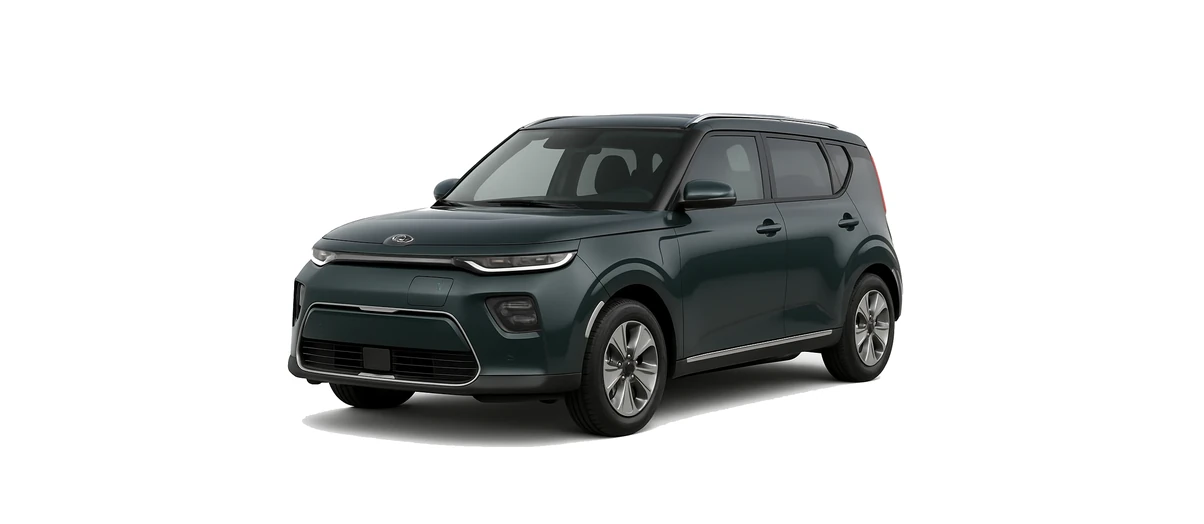
The Kia Soul EV sold in the UK from 2019 is a fully electric small SUV/crossover hatchback with distinctive styling, practical range and straightforward charging hardware. The most important point for cable selection is that the 2019-on UK and European Soul EV uses a Type 2 AC inlet and CCS Combo 2 DC rapid charging inlet. That makes it different from some earlier pre-2019 Soul EV models, which may use different charging connectors and should not be mixed up with this later model category.
For most UK owners, the practical charging setup is simple: use a Type 2 to Type 2 cable for home wallboxes, workplace chargers and untethered public AC posts, and use the tethered CCS cable fitted to public rapid chargers when charging on longer journeys. The car’s AC charging capability is up to around 7.2 kW single-phase, so a 7 kW home charge point is a natural match.
View Kia Soul EV (Models From 2019) Charging Cables
Kia Soul EV (Models From 2019) Battery and Charging Specifications
The 2019-on Kia Soul EV is a battery-electric vehicle, not a plug-in hybrid. In the UK, this generation of Soul was electric-only, with no petrol engine or onboard fuel system. UK cars were initially offered mainly with the larger 64 kWh battery, while the later 2023 model-year line-up introduced two versions: the Urban with a 39.2 kWh usable battery and the Explore with the 64 kWh usable battery.
The charging port is mounted at the front of the vehicle, behind a charging flap. This can be useful in nose-in public charging bays and on driveways where the charger is mounted ahead of the car. The inlet combines Type 2 AC pins for slower charging and the additional CCS DC pins for rapid charging.
- Vehicle type: battery-electric vehicle
- Connector type: Type 2 AC / CCS Combo 2 DC
- AC charging: up to 7.2 kW single-phase
- DC rapid charging: commonly quoted at up to around 77 kW for the 64 kWh model, with slower performance expected for the smaller battery
- Typical rapid charging window: around 47 to 54 minutes for a major top-up, depending on battery, charger and conditions
Battery Options
There are two main battery capacities to be aware of when looking at UK 2019-on Kia Soul EV models.
39.2 kWh Urban: Introduced for the later UK line-up, the Urban version uses a 39.2 kWh usable battery. Kia’s UK figures list a WLTP combined range of 171 miles and a city range of up to 252 miles. This version is well suited to local driving, commuting and mixed use where home or workplace charging is available.
64 kWh First Edition, Maxx or Explore: Earlier UK cars and the later Explore version use the larger 64 kWh usable battery. Kia UK and independent data sources quote a WLTP combined range of around 280 to 281 miles, depending on source and rounding. This is the version most commonly associated with the 2019-on Soul EV in the used market, especially for cars registered before the 2023 model-year changes.
Because the two battery sizes have different range expectations, it is worth checking the exact trim and model year before planning long-distance journeys or comparing charge times. However, both versions use the same Type 2/CCS connector layout for UK and European 2019-on models.
AC Charging Speed
For everyday charging, the Kia Soul EV accepts Type 2 AC charging at up to 7.2 kW single-phase. This is why a standard UK 7 kW home wallbox is a very good match for the car: the charger and vehicle are closely aligned, and there is little benefit from seeking a higher-powered AC unit unless it is needed for another vehicle.
Kia’s UK data gives indicative AC charge times of around 6 hours from 10-100% for the 39.2 kWh Urban and around 9 hours 15 minutes from 10-100% for the 64 kWh Explore when charging at the car’s maximum AC rate. Earlier 64 kWh specification data and reviews quote similar overnight charging times, with some variation depending on whether the figure is measured from 0-100% or 10-100%.
If you plug the Soul EV into a 22 kW three-phase public AC post, it will not charge at 22 kW. The car’s onboard AC charger is the limiting factor, so charging will still be limited to around 7.2 kW. A 22 kW post can still be useful, but it will not deliver three times the speed on this vehicle.
DC Rapid Charging Speed
On longer journeys, the Kia Soul EV uses CCS rapid charging. You do not need to buy a separate CCS cable for this: public rapid and ultra-rapid chargers have their own thick tethered DC cables attached to the unit.
Professional sources commonly quote the 64 kWh Soul EV at up to around 77 kW DC under suitable conditions. Kia’s charging-time information is often based on charging from a rapid charger rather than stating one simple sustained peak power figure, so it is best not to treat the car as a 100 kW, 150 kW or 350 kW charging vehicle. It is based on an older 400 V-era EV powertrain, not Kia’s newer E-GMP 800 V architecture.
For practical journey planning, a typical 10-80% rapid charge is around 47 minutes in favourable conditions, while some review and database figures place a substantial rapid charge nearer 50 to 54 minutes. Battery temperature, charger output, state of charge and site reliability can all affect the result. The smaller 39.2 kWh version may have lower peak DC charging capability, even though the overall stop time can still appear similar because there is less energy to add.
Range and Efficiency
The 64 kWh Kia Soul EV has an official WLTP combined range of about 280 to 281 miles. In real UK use, a range in the region of 230 to 240 miles is a sensible expectation in mild mixed driving for the larger-battery version, based on review experience. Colder weather, high motorway speeds, roof loads, heavy cabin heating use and wet roads can reduce that figure.
The 39.2 kWh Urban is officially rated at 171 miles WLTP combined, with a higher city-cycle figure. In day-to-day use, it is best seen as the shorter-range option for drivers who can charge regularly and do not need maximum motorway range between stops.
As with any EV, efficiency is usually strongest in urban and suburban driving, where regenerative braking can recover some energy when slowing. The Soul EV is noted for steering-wheel paddles that allow drivers to adjust regenerative braking strength, giving a more flexible driving style and helping reduce unnecessary brake use.
Charging at Home
Home charging is the most convenient and cost-effective way to run a Kia Soul EV for many UK owners. A dedicated 7 kW wallbox can add a large amount of range overnight and makes use of the car’s 7.2 kW AC capability. For the 64 kWh model, an overnight charge is usually enough to go from a low battery to full or near-full. For the 39.2 kWh version, the same wallbox can complete a substantial charge in a shorter time.
If your home charge point is untethered, you will need a Type 2 to Type 2 charging cable. A 32 amp single-phase cable is appropriate for accessing the car’s maximum AC rate on a compatible 7 kW charge point. Many owners choose a 5 metre cable for typical driveway use, while a longer cable can be helpful where the charge point position, parking layout or front-mounted port require extra reach.
A 3-pin portable charger is generally best suited as a backup or occasional charging solution, but can be used regularly if a qualified electrician has confirmed the socket and electrical installation are suitable for sustained EV charging. Standard domestic sockets were not designed primarily for repeated high-load EV charging over many hours, so professional assessment is important if relying on this method.
Public Charging
Public charging falls into two categories for the Soul EV: AC destination charging and DC rapid charging. For AC posts at supermarkets, hotels, workplaces, town centres and car parks, you will usually use your own Type 2 to Type 2 cable. These chargers may be rated at 7 kW, 11 kW or 22 kW, but the Soul EV’s onboard charger will limit AC charging to around 7.2 kW.
For DC rapid charging, use the CCS connector attached to the charger. These chargers are designed for shorter stops during longer journeys. The Soul EV’s rapid charging is useful, but modest compared with newer high-voltage EVs, so it is worth planning stops realistically rather than assuming very short 15-minute top-ups.
When travelling, try to arrive at a rapid charger with a reasonable buffer rather than depending on the final few miles of range. The car will usually charge fastest at lower to mid states of charge and slow down as it approaches a high battery percentage, so charging to 80% is often more time-efficient than waiting for 100% unless you need the extra range.
Vehicle-Specific Features
The front-mounted charging flap is one of the most useful day-to-day design details of the Kia Soul EV. It can make access easier at many public chargers, especially where bays are designed for cars to park nose-in. At home, it may also simplify cable routing if the wallbox is positioned near the front of the parking space.
The Soul EV also offers adjustable regenerative braking using steering-wheel paddles, and reviews note one-pedal-style driving behaviour. This can make urban driving smoother and can help maximise efficiency in stop-start conditions.
Kia Connect app functionality on relevant models can support checking charging status and setting charging-related options, as well as cabin pre-heating or remote climate functions. This should not be confused with confirmed battery rapid-charge preconditioning, which should only be assumed if verified for the exact vehicle and model year.
Charging Tips
- Check the model generation: 2019-on UK/EU Soul EV models use Type 2 and CCS Combo 2. Older Soul EVs may have different connectors.
- Use a 7 kW wallbox where possible: it closely matches the car’s 7.2 kW single-phase AC charging capability.
- Choose Type 2 to Type 2 for AC charging: this is the cable used for untethered home, workplace and public AC charge points.
- Do not expect 22 kW AC charging: even on a 22 kW post, the car will charge at its own AC limit.
- Use CCS for rapid charging: public rapid chargers provide the CCS cable, so no separate rapid charging cable is required.
- Plan realistic motorway stops: allow around 50 minutes for a major rapid charge rather than expecting the speeds of newer 800 V models.
- Consider cable length: the front charge port can be convenient, but driveway layouts vary, so choose a cable long enough for your usual parking position.
Frequently Asked Questions
What charging cable does the 2019-on Kia Soul EV use?
For UK and European 2019-on Kia Soul EV models, the correct AC charging cable is a Type 2 to Type 2 cable. The car also has CCS Combo 2 rapid charging, but CCS rapid chargers have tethered cables attached to the charger.
Is the Kia Soul EV from 2019 a plug-in hybrid?
No. The 2019-on Kia Soul EV is a battery-electric vehicle. It does not have a petrol engine and is not a PHEV.
Can the Kia Soul EV charge at 22 kW AC?
No. The car can use a 22 kW public AC post, but it will be limited by its onboard AC charger to around 7.2 kW.
How long does home charging take?
As a guide, Kia quotes around 6 hours from 10-100% for the 39.2 kWh version and around 9 hours 15 minutes from 10-100% for the 64 kWh version at the maximum AC charging rate. Actual times depend on starting charge level, charger output and conditions.
Do all Kia Soul EVs use Type 2 and CCS?
No. This guide applies to UK and European Kia Soul EV models from 2019. Earlier pre-2019 Soul EVs may use different charging hardware, so always check the vehicle’s inlet before buying a cable.
What This Means for Drivers
The 2019-on Kia Soul EV is one of the simpler EVs to understand from a charging point of view. It uses the common UK and European Type 2/CCS arrangement, it is well matched to a 7 kW home wallbox, and it does not require owners to buy a separate cable for rapid charging. The main thing is to choose the right Type 2 cable for AC charging and to recognise that the car’s charging speeds are sensible rather than cutting-edge by today’s standards.
For the larger 64 kWh model, the combination of useful real-world range and overnight home charging makes the Soul EV a practical family EV. For the 39.2 kWh Urban, regular home or workplace charging becomes more important, but the same cable and connector advice applies.
Looking for a Charging Cable for Kia Soul EV (Models From 2019)?
We offer charging cables suitable for the 2019-on Kia Soul EV, including Type 2 options for home, workplace and public AC charging.
View Kia Soul EV (Models From 2019) Charging Cables
Please note that this information is intended as a guide. Charging specifications may change due to model and year of manufacture. For precise information, always refer to your vehicle user manual.

