
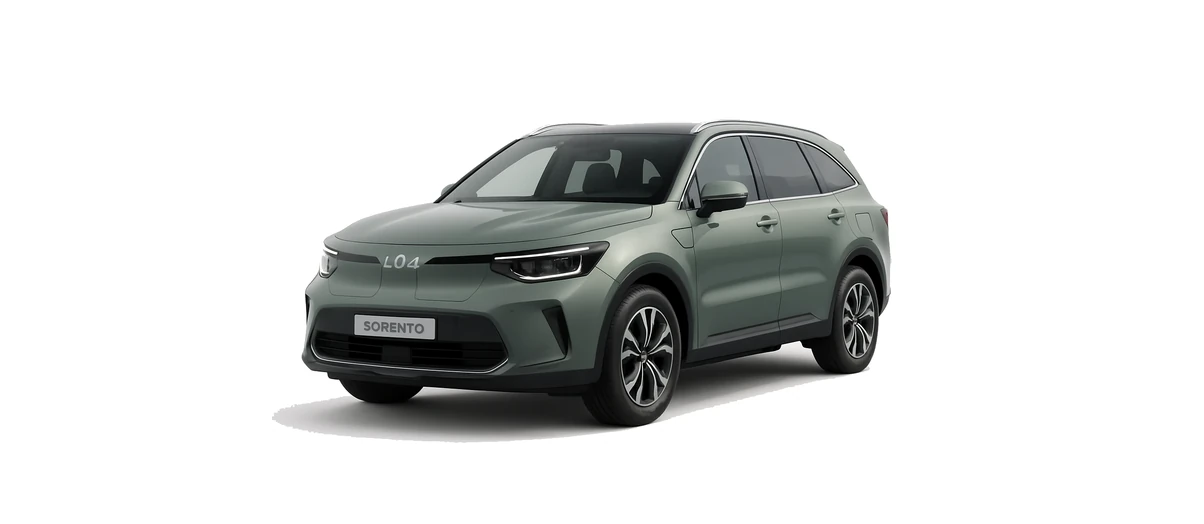
The Kia Sorento is a large seven-seat SUV available in the UK with several powertrain options, including petrol hybrid, diesel and a plug-in hybrid. This charging guide is specifically for the current UK Kia Sorento 1.6 Petrol Plug-In Hybrid AWD, because the standard hybrid and diesel versions are not externally chargeable.
As a plug-in hybrid rather than a full battery-electric vehicle, the Sorento PHEV is designed around regular, convenient AC charging and short electric journeys. Kia UK lists a 13.8kWh lithium-ion polymer battery, a combined WLTP electric range of up to 34 miles and Type 2 AC charging at 3.3kW. That makes cable choice fairly straightforward: a standard Type 2 charging setup is the key requirement for home wallboxes and many UK public AC charge points.
View Kia Sorento Charging Cables
Kia Sorento Battery and Charging Specifications
The UK-market chargeable Sorento is the 1.6 T-GDi plug-in hybrid. It combines a petrol engine with an externally rechargeable battery, allowing shorter journeys to be completed using electric power when the battery has enough charge. It is not a fully electric SUV, and it should not be treated like a long-range BEV when planning journeys.
Current Kia UK specification data lists the Sorento Plug-In Hybrid AWD with a 13.8kWh battery and Type 2 AC charging at 3.3kW. Kia also lists a 10–100% Type 2 AC charging time of around 3 hours 25 minutes, and a 10–100% 3-pin charging time of around 5 hours 2 minutes. These figures apply to the plug-in hybrid model only.
Because the Sorento PHEV has a relatively small battery compared with a full EV, the ownership pattern is different. Rather than relying on rapid charging stops, the best approach is usually to charge at home, at work or during longer parking sessions, then use the available electric range for school runs, commuting, local errands and town driving.
Battery Options
Kia UK lists one plug-in hybrid battery configuration for the current chargeable Sorento: a 13.8kWh lithium-ion polymer battery. A usable battery capacity figure was not confirmed in the supplied official UK data, so it is best to use Kia’s stated charging times and WLTP range as the practical reference points.
The Sorento range also includes non-plug-in versions. The petrol hybrid can use electric assistance, but it is not charged from an external cable. The diesel model is not externally chargeable either. If you are choosing a charging cable, wallbox setup or public charging routine, make sure your vehicle is the 1.6 Petrol Plug-In Hybrid AWD rather than another Sorento variant.
AC Charging Speed
AC charging is the main charging method for the Kia Sorento PHEV. Kia UK currently lists Type 2 AC charging at 3.3kW, with a 10–100% charging time of approximately 3 hours 25 minutes. That is quick enough for overnight charging, topping up during the working day, or replenishing the battery while the car is parked for a few hours.
A higher-powered AC charge point will not make the current UK Sorento PHEV charge beyond its listed onboard AC limit. For example, a 7kW home wallbox or a 22kW public AC post should still charge the vehicle at up to the car’s supported AC rate, rather than at the maximum output of the charger. This is normal: the vehicle’s onboard charger determines how much AC power it can accept.
For most Sorento PHEV drivers, a Type 2 cable is the important item for untethered home chargers and many public AC charge points. Kia’s accessory information describes a Mode 3 charging cable with Type 2 connectors at both ends for public and domestic charging points, which matches the typical UK AC charging setup.
DC Rapid Charging Speed
Reliable UK specification data for the current Kia Sorento PHEV confirms AC charging times, but does not confirm DC rapid charging support or a CCS rapid-charging time. As a result, you should not plan motorway journeys around DC rapid charging stops in the Sorento Plug-In Hybrid.
This is an important difference between the Sorento PHEV and a fully electric SUV. A BEV is often designed to use high-power rapid chargers on longer trips, whereas the Sorento PHEV uses its petrol engine once the electric range has been used. Charging is still very useful for reducing fuel use on shorter journeys, but the charging pattern is based around home and destination AC top-ups rather than rapid en-route charging.
Range and Efficiency
Kia UK lists a combined WLTP electric range of up to 34 miles for the Sorento Plug-In Hybrid. Some older review material may refer to a slightly different official figure, but the current Kia UK specification shows 34 miles. Independent real-world experience can vary with route, weather, speed, load and driving style, with mixed-route electric range likely to be lower than the headline WLTP figure.
For many households, the useful value of the Sorento PHEV comes from frequent short top-ups. If your daily use includes local commuting, school journeys, shopping trips or short urban routes, keeping the battery charged can allow a meaningful share of those miles to be covered electrically. If the vehicle is rarely plugged in, it will behave much more like a conventional hybrid SUV, carrying the extra plug-in hybrid hardware without gaining the full efficiency benefit.
Efficiency is usually strongest when the car starts with a charged battery and is used on shorter, lower-speed routes. Long motorway trips are still possible, but the Sorento PHEV is not intended to cover long distances on battery power alone.
Charging at Home
Home charging is likely to be the most convenient way to run a Kia Sorento Plug-In Hybrid. With a Type 2 home wallbox, Kia’s quoted 10–100% charging time is around 3 hours 25 minutes, so the vehicle can be recharged comfortably overnight or during an evening at home.
If your home charger is untethered, you will need a Type 2 to Type 2 charging cable. If your wallbox is tethered, the cable is already attached to the charger, so you may still want a separate Type 2 cable for public AC charging. A longer cable may be useful for a large SUV depending on driveway layout, but very long cables can be heavier and less convenient to store.
A 7kW home charger is still a sensible installation for many households, especially if you may own a full EV in future, but it will not make the Sorento PHEV charge faster than its onboard AC capability. The benefit is convenience, safe dedicated charging equipment and future flexibility rather than faster-than-specified Sorento charging.
A 3-pin charger is generally best suited as a backup or occasional charging solution, but can be used regularly if a qualified electrician has confirmed the socket and electrical installation are suitable for sustained EV charging. Kia UK lists a 10–100% 3-pin charging time of around 5 hours 2 minutes, so it can still replenish the Sorento’s relatively small plug-in hybrid battery, but a dedicated home charge point is usually the more robust long-term option.
Public Charging
Public charging for the Kia Sorento PHEV is mainly about AC destination charging. This could include supermarket car parks, hotels, workplaces, town-centre parking, leisure venues and other locations where the vehicle is parked for a few hours. Untethered public AC charge points normally require you to bring your own Type 2 cable.
Because the Sorento’s listed AC charging rate is 3.3kW, short public charging stops may add only a modest amount of electric range. The best opportunities are longer parking sessions: a meal, a shopping trip, a work meeting or a full day at the office. In those situations, a Type 2 AC post can be enough to bring the battery back up substantially before the next journey.
It is worth checking pricing before plugging in. Some public AC chargers are priced fairly for a PHEV top-up, while others may have connection fees, overstay fees or pricing structures that make a small battery top-up less attractive. For many Sorento owners, home charging will remain the lowest-effort routine, with public AC charging used when it fits naturally into the day.
Vehicle-Specific Features
The Sorento PHEV’s most important charging-related feature is its role as a seven-seat plug-in hybrid SUV. It offers the practicality of a large family vehicle while giving drivers the option to complete shorter journeys using externally charged electric energy.
Kia UK notes home charging support and Kia App charging scheduling for the Sorento PHEV. Charging scheduling can be useful if you want to align charging with off-peak electricity tariffs, avoid charging at peak household demand times, or make sure the vehicle is ready before the morning commute.
The UK plug-in hybrid version is also listed with all-wheel drive. That does not change the cable requirement, but it reinforces the Sorento’s positioning as a practical family SUV rather than a small urban PHEV. For owners, the key is to make charging easy enough that plugging in becomes part of the normal parking routine.
Charging Tips
- Use Type 2 AC charging as the default. The current UK Sorento PHEV is listed with Type 2 AC charging, making this the practical standard for home wallboxes and public AC posts.
- Do not expect faster charging from a higher-output AC post. A 7kW or 22kW charger will not override the vehicle’s listed 3.3kW AC limit.
- Charge little and often. The Sorento PHEV is most efficient when you regularly replenish the battery and use the electric range for shorter journeys.
- Keep a public charging cable in the vehicle. Many public AC chargers are untethered, so a Type 2 cable helps you use destination charging when available.
- Avoid planning around rapid chargers. Official UK data does not confirm DC rapid charging for the Sorento PHEV, so treat public charging as AC destination charging.
- Use charging schedules where helpful. If available through your setup and tariff, scheduled charging can make home charging cheaper and more convenient.
Frequently Asked Questions
Is the Kia Sorento a fully electric car?
No. The chargeable UK Sorento is a plug-in hybrid, not a full battery-electric vehicle. It has a petrol engine and an externally rechargeable battery. The standard hybrid and diesel Sorento models are not externally chargeable.
What charging cable does the Kia Sorento PHEV use?
The Kia Sorento PHEV uses Type 2 AC charging. For untethered home wallboxes and many UK public AC charge points, you will need a Type 2 to Type 2 charging cable.
How long does the Kia Sorento PHEV take to charge?
Kia UK lists a 10–100% Type 2 AC charging time of around 3 hours 25 minutes. Using a 3-pin supply, Kia lists a 10–100% time of around 5 hours 2 minutes.
Will a 7kW charger charge the Sorento PHEV faster?
Not beyond the car’s onboard charging limit. Kia UK currently lists Type 2 AC charging at 3.3kW for the Sorento PHEV, so a 7kW or 22kW AC charger should still charge at up to the car’s supported rate.
Can the Kia Sorento PHEV use DC rapid charging?
Current reliable UK information for the Sorento PHEV confirms AC charging, but does not confirm DC rapid charging support. It is best not to plan journeys around CCS or DC rapid charging stops for this model.
What is the electric range of the Kia Sorento PHEV?
Kia UK lists a combined WLTP electric range of up to 34 miles for the current Sorento Plug-In Hybrid. Real-world range will depend on driving conditions, temperature, speed, load and how the vehicle is used.
What This Means for Drivers
The Kia Sorento PHEV is at its best when treated as a large family SUV that can cover many shorter journeys electrically, rather than as a full EV for rapid-charging road trips. The charging setup is simple: Type 2 AC charging at home, Type 2 AC charging at suitable public destinations, and regular top-ups to make the most of the 34-mile WLTP electric range.
For most UK owners, the ideal routine is to plug in when the vehicle is parked at home and use public AC charging only when it conveniently fits your plans. A higher-powered wallbox may be useful for future vehicles, but it will not make the current Sorento PHEV exceed its listed 3.3kW AC charging rate. The real benefit is making charging safe, easy and habitual.
Looking for a Charging Cable for Kia Sorento?
If you drive the Kia Sorento Plug-In Hybrid, choosing a suitable Type 2 charging cable will help you use untethered home wallboxes and public AC charge points with confidence.
View Kia Sorento Charging Cables
Please note that this information is intended as a guide. Charging specifications may change due to model and year of manufacture. For precise information, always refer to your vehicle user manual.

