
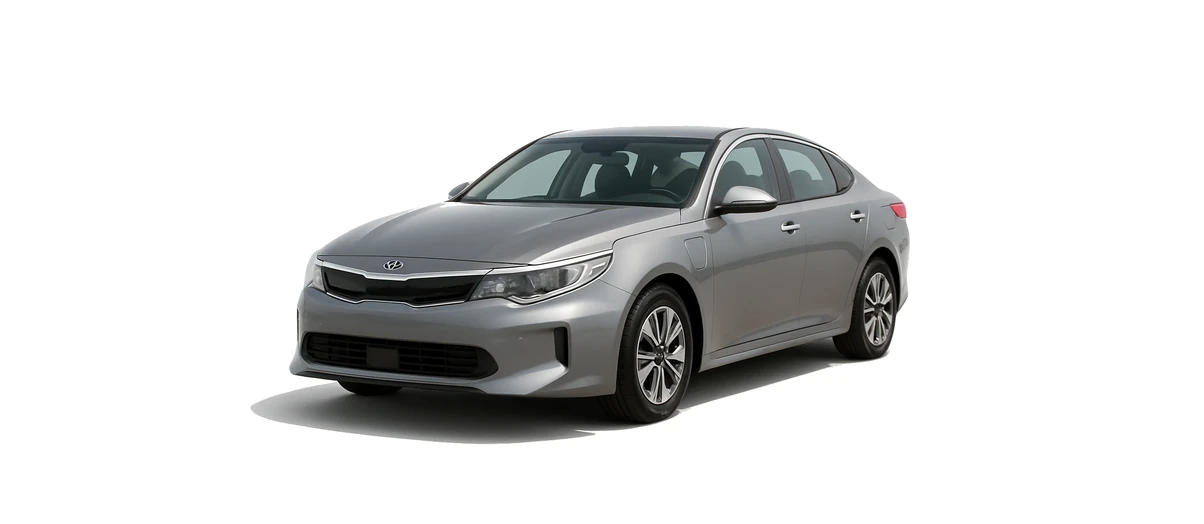
The Kia Optima plug-in hybrid is now a used-car choice in the UK rather than a new model, but it can still be a practical option for drivers who want short electric journeys with petrol flexibility for longer trips. The important point is that this guide applies to the Kia Optima PHEV only. Petrol and diesel Optima models do not have a charge port and do not require charging cables.
UK plug-in versions were sold as an Optima PHEV saloon and later as the Optima Sportswagon PHEV estate. They are not fully electric cars: they combine a 2.0 GDi petrol engine with an electric motor and a rechargeable lithium-ion polymer battery. For owners, that means charging expectations should be realistic. The Optima PHEV uses Type 2 AC charging and is best treated as a car to top up at home, at work or on slower public AC charge points.
View Kia Optima Charging Cables
Kia Optima Battery and Charging Specifications
The UK Kia Optima PHEV is a plug-in hybrid with a relatively small traction battery compared with a modern battery-electric vehicle. That is not a disadvantage if the car is used as intended: regular charging for local electric driving, backed up by the petrol engine when the battery is depleted or when longer journeys are required.
The charging connection for UK and European Optima PHEV models is Type 2 AC. The well-supported onboard AC charging figure is around 3.3 kW single-phase. This is a key detail when choosing a cable or planning charge times, because connecting to a more powerful AC charge point will not make the car charge above the limit of its onboard charger.
There is no confirmed CCS or other DC rapid charging capability for the UK Optima PHEV. In practice, that means you should not plan motorway-style 10-80% rapid charging stops in the way you might with a pure electric vehicle.
Battery Options
There is not one single battery size that should be quoted for every UK Kia Optima PHEV. Official UK material shows different battery capacities depending on body style and model period.
Earlier UK Optima PHEV saloon information listed a 9.8 kWh lithium-ion polymer battery. Kia UK material from that period quoted an all-electric range of up to 33 miles, although this appears to relate to the earlier pre-WLTP testing era rather than being directly comparable with current WLTP figures.
The later Optima Sportswagon PHEV, including the 2019 facelift estate, used an 11.26 kWh lithium-ion polymer battery. Some third-party sources round this to 11.3 kWh. The Sportswagon PHEV was removed from UK sale in late 2019, with no new UK Optima from 2020 apart from any remaining dealer stock at the time.
If you are buying a used Optima, first check whether it is the saloon PHEV or the Sportswagon PHEV. This helps set expectations for battery capacity, electric range and likely charging time. It also avoids confusion with non-plug-in petrol or diesel Optima models, which are not relevant for charging-cable selection.
AC Charging Speed
The Kia Optima PHEV charges using single-phase Type 2 AC. Kia UK’s 2019 Sportswagon PHEV specification gives an AC charging power of 3.3 kW and a charge time of around 3.1 hours at 240 V. In everyday use, it is sensible to think in terms of roughly 3 to 4 hours for a full charge, depending on the variant, starting battery level, temperature and the charge point being used.
A 7 kW home wallbox is still a good match for regular charging because it provides a dedicated, convenient and safer charging setup than relying on a domestic socket. However, the car will only draw around 3.3 kW, so it will not charge at the full 7 kW output of the wallbox. The same applies if you connect to an 11 kW or 22 kW public AC post: the car’s onboard charger remains the limiting factor.
For cable selection, this means a Type 2 cable suitable for public AC charging and home wallboxes is the main item to check. Older Kia UK material listed both a 3-pin-to-Type 2 charging cable and a Type 2-to-Type 2 16 A cable as supplied equipment, but used cars may not still include their original cables. Always inspect the car and accessories before assuming they are present.
DC Rapid Charging Speed
The Kia Optima PHEV should be treated as an AC-only plug-in hybrid. No CCS/DC rapid charging capability is confirmed for this model in the UK data used for this guide, and public DC rapid chargers are not relevant to normal Optima PHEV charging.
That also means there is no meaningful 10-80% DC rapid-charge time to quote. If you see a rapid charger at a motorway services, it may be intended for fully electric vehicles and plug-in hybrids with DC capability, but the Optima PHEV is designed around slower AC top-ups. For long journeys, you can simply continue using the petrol engine once the usable electric charge has been depleted.
Range and Efficiency
The later UK Optima Sportswagon PHEV was associated with an electric range of up to 33 miles, and earlier UK saloon material also referred to up to 33 miles in official information from its period. In real-world use, many drivers should expect something closer to around 25 miles of electric driving, although the result will vary with temperature, route, speed, driving style and use of heating or air conditioning.
This type of range can work well for commuting, school runs, local errands and urban journeys, especially if the car is charged daily. The key is to use the plug-in hybrid system as intended: charge frequently, use electric power where it is most effective, and allow the petrol engine to handle longer or higher-speed trips when needed.
Because the battery is small compared with a pure EV, even a partial overnight charging window is usually enough to restore useful electric range. Scheduled off-peak charging can therefore be easy to manage, provided your home charging arrangement is safe and suitable.
Charging at Home
Home charging is where the Optima PHEV makes the most sense. If you can plug in overnight or during off-peak periods, you can start many days with a full battery and make the most of the car’s electric mode for short journeys.
A dedicated 7 kW wallbox is generally the most convenient home charging solution, even though the Optima PHEV will draw only around 3.3 kW. The benefit is not faster-than-car-capable charging; it is convenience, weather-resistant installation, dedicated circuit protection and a proper Type 2 connection ready whenever you park.
A 3-pin charger is generally best suited as a backup or occasional charging solution, but can be used regularly if a qualified electrician has confirmed the socket and electrical installation are suitable for sustained EV charging. Avoid using damaged sockets, extension leads or any setup that has not been checked for continuous load.
If you have a time-of-use electricity tariff, the Optima PHEV’s modest battery size can be an advantage. A typical full charge can often fit comfortably into an overnight low-cost window, and you do not need a large number of charging hours to add meaningful electric range.
Public Charging
For public charging, look for AC charge points with a Type 2 socket or tethered Type 2 connector. Many destination chargers at supermarkets, hotels, workplaces, town-centre car parks and leisure facilities are suitable for this type of plug-in hybrid.
If the public post has an untethered socket, you will need your own Type 2-to-Type 2 cable. This is one of the most important checks for used Optima PHEV owners, as not every used example will still have the cable originally supplied with the car.
Public charging is most useful when the car is parked for a few hours. A short stop at a high-powered rapid charger is not the right charging pattern for the Optima PHEV, because it does not use DC rapid charging. Instead, think of public AC charging as a way to recover electric range while you are already stopped for work, shopping or an appointment.
Vehicle-Specific Features
The Optima PHEV uses a parallel hybrid system combining petrol and electric drive. The Sportswagon PHEV was described with EV and HEV driving modes, allowing the car to prioritise electric running when charge is available or operate more like a conventional hybrid when required.
Regenerative braking is also part of the plug-in hybrid system. It recovers some energy when slowing down or braking, helping to improve efficiency around town. However, regeneration does not replace plugging in. To get the best electric range from the Optima PHEV, regular charging remains essential.
From a used-car perspective, the most vehicle-specific check is whether the car is genuinely a PHEV. Look for the charge port, confirm the model description and check the charging accessories. The broader Kia Optima name also covers non-plug-in petrol and diesel models, so charging cable advice only applies to the plug-in hybrid versions.
Charging Tips
- Choose the right cable: Use a Type 2 cable for home wallboxes and public AC posts.
- Check used-car accessories: Do not assume the original Kia cables are still with the car.
- Expect 3.3 kW charging: A higher-powered AC post will not override the car’s onboard charging limit.
- Charge little and often: Frequent top-ups help maximise electric running on local journeys.
- Do not plan around rapid charging: The Optima PHEV is not a CCS/DC rapid-charging vehicle.
- Use scheduled charging: The battery size makes overnight off-peak charging straightforward for many owners.
- Inspect the charge port: If buying used, check the Type 2 inlet is clean, undamaged and operating correctly.
Frequently Asked Questions
Is the Kia Optima a fully electric car?
No. The UK plug-in Optima is a PHEV, not a battery-electric vehicle. It has a petrol engine, an electric motor and a rechargeable battery for short electric journeys.
Which charging cable does the Kia Optima PHEV use?
UK and European Kia Optima PHEV models use a Type 2 AC charging connection. For most owners, a Type 2-to-Type 2 cable is the key cable for home wallboxes and untethered public AC charge points.
How fast does the Kia Optima PHEV charge?
The well-supported figure is around 3.3 kW on single-phase AC. Kia UK’s 2019 Sportswagon PHEV specification gives a charge time of about 3.1 hours at 240 V, so around 3 to 4 hours is a realistic guide depending on conditions and battery state.
Can the Kia Optima PHEV use a 7 kW home charger?
Yes, it can connect to a suitable 7 kW home wallbox, but it will only draw around 3.3 kW. The wallbox is still useful for convenience and regular home charging.
Does the Kia Optima PHEV support rapid charging?
No confirmed DC rapid charging capability applies to the UK Optima PHEV. It should be charged using Type 2 AC charge points rather than CCS rapid chargers.
What electric range should I expect?
Official material referred to up to 33 miles of electric range, depending on model period and test basis. In real-world UK driving, around 25 miles is a more cautious expectation for many users.
What This Means for Drivers
The Kia Optima PHEV is straightforward to charge once you understand its limits. It is an AC-only plug-in hybrid with a Type 2 connection and an onboard charger of around 3.3 kW. That makes it well suited to overnight home charging, workplace charging and destination AC charging, rather than rapid-charge route planning.
For used-car owners, the practical checklist is simple: confirm your car is a PHEV, identify whether it is the earlier saloon or later Sportswagon estate, check which charging cables are present, and choose a Type 2 cable if you need to use untethered wallboxes or public AC posts. With regular charging, the Optima PHEV can cover many shorter journeys electrically while retaining petrol flexibility for longer trips.
Looking for a Charging Cable for Kia Optima?
If you need a replacement or spare Type 2 cable for a Kia Optima PHEV, We sell charging cables suitable for the plug-in hybrid Optima models.
View Kia Optima Charging Cables
Please note that this information is intended as a guide. Charging specifications may change due to model and year of manufacture. For precise information, always refer to your vehicle user manual.

