
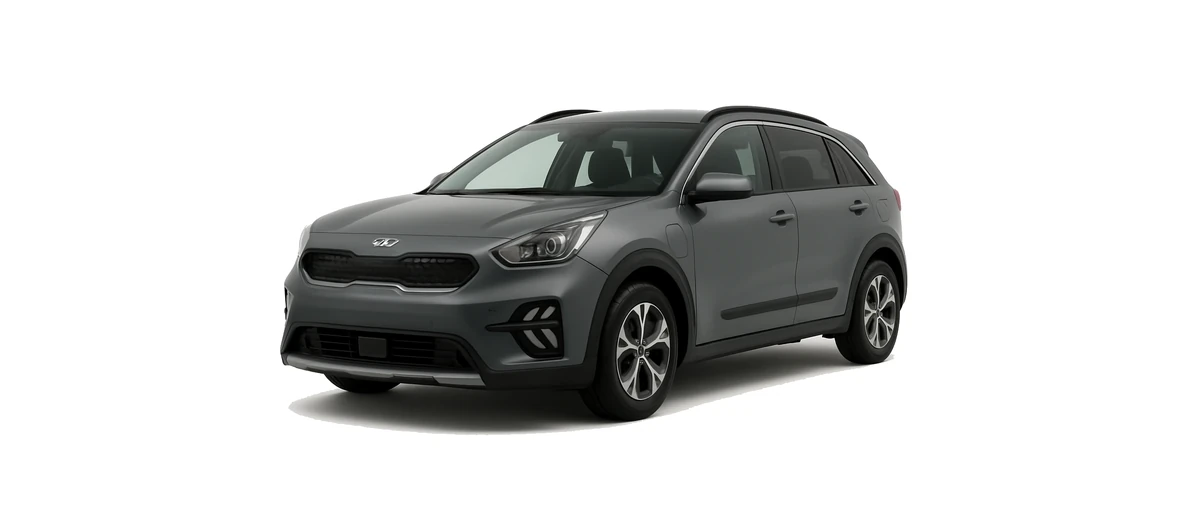
The Kia Niro PHEV is a plug-in hybrid compact SUV/crossover, designed to combine useful electric-only driving for local journeys with the flexibility of a petrol engine for longer trips. It is important not to confuse it with the fully electric Kia Niro EV or earlier e-Niro: the Niro PHEV has a petrol engine, a smaller traction battery and different charging capabilities.
For UK drivers, the key point is simple: the Kia Niro PHEV uses a Type 2 AC charging connection, but it is limited by its onboard charger to around 3.3 kW. That means a normal 7 kW home wallbox is already more than enough, and connecting to an 11 kW or 22 kW public AC post will not make the car charge any faster. The PHEV also does not use CCS/DC rapid charging, so rapid chargers and 10-80% rapid-charge figures apply to the Niro EV, not the Niro PHEV.
View Kia Niro PHEV Charging Cables
Kia Niro PHEV Battery and Charging Specifications
The current UK second-generation Kia Niro Plug-In Hybrid uses a 1.6 GDi petrol plug-in hybrid drivetrain with an 11.1 kWh lithium-ion polymer battery. Kia UK quotes an official EV-mode WLTP range of up to 40 miles for grade ‘2’ models with 16-inch wheels, and 37 miles for grades ‘3’ and ‘4’ with 18-inch wheels.
Charging is AC only via a Type 2 socket/inlet in the UK and Europe. Kia’s UK charging information lists the Niro PHEV at an effective maximum charging speed of 3.3 kW. The current car is quoted at about 2 hours 55 minutes for a 15-95% AC charge when connected to suitable AC charging equipment. This time is broadly the same whether the charge point is a 7.2 kW single-phase unit or a higher-rated AC post, because the car’s onboard charger sets the limit.
There is no CCS/DC rapid charging capability on the Kia Niro PHEV. If you are comparing charging information online, make sure you are looking at the plug-in hybrid rather than the Niro EV, as the two models have very different charging systems.
Battery Options
For the current UK Niro Plug-In Hybrid, Kia lists an 11.1 kWh lithium-ion polymer battery. Kia’s published UK specification does not label this figure as gross or usable, so it is best treated simply as the manufacturer’s stated battery capacity rather than assuming a usable-energy figure.
Used buyers should be aware that earlier UK first-generation Niro PHEV models are different. Older UK specification data lists an 8.9 kWh lithium-ion polymer battery and a maximum EV-mode range of 30 miles. These earlier models still use Type 2 AC charging and are also limited to a maximum of around 3.3 kW, with earlier Kia data quoting around 2 hours 15 minutes for a 0-100% charge at 3.3 kW.
This matters when planning ownership costs and daily charging habits. A current second-generation car may offer a longer electric driving range than an earlier example, but both generations share the same broad charging behaviour: AC Type 2 charging, no DC rapid charging, and a modest onboard charging limit.
AC Charging Speed
The Kia Niro PHEV’s AC charging speed is capped at around 3.3 kW. In practical terms, this means the car will not draw the full output from a 7 kW home wallbox, and it will not benefit from the higher rating of an 11 kW or 22 kW AC public charge point.
That does not mean a 7 kW wallbox is unsuitable. In fact, it is a sensible and common home charging option because it provides more than enough capacity for the Niro PHEV and will also be suitable for many future electric or plug-in hybrid vehicles. The important point is that the car decides how much power it can accept. If the wallbox can provide more than 3.3 kW, the Niro PHEV will still charge at approximately its own maximum rate.
For cable selection, a Type 2 charging cable is the key requirement for UK public AC posts and untethered home wallboxes. A higher-rated cable can be compatible, but it will not increase the Niro PHEV’s charging speed beyond the car’s onboard limit. When choosing a cable, practical factors such as length, portability, connector fit and future vehicle plans may be more important than chasing a higher charging rating for this particular car.
DC Rapid Charging Speed
The Kia Niro PHEV does not have CCS/DC rapid charging. Kia UK lists DC rapid charging as not applicable for the PHEV, so there is no meaningful 10-80% rapid-charging time to quote.
This is normal for many plug-in hybrids. Because the battery is much smaller than a full battery-electric vehicle battery and the petrol engine remains available for longer trips, PHEVs are usually designed around slower AC charging at home, at work or at destination chargers.
Do not plug the Niro PHEV into DC rapid chargers. The connector and charging system are not designed for that type of charging. If you see rapid-charging figures for a Kia Niro, they are almost certainly referring to the fully electric Niro EV/e-Niro rather than the plug-in hybrid model.
Range and Efficiency
The current UK Kia Niro PHEV is officially rated for up to 40 miles of EV-mode WLTP range on grade ‘2’ models and 37 miles on grades ‘3’ and ‘4’. These figures make the car well suited to short commutes, school runs, local errands and urban driving where many journeys can be completed without using much petrol, provided the battery is charged regularly.
As with any electrified vehicle, real-world electric range can vary. Weather, road speed, use of heating or air conditioning, tyre condition, traffic and driving style can all influence how far the car travels on battery power. Higher-speed routes and cold conditions are likely to reduce electric range compared with gentle town driving.
For earlier UK first-generation Niro PHEV models, use the older 30 mile EV-mode figure as a more appropriate reference point. It is not safe to apply the current 11.1 kWh battery and 40 mile headline figure to every used Niro PHEV, because the earlier cars used a smaller battery.
Charging at Home
Home charging is usually the most convenient way to run a Kia Niro PHEV efficiently. If you can charge overnight or during longer parked periods, the car’s 3.3 kW AC limit is unlikely to be a problem. A current model’s quoted 15-95% charge time of about 2 hours 55 minutes means that a typical evening or overnight parking window should be more than enough for a useful top-up.
An installed home wallbox is the preferred regular charging method for most owners. A 7 kW wallbox is suitable even though the car will only draw around 3.3 kW, and it may be useful if you later change to a full EV or a faster-charging plug-in hybrid. If the wallbox is untethered, you will need a Type 2 cable to connect the car.
A 3-pin charger is generally best suited as a backup or occasional charging solution, but can be used regularly if a qualified electrician has confirmed the socket and electrical installation are suitable for sustained EV charging. Standard domestic sockets were not primarily designed for repeated high-load charging over long periods, so professional checking is important before relying on one as your everyday charging setup.
For the best ownership experience, get into the habit of plugging in whenever it is convenient rather than waiting for the battery to be empty. Regular short top-ups help maximise the electric portion of your driving and reduce petrol use on local journeys.
Public Charging
Public charging for the Kia Niro PHEV is mainly about AC destination charging. Look for Type 2 AC charge points in car parks, hotels, workplaces, supermarkets, leisure centres and town-centre locations. These are the kinds of places where the car may be parked long enough for the modest 3.3 kW AC rate to be useful.
Because the Niro PHEV does not rapid charge, it is not the right vehicle for short motorway rapid-charging stops. For long journeys, the petrol engine provides the long-distance flexibility. Public AC charging is still useful, but it works best when it fits naturally into your parking time rather than becoming a dedicated stop.
Many public AC charge points are untethered, which means they provide a socket rather than an attached cable. In those situations, you need your own Type 2 cable. Carrying one in the car is a practical way to make use of available AC posts when you find them.
Vehicle-Specific Features
The Kia Niro PHEV uses Kia’s plug-in hybrid system with a 1.6 GDi petrol engine, a 6-speed automatic transmission and an electric drive system supported by the traction battery. It is part of the Niro electrified crossover range, but it should be viewed separately from the Niro EV because the charging hardware and intended use are different.
Kia UK information shows Vehicle-to-Load as an EV-only feature and unavailable for PHEV grades. In other words, do not buy or use the Niro PHEV expecting the external power supply features associated with some battery-electric Kia models.
The most important vehicle-specific charging feature is the 3.3 kW onboard AC limit. It affects home charging, public charging and cable-buying decisions. A more powerful AC post can still be used if it has the correct Type 2 connection, but the Niro PHEV will only take what its onboard charger allows.
Charging Tips
- Use a Type 2 cable: The UK Kia Niro PHEV uses Type 2 AC charging, so a Type 2 cable is needed for untethered home wallboxes and many public AC posts.
- Do not overbuy for speed alone: A 22 kW cable or charge point will not make the car charge faster than its approximate 3.3 kW onboard limit.
- Charge little and often: Regular top-ups help you make the most of EV-mode driving, especially for short daily journeys.
- Plan public charging around parking time: Destination AC charging is useful; rapid-charge-style stops are not relevant to this PHEV.
- Check which generation you own: Current UK models use an 11.1 kWh battery, while earlier UK cars used an 8.9 kWh battery and have a shorter official EV-mode range.
- Avoid DC chargers: The PHEV does not have CCS/DC rapid charging capability.
Frequently Asked Questions
What charging cable does the Kia Niro PHEV use?
The UK Kia Niro PHEV uses a Type 2 AC charging connection. You will need a Type 2 cable for untethered home wallboxes and many public AC charging points.
How fast can the Kia Niro PHEV charge?
Kia UK charging information lists an effective maximum of around 3.3 kW on AC. The current UK model is quoted at about 2 hours 55 minutes for a 15-95% charge on suitable AC equipment.
Will a 7 kW wallbox charge the Niro PHEV faster?
A 7 kW wallbox is suitable, but the Niro PHEV will only draw around 3.3 kW. The extra wallbox capacity may be useful for future vehicles, but it does not increase this car’s charging speed beyond its onboard limit.
Can the Kia Niro PHEV use a 22 kW public charger?
It can use compatible Type 2 AC public charging equipment, but it will not charge at 22 kW. The car remains limited to approximately 3.3 kW AC charging.
Does the Kia Niro PHEV have DC rapid charging?
No. Kia UK lists DC rapid charging as not applicable for the Niro PHEV. There is no CCS rapid-charging capability and no useful 10-80% rapid-charging figure for this model.
Is the current Niro PHEV battery the same as older models?
No. The current UK second-generation Niro Plug-In Hybrid is listed with an 11.1 kWh battery. Earlier UK first-generation Niro PHEV models used an 8.9 kWh battery and had a 30 mile maximum EV-mode range.
What This Means for Drivers
The Kia Niro PHEV is at its best when treated as a plug-in hybrid that you charge regularly, not as a rapid-charging electric car. For many drivers, the official electric range is enough to cover a significant share of local driving, while the petrol engine removes the need to plan long trips around chargers.
From a charging-equipment point of view, the message is reassuringly straightforward. You need Type 2 AC charging, and you do not need to chase high charging speeds for this car. A 7 kW home wallbox is more than adequate, a suitable Type 2 cable is useful for public and untethered home charging, and higher-rated AC equipment will not overcome the car’s 3.3 kW onboard limit.
If you are buying used, check the model generation and battery specification so that your range expectations are realistic. Current and earlier UK Niro PHEV models differ in battery size and official EV-mode range, but both are fundamentally AC-only plug-in hybrids with the same modest charging ceiling.
Looking for a Charging Cable for Kia Niro PHEV?
If you need a compatible Type 2 cable for home or public AC charging, We offer Kia Niro PHEV charging cables suitable for the plug-in hybrid’s UK charging connection.
View Kia Niro PHEV Charging Cables
Please note that this information is intended as a guide. Charging specifications may change due to model and year of manufacture. For precise information, always refer to your vehicle user manual.

