
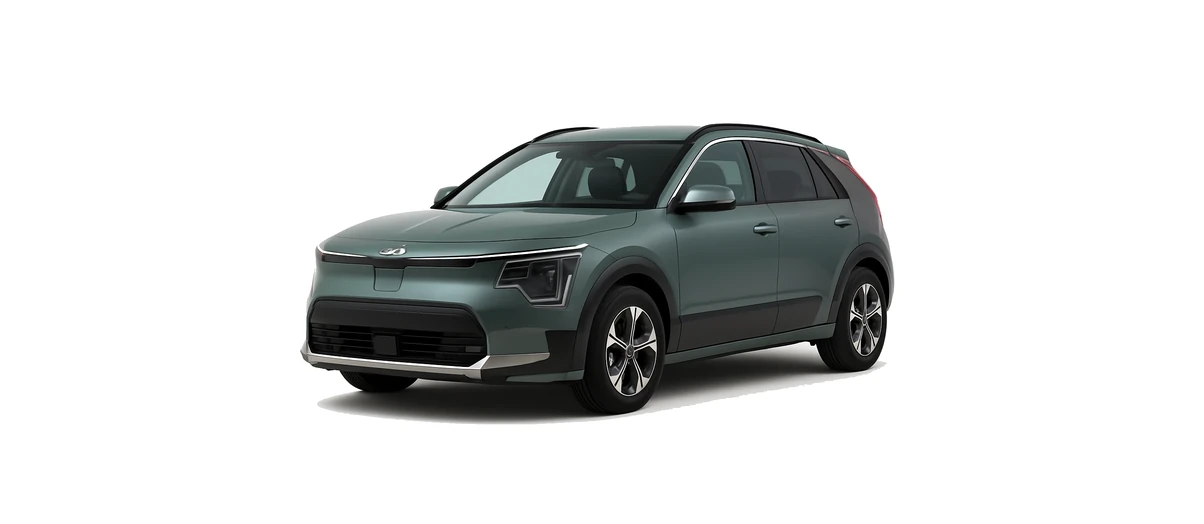
The Kia Niro EV is the fully electric version of Kia’s compact crossover/SUV, and it is important not to confuse it with the Niro Hybrid, Niro Plug-In Hybrid or the earlier Kia e-Niro. This guide focuses mainly on the second-generation UK Kia Niro EV sold from 2022 to around 2025, using the 64.8 kWh battery and Type 2 / CCS Combo 2 charging setup.
For UK owners, the practical charging picture is straightforward: use Type 2 AC charging for home and many destination chargers, and use CCS rapid charging for longer journeys. The Niro EV can accept up to 11 kW AC where three-phase charging is available, but most UK home wallboxes are single-phase, so everyday home charging is usually closer to 7.2 or 7.4 kW.
View Kia Niro EV Charging Cables
Kia Niro EV Battery and Charging Specifications
The second-generation Kia Niro EV uses a lithium-ion battery marketed by Kia as 64.8 kWh. EV Database UK estimates this as a 68 kWh total pack with around 64.8 kWh usable capacity. Kia’s UK figures quote up to 285 miles WLTP range, while real-world range will vary depending on speed, weather, terrain, wheel size, load and driving style.
| Vehicle | Kia Niro EV, second-generation UK model |
|---|---|
| Powertrain | Battery-electric vehicle, not a plug-in hybrid |
| Battery | 64.8 kWh usable battery capacity |
| WLTP range | Up to 285 miles |
| Estimated real-world range | Around 235 miles, depending on conditions |
| AC charging connection | Type 2 |
| Maximum AC charging | Up to 11 kW on three-phase AC |
| Rapid charging connection | CCS Combo 2 |
| Kia quoted DC charging time | Approximately 43 minutes from 10-80% on the highest-power suitable DC charger |
Battery Options
For the 2022-2025 UK Kia Niro EV, the key battery specification is the 64.8 kWh pack. This is the figure Kia uses in UK brochure material for the electric Niro. It should not be mixed with the Niro Plug-In Hybrid, which is a different vehicle with a much smaller battery and no CCS rapid charging, or with the earlier Kia e-Niro, which had different published charging figures depending on model year.
This distinction matters when choosing cables and estimating charging times. If your car is badged Niro EV and has a CCS rapid charging inlet beneath the Type 2 section, it is the full battery-electric model. If it is a Niro PHEV, its charging needs and cables are different.
AC Charging Speed
The Kia Niro EV uses a Type 2 connector for AC charging. Kia UK’s charging-time information lists 7.2 kW single-phase AC and 11 kW three-phase AC capability for the second-generation Niro EV. On a 7.2 kW AC supply, Kia quotes around 9 hours 25 minutes for a 10-100% charge. On an 11 kW three-phase AC supply, the same 10-100% charge is quoted at around 6 hours 20 minutes.
In everyday UK use, many homes have single-phase electricity. That means a typical home wallbox will usually charge at around 7.2 or 7.4 kW rather than the car’s 11 kW three-phase maximum. This is still more than enough for most owners, because the car can be charged overnight and does not usually need to be taken from nearly empty to full every day.
If you regularly use untethered public AC posts, a Type 2 to Type 2 cable is the cable to carry. A three-phase Type 2 cable can help the Niro EV access its 11 kW AC maximum where the charge point and local supply support it. If the charge point is single-phase, or if the supply is limited, the car will simply charge at the lower available rate.
DC Rapid Charging Speed
For rapid charging, the Kia Niro EV uses the CCS Combo 2 connector. CCS rapid and ultra-rapid chargers are normally tethered, meaning the charging cable is attached to the charger, so you do not usually need to provide your own cable for DC charging.
Kia UK material lists a 10-80% DC charging time of around 43 minutes for the Niro EV on the highest-power suitable charger, with some Kia fleet information rounding this to 45 minutes. This makes the Niro EV well suited to planned motorway stops, particularly if you arrive at a charger with a lower state of charge and leave at around 80%.
Like most EVs, charging will generally slow down as the battery gets fuller, especially above 80%. On a long journey, it is often quicker to do a shorter 10-80% rapid charge and continue driving than to wait for the final 20% unless you need the extra range for the next leg.
Range and Efficiency
Kia quotes up to 285 miles WLTP range for the second-generation Niro EV. In mixed UK driving, a real-world figure of around 235 miles is a sensible expectation, although this can be higher or lower. Gentle urban driving in mild weather can be favourable, while fast motorway driving, winter temperatures, heavy rain, roof loads and repeated short trips can reduce range.
The Niro EV’s strength is that it offers useful battery capacity in a compact crossover body. For many drivers, this means several days of commuting from one home charge, with rapid charging reserved for longer trips. If you mostly drive locally, charging to 80% for day-to-day use may be enough, with 100% reserved for journeys where you need the full range.
Charging at Home
Home charging is usually the most convenient and cost-effective way to run a Kia Niro EV. A dedicated Type 2 wallbox allows you to plug in when you get home, schedule charging for cheaper off-peak electricity if your tariff supports it, and start the next day with the range you need.
On a typical UK single-phase 7.2 or 7.4 kW wallbox, the Niro EV will not use its full 11 kW AC capability, but it will still charge comfortably overnight. For example, topping up from 30% to 80% is far quicker than a full 10-100% charge and is more representative of everyday use for many owners.
A 3-pin portable charger is generally best suited as a backup or occasional charging solution, but can be used regularly if a qualified electrician has confirmed the socket and electrical installation are suitable for sustained EV charging. A normal domestic socket charges much more slowly than a wallbox, so it is best treated as a fall-back option rather than the main charging method unless your installation has been properly assessed.
For cable choice at home, the answer depends on whether your wallbox is tethered or untethered. A tethered wallbox has its own cable attached. An untethered wallbox requires a separate Type 2 charging cable. If you also use public AC chargers, keeping a Type 2 cable in the boot is useful even if your home charger is tethered.
Public Charging
The Kia Niro EV is compatible with the UK and European Type 2 and CCS charging standard. Public AC posts, such as those found in car parks, hotels, workplaces and some town-centre locations, usually require your own Type 2 cable unless the unit is tethered. These chargers are useful when the car will be parked for several hours.
For long-distance travel, CCS rapid chargers are the better option. They are typically found at motorway services, charging hubs, retail parks and major A-road locations. Because the Niro EV’s best rapid charging window is broadly 10-80%, journey planning should focus on reaching a charger with enough remaining range for comfort, charging to around 80%, and then continuing.
Public charging speed depends on more than the number displayed on the charger. Battery temperature, state of charge, charger load, site power sharing and the vehicle’s own charging curve all affect the actual rate. A charger rated far above the Niro EV’s capability will not make the car charge at that higher rate; the vehicle controls how much power it can accept.
Vehicle-Specific Features
The second-generation Kia Niro EV includes Vehicle-to-Device functionality in Kia UK brochure material. This allows the car to power suitable external electrical devices, depending on the equipment and setup used. It should not be confused with full vehicle-to-grid or vehicle-to-home capability; the Niro EV is not being presented here as a home backup power system or grid export vehicle.
Kia UK brochure information also lists a heat pump as optional or grade/variant dependent rather than standard on every Niro EV. If fitted, a heat pump can help improve heating efficiency in colder weather, but owners should check their exact vehicle specification rather than assuming every UK car has one.
The Niro EV is also not based on Kia’s E-GMP dedicated EV platform used by models such as the EV6. That is one reason its rapid charging figures should not be compared directly with Kia models that advertise much higher charging power and shorter 10-80% times.
Charging Tips
- Use Type 2 for everyday charging: A Type 2 cable is the key cable for untethered home wallboxes and many public AC posts.
- Choose a three-phase Type 2 cable if you use public AC often: This gives access to the Niro EV’s 11 kW AC capability where the charger supports it.
- Expect lower AC speed at most homes: Many UK domestic installations are single-phase, so around 7.2 or 7.4 kW is typical.
- Use CCS for journey charging: Rapid chargers are best for long trips, with the fastest practical stops usually planned around the 10-80% window.
- Avoid charging to 100% on rapid chargers unless needed: Charging usually slows significantly at higher states of charge.
- Do not mix Niro versions: Niro EV, e-Niro and Niro Plug-In Hybrid specifications are not interchangeable.
Frequently Asked Questions
What charging cable does the Kia Niro EV use?
The Kia Niro EV uses a Type 2 connector for AC charging. For rapid charging, it uses the CCS Combo 2 connector. In practice, owners usually need a Type 2 to Type 2 cable for untethered AC charging, while CCS rapid chargers normally have the cable attached.
Can the Kia Niro EV charge at 11 kW at home?
The car can accept up to 11 kW AC on a suitable three-phase supply. However, most UK homes are single-phase, so a typical home wallbox will usually provide around 7.2 or 7.4 kW. To use 11 kW at home, you would need a compatible three-phase installation and suitable charging equipment.
How long does the Kia Niro EV take to charge?
Kia lists around 9 hours 25 minutes for a 10-100% charge at 7.2 kW AC, and around 6 hours 20 minutes at 11 kW AC. For DC rapid charging, Kia quotes approximately 43 minutes from 10-80% on the highest-power suitable charger.
Is the Kia Niro EV the same as the Kia e-Niro?
No. The Niro EV covered here is mainly the second-generation UK model sold from 2022 to around 2025. The earlier Kia e-Niro had different published specifications and should be checked separately before choosing cables or estimating charging times.
Is the Kia Niro EV a plug-in hybrid?
No. The Kia Niro EV is a full battery-electric vehicle. The Niro Plug-In Hybrid is a different model with a different battery, different charging behaviour and no DC rapid charging.
What This Means for Drivers
For most UK Kia Niro EV owners, the best charging setup is simple: install or use a Type 2 home wallbox for everyday charging, keep a Type 2 cable available for untethered public AC posts, and use CCS rapid chargers for longer journeys. The car’s 64.8 kWh battery and up to 285-mile WLTP range make it practical for commuting, family use and longer trips, provided charging stops are planned sensibly.
The key detail is to match expectations to the actual Niro EV specification. It can charge at up to 11 kW AC, but many UK homes will be limited to around 7.2 or 7.4 kW. It can rapid charge using CCS, but it is not an ultra-fast 18-minute charging Kia EV6-style model. Used with the right cable and realistic charging plan, the Niro EV remains a very usable electric crossover for UK driving.
Looking for a Charging Cable for Kia Niro EV?
We can help you choose a suitable Type 2 charging cable for the Kia Niro EV, including options for home wallboxes and public AC charging.
View Kia Niro EV Charging Cables
Please note that this information is intended as a guide. Charging specifications may change due to model and year of manufacture. For precise information, always refer to your vehicle user manual.

