
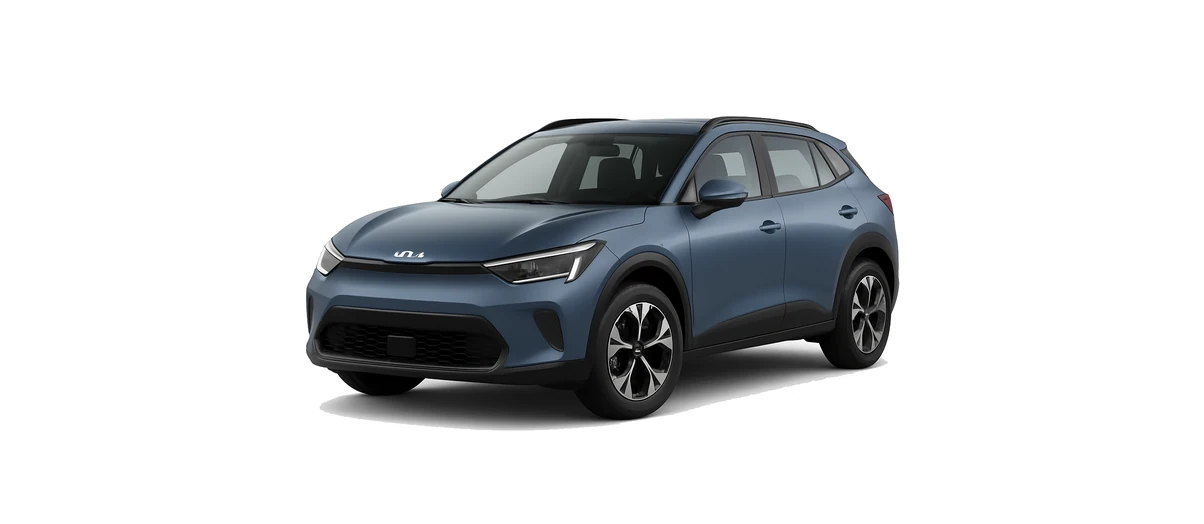
The Kia EV4 is a fully electric UK-market model offered in Hatchback and Fastback forms. It sits in Kia’s expanding electric range and is aimed at drivers who want a practical EV with long-distance capability, familiar charging connectors and a choice of battery sizes. For UK owners, the most important charging point is straightforward: the Kia EV4 uses a Type 2 connection for AC charging and a CCS connection for DC rapid charging.
This guide explains how the EV4 charges at home, what cable you need for public destination chargers, how the 58.3 kWh and 81.4 kWh battery versions differ, and what to expect from rapid charging on longer journeys. Figures should be treated as current UK-market guidance and worth re-checking before purchase or publication, as the EV4 is a newly launched model and some trim details may be updated over time.
Kia EV4 Battery and Charging Specifications
UK Kia EV4 models are battery electric vehicles, not hybrids or plug-in hybrids. Kia UK lists two lithium-ion battery sizes for the EV4 range: a 58.3 kWh battery and an 81.4 kWh battery. The smaller battery is associated with the Hatchback Air in Kia’s UK specification data, while the larger battery is available across long-range Hatchback and Fastback versions.
For charging hardware, UK data indicates a Type 2 AC charging inlet and CCS DC rapid charging. EV Database UK lists an 11 kW AC on-board charger, while Kia UK provides AC charging times for both battery sizes. In day-to-day UK use, however, many owners will charge from a 7.4 kW single-phase home wallbox rather than seeing the full 11 kW AC rate, because 11 kW charging generally requires a suitable three-phase supply and compatible charge point.
Battery Options
The 58.3 kWh EV4 battery is the standard-range option in Kia UK’s current specification table. EV Database UK estimates usable capacity at around 55 kWh. Kia UK quotes a WLTP combined range of 273 miles for the 58.3 kWh Hatchback Air on 17-inch wheels. This version is likely to suit drivers who mainly cover local, commuting and regional journeys, with occasional longer trips using the public rapid charging network.
The 81.4 kWh battery is the long-range option. EV Database UK estimates usable capacity at around 78 kWh. Kia UK quotes variant-dependent WLTP ranges: up to 388 miles for the 81.4 kWh Hatchback Air on 17-inch wheels, 362 miles for the Hatchback on 19-inch wheels, and 380 miles for the Fastback on 19-inch wheels. These figures show why it is important not to treat the EV4 as having one single range figure; battery size, body style, trim and wheel choice all matter.
AC Charging Speed
AC charging is the type of charging most owners use at home and at many public destination chargers. The Kia EV4’s Type 2 AC connection makes it compatible with standard UK Type 2 charging points, including untethered home wallboxes and many workplace, hotel, supermarket and town-centre chargers.
EV Database UK lists the EV4 with an 11 kW on-board AC charger. Kia UK quotes AC charging from 10-100% in around 5 hours 20 minutes for the 58.3 kWh battery and around 7 hours 15 minutes for the 81.4 kWh battery, although the table wording should be checked against the final UK handbook and charger setup. In practical UK home charging terms, a 7.4 kW single-phase wallbox is the common reference point. With the larger battery, an overnight charge is still a realistic routine for many owners, especially if you are topping up rather than charging from near empty to full every time.
If your property has a suitable three-phase supply, an 11 kW three-phase charge point may reduce AC charging times. This is more common in some commercial premises and less common in typical domestic installations, so it is worth confirming your electrical supply before planning around the maximum AC figure.
DC Rapid Charging Speed
For long journeys, the Kia EV4 uses the CCS connector for DC rapid and ultra-rapid charging. This is the standard rapid charging connector for modern European-market EVs and is widely supported across UK motorway services, charging hubs and many larger retail sites.
Kia UK quotes 10-80% DC charging times of 29 minutes for the 58.3 kWh battery and 31 minutes for the 81.4 kWh battery when using a sufficiently powerful 400 V DC charger. Those figures are a more useful planning guide than focusing only on peak kW numbers, because real charging speed varies during the session. Charging is usually fastest at lower states of charge and slows as the battery fills, particularly beyond 80%.
Cold weather, battery temperature, charger output, site load and the vehicle’s charging curve can all affect rapid charging time. Kia’s UK information specifically notes that battery temperature and weather conditions can influence actual charging performance. If your EV4 has battery conditioning active through route planning, it may help the car prepare the battery for faster charging, but drivers should still allow a margin on winter journeys.
Range and Efficiency
The EV4’s range depends heavily on specification. Kia UK’s WLTP figures include 273 miles for the 58.3 kWh Hatchback Air, up to 388 miles for the 81.4 kWh Hatchback Air, 362 miles for the 81.4 kWh Hatchback on 19-inch wheels, and 380 miles for the 81.4 kWh Fastback. WLTP is a standardised laboratory test, so it is best used for comparing versions rather than guaranteeing what every driver will see.
Real-world range will vary with speed, temperature, tyre choice, passenger and luggage load, driving style and use of heating or air conditioning. EV Database UK estimates real-world range figures by version, with the long-range versions typically offering substantially more usable motorway and mixed-route range than the 58.3 kWh car. For most owners, the key difference is simple: the 58.3 kWh Air will need more frequent charging on long trips, while the 81.4 kWh models offer more flexibility between stops.
Charging at Home
Home charging is usually the cheapest and most convenient way to run a Kia EV4. A dedicated 7.4 kW wallbox on a suitable single-phase supply will suit many UK households, especially when paired with an off-peak EV electricity tariff. Most owners do not need to wait until the battery is almost empty; plugging in for regular top-ups can be easier and gentler on your routine.
If you choose an untethered wallbox, you will need a Type 2 charging cable. The same cable can also be used at many public AC charge points. If you choose a tethered home wallbox with its own fixed Type 2 lead, you may still want to keep a separate Type 2 cable in the boot for public destination charging.
A 3-pin portable charger can be useful, but it charges much more slowly than a wallbox. It is generally best suited as a backup or occasional charging solution, but can be used regularly if a qualified electrician has confirmed the socket and electrical installation are suitable for sustained EV charging. Avoid using extension leads unless specifically approved for EV use and professionally assessed.
Public Charging
For public AC charging, use a Type 2 cable where the charge point is untethered. These chargers are common at workplaces, hotels, council car parks, shopping centres and some longer-stay locations. AC public charging is best thought of as destination charging: you plug in while you are doing something else.
For motorway and long-distance charging, use CCS rapid chargers. The most efficient approach is usually to arrive with a reasonably low state of charge and charge to around 80%, rather than waiting for a full charge. The last 20% can take disproportionately longer, so on longer journeys it may be quicker to make a shorter stop and continue to the next charger.
The 81.4 kWh EV4 versions will generally allow longer gaps between charging stops than the 58.3 kWh version. However, the smaller-battery model has a similar quoted 10-80% DC charging time, so it can still be practical for longer journeys with sensible planning.
Vehicle-Specific Features
The Kia EV4 is based on Kia’s E-GMP electric platform context and is described in current data as using a 400 V architecture. Kia UK lists both EV4 battery sizes with front-wheel drive and a 150 kW output, equivalent to around 201 bhp.
Heat pump availability should be treated as trim-dependent. Kia UK’s specification table shows the heat pump as optional on GT-Line S and Fastback GT-Line S, rather than standard across the whole EV4 range. A heat pump can help improve cold-weather efficiency, but buyers should check the exact trim and option pack before assuming it is fitted.
Kia also references Battery Conditioning and Smart Route Planning in EV4 product information. Battery conditioning can help prepare the battery for faster charging when a rapid charger is set as a destination, but the exact trim-by-trim presentation should be checked against the latest Kia UK specification.
Vehicle-to-Load is also trim-dependent. Kia UK’s data shows V2L capability, V2L with adapter and a 3-pin socket on GT-Line S and Fastback GT-Line S versions, not across all trims. Confirmed UK vehicle-to-grid or vehicle-to-home functionality is not clearly established in the supplied UK sources, so it should not be assumed.
Charging Tips
- Choose the right cable: a Type 2 cable is the everyday cable for untethered home and public AC chargers.
- Plan around 7.4 kW at home: this is the common UK single-phase wallbox speed, even though the EV4 can support higher AC charging where three-phase supply is available.
- Use CCS for long journeys: rapid charging is designed for en-route stops, especially when travelling between major towns, cities or motorway services.
- Charge to 80% on the road: unless you need the extra range, stopping at around 80% usually saves time.
- Check your exact trim: heat pump and V2L availability are not universal across the EV4 line-up.
- Expect seasonal variation: winter temperatures and high-speed motorway driving can reduce range and slow charging.
Frequently Asked Questions
What charging cable does the Kia EV4 need?
The Kia EV4 uses a Type 2 connection for AC charging. A Type 2 cable is suitable for untethered home wallboxes and many UK public destination chargers.
Can the Kia EV4 use rapid chargers?
Yes. The EV4 uses CCS for DC rapid charging. Kia UK quotes 10-80% charging in 29 minutes for the 58.3 kWh battery and 31 minutes for the 81.4 kWh battery when conditions and charger capability allow.
Is 11 kW home charging possible?
The car is listed with up to 11 kW AC charging, but most UK homes use 7.4 kW single-phase wallboxes. To charge at 11 kW, you generally need a suitable three-phase supply and compatible charge point.
Does every Kia EV4 have a heat pump?
No. Kia UK’s specification information shows the heat pump as optional on GT-Line S and Fastback GT-Line S, rather than standard on every EV4 trim.
Does every Kia EV4 have V2L?
No. Vehicle-to-Load equipment is shown by Kia UK as trim-dependent, with V2L listed on GT-Line S and Fastback GT-Line S versions.
What This Means for Drivers
The Kia EV4 should be straightforward to live with in the UK because it uses the familiar Type 2 and CCS charging arrangement. For most owners, the best setup will be a 7.4 kW home wallbox for overnight charging, a Type 2 cable for public AC charging, and CCS rapid charging for longer trips.
The main decision is which EV4 version suits your mileage. The 58.3 kWh Hatchback Air offers a lower-range entry point with a quoted 273-mile WLTP figure, while the 81.4 kWh Hatchback and Fastback versions offer much longer WLTP ranges and greater flexibility for motorway travel. Trim details also matter, particularly if you want a heat pump or V2L capability.
Looking for a Charging Cable for Kia EV4?
If you need a compatible Type 2 cable for home, workplace or public AC charging, We offer Kia EV4 charging cables suitable for UK charging points.
Please note that this information is intended as a guide. Charging specifications may change due to model and year of manufacture. For precise information, always refer to your vehicle user manual.

