
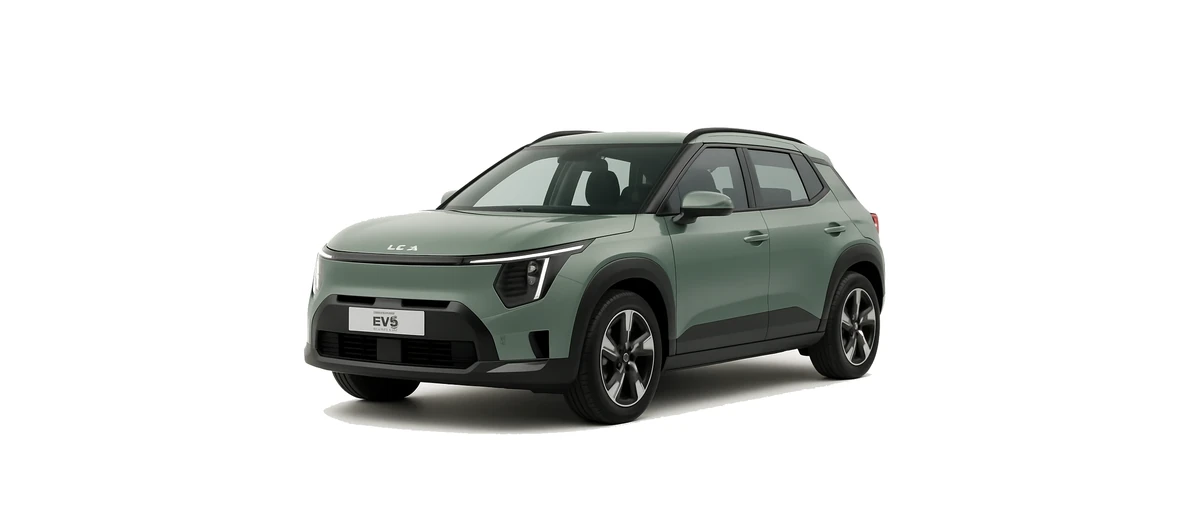
The Kia EV3 is a compact electric SUV designed to bring Kia’s dedicated EV thinking into a smaller, more affordable family car. In the UK, it is a full battery-electric vehicle, available with two battery sizes depending on trim: a 58.3 kWh Standard Range battery and an 81.4 kWh Long Range battery.
From a cable and connector point of view, the Kia EV3 is straightforward: UK and European models use a Type 2 connection for AC charging and CCS Combo 2 for DC rapid charging. The important detail is that the same connector setup does not mean every charging session will feel the same. Charging speed and journey planning will vary depending on whether you have the Standard Range or Long Range battery, whether you charge at home on single-phase or three-phase power, and whether your car has features such as Vehicle-to-Load or the optional heat pump.
Kia EV3 Battery and Charging Specifications
The Kia EV3 uses a 400V electric architecture and is listed as having an 11 kW AC onboard charger. For public rapid charging, it uses the CCS Combo 2 connector found on most UK and European rapid and ultra-rapid charging networks. The charging port is positioned on the right-front side according to EV Database data.
| Specification | Kia EV3 |
|---|---|
| Vehicle type | Battery-electric compact SUV / crossover |
| AC charging connector | Type 2 |
| DC rapid charging connector | CCS Combo 2 |
| Maximum AC charging | Up to 11 kW where the supply supports it |
| Typical UK home charging | Up to 7.4 kW on many single-phase home wallboxes |
| Battery options | 58.3 kWh Standard Range or 81.4 kWh Long Range |
| DC rapid charging | Up to around 100 kW on Standard Range and up to around 135 kW on Long Range according to EV Database |
Battery Options
The UK Kia EV3 line-up includes two battery sizes. The Standard Range version uses a 58.3 kWh gross battery. Kia UK quotes up to 270 miles WLTP combined range for the EV3 Air with 17-inch wheels, while EV Database estimates a usable capacity of around 55 kWh and a real-world range of about 200 miles.
The Long Range version uses an 81.4 kWh gross battery. Kia UK quotes up to 375 miles WLTP combined range for the Air with 17-inch wheels. Other Long Range trims are slightly lower depending on specification, wheels and equipment, including GT-Line and GT-Line S versions. EV Database estimates usable capacity at around 78 kWh and gives a real-world range estimate of about 280 miles.
It is worth treating WLTP range as a comparison figure rather than a guarantee. Motorway speed, weather, cabin heating, wheel size, load, hills and driving style can all affect the distance you achieve between charges.
AC Charging Speed
Both Kia EV3 battery versions are listed with an 11 kW AC onboard charger. This means the car can accept up to 11 kW from a suitable AC supply, normally requiring three-phase power. Most UK homes are single-phase, so a typical installed home wallbox will usually provide up to 7.4 kW rather than the EV3’s full 11 kW AC capability.
For most owners, that still makes home charging practical. A 7.4 kW wallbox should comfortably add a substantial amount of range overnight, especially if you plug in regularly rather than waiting until the battery is nearly empty. If you have access to a suitable three-phase supply at home, work or a destination charger, the EV3 can make use of the higher 11 kW AC charging rate.
For AC charging, you need a Type 2 charging cable when using untethered home, workplace or public AC charge points. Tethered charge points already have a cable attached, but many destination chargers in the UK require you to bring your own Type 2 cable.
DC Rapid Charging Speed
For longer journeys, the Kia EV3 uses CCS Combo 2 rapid chargers. These are tethered DC chargers, so you do not use your own Type 2 cable for rapid charging; the charging cable is attached to the charger.
Kia UK quotes 10-80% DC charging in 29 minutes for the 58.3 kWh Standard Range battery and 31 minutes for the 81.4 kWh Long Range battery when using a suitable 150 kW charger. EV Database lists a maximum DC rate of around 100 kW for the Standard Range and around 135 kW for the Long Range, with similar approximate 10-80% charging times.
Those times should be seen as best-case or favourable-condition figures. Rapid charging speed depends on battery temperature, state of charge, charger output, charger availability, weather and whether the car has prepared the battery for rapid charging. In practice, the fastest part of a rapid charge is usually in the lower-to-middle part of the battery, and charging normally slows as the battery approaches 80%.
Range and Efficiency
The Kia EV3’s headline range depends heavily on the battery and trim. The Standard Range Air is quoted by Kia UK at up to 270 miles WLTP combined. The Long Range Air is quoted at up to 375 miles WLTP combined, with GT-Line and GT-Line S models slightly lower depending on their equipment and wheel specification.
For day-to-day ownership, the Long Range battery gives more flexibility if you regularly do motorway journeys, cover high weekly mileage or want fewer charging stops. The Standard Range battery may still be more than enough for commuting, school runs, local driving and occasional longer trips, particularly if you can charge at home.
Cold weather usually reduces EV range because the battery and cabin need heat, and the air is denser at speed. The EV3’s confirmed battery preconditioning helps with rapid charging preparation, while the optional heat pump may help reduce heating-related energy use on versions where it is fitted.
Charging at Home
Home charging is likely to be the simplest and cheapest way to run a Kia EV3 for many UK drivers, especially when paired with an off-peak electricity tariff. A dedicated 7.4 kW home wallbox is the practical maximum for many single-phase homes and will be suitable for regular overnight charging.
If your wallbox is untethered, the Kia EV3 requires a Type 2 to Type 2 charging cable. A 32 amp Type 2 cable is normally the right choice for a 7.4 kW single-phase wallbox, while an 11 kW three-phase setup requires a compatible three-phase Type 2 cable and a suitable electrical supply.
A 3-pin portable charger is generally best suited as a backup or occasional charging solution, but can be used regularly if a qualified electrician has confirmed the socket and electrical installation are suitable for sustained EV charging. Domestic sockets were not originally designed around long, repeated high-load charging sessions, so electrical safety and installation condition matter.
For battery health and convenience, many owners set a daily charging limit and only charge to 100% before longer journeys. The best routine depends on your mileage, access to charging and Kia’s latest owner manual guidance for your specific model.
Public Charging
Public charging for the Kia EV3 falls into two broad categories: AC destination charging and DC rapid charging. AC destination chargers are common in town centres, hotels, car parks and workplaces. Many are untethered, so you will often need your own Type 2 cable.
DC rapid and ultra-rapid chargers are used for faster stops on longer journeys. The Kia EV3 connects using CCS Combo 2, and the charger provides its own cable. For the shortest stops, it makes sense to choose a charger rated at 150 kW or higher where available, even though the EV3’s peak rate will depend on battery version and charging conditions.
On long trips, charging from roughly 10% to 80% is usually more time-efficient than charging all the way to 100% at a rapid charger. The final 20% can take disproportionately longer because the car reduces charging speed to protect the battery.
Vehicle-Specific Features
The Kia EV3 has confirmed battery preconditioning. This can help prepare the battery for rapid charging, especially in colder weather. Where possible, use the car’s navigation-based or manual preconditioning features before arriving at a rapid charger, particularly before winter motorway journeys.
Vehicle-to-Load is also part of the EV3 story, but it should not be treated as standard across every UK model. Kia UK information confirms V2L availability for GT-Line S, using the relevant adapter and 3-pin socket arrangement. V2L can allow compatible low-power external devices to be powered from the car, but availability and limits depend on the exact vehicle specification and equipment.
UK Kia information does not support claiming Vehicle-to-Grid or Vehicle-to-Home capability for the EV3. Kia’s UK guidance indicates that current UK Kia EVs support Vehicle-to-Load rather than V2G or V2H.
A heat pump is listed as optional in the UK EV3 range rather than universal. If fitted, it may help cabin heating efficiency in colder conditions, but drivers should check the exact specification of the car they are ordering or buying.
Charging Tips
- Choose the right cable: for AC charging, the Kia EV3 uses a Type 2 cable. Rapid charging uses tethered CCS chargers.
- Know your supply: the EV3 can accept up to 11 kW AC, but most UK home charging will be limited to 7.4 kW on single-phase power.
- Use rapid chargers efficiently: on long journeys, aim for 10-80% rapid charging stops rather than waiting for 100% unless you really need the extra range.
- Precondition in cold weather: use the EV3’s battery preconditioning before rapid charging where possible to help improve charging performance.
- Check the battery version: Standard Range and Long Range models have different battery sizes, range expectations and DC charging characteristics.
- Keep a Type 2 cable in the car: many useful public AC charge points are untethered, especially at destinations where the car may be parked for several hours.
Frequently Asked Questions
What charging cable does the Kia EV3 use?
The Kia EV3 uses a Type 2 cable for AC charging at home, work and many public destination chargers. For DC rapid charging, it uses the CCS Combo 2 connector, with the cable attached to the rapid charger.
Can the Kia EV3 charge at 22 kW AC?
No. The EV3 is listed with an 11 kW AC onboard charger, so it cannot make use of 22 kW AC charging at the full rate. On many UK home installations, the practical charging rate will be up to 7.4 kW because most homes are single-phase.
How long does the Kia EV3 take to rapid charge?
Kia UK quotes 10-80% DC charging in 29 minutes for the 58.3 kWh Standard Range battery and 31 minutes for the 81.4 kWh Long Range battery on a suitable 150 kW charger. Real-world times can vary with temperature, battery state of charge and charger performance.
Does every Kia EV3 have Vehicle-to-Load?
No. UK information confirms V2L for the GT-Line S, using the relevant equipment. It should not be assumed to be standard on every EV3 trim.
Is the Kia EV3 a plug-in hybrid?
No. The Kia EV3 is a full battery-electric vehicle. It does not have a petrol engine and is not a plug-in hybrid, self-charging hybrid or range-extender.
What This Means for Drivers
The Kia EV3 is simple in terms of connector choice but more nuanced in terms of charging expectations. Every UK EV3 uses Type 2 for AC charging and CCS Combo 2 for rapid charging, and both battery versions are listed with up to 11 kW AC capability. For many UK homes, however, a 7.4 kW single-phase wallbox will be the realistic everyday charging speed.
The Standard Range model should suit many lower-mileage drivers who can charge at home and only occasionally need rapid charging. The Long Range model gives more flexibility for motorway use and longer gaps between charging stops. In both cases, the best ownership experience comes from combining a suitable Type 2 cable, regular home or destination charging, and sensible use of rapid charging on longer journeys.
Looking for a Charging Cable for Kia EV3?
We offer Kia EV3 charging cables for home, workplace and public AC charging, including Type 2 options suitable for the EV3’s UK charging connection.
Please note that this information is intended as a guide. Charging specifications may change due to model and year of manufacture. For precise information, always refer to your vehicle user manual.

