
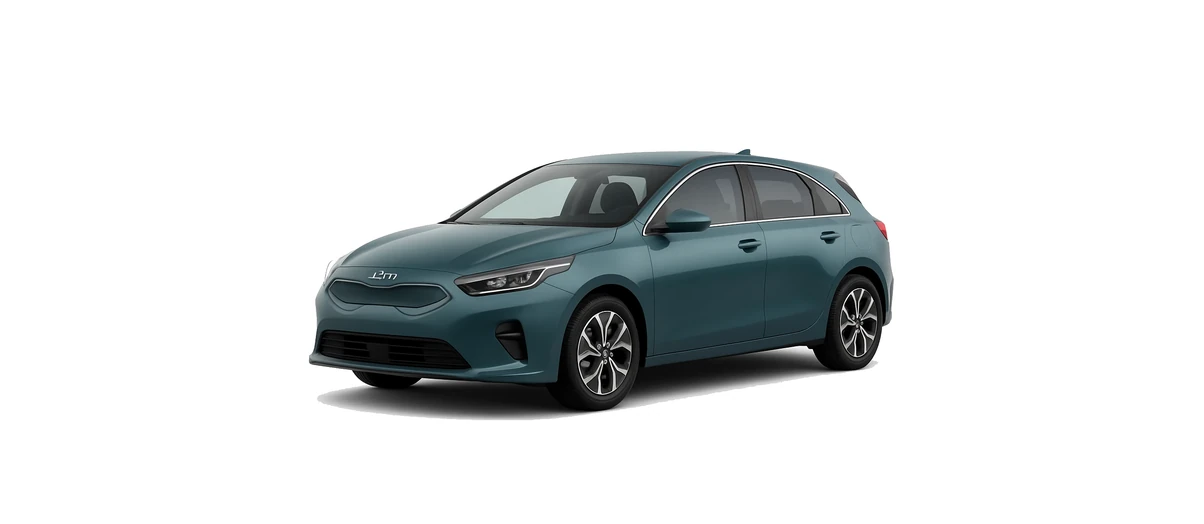
The Kia Ceed name can be confusing when it comes to charging, because most Kia Ceed models sold in the UK do not plug in at all. The chargeable UK-market model was the Kia Ceed Sportswagon Plug-in Hybrid, an estate-bodied PHEV sold from 2020 and removed from the UK line-up in 2021. Standard Ceed hatchbacks, petrol or diesel Sportswagons, mild-hybrid versions and ProCeed models do not have an external charging port and do not use EV charging cables.
This guide is therefore written specifically for the Kia Ceed Sportswagon Plug-in Hybrid 1.6 GDi DCT. It covers how to identify whether your car is the plug-in model, what charging cable it uses, how quickly it charges at home and on public AC charge points, and why DC rapid chargers are not relevant for this vehicle.
Kia Ceed Battery and Charging Specifications
The UK plug-in Kia Ceed was a plug-in hybrid rather than a pure electric car. It combined a 1.6-litre GDi petrol engine, an electric motor, a dual-clutch automatic gearbox and an 8.9 kWh lithium-polymer battery. For short journeys, it can drive using electric power when the battery has charge available, while longer journeys are supported by the petrol engine.
| Model covered | Kia Ceed Sportswagon Plug-in Hybrid 1.6 GDi DCT |
|---|---|
| UK body style with plug | Sportswagon estate only |
| Battery capacity | 8.9 kWh gross lithium-polymer battery |
| Usable battery estimate | Around 7.1 kWh, based on EV database-style sources rather than an official Kia UK figure |
| Charging connector | Type 2 AC |
| Maximum AC charging rate | Up to approximately 3.3 kW single-phase AC |
| DC rapid charging | Not supported / not applicable |
| Typical full AC charge time | Approximately 2 hours 15 minutes from a suitable wallbox or public AC post |
The key point for cable selection is that the Ceed Sportswagon PHEV uses a Type 2 AC charging connection. A Type 2 cable is the correct cable type for untethered UK home wallboxes and most UK/EU public AC charging posts.
Battery Options
Unlike many newer electric cars, the Kia Ceed Sportswagon Plug-in Hybrid was not offered in the UK with a choice of large battery packs. The relevant UK plug-in model used an 8.9 kWh battery. Some independent data sources estimate usable capacity at around 7.1 kWh, but this should be treated as an estimate rather than an official Kia UK published usable-capacity figure.
Because the battery is small compared with a battery-electric vehicle, the Ceed PHEV is best understood as a car for frequent short electric trips with petrol support for longer driving. Regular charging is what allows a plug-in hybrid to deliver its best efficiency. If the battery is left empty, it behaves much more like a conventional hybrid petrol estate.
AC Charging Speed
The Kia Ceed Sportswagon PHEV charges on AC at up to around 3.3 kW. Kia UK’s public charging information lists the Ceed SW PHEV at 3.3 kW with an approximate full charge time of 2 hours 15 minutes. That means the car does not make full use of a 7 kW home wallbox, because its onboard charger is the limiting factor.
This is normal for many plug-in hybrids of this era. The battery is relatively small, so a 3.3 kW charging rate is still quick enough to replenish it in a few hours. For example, charging after work or during a long shopping stop can be enough to restore a useful amount of electric range.
For cable choice, a 16A single-phase Type 2 cable is technically sufficient for the Ceed’s charging capability. A 32A Type 2 cable is also compatible and may be more future-proof if you expect to change to a faster-charging plug-in hybrid or electric car later, but it will not make the Ceed Sportswagon PHEV charge faster than its onboard limit.
DC Rapid Charging Speed
The Kia Ceed Sportswagon Plug-in Hybrid does not have confirmed CCS/DC rapid charging capability. Reliable UK charging information lists DC charging for the Ceed SW PHEV as not applicable. In practical terms, this means you should not plan to use motorway rapid chargers in the same way a full battery-electric vehicle would.
Public charging for the Ceed PHEV is AC Type 2 charging only. If you arrive at a rapid charging hub with large CCS plugs attached to the charger, those connectors are not for this car. Some rapid charging sites also have AC Type 2 sockets or AC posts nearby, but availability varies by location.
Range and Efficiency
UK review sources commonly quote a 29-mile WLTP electric range for the 2020-2021 Kia Ceed Sportswagon Plug-in Hybrid. In real-world use, a figure of around 22 miles is a reasonable expectation, although actual range varies with temperature, speed, driving style, terrain, use of heating and how heavily the car is loaded.
Some European and launch material used higher electric-only range figures in different test or market contexts, so it is sensible to treat range claims with context. For UK ownership, the Ceed PHEV should be viewed as a short-range electric commuter with a petrol engine for flexibility, rather than a long-range electric car.
The best efficiency comes when the car is charged regularly and used for shorter journeys where its electric range can cover most or all of the trip. If your daily driving is often under 20 miles and you can charge at home, the plug-in hybrid system can be used very effectively.
Charging at Home
Home charging is the most convenient way to run the Kia Ceed Sportswagon PHEV efficiently. A dedicated home wallbox gives a safer and more practical charging setup than relying on a domestic socket, and it will allow the car to charge at its maximum AC rate where the installation supports it.
From a suitable wallbox, expect a full charge in roughly 2 hours 15 minutes. Because the Ceed PHEV’s onboard charger is limited to around 3.3 kW, a 7 kW wallbox will not shorten the charge time beyond the vehicle’s limit. However, a 7 kW wallbox is still a sensible home charging choice because it is widely supported and useful for future vehicles.
A 3-pin domestic charger is generally best suited as a backup or occasional charging solution, but can be used regularly if a qualified electrician has confirmed the socket and electrical installation are suitable for sustained EV charging. If you use a 3-pin lead, charging will typically take longer than from a wallbox and the socket should never be overloaded, damaged or used with unsuitable extension leads.
If you have an untethered wallbox, you will need your own Type 2 cable. If you have a tethered Type 2 wallbox, the cable is already attached to the unit, so you generally do not need a separate home cable unless you also want one for public AC charging.
Public Charging
For public charging, the Kia Ceed Sportswagon PHEV uses Type 2 AC charging posts. Many town-centre, supermarket, workplace, hotel and destination chargers use untethered Type 2 sockets, so you will usually need to carry a Type 2 charging cable in the boot.
Because the Ceed PHEV’s battery is small, public AC charging can be useful during longer stops. A couple of hours parked at a suitable AC post may be enough for a full or near-full battery. This can help reduce petrol use on the next stage of your journey, particularly in urban or suburban driving.
However, it is worth being realistic about public charging economics. On some public networks, the price per kWh may be high compared with home electricity. For a plug-in hybrid with a small battery, public charging makes most sense when it is convenient, fairly priced, or available at a destination where you are already parked.
Vehicle-Specific Features
The most important vehicle-specific feature is identification. A Kia Ceed badge alone does not mean the car can be charged. The UK plug-in version was the Ceed Sportswagon PHEV, so you should look for the estate body style, PHEV badging where present, hybrid information in the instrument display and, most importantly, a physical Type 2 charging flap.
If you are buying used, check the exact model description carefully. Many Ceed hatchbacks, Sportswagons and ProCeeds on the used market are petrol, diesel or mild-hybrid cars. These do not have an external charging port and cannot use a Type 2 cable.
The Ceed Sportswagon PHEV’s charging setup is straightforward: Type 2 AC only, up to around 3.3 kW, with no DC rapid charging. That simplicity makes cable selection easier, but it also means there is no benefit in choosing a cable or charger in the hope of unlocking faster charging on this specific car.
Charging Tips
- Charge little and often: Plug-in hybrids work best when the battery is topped up regularly, especially before short local trips.
- Use the right cable: Choose a Type 2 cable for public AC posts and untethered home wallboxes.
- Do not chase rapid chargers: The Ceed Sportswagon PHEV does not use CCS/DC rapid charging.
- Consider 16A vs 32A carefully: A 16A Type 2 cable is enough for this car’s 3.3 kW charging, while a 32A cable may be more useful for a future EV.
- Check before buying used: Confirm the car is the Sportswagon Plug-in Hybrid and has a Type 2 charging port.
- Plan charging around parking time: A full charge takes a little over two hours from a suitable AC source, so destination charging is often more useful than brief stops.
Frequently Asked Questions
Is the Kia Ceed an electric car?
No. The chargeable UK Kia Ceed was a plug-in hybrid estate, the Ceed Sportswagon PHEV. It is not a pure electric vehicle. Most Kia Ceed models in the UK are not plug-in vehicles at all.
Which Kia Ceed models need a charging cable?
The relevant UK model is the Kia Ceed Sportswagon Plug-in Hybrid. Standard Ceed hatchbacks, non-PHEV Sportswagons and ProCeed models do not need charging cables because they do not have an external charging socket.
What charging cable does the Kia Ceed Sportswagon PHEV use?
It uses a Type 2 charging cable for AC charging. This is the cable type used with most untethered UK home wallboxes and public AC charging posts.
Will a 7 kW or 22 kW cable charge the Kia Ceed faster?
No. A higher-rated cable can be compatible, but the car’s onboard AC charger is limited to around 3.3 kW. A 32A cable may be useful for future-proofing, but it will not increase the Ceed PHEV’s charging speed.
Can the Kia Ceed Sportswagon PHEV use rapid chargers?
It does not support confirmed CCS/DC rapid charging. Use Type 2 AC charging posts instead.
How long does the Kia Ceed PHEV take to charge?
From a suitable wallbox or public AC post, a full charge is approximately 2 hours 15 minutes. A 3-pin domestic lead will typically take longer.
What This Means for Drivers
The Kia Ceed Sportswagon Plug-in Hybrid is a practical used plug-in hybrid estate, but it needs to be understood on its own terms. It has a small battery, a modest 3.3 kW AC charging rate and no DC rapid charging. That makes it well suited to regular home charging and short electric journeys rather than long-distance electric-only travel.
For cable selection, the answer is simple once you have confirmed the vehicle is genuinely the plug-in hybrid: you need a Type 2 AC charging cable. A 16A cable matches the car’s charging capability, while a 32A cable is compatible and may be a better choice if you want a cable that could also serve a future vehicle.
Looking for a Charging Cable for Kia Ceed?
If you have confirmed that your vehicle is the Kia Ceed Sportswagon Plug-in Hybrid, We can help you choose a suitable Type 2 cable for home wallboxes and public AC charging posts.
Please note that this information is intended as a guide. Charging specifications may change due to model and year of manufacture. For precise information, always refer to your vehicle user manual.

