
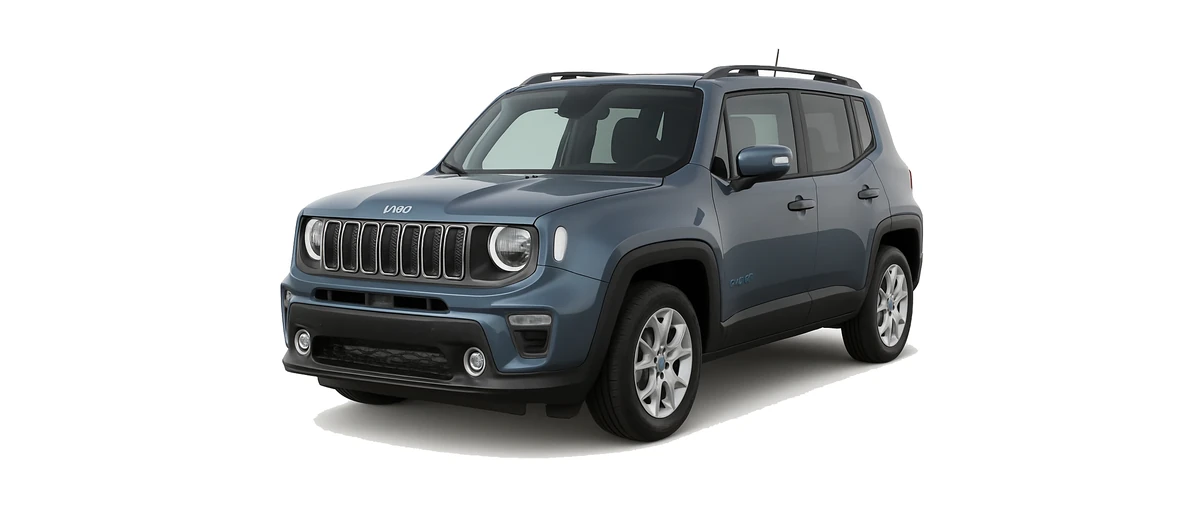
The Jeep Renegade 4Xe is a plug-in hybrid compact SUV, not a pure electric vehicle. That distinction matters when choosing charging equipment. Rather than relying on DC rapid charging like many battery electric cars, the Renegade 4Xe is designed around regular AC charging through a Type 2 socket, with a relatively small plug-in hybrid battery intended for short electric journeys, commuting and urban driving.
UK specifications vary by model year and trim. Earlier launch material referred to 190 hp and 240 hp versions with higher quoted electric range figures, while later UK price-list material for North Star/Summit-era cars lists the 1.3 GSE T4 PHEV 240 hp AT eAWD with an 11.4 kWh battery, a 7.4 kW onboard charger and 22 miles of combined WLTP electric range. If you are buying used, it is worth checking the exact registration year, trim and supplied cable pack before ordering accessories.
View Jeep Renegade 4Xe Charging Cables
Jeep Renegade 4Xe Battery and Charging Specifications
The Renegade 4Xe combines a petrol engine with an electric rear motor. In simple terms, the petrol engine drives the front wheels while the electric motor drives the rear axle, giving the car its 4xe eAWD layout. It can be driven in electric-only operation for shorter trips when the battery has charge, while the petrol engine provides longer-distance flexibility.
For charging, the key points for UK drivers are:
- Vehicle type: plug-in hybrid electric vehicle (PHEV)
- Charging port: Type 2 AC socket
- Battery capacity: 11.4 kWh stated in Jeep UK and Stellantis material
- Onboard AC charger: around 7.2–7.4 kW depending on the model-year source
- Later UK WLTP electric range: 22 miles combined, with 35 miles city EV range stated in later price-list material
- DC rapid charging: no confirmed UK/EU CCS or DC rapid-charging capability found
Because the car’s charging is centred on AC rather than DC rapid charging, cable choice is more important than finding high-power motorway chargers.
Battery Options
The UK-market Renegade 4Xe data found points consistently to an 11.4 kWh lithium-ion battery pack, although usable capacity is not stated in the referenced UK material. The quoted electric range and variant names differ across model years, so it is better to treat the 11.4 kWh pack as the supported headline figure while checking range figures against the exact vehicle.
| Version / context | Battery capacity | Notes |
|---|---|---|
| Later UK 1.3 GSE T4 PHEV 240 hp AT eAWD specification | 11.4 kWh gross | Jeep UK price-list material states an 11.4 kWh, 401 V lithium-ion nickel-manganese-cobalt battery pack. Usable capacity is not stated. |
| Earlier UK 190 hp / 240 hp 4xe launch variants | 11.4 kWh gross | Stellantis/Jeep launch material also refers to an 11.4 kWh battery pack, with different trim and range context. |
As with many plug-in hybrids, the battery is relatively small compared with a full battery electric SUV. That is not a drawback if the car is used as intended: plugged in regularly and used for short local journeys on electric power wherever possible.
AC Charging Speed
The Jeep Renegade 4Xe uses AC charging through a Type 2 socket. Later UK price-list material lists a 7.4 kW onboard charger, while some Jeep FAQ and older material describes charging at up to around 7.2 kW. In practical UK ownership terms, that means the car is broadly suited to a single-phase 7 kW home charge point or a 7.4 kW public AC post.
Jeep UK’s charging information gives an approximate public/Mode 3 charging time of about 1 hour 40 minutes at 7.4 kW. Older references may describe a time of around 1.5 hours, so it is sensible to think of a full AC charge as taking roughly one and a half to two hours, depending on conditions, starting charge level and the exact model year.
For cable selection, the practical choice is a Type 2 to Type 2 Mode 3 cable rated at least 32 A single-phase / 7.4 kW. A 22 kW three-phase Type 2 cable may be physically compatible with many public AC posts, but it will not make the Renegade 4Xe charge at 22 kW because the car is limited by its onboard AC charger.
DC Rapid Charging Speed
No reliable UK/EU source was found confirming CCS or DC rapid-charging capability for the Jeep Renegade 4Xe. Owners should therefore not plan journeys around motorway DC rapid charging in the way they might with a battery electric vehicle.
This is normal for many plug-in hybrids. The Renegade 4Xe has a small battery and is designed to be topped up using AC charging at home, at work, on a driveway, or at destination chargers. Using the petrol engine for longer journeys is part of the PHEV design, while frequent AC top-ups help maximise electric running for shorter trips.
Range and Efficiency
Later UK price-list material lists 22 miles of combined WLTP electric range and 35 miles of city EV range for the 1.3 GSE T4 PHEV 240 hp AT eAWD. Earlier UK launch material listed higher electric range figures, including up to 26 miles for some versions, so it is important not to assume that one WLTP number applies to every Renegade 4Xe.
Real-world electric range will depend on temperature, route, speed, driving style, use of heating or air conditioning, tyre condition and how much of the route is urban rather than high-speed. Plug-in hybrids tend to deliver their best electric-only results on shorter, lower-speed journeys where regenerative braking and stop-start urban driving can help.
For many owners, the key efficiency question is not “how far can it go on one charge?” but “how often can I leave with a full battery?” If you can charge at home or work, the Renegade 4Xe can cover a useful proportion of daily mileage electrically. If it is rarely plugged in, it will behave more like a conventional petrol hybrid and the benefit of the plug-in battery will be reduced.
Charging at Home
Home charging is likely to be the most convenient way to run a Jeep Renegade 4Xe efficiently. A dedicated 7 kW home charge point is well matched to the car’s onboard AC charging capability, and because the battery is small, a full top-up can usually be completed far more quickly than with a full battery electric vehicle.
A 3-pin charger is generally best suited as a backup or occasional charging solution, but can be used regularly if a qualified electrician has confirmed the socket and electrical installation are suitable for sustained EV charging. Standard domestic sockets were not all installed with long, repeated EV charging sessions in mind, so professional advice is important if you intend to rely on one frequently.
When buying a used Renegade 4Xe, check what cables are included with the vehicle. Jeep UK material indicates that Mode 2 domestic charging cables and Mode 3 public charging cables vary by trim and model year. Some cars may have both, some may have one, and some used examples may be missing original equipment entirely.
Public Charging
For public charging, the most useful charging locations for the Renegade 4Xe are AC destination chargers: supermarkets, workplaces, hotels, leisure centres, car parks and on-street residential charging points. Many of these require the driver to bring their own Type 2 cable, which is why a suitable Mode 3 cable is an important accessory for this model.
On a 7 kW or 7.4 kW AC post, the Renegade 4Xe should be close to its supported charging rate. On a higher-rated 11 kW or 22 kW AC post, the car will still be limited by its own onboard charger, so the session will not be dramatically faster. This is not a fault; it is simply how AC charging works.
For longer trips, public AC charging can still be useful if you are parked for long enough at your destination. However, it is usually less practical to stop specifically to recharge a PHEV on a long motorway journey. In that situation, the petrol engine provides the range extension, while AC charging is best used when the car would be parked anyway.
Vehicle-Specific Features
The Renegade 4Xe includes several features that help manage plug-in hybrid driving. Jeep describes Electric, Hybrid and E-Save drive modes, allowing the driver to prioritise electric driving, let the car manage the petrol/electric balance, or preserve battery charge for later use where appropriate.
Jeep also references regenerative braking and e-Coasting features. These can help recover some energy during deceleration, although they should not be confused with plugging in: to get the full benefit of the 4Xe system, regular external charging is still essential.
Cabin pre-conditioning via Uconnect/My Remote is referenced by Jeep, which may allow owners to prepare the cabin before setting off, depending on model year and connected services. This should be understood as cabin pre-conditioning rather than battery preconditioning.
Charging Tips
- Choose the right cable: a Type 2 to Type 2 Mode 3 cable rated at least 32 A single-phase / 7.4 kW is the practical match for UK home and public AC charging.
- Do not expect 22 kW charging: a 22 kW cable or post will not override the car’s onboard AC charger limit.
- Plug in little and often: with a small PHEV battery, frequent short top-ups are more useful than waiting until the battery is empty.
- Check used-car cables: confirm whether the car includes a domestic Mode 2 lead, a public Mode 3 Type 2 cable, or neither.
- Use public AC when parked: destination charging works well for a PHEV if the car will be parked for an hour or more.
- Avoid planning around DC rapid chargers: no confirmed UK/EU DC rapid-charging capability was found for this model.
Frequently Asked Questions
Is the Jeep Renegade 4Xe fully electric?
No. The Jeep Renegade 4Xe is a plug-in hybrid. It combines a petrol engine with an electric motor and can be charged from an external power source for short electric-only journeys.
What charging cable does the Jeep Renegade 4Xe use?
For UK public AC charging, the practical cable is a Type 2 to Type 2 Mode 3 cable. A 32 A single-phase cable rated for 7.4 kW is well matched to the car’s onboard AC charger.
Can the Jeep Renegade 4Xe use rapid chargers?
No confirmed UK/EU CCS or DC rapid-charging capability was found. The Renegade 4Xe should be treated as an AC-charging plug-in hybrid using its Type 2 socket.
How long does the Jeep Renegade 4Xe take to charge?
Jeep UK charging information gives an approximate time of about 1 hour 40 minutes on a 7.4 kW AC public/Mode 3 charger. Older references may quote around 1.5 hours, so actual time should be treated as approximate.
Will a 22 kW Type 2 cable charge the Renegade 4Xe faster?
No. A 22 kW Type 2 cable can be physically compatible with many AC posts, but the Renegade 4Xe will still be limited by its onboard charger, around 7.2–7.4 kW depending on model-year source.
What This Means for Drivers
The Jeep Renegade 4Xe makes the most sense when it is charged regularly. Its plug-in hybrid battery is not intended to replace the petrol engine for long-distance driving, but it can be very useful for commuting, school runs, shopping trips and urban journeys where electric running is most effective.
For UK owners, the most important charging decision is straightforward: make sure you have the correct Type 2 cable for home and public AC charging. A 7.4 kW-compatible 32 A single-phase Type 2 cable suits the car’s charging capability, while higher-powered AC posts or cables will not increase the car’s maximum charging rate. If you are buying a used example, always check the exact model year, trim and cable pack before assuming what is included.
Looking for a Charging Cable for Jeep Renegade 4Xe?
We offer Jeep Renegade 4Xe charging cables suitable for UK Type 2 AC charging, including options for home and public charging use.
View Jeep Renegade 4Xe Charging Cables
Please note that this information is intended as a guide. Charging specifications may change due to model and year of manufacture. For precise information, always refer to your vehicle user manual.

