
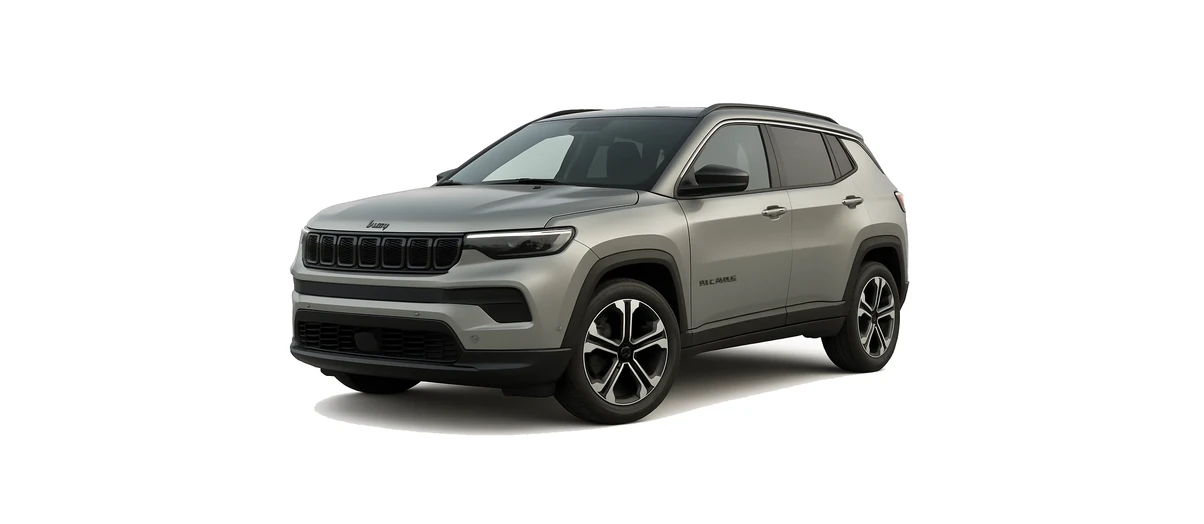
The Jeep Compass Electric is the full-electric version of Jeep’s C-segment SUV, and it is important to separate it from other Compass models. The Compass name is also used for e-Hybrid and plug-in hybrid 4xe variants, but this guide focuses on the UK-market Jeep Compass Full-Electric 74 kWh FWD model.
For UK owners, the key points are straightforward: the Compass Electric uses a Type 2 connection for AC charging and a CCS Combo 2 connection for DC rapid charging. Jeep UK material lists an 11 kW onboard AC charger, while public rapid charging is quoted at up to 160 kW in the latest UK price-list information. Most UK home charging, however, will be limited by the home wallbox and electricity supply rather than the car’s maximum AC capability.
View Jeep Compass Electric Charging Cables
Jeep Compass Electric Battery and Charging Specifications
The current UK Jeep Compass Full-Electric is listed with a 74 kWh battery and front-wheel drive. Official UK pricing material gives output as 213 hp / 157 kW and 345 Nm for the 74 kWh FWD model. Independent specification sources list the battery at around 79.9 kWh nominal and 73.7 kWh usable, although Jeep’s own UK customer material generally markets it simply as a 74 kWh Full-Electric model.
For charging, the car uses the European standard Type 2 socket for AC charging and CCS Combo 2 for DC rapid charging. That means a Type 2 to Type 2 cable is the relevant cable for untethered UK and European AC public charge points, while motorway-style rapid chargers use their own tethered CCS cable.
- Vehicle type: Battery electric vehicle, not the Compass 4xe plug-in hybrid
- Battery: Marketed as 74 kWh
- WLTP range: Up to 285 miles in current UK price-list/press figures
- Estimated real-world range: Around 225 miles, depending on conditions
- AC charging: Up to 11 kW where the supply supports it
- DC rapid charging: Up to 160 kW in the latest UK price-list and independent data
- Charging port: Type 2 AC / CCS Combo 2 DC
Battery Options
For the UK Full-Electric version covered here, the relevant battery is the 74 kWh pack paired with a 213 hp front-wheel-drive powertrain. Jeep UK pricing material lists current Full-Electric trims including Altitude, Summit and First Edition, although exact equipment can vary by trim and price-list section.
Because Jeep sells more than one type of Compass powertrain, buyers should check that they are looking at the Full-Electric model rather than the e-Hybrid or 4xe plug-in hybrid. The plug-in hybrid Compass has different charging needs and should not be confused with the BEV specification discussed in this guide.
AC Charging Speed
The Jeep Compass Electric’s onboard AC charger is listed at 11 kW. In practice, this figure matters most when the car is connected to a suitable three-phase AC supply. Many UK homes have single-phase electricity, and a typical dedicated home wallbox will provide up to 7.4 kW. In that case, the practical charging speed is set by the wallbox and electrical supply, not by the maximum rating of the car or cable.
On a 7.4 kW home wallbox, a large battery such as this will usually need an overnight charging window for a substantial recharge. On an 11 kW three-phase AC point, the same charge would be quicker, but three-phase home supplies are less common in the UK. Some workplaces, commercial premises and public AC posts may offer 11 kW or higher-rated AC charging, but the Compass Electric will only draw up to its own onboard AC limit.
For public AC charging, a Type 2 to Type 2 cable is the correct cable type. A three-phase Type 2 cable is generally the most suitable choice if you want to make use of the car’s 11 kW AC capability where available, while it will still work on lower-powered Type 2 AC posts within the limits of the charger and vehicle.
DC Rapid Charging Speed
For longer journeys, the Jeep Compass Electric uses CCS rapid charging. The latest UK price-list information and independent data list a peak DC rapid charging rate of up to 160 kW. EV Database UK estimates a typical 10–80% rapid charging session at around 36 minutes, while Jeep UK material has also referred to 20–80% charging in under 35 minutes, with some documents quoting 31 minutes at 160 kW.
As with any EV, the maximum rapid charging speed is not held from empty to full. Charging is usually fastest at lower to mid battery percentages and slows as the battery approaches a high state of charge. For this reason, motorway stops are normally most efficient when planned around charging to roughly 80% rather than waiting for 100% unless you specifically need the extra range.
Range and Efficiency
The most defensible current UK range figure for the Compass Electric 74 kWh FWD is up to 285 miles WLTP, based on newer UK price-list and press information. Earlier or live marketing references may show different figures, so it is worth checking the exact UK trim and document date when comparing specifications.
In everyday driving, range will vary with temperature, speed, terrain, tyre choice, payload and driving style. A cautious real-world estimate is around 225 miles, although some drivers may see more in mild weather and mixed driving, while sustained motorway use in winter can reduce the distance between charges.
The Compass Electric is a relatively practical family SUV, so efficiency will naturally depend on how it is used. Pre-heating the cabin while plugged in, maintaining sensible tyre pressures and avoiding unnecessary roof loads can all help preserve range.
Charging at Home
For most UK owners, home charging will be the most convenient and cost-effective way to run the Jeep Compass Electric. A dedicated 7.4 kW wallbox on a suitable single-phase supply is likely to be the common home setup. Even though the vehicle can accept up to 11 kW AC, the home charger and electrical supply determine the actual charging speed.
A tethered wallbox has its own cable attached, so you simply plug the car in. An untethered wallbox requires a separate Type 2 charging cable, which can also be useful for public AC charging. If choosing a cable for flexibility, many owners prefer a Type 2 to Type 2 cable capable of three-phase charging, as this allows the car to use 11 kW AC posts where available.
A 3-pin charger is generally best suited as a backup or occasional charging solution, but can be used regularly if a qualified electrician has confirmed the socket and electrical installation are suitable for sustained EV charging. Standard domestic sockets were not primarily designed for repeated high-load charging over long periods, so professional checks are important before relying on this method.
Public Charging
Public charging falls into two broad categories: AC destination charging and DC rapid charging. AC destination chargers are common in car parks, hotels, workplaces and town centres. Many are untethered, so you will need your own Type 2 to Type 2 cable. The charger may be rated at 7 kW, 11 kW or 22 kW, but the Compass Electric’s onboard charger determines how much AC power the car can actually take.
DC rapid and ultra-rapid chargers are normally found at motorway services, charging hubs and major routes. These chargers have tethered CCS cables, so you do not need to use your own cable for DC charging. Plug in using the CCS connector, follow the payment or app instructions, and the car and charger will manage the charging session.
When planning longer trips, it is sensible to identify several suitable CCS charging options rather than relying on a single site. Availability, charger output, weather and battery state of charge can all affect the total stop time.
Vehicle-Specific Features
The Compass Electric uses Stellantis STLA Medium underpinnings and is listed by independent EV data sources as a 400 V architecture vehicle. UK equipment information includes features such as Selec-Terrain, Level 2 driver assistance features, a 550-litre boot and a quoted 470 mm water fording capability.
Battery preconditioning is listed as standard in independent data for the Compass Electric, which can help prepare the battery for rapid charging in suitable conditions. A heat pump is confirmed in Jeep UK material for at least some Full-Electric versions or trim offers, but it should not be assumed to be standard on every UK trim unless checked against the exact vehicle specification.
Vehicle-to-load, vehicle-to-grid and vehicle-to-home capability are not confirmed for this model in the data used for this guide, and independent sources list these functions as not supported. Owners should therefore not buy the car on the assumption that it can power external devices or a home energy system.
Charging Tips
- Confirm the model: Make sure you have the Full-Electric Compass, not the e-Hybrid or 4xe plug-in hybrid, before using BEV range and charging figures.
- Choose the right AC cable: For UK and European public AC posts, use a Type 2 to Type 2 cable.
- Understand the 11 kW figure: The car can accept up to 11 kW AC, but most UK home wallboxes are 7.4 kW single-phase.
- Use CCS for long journeys: Rapid chargers use a tethered CCS connector and are the best option for motorway stops.
- Stop at around 80% when practical: Charging beyond 80% is usually slower, so shorter, well-planned stops can be more efficient.
- Check trim details: Features such as a heat pump may depend on trim or offer, so verify the exact specification.
Frequently Asked Questions
Is the Jeep Compass Electric the same as the Compass 4xe?
No. The Compass Electric covered here is a battery electric vehicle. The Compass 4xe is a plug-in hybrid and has different charging and range characteristics.
What charging cable does the Jeep Compass Electric use?
For AC charging, it uses a Type 2 connection. For untethered public AC posts, you will need a Type 2 to Type 2 cable. For DC rapid charging, the car uses CCS Combo 2, and the rapid charger provides the cable.
Can the Jeep Compass Electric charge at 22 kW AC?
The UK-market Full-Electric model is listed with an 11 kW onboard AC charger, so it should not be described as a 22 kW AC vehicle unless a specific vehicle specification confirms otherwise.
How long does rapid charging take?
Current data suggests a typical 10–80% CCS rapid charging session is around 36 minutes, with Jeep UK material also referring to 20–80% in under 35 minutes. Actual time depends on charger output, battery temperature and state of charge.
What is the UK range of the Jeep Compass Electric?
The latest UK price-list and press figures used here state up to 285 miles WLTP for the 74 kWh FWD Full-Electric model. Real-world range is likely to vary, with around 225 miles a reasonable broad estimate.
What This Means for Drivers
The Jeep Compass Electric should be straightforward to live with if you match the charging equipment to how the car will actually be used. For daily driving, a home wallbox and a Type 2 cable cover most needs. For longer journeys, CCS rapid charging provides the quickest top-ups, particularly when charging between roughly 10% and 80%.
The main point for UK buyers is to avoid mixing up specifications from the different Compass powertrains. The Full-Electric model is a BEV with Type 2 and CCS charging, an 11 kW AC onboard charger and a current UK WLTP range figure of up to 285 miles. The Compass 4xe plug-in hybrid is a different vehicle from a charging perspective.
Looking for a Charging Cable for Jeep Compass Electric?
If you need a suitable Type 2 charging cable for the Jeep Compass Electric, choose one that matches how you plan to charge, including whether you want three-phase capability for 11 kW AC posts where available.
View Jeep Compass Electric Charging Cables
Please note that this information is intended as a guide. Charging specifications may change due to model and year of manufacture. For precise information, always refer to your vehicle user manual.

