
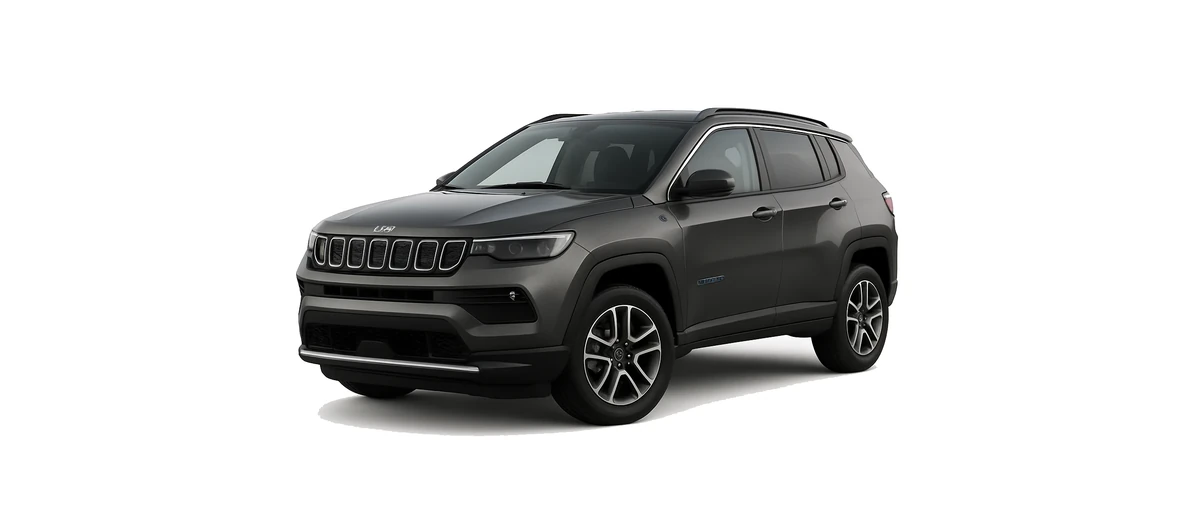
The Jeep Compass 4Xe is a plug-in hybrid SUV, not a fully electric car. That distinction matters when choosing charging cables and planning how to use public charging. Unlike a battery electric vehicle, the Compass 4Xe combines a petrol engine with an electric motor and rear e-axle, giving it electric driving for shorter journeys while retaining petrol power for longer trips.
For UK drivers, the key point is simple: the Compass 4Xe is primarily an AC charging vehicle. It uses a Type 2 charging connection and is best kept topped up at home, at work or on standard public AC chargepoints. It should not be confused with the newer Jeep Compass Electric battery-electric model, which has different charging hardware and specifications.
View Jeep Compass 4Xe Charging Cables
Jeep Compass 4Xe Battery and Charging Specifications
Current UK information for the Jeep Compass 4Xe lists it as a plug-in hybrid 1.3 GSE T4 4Xe 240 hp automatic eAWD model. It has an 11.4 kWh battery and uses a Type 2 charging port for AC charging. Jeep’s UK 2025 figures give a combined WLTP electric range of 22 miles, with a higher city WLTP electric range of 33–34 miles depending on specification.
The Compass 4Xe’s charging behaviour is typical of many plug-in hybrids: it has a relatively small battery compared with a fully electric SUV, so charging times are short, but it is not designed around DC rapid charging. The practical aim is to recharge regularly, especially before local journeys where electric driving can make the biggest difference to fuel use.
- Vehicle type: Plug-in hybrid SUV
- Charging connector: Type 2
- Battery capacity: 11.4 kWh gross
- Maximum AC charging: around 7.4 kW single-phase AC
- Official combined WLTP electric range: 22 miles
- Official city WLTP electric range: 33–34 miles
- DC rapid charging: not supported by the checked UK Compass 4Xe data
Battery Options
The UK 2025 Jeep Compass information checked for this guide lists the Compass 4Xe plug-in hybrid with an 11.4 kWh battery. The usable battery capacity is not clearly published in the UK sources checked, so it is better to refer to the official 11.4 kWh battery capacity rather than assume a separate usable figure.
This battery size is modest compared with a full EV, but it is well suited to the car’s role as a plug-in hybrid. If you can charge at home or at work, the Compass 4Xe can cover many short urban and suburban journeys using electric power, while the petrol engine remains available for longer-distance driving.
AC Charging Speed
The Compass 4Xe charges at around 7.4 kW on single-phase AC. Jeep’s UK 2025 price list refers to a fastest possible charge time of around 1 hour 45 minutes, with public charging averaging around 1 hour 40 minutes thanks to 7.4 kW charging. Older Jeep UK material has quoted up to 7.2 kW and around 1.6 hours, so the small difference is best treated as model-year or rounding variation.
For cable selection, a Type 2 to Type 2 Mode 3 cable rated at 32A single-phase is the sensible match. That rating allows the car to access its maximum AC charging capability when connected to a suitable 7 kW home wallbox or compatible public AC chargepoint.
A three-phase 11 kW or 22 kW Type 2 cable may still work if correctly rated and compatible, but it will not make the Compass 4Xe charge faster than the vehicle’s onboard AC charging limit. In other words, the car decides the maximum charging rate, not just the cable or the chargepoint.
DC Rapid Charging Speed
The Jeep Compass 4Xe should not be treated as a DC rapid-charging vehicle. The checked UK sources support Type 2 AC charging for the Compass 4Xe plug-in hybrid, and do not support claims of CCS compatibility, DC rapid charging or a 10–80% rapid-charge time.
This is one of the most important areas where confusion can occur. The Compass 4Xe PHEV is different from the newer Jeep Compass Electric battery-electric model. Specifications such as a large battery, CCS connector, 11 kW AC charging or DC rapid charging belong to BEV models and should not be applied to the Compass 4Xe plug-in hybrid.
In day-to-day use, this is not a major limitation. The Compass 4Xe has a petrol engine, so it does not depend on motorway rapid chargers in the way a fully electric vehicle does. Its electric battery is intended for shorter electric journeys and regular AC top-ups.
Range and Efficiency
Jeep’s current UK figures list 22 miles of combined WLTP electric range for the Compass 4Xe and 33–34 miles of city WLTP electric range. As with any plug-in hybrid, real-world electric range depends on speed, temperature, route, driving style, use of heating or air conditioning, and how much of the journey is urban driving.
Drivers should see the electric range as a useful daily-use tool rather than a long-distance EV range. If your commute, school run, shopping trip or local errands fall within the electric range, charging regularly can significantly reduce petrol use. If the battery is depleted, the vehicle continues as a hybrid using its petrol engine and hybrid system.
For best efficiency, plug in whenever it is convenient. A plug-in hybrid only delivers its strongest fuel-saving benefit when the battery is charged. Relying on the petrol engine to recharge the battery through driving is generally less efficient than charging from the mains.
Charging at Home
Home charging is the most convenient way to run a Jeep Compass 4Xe efficiently. A dedicated 7 kW home wallbox, used with the correct Type 2 cable where required, can recharge the battery in under two hours in typical conditions. This makes it easy to top up after work, overnight, or between local journeys.
If your wallbox has a tethered Type 2 lead, you may not need a separate cable for home use, although many owners still carry one for public charging. If your wallbox is untethered, you will need a Type 2 to Type 2 cable. For the Compass 4Xe, a 32A single-phase cable is the practical choice.
A 3-pin charger is generally best suited as a backup or occasional charging solution, but can be used regularly if a qualified electrician has confirmed the socket and electrical installation are suitable for sustained EV charging. Standard household sockets were not originally designed for repeated high-load EV charging without assessment, so it is important to take electrical safety seriously.
Public Charging
For public charging, look for standard AC chargepoints with a Type 2 connection. Many UK public AC posts are untethered, meaning you need to bring your own Type 2 to Type 2 cable. This is where having the correct cable in the boot is especially useful.
The Compass 4Xe’s relatively short charging time means a useful top-up can be added while shopping, at the gym, at a workplace charger or during a short town-centre stop. However, it is not a good fit for DC rapid charger planning. Even where a rapid charger site also has AC posts, use the AC side only if the connector and charging arrangements are suitable.
Because the petrol engine remains available, you do not need to plan long journeys around rapid charging stops. Instead, treat public AC charging as an opportunity to increase electric running during the day.
Vehicle-Specific Features
The Compass 4Xe uses Jeep’s plug-in hybrid 4xe layout, with a petrol engine and an electric rear motor/e-axle providing eAWD capability. This arrangement allows electric driving at lower speeds and in suitable conditions, while also supporting hybrid operation when more power or range is needed.
Jeep lists Hybrid, Electric and E-Save driving modes for the Compass 4Xe. Electric mode prioritises electric driving when charge is available. Hybrid mode blends petrol and electric power automatically. E-Save can help preserve battery charge, or in some circumstances add charge while driving, but plugging in remains the more efficient way to recharge the traction battery.
Cabin pre-conditioning is also listed for the vehicle, allowing the cabin to be prepared before a journey. This should not be confused with confirmed battery preconditioning, which is a different feature and is not clearly confirmed in the checked UK Compass 4Xe data.
Charging Tips
- Charge little and often: Plug in whenever practical so local trips can be completed using more electric power.
- Use the right cable: A Type 2 to Type 2, 32A single-phase Mode 3 cable is sufficient for the car’s AC charging capability.
- Do not expect faster charging from a 22 kW cable: A higher-rated three-phase cable will not override the vehicle’s onboard AC charging limit.
- Avoid DC rapid charger assumptions: The Compass 4Xe PHEV is not documented in the checked UK data as a CCS/DC rapid-charging vehicle.
- Pre-plan urban trips: Charging before town driving helps make the most of the official city electric range.
- Keep a cable in the car: Many public AC chargepoints are untethered, so carrying your own Type 2 cable avoids missed charging opportunities.
Frequently Asked Questions
Is the Jeep Compass 4Xe fully electric?
No. The Jeep Compass 4Xe is a plug-in hybrid. It has an electric motor and a rechargeable battery, but it also has a petrol engine. The newer Jeep Compass Electric is a different battery-electric model and should not be confused with the Compass 4Xe PHEV.
What charging cable does the Jeep Compass 4Xe use?
It uses a Type 2 connection for AC charging. For most UK owners, the recommended cable is a Type 2 to Type 2 Mode 3 cable rated at 32A single-phase.
Can the Jeep Compass 4Xe use rapid chargers?
The checked UK Compass 4Xe information supports Type 2 AC charging, not CCS/DC rapid charging. You should not plan to use DC rapid chargers with this plug-in hybrid model.
How long does the Jeep Compass 4Xe take to charge?
On a suitable AC chargepoint, current UK data indicates a fastest charge time of around 1 hour 45 minutes, with public charging quoted at around 1 hour 40 minutes in Jeep’s 2025 UK information. Actual times can vary depending on the charger, temperature and battery state of charge.
Will a 22 kW Type 2 cable charge the Compass 4Xe faster?
No. A correctly rated 22 kW cable may be compatible, but it will not make the car charge faster than its onboard AC charging capability of around 7.4 kW.
What This Means for Drivers
The Jeep Compass 4Xe is at its best when treated as a plug-in hybrid that benefits from frequent AC charging. You do not need to think like a full EV driver planning around rapid charging hubs. Instead, the most useful setup is straightforward: a suitable home or workplace charging routine and a Type 2 cable for untethered public AC posts.
If your daily mileage is often within the official electric range, keeping the battery charged can make the Compass 4Xe feel much more electric in everyday use. For longer journeys, the petrol engine provides flexibility, meaning depleted battery charge does not stop the trip.
Looking for a Charging Cable for Jeep Compass 4Xe?
We offer charging cables suitable for the Jeep Compass 4Xe, including Type 2 options for home wallboxes and public AC chargepoints.
View Jeep Compass 4Xe Charging Cables
Please note that this information is intended as a guide. Charging specifications may change due to model and year of manufacture. For precise information, always refer to your vehicle user manual.

