
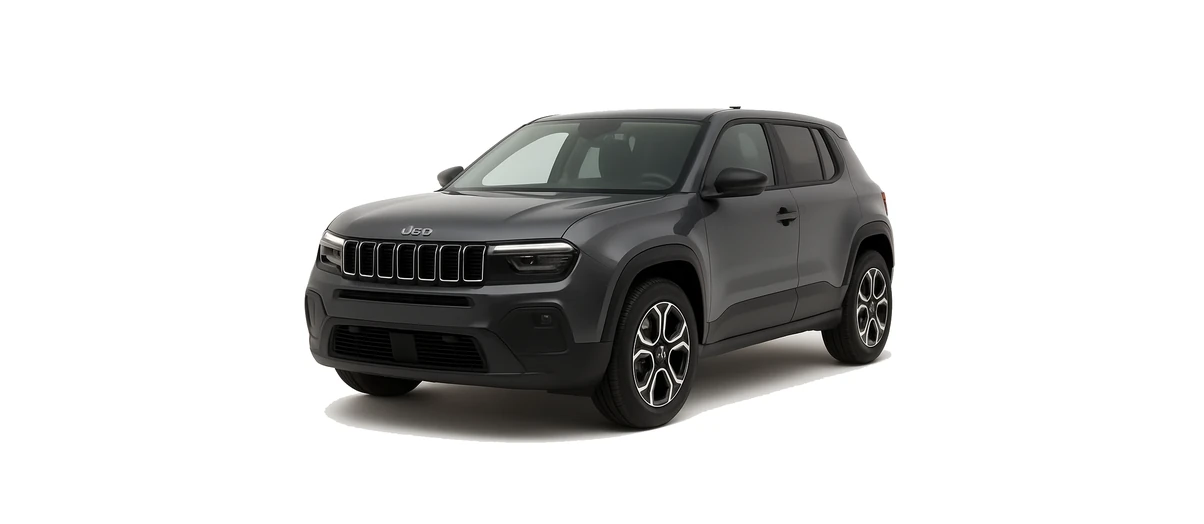
The Jeep Avenger is sold in the UK in petrol, e-Hybrid and Full-Electric forms, but this guide is specifically for the Jeep Avenger Full-Electric. The petrol and e-Hybrid versions are not plug-in vehicles and do not need EV charging cables.
For UK drivers, the most important charging point to understand is the difference between the Avenger’s headline 11 kW AC onboard charger and the 7.4 kW charging that most single-phase home wallboxes provide. The car can make good use of faster three-phase AC charging where available, but for many owners the practical home-charging experience will be an overnight 7.4 kW charge using a Type 2 connection.
View Jeep Avenger Charging Cables
Jeep Avenger Battery and Charging Specifications
The UK-market Jeep Avenger Full-Electric uses a 54 kWh gross battery, with Jeep UK price-list data quoting 51 kWh net. EV Database lists the usable figure at 50.8 kWh, which is effectively the same capacity rounded slightly differently.
The charging inlet uses the European standard arrangement: Type 2 for AC charging and CCS Combo 2 for DC rapid charging. In practical terms, this means you use a Type 2 cable for untethered home and public AC charging, while rapid chargers on motorways and major charging hubs normally have their own tethered CCS cable attached.
| Vehicle | Jeep Avenger Full-Electric |
|---|---|
| Battery | 54 kWh gross / about 51 kWh usable |
| AC charging | Up to 11 kW via Type 2 |
| Typical UK home charging | Up to 7.4 kW on a single-phase wallbox |
| DC rapid charging | Up to 100 kW using CCS |
| Official combined WLTP range | 239-248 miles depending on trim/specification |
Battery Options
Current UK information points to one main battery specification for the Avenger Full-Electric: a 54 kWh gross CATL battery with around 51 kWh usable capacity. The electric motor is rated at 115 kW, or 156 hp, and the model sits on the Stellantis e-CMP platform with a 400 V electrical architecture.
Because the wider Avenger line-up also includes non-plug-in petrol and e-Hybrid versions, it is worth checking the exact model before choosing charging accessories. If it is the Full-Electric version, it uses a Type 2 AC connection and CCS rapid charging. If it is a petrol or e-Hybrid Avenger, charging-cable guidance does not apply.
AC Charging Speed
The Jeep Avenger Full-Electric has an 11 kW onboard AC charger. This is the maximum AC charging rate the car can accept, even if connected to a faster-rated public AC post. For example, a 22 kW untethered AC post will not make the Avenger charge at 22 kW; the car will limit the session to its own onboard capability, and in many UK situations the actual rate will be lower.
Jeep UK quotes a 0-100% AC charging time of around 5 hours 45 minutes at 11 kW. However, reaching 11 kW usually requires a three-phase electrical supply. Most UK homes have single-phase power, where a dedicated home wallbox typically provides up to 7.4 kW. At that rate, Jeep quotes a 0-100% time of around 8 hours 15 minutes, making overnight charging a realistic routine for many owners.
At lower-power AC charging rates, Jeep quotes around 16 hours 10 minutes at 3.7 kW. This may be relevant for some workplace or older charging setups, but it is not the fastest way to refill the battery.
DC Rapid Charging Speed
For longer journeys, the Avenger Full-Electric supports DC rapid charging at up to 100 kW using the CCS part of the charging inlet. Jeep UK quotes 10-80% in around 30 minutes at a suitable rapid charger, with 20-80% quoted at around 27 minutes in UK price-list data.
As with any EV, rapid-charging speed depends on several factors, including battery temperature, state of charge, charger output and site conditions. The fastest part of the session is usually in the lower and middle part of the battery, while charging tends to slow noticeably above 80%. For this reason, long-distance planning is normally more efficient if you stop for shorter top-ups between roughly 10% and 80%, rather than waiting for 100% at every rapid charger.
CCS rapid chargers are normally tethered, so you do not need to carry a separate DC rapid-charging cable. Your own cable is mainly for untethered Type 2 AC charging.
Range and Efficiency
Jeep UK currently quotes a combined WLTP range of 239-248 miles for the Avenger Full-Electric, depending on trim and specification. WLTP is useful for comparing vehicles, but day-to-day range will vary with temperature, road speed, weather, terrain, tyre condition and driving style.
EV Database gives a real-world estimate of around 190 miles, while some other UK charging guides estimate slightly higher in mixed use. As a practical planning figure, many drivers should expect the Avenger to be most efficient around town and on slower A-roads, with range reducing during sustained motorway driving, cold weather or when using more cabin heating.
The Avenger Full-Electric is listed with a standard heat pump, which can help reduce the energy used for cabin heating compared with less efficient systems in some conditions. Jeep UK also refers to remote cabin pre-conditioning for comfort and range preservation, but this should not be confused with confirmed battery preconditioning for rapid charging. Available research lists battery preconditioning for rapid charging as not supported on this model.
Charging at Home
For most UK Avenger Full-Electric owners, a dedicated 7.4 kW home wallbox will be the most convenient charging option. It allows the car to be topped up overnight, makes it easier to use off-peak electricity tariffs where available, and avoids relying solely on public charging.
Although the Avenger can accept up to 11 kW AC, that rate generally requires a three-phase supply. Some homes, farms, businesses and newer developments may have three-phase availability, but it is not the norm for UK domestic properties. If your home is single-phase, expect the car to charge at up to 7.4 kW from a suitable wallbox.
A 3-pin charger is generally best suited as a backup or occasional charging solution, but can be used regularly if a qualified electrician has confirmed the socket and electrical installation are suitable for sustained EV charging. A domestic socket charges much more slowly than a wallbox and should not be treated as a substitute for a properly installed EV charge point without appropriate checks.
If your home wallbox is untethered, you will need a Type 2-to-Type 2 charging cable. A tethered wallbox has the cable attached, so you may still want a separate Type 2 cable for public AC charging.
Public Charging
On public AC chargers, the Avenger Full-Electric uses the Type 2 portion of its inlet. Many destination chargers at supermarkets, hotels, town centres and workplaces are untethered, meaning you plug in using your own Type 2 cable. On these chargers, the Avenger will charge at up to 11 kW if the supply and post support it, though many single-phase AC posts will provide lower rates.
For motorway and en-route charging, use CCS rapid or ultra-rapid chargers. Even if the charger is capable of more than 100 kW, the Avenger’s charging rate is limited by the vehicle. Choosing a 150 kW or 350 kW charger is not harmful, but it will not make the vehicle exceed its supported charging capability.
Zapmap identifies the charging inlet as being on the near-side rear flank. Getting familiar with the inlet location can make public charging easier, particularly at busy rapid-charging hubs where bay layout and cable reach vary.
Vehicle-Specific Features
The Avenger Full-Electric has several charging-related details that are useful for ownership planning. It has an 11 kW AC onboard charger, 100 kW official DC rapid-charging capability and a Type 2 / CCS Combo 2 inlet. A heat pump is listed as standard, which may help with cabin-heating efficiency in cooler weather.
Features not confirmed for the Avenger Full-Electric are just as important to understand. Current research lists vehicle-to-load, vehicle-to-home and vehicle-to-grid capability as not supported. Battery preconditioning for rapid charging is also listed as not available, so it is best not to assume the car will actively prepare the battery for maximum rapid-charging speed before every stop.
Charging Tips
- Use the right cable: choose a Type 2-to-Type 2 cable for untethered home and public AC charging.
- Do not expect 22 kW AC: the car’s onboard AC charger is limited to 11 kW, and many UK home setups will be 7.4 kW.
- Charge overnight at home: a 7.4 kW wallbox should usually refill the battery from low to full within a normal overnight period.
- Rapid charge in the efficient window: on long trips, plan stops around 10-80% or 20-80% rather than waiting for 100%.
- Check charger type before arrival: untethered AC chargers need your own cable; CCS rapid chargers normally have one attached.
- Allow for winter range: cold temperatures and motorway speeds can reduce the distance available from a full charge.
Frequently Asked Questions
Does every Jeep Avenger need a charging cable?
No. This guide applies to the Jeep Avenger Full-Electric only. UK petrol and e-Hybrid versions are not plug-in vehicles and do not use EV charging cables.
What charging cable does the Jeep Avenger Full-Electric use?
For AC charging, it uses a Type 2 connection. For untethered home and public AC charge points, a Type 2-to-Type 2 cable is the usual choice. DC rapid charging uses CCS, and those chargers normally have a tethered cable attached.
Can the Jeep Avenger charge at 22 kW AC?
No. The onboard AC charger is rated at up to 11 kW. If you connect to a 22 kW AC post, the Avenger will not charge at 22 kW.
How long does the Jeep Avenger take to charge at home?
Jeep UK quotes around 8 hours 15 minutes from 0-100% at 7.4 kW, which is the practical maximum for many UK single-phase home wallboxes. At 11 kW on a suitable three-phase supply, the quoted time is around 5 hours 45 minutes.
How fast does the Jeep Avenger rapid charge?
Jeep UK quotes up to 100 kW DC rapid charging, with 10-80% taking around 30 minutes at a suitable charger and under suitable conditions.
What This Means for Drivers
The Jeep Avenger Full-Electric is straightforward to charge in the UK once you separate the car’s maximum capability from the charging speeds you are most likely to see. The 11 kW onboard AC charger is useful where three-phase AC is available, but most home charging will be at up to 7.4 kW. That still suits the car well, giving a practical overnight charging routine for daily use.
For public charging, a Type 2 cable covers untethered AC posts, while CCS rapid chargers handle longer journeys with their own attached cables. The key is to plan charging around the way the car is actually used: home charging for routine mileage, destination charging when parked for longer periods, and rapid charging for motorway or cross-country trips.
Looking for a Charging Cable for Jeep Avenger?
We offer Jeep Avenger Full-Electric charging cables suitable for Type 2 AC charging at home, work and public charging points.
View Jeep Avenger Charging Cables
Please note that this information is intended as a guide. Charging specifications may change due to model and year of manufacture. For precise information, always refer to your vehicle user manual.

