
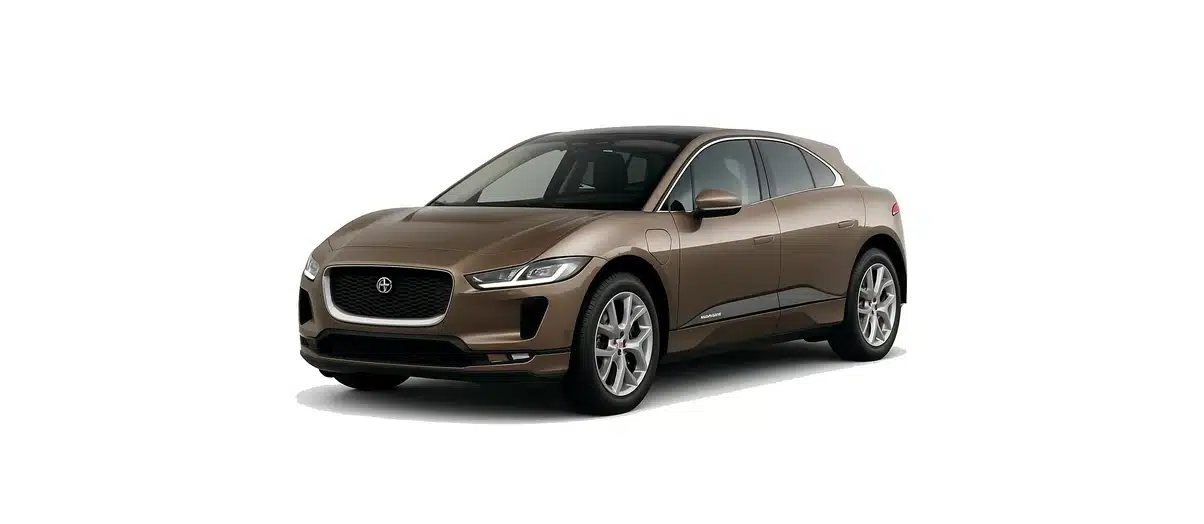
The Jaguar i-Pace is a fully electric SUV / crossover and one of the most recognisable premium EVs on the UK used market. Although UK new sales of the current-generation Jaguar range have ended, the i-Pace remains a popular Approved Used choice, particularly in EV400 dual-motor AWD form.
Charging an i-Pace is straightforward once you understand one important used-car detail: not every i-Pace has the same AC charging capability. Early 2018-2020 cars were generally limited to around 7 kW AC charging, while later 2021 model year and newer cars gained an 11 kW three-phase onboard charger. That difference matters when choosing a Type 2 charging cable and when estimating charging times at home, work or public AC charge points.
This guide explains the Jaguar i-Pace battery, home charging, public charging, CCS rapid charging, cable selection and the practical differences between early and later cars.
View Jaguar i-Pace Charging Cables
Jaguar i-Pace Battery and Charging Specifications
The Jaguar i-Pace EV400 is a battery electric vehicle, not a plug-in hybrid. It uses a 90 kWh gross battery pack, with EV Database listing 84.7 kWh as the usable capacity for the final 2023-2025 EV400 generation. Power comes from a dual-motor all-wheel-drive system rated at 400 PS / 294 kW.
| Vehicle | Jaguar i-Pace EV400 |
|---|---|
| Powertrain | Fully electric dual-motor AWD |
| Battery | 90 kWh gross / approximately 84.7 kWh usable |
| Charging port | Type 2 for AC charging / CCS Combo 2 for DC rapid charging |
| Later AC charging capability | Up to 11 kW three-phase AC on 2021-on cars |
| Early AC charging capability | Around 7 kW AC on many 2018-2020 cars |
| DC rapid charging | Up to around 100-104 kW peak |
| Typical 10-80% DC time | Approximately 45 minutes in EV Database data |
Because the i-Pace is now mainly considered as a used purchase in the UK, it is worth checking the specific model year, VIN, handbook or original specification before buying a cable or relying on a quoted AC charging speed.
Battery Options
The i-Pace EV400 used a 90 kWh headline battery pack throughout its production life. For the final-generation specification, Jaguar and JLR technical material reference the 90 kWh battery, while EV Database lists 84.7 kWh usable capacity.
In day-to-day ownership, usable capacity is the more relevant figure because it reflects the energy available for driving after the vehicle’s buffer has been accounted for. The i-Pace’s large battery is one of its strengths, giving it the range needed for commuting, family use and longer motorway journeys. However, it also means home charging times are longer than they would be for a smaller-battery EV, especially if you are charging from a low state of charge.
AC Charging Speed
AC charging is what you use at most home wallboxes, many workplace chargers and slower public charge points. The Jaguar i-Pace uses a Type 2 connection for AC charging.
For later UK i-Pace models, Jaguar lists an 11 kW three-phase AC onboard charger. On a suitable 11 kW three-phase supply, a full charge is commonly quoted at around 9 hours. However, most UK homes are single-phase, which means even a later 11 kW-capable i-Pace will usually charge at up to 7.4 kW from a typical domestic wallbox. Jaguar’s own public charging information gives approximately 12.75-13.5 hours for a full charge using a typical 7 kW / 7.4 kW AC charger.
Early 2018-2020 i-Pace models are different. These cars were generally fitted with an onboard AC charger limited to around 7 kW, so they will not charge at 11 kW on AC simply because you plug them into a higher-rated public charger or use a three-phase cable.
For cable selection, this means:
- Early 7 kW i-Pace: a Type 2 cable suitable for single-phase 7.4 kW charging is usually sufficient for AC charging.
- Later 11 kW i-Pace: a three-phase Type 2 cable can be useful if you regularly use 11 kW public, workplace or destination chargers.
- Most UK home charging: charging will commonly be limited to 7.4 kW because domestic supplies are usually single-phase.
DC Rapid Charging Speed
For longer journeys, the Jaguar i-Pace uses the CCS Combo 2 connector for DC rapid charging. You do not need to buy or carry a separate DC charging cable, as rapid chargers are tethered with their own CCS cable.
The i-Pace’s peak DC charging rate is around 100-104 kW, depending on source and conditions. EV Database lists a 10-80% rapid charge time of about 45 minutes. This is a useful planning figure for motorway journeys, but actual charging time will vary with battery temperature, state of charge, charger availability, charger power and the condition of the charging site.
As with most EVs, the i-Pace charges fastest when the battery is at a lower state of charge and slows as it approaches higher percentages. For road trips, it is usually more efficient to plan charging stops around the 10-80% window rather than waiting for 100% on a DC rapid charger, because charging above 80% is typically much slower.
Range and Efficiency
Official UK / EU WLTP range for the final i-Pace EV400 varies by configuration. JLR technical data shows a combined WLTP range of about 254-292 miles depending on TEL / TEH configuration, wheels and options. Jaguar’s UK material has also presented a maximum figure of up to 292 miles.
For real-world planning, it is sensible to be more conservative. EV Database estimates around 235 miles of real-world range for the 2023-2025 i-Pace EV400. In everyday use, your result may be higher or lower depending on speed, temperature, road type, tyre choice, wheel size, load and use of heating or air conditioning.
Motorway driving in cold weather is usually the most demanding scenario for range. Urban and mixed driving can be more favourable because EVs are efficient at lower speeds and can recover energy through regenerative braking. The i-Pace is fitted with a heat pump according to EV Database, and Jaguar describes the heat pump as part of the vehicle’s thermal-management system, which can help reduce the energy required for cabin heating in suitable conditions.
Charging at Home
For most UK i-Pace owners, home charging is the most convenient and cost-effective way to run the car. A dedicated 7.4 kW home wallbox on a single-phase supply is the typical setup. With the i-Pace’s large battery, a full charge from very low to 100% can take roughly half a day on a 7 kW / 7.4 kW charger, but most drivers will not be charging from empty every night.
A better way to think about home charging is to top up regularly. If you plug in overnight after normal daily driving, the car can often return to your preferred charge level by the morning. Many owners set charging schedules to make use of cheaper off-peak electricity tariffs where available.
A 3-pin plug-in charger is generally best suited as a backup or occasional charging solution, but can be used regularly if a qualified electrician has confirmed the socket and electrical installation are suitable for sustained EV charging. Because the i-Pace has a large battery, charging from a standard domestic socket is very slow and is unlikely to be the best routine solution for most owners.
If you have a later 11 kW i-Pace and access to a three-phase home, workplace or commercial supply, you may be able to charge faster on AC than a standard 7.4 kW wallbox allows. If you have a typical single-phase UK home supply, the onboard 11 kW capability will not by itself make the car charge at 11 kW.
Public Charging
Public charging for the Jaguar i-Pace falls into two main categories: AC destination charging and DC rapid charging.
AC destination chargers are common in car parks, hotels, supermarkets, workplaces and town centres. These often use untethered Type 2 sockets, so you need your own Type 2 cable. If your i-Pace is an early 7 kW car, it will charge at around its onboard limit even if the post is rated higher. If it is a later 11 kW car and the charger supports three-phase output, a three-phase Type 2 cable allows the vehicle to make use of that higher AC rate.
DC rapid chargers are used for longer journeys and motorway stops. These are tethered, so you simply use the CCS cable attached to the charger. The i-Pace will draw only the power it can accept, so using a charger rated above the car’s peak does not mean the vehicle will charge at that higher rate.
Vehicle-Specific Features
The i-Pace has several charging-related characteristics worth knowing before choosing accessories or planning journeys.
- Charging port: Type 2 for AC charging and CCS Combo 2 for DC rapid charging.
- Used-car AC variation: early cars are typically around 7 kW AC, while later cars support up to 11 kW three-phase AC.
- Heat pump: listed as standard by EV Database and described by Jaguar as part of the i-Pace thermal-management system.
- No V2L, V2H or V2G: EV Database lists vehicle-to-load, vehicle-to-home and vehicle-to-grid functionality as not supported.
- Large battery: the 90 kWh gross pack provides useful range but means AC charging from low to full takes time.
Charging Tips
- Check your exact car: if buying used, confirm whether your i-Pace is an early 7 kW AC model or a later 11 kW AC model.
- Choose the cable around your charging use: a single-phase Type 2 cable is usually enough for 7.4 kW home charging, while later 11 kW cars can benefit from a three-phase Type 2 cable at suitable public or workplace chargers.
- Use CCS for road trips: rapid charging is via tethered CCS chargers, so no separate DC cable is required.
- Avoid relying on 100% rapid charging: on longer journeys, plan around 10-80% charging stops where practical.
- Be realistic about range: the maximum WLTP figure is not the same as normal real-world range in all conditions.
- Use scheduled charging: if your tariff supports it, overnight charging can reduce running costs.
Frequently Asked Questions
What charging cable does the Jaguar i-Pace use?
The Jaguar i-Pace uses a Type 2 cable for AC charging. For DC rapid charging, it uses the CCS Combo 2 connection, and the rapid charger provides the cable.
Does every Jaguar i-Pace charge at 11 kW AC?
No. Later 2021-on i-Pace models gained an 11 kW three-phase AC onboard charger, but many 2018-2020 cars were limited to around 7 kW AC. Check the specific car before choosing a cable or estimating charging times.
How long does the Jaguar i-Pace take to charge at home?
On a typical 7 kW / 7.4 kW UK home wallbox, Jaguar data indicates a full charge in roughly 12.75-13.5 hours. In normal use, many drivers top up overnight rather than charging from empty to full.
Can the Jaguar i-Pace use rapid chargers?
Yes. The i-Pace uses CCS rapid charging with a peak rate of around 100-104 kW. A 10-80% charge is commonly estimated at about 45 minutes, depending on conditions and charger performance.
Is the Jaguar i-Pace a plug-in hybrid?
No. The i-Pace is a fully electric battery electric vehicle. It does not have a petrol or diesel engine.
What This Means for Drivers
The Jaguar i-Pace is an appealing used electric SUV, but charging expectations should be set around the specific model year. If you own or are buying an early 2018-2020 car, assume around 7 kW AC charging unless the vehicle’s documentation confirms otherwise. If you own a later 2021-on car, it can use up to 11 kW AC on a suitable three-phase supply, although most UK home charging will still be 7.4 kW.
For most owners, the essential cable is a Type 2 cable suited to public AC and home charging needs. Rapid charging is handled by tethered CCS chargers, so journey planning is more about choosing reliable charging stops and keeping expectations realistic than carrying extra hardware. Aim for efficient 10-80% rapid charging stops, use home charging whenever possible, and confirm your car’s AC capability before investing in a higher-rated cable.
Looking for a Charging Cable for Jaguar i-Pace?
We offer charging cables suitable for the Jaguar i-Pace, including Type 2 options for home and public AC charging. Choose your cable based on whether your car is an early 7 kW AC model or a later 11 kW three-phase AC model, and on the chargers you use most often.
View Jaguar i-Pace Charging Cables
Please note that this information is intended as a guide. Charging specifications may change due to model and year of manufacture. For precise information, always refer to your vehicle user manual.

