
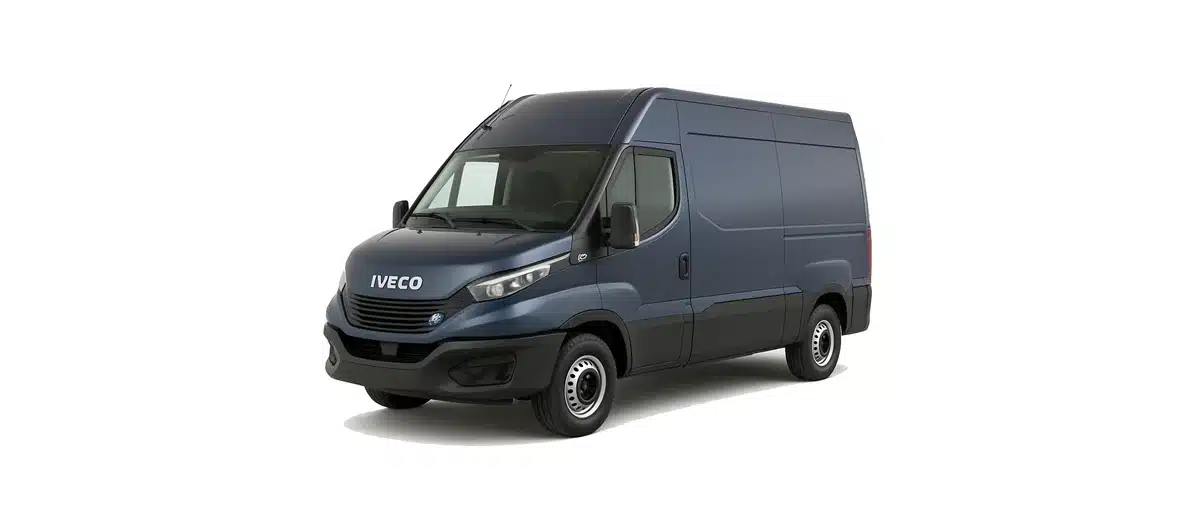
The Iveco eDaily is the battery-electric version of the Iveco Daily, aimed at operators who need a large van, chassis cab, crew cab, cowl or minibus-style platform without moving away from the Daily’s conversion-friendly layout. Unlike many passenger EVs, the eDaily is not a single-spec vehicle. Battery capacity, range, AC charging expectations and DC rapid charging speed all depend heavily on the exact body, gross vehicle weight, wheelbase and number of battery modules fitted.
That makes cable and charger selection particularly important. A lighter van with one or two battery packs will have very different charging needs from a heavier 72C vehicle with three or four packs. Fleet and depot users should also check whether their eDaily has the standard 11 kW AC onboard charger or the optional 22 kW unit before investing in three-phase charging infrastructure.
View Iveco eDaily Charging Cables
Iveco eDaily Battery and Charging Specifications
The current UK eDaily range uses modular lithium-ion battery packs. Iveco describes each module as 37 kWh installed capacity, with a 95% ratio between installed and usable energy. In practical terms, the eDaily can be configured with 1, 2, 3 or, on selected heavy-duty variants, 4 battery modules.
For AC charging, current Iveco material lists an 11 kW onboard charger as standard, with a 22 kW AC onboard charger available as an option. For DC rapid charging, the maximum rate is not universal: smaller configurations are shown with lower limits, while 3- and 4-battery versions can charge at up to 115 kW according to current MY24 information.
Charging connection information should be treated with a small note of caution. Iveco’s brochure refers to Mode 2/3 AC charging and Mode 4 DC fast charging, while UK charging guides identify the eDaily as using Type 2 for AC and CCS/Combo 2 for DC rapid charging. For UK fleet procurement, it is still sensible to confirm the connector and inlet position on the exact vehicle build, especially where conversions or optional side charging sockets are involved.
Battery Options
The eDaily’s battery line-up is one of its most important ownership considerations. Current MY24 information shows the following modular options:
- 1 battery module: 37 kWh gross, approximately 35.15 kWh usable based on Iveco’s 95% statement.
- 2 battery modules: 74 kWh gross, approximately 70.3 kWh usable.
- 3 battery modules: 111 kWh gross, approximately 105.45 kWh usable.
- 4 battery modules: 148 kWh gross, approximately 140.6 kWh usable, shown for selected heavy 72C configurations rather than every eDaily variant.
Not every eDaily body or GVW configuration can be specified with every battery size. This is why it is best to identify the exact vehicle variant before calculating depot charging times, route suitability or cable requirements.
AC Charging Speed
For most UK fleets, AC charging will be the everyday charging method. The eDaily has an 11 kW AC onboard charger as standard. With the optional 22 kW onboard charger, suitable vehicles can make better use of three-phase depot charge points.
Iveco’s official full-charge AC timings are approximately:
- 37 kWh: around 3 hours 10 minutes at 11 kW, or around 1 hour 30 minutes at 22 kW.
- 74 kWh: around 6 hours 20 minutes at 11 kW, or around 3 hours 10 minutes at 22 kW.
- 111 kWh: around 9 hours 30 minutes at 11 kW, or around 4 hours 50 minutes at 22 kW.
- 148 kWh: around 12 hours 40 minutes at 11 kW, or around 6 hours 20 minutes at 22 kW.
A 22 kW Type 2 cable or three-phase charge point is only useful at its full potential if the van has the optional 22 kW onboard charger and the site has a compatible three-phase supply. If the vehicle has the standard 11 kW onboard charger, it will be limited to that rate even when plugged into a higher-rated AC charger.
DC Rapid Charging Speed
DC rapid charging is useful for mid-shift top-ups, longer delivery routes and vehicles that cannot return to the depot for a full overnight charge. However, the eDaily’s DC charging rate depends on battery configuration.
Current MY24 material indicates DC charging capability of 40 kW for the 1-battery version, up to 80 kW for 1- and 2-battery versions, and up to 115 kW for 3- and 4-battery versions. Iveco’s official rapid-charge table uses 20-80% times rather than the 10-80% figures often quoted for passenger cars.
Official 20-80% examples include approximately 30 minutes for the 37 kWh pack at 40 kW, 30 minutes for the 74 kWh pack at 80 kW, 50 minutes for the 111 kWh pack at 80 kW or 35 minutes at 115 kW, and 1 hour for the 148 kWh pack at 80 kW or 47 minutes at 115 kW.
For operators, the practical issue is not just peak charging speed. Large vans need suitable bay access, enough cable reach, room to manoeuvre and charging locations that do not block loading schedules. Planning rapid charging around vehicle size can be just as important as choosing a charger with a high advertised output.
Range and Efficiency
The eDaily’s range varies widely because the vehicle is offered in many bodies and weight classes. Current official WLTP examples include figures from around 81 miles for some 1-battery variants up to around 211 miles for a 42S 3-battery van. Other examples include 50C configurations at around 124 to 162 miles depending on battery count, and 72C configurations at around 87 to 149 miles depending on battery count.
Iveco also refers to up to 400 km, or around 248 miles, of urban autonomy. That should not be treated as a universal WLTP combined range figure. It is an urban-cycle or simulation-based claim and will not represent every use case.
In day-to-day fleet use, range will be affected by payload, route profile, temperature, auxiliary electrical loads, stop-start driving, motorway speed, body conversion and driving style. A box-bodied conversion, minibus or heavy chassis cab may not deliver the same efficiency as a lighter panel van on urban routes. For route planning, use the official figure for the exact configuration and build in a sensible operational buffer.
Charging at Home
Some eDaily drivers may charge at home, particularly owner-drivers or small businesses where the van returns to the same address each night. A dedicated wallbox is usually the most practical option. On a typical UK single-phase home supply, AC charging may be limited below the eDaily’s maximum capability, depending on the charge point and electrical installation.
Where a property has three-phase power, and the vehicle is fitted with the optional 22 kW AC charger, faster AC charging may be possible. However, this is not something to assume. The van specification, supply capacity, charge point rating and installation design all need to match.
A 3-pin charger is generally best suited as a backup or occasional charging solution, but can be used regularly if a qualified electrician has confirmed the socket and electrical installation are suitable for sustained EV charging. For a large electric van, a 3-pin socket will be slow, especially with the larger battery packs, so it should not normally be the main charging plan for high-mileage commercial use.
Public Charging
For public charging, the eDaily is generally associated with Type 2 AC charging and CCS/Combo 2 rapid charging in UK charging guides. AC public charging can be useful when parked for several hours, but DC rapid charging is the better choice for short operational top-ups.
Because eDaily charging speed is variant-dependent, drivers should not expect every vehicle to reach 115 kW. A smaller battery configuration may be limited to 40 kW or 80 kW, while larger 3- and 4-battery versions can use up to 115 kW where the charger and conditions allow.
Public rapid chargers can also vary in layout. Before relying on a particular site, fleet managers should consider whether the bay can accommodate a large van or chassis conversion, whether the cable can comfortably reach the charge port and whether the site is accessible during working hours. This is especially important for converted vehicles, refrigerated bodies, minibuses and vehicles with rear access requirements.
Vehicle-Specific Features
The eDaily is built around a Daily-based rear-wheel-drive light commercial platform with modular under-frame battery packs. Iveco positions it as retaining much of the body versatility and conversion potential associated with the wider Daily range, while replacing the combustion powertrain with a BEV setup.
One notable feature for commercial operators is the availability of an ePTO/electric power supply function up to 50 kW for equipment and conversions. This is best understood as an ePTO or V2L-like worksite power feature for professional applications, rather than a confirmed domestic vehicle-to-home or grid-export system.
Current MY24 material also shows an optional side charging socket in addition to the front charging plug. If this is specified, it may improve access in depots or at public charging sites, depending on parking layout and charger cable position.
Charging Tips
- Confirm the battery count first: A 37 kWh eDaily and a 148 kWh eDaily need very different charging schedules.
- Check the onboard AC charger: Do not assume 22 kW AC charging is fitted. The standard onboard charger is 11 kW.
- Match the cable to the depot: A three-phase Type 2 cable can be worthwhile for 22 kW-equipped vehicles and suitable sites, but it will not override the van’s onboard limit.
- Plan around route duty: Payload, body type and motorway use can reduce range compared with lighter urban operation.
- Use rapid charging strategically: CCS charging is useful for top-ups, but bay size and access matter for large vans.
- Allow charging buffers: Commercial vehicles often need predictable readiness, so avoid planning every route down to the last mile of indicated range.
Frequently Asked Questions
What charging cable does the Iveco eDaily use?
UK charging guides identify the eDaily as using a Type 2 connector for AC charging and CCS/Combo 2 for DC rapid charging. Iveco’s own material refers to Mode 2/3 AC and Mode 4 DC charging, so operators should confirm the connector arrangement on the exact vehicle specification.
Is 22 kW AC charging standard on the Iveco eDaily?
No. Current Iveco material lists 11 kW AC charging as standard and 22 kW AC charging as optional. To use 22 kW AC charging, the van needs the optional onboard charger and the site needs a suitable three-phase supply.
How fast can the Iveco eDaily rapid charge?
It depends on the battery configuration. Current information shows smaller versions with lower DC limits, while 3- and 4-battery versions can charge at up to 115 kW. Iveco’s official rapid-charge figures are given as 20-80% times, not universal 10-80% times.
What is the range of the Iveco eDaily?
Official WLTP examples vary significantly by variant, from around 81 miles for some 1-battery versions to around 211 miles for a lighter 3-battery van configuration. Iveco’s advertised urban autonomy figure of up to around 248 miles should not be treated as a universal WLTP combined figure.
Can the Iveco eDaily power tools or equipment?
An ePTO/electric power supply function is available up to 50 kW for equipment and conversions. This is a commercial worksite power feature rather than confirmed domestic V2H or grid export functionality.
What This Means for Drivers
The Iveco eDaily is best approached as a configurable electric commercial platform rather than a single model with one battery and one charging profile. For drivers and fleet managers, the key decisions are battery count, daily mileage, payload, body type and charging location.
If the van returns to base every night, AC depot charging is likely to be the most predictable and cost-effective routine. For larger fleets, checking whether 11 kW is sufficient overnight or whether selected vehicles justify optional 22 kW AC charging can make a major difference to infrastructure planning. For longer routes, CCS rapid charging can help, but the vehicle’s maximum DC rate and physical access to charging bays must be considered.
Looking for a Charging Cable for Iveco eDaily?
We offer charging cables for the Iveco eDaily, including options suitable for UK home, workplace and depot charging setups. Choose a cable that matches your vehicle specification, charge point and site supply.
View Iveco eDaily Charging Cables
Please note that this information is intended as a guide. Charging specifications may change due to model and year of manufacture. For precise information, always refer to your vehicle user manual.

