
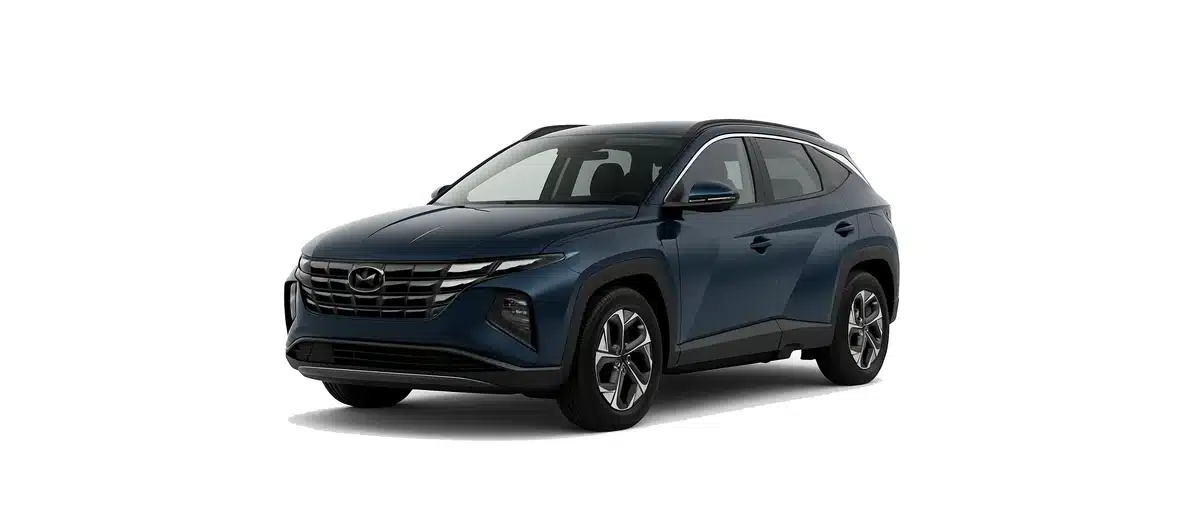
The Hyundai Tucson is a popular mid-size SUV in the UK, but there is an important charging point to understand before choosing a cable: not every Tucson plugs in. The current UK Tucson range includes petrol, self-charging hybrid and plug-in hybrid versions. For charging-cable purposes, the relevant model is the Hyundai Tucson Plug-in Hybrid, because it has an external charging socket and can be charged from a home wallbox, public AC charge point or domestic socket.
The Tucson Plug-in Hybrid is not a pure electric car. It combines a petrol engine with a plug-in hybrid battery, so you can use electric driving for local journeys and then continue on petrol/hybrid power once the electric range has been used. That makes charging behaviour different from a battery-electric vehicle: regular home top-ups matter more than motorway rapid charging stops.
In current UK model-year context, Hyundai’s published information should be read carefully because live web pages and MY27 technical data do not present every figure in exactly the same way. However, the core charging picture is clear: the Tucson Plug-in Hybrid uses a Type 2 AC charging connection, has a 13.8 kWh battery, and is best matched with a 7 kW home wallbox because earlier Hyundai UK technical data confirms a 7.2 kW onboard charger.
View Hyundai Tucson Charging Cables
Hyundai Tucson Battery and Charging Specifications
The charging-relevant Tucson is the plug-in hybrid version, not the petrol or self-charging hybrid model. The Tucson Plug-in Hybrid has a petrol engine, an electric motor and a lithium-ion polymer battery that can be charged from an external power source.
Key UK charging details for the Tucson Plug-in Hybrid are:
- Vehicle type: Plug-in hybrid SUV, not a BEV
- Charging port: Type 2 for AC charging
- Battery capacity: 13.8 kWh gross capacity, according to Hyundai UK/EU sources
- Onboard AC charger: 7.2 kW, based on earlier official Hyundai UK technical data and current review corroboration
- DC rapid charging: no confirmed UK DC rapid charging capability for the Tucson Plug-in Hybrid
- Typical practical electric range: often around 30 miles in mixed real-world use, with official WLTP figures varying by model year and variant
The most important practical point is that the car’s onboard charger controls the maximum AC charging speed. Even if you connect to a higher-rated 11 kW or 22 kW public AC post, the Tucson Plug-in Hybrid will not charge at 11 kW or 22 kW if its onboard charger is limited to 7.2 kW.
Battery Options
Hyundai UK/EU information states a 13.8 kWh lithium-ion polymer battery for the Tucson Plug-in Hybrid. Public UK sources do not clearly confirm a separate usable capacity figure, so it is better to describe the battery using the published 13.8 kWh figure rather than assuming a usable-capacity number.
Because this is a plug-in hybrid, the battery is much smaller than the pack in a full electric SUV. That is not necessarily a disadvantage if your use case suits it. A smaller plug-in hybrid battery can be charged overnight or during an off-peak tariff window, and it can cover many short local journeys without needing the petrol engine. For drivers doing school runs, commuting, shopping trips and local errands, the Tucson Plug-in Hybrid can make sense if it is charged regularly.
On longer journeys, the car does not need to stop for charging in the same way as a pure electric vehicle. Once the plug-in battery’s electric driving range is depleted, the Tucson continues operating as a petrol hybrid. That is one of the main reasons why charging guidance for this car should focus on home and destination AC charging rather than rapid-charging route planning.
AC Charging Speed
The Tucson Plug-in Hybrid uses Type 2 AC charging. Earlier official Hyundai UK technical material confirms a 7.2 kW onboard charger, and professional UK review sources also describe 7.2 kW AC charging. This makes a standard 7 kW home wallbox a very suitable match.
At the car’s maximum AC rate, a full charge is generally described by review sources as taking under two hours, although exact charge time can vary depending on the battery’s starting level, the charge point, temperature and charging losses. If you plug into a lower-powered supply, charging will take longer.
A higher-rated cable or charge point does not automatically mean faster charging. For example, a 22 kW public AC post may look much faster on paper, but the Tucson Plug-in Hybrid is limited by the onboard charger. The post can offer more power, but the car will only draw what it can accept. For this reason, a good-quality Type 2 cable suitable for 7 kW single-phase charging is the practical choice for most owners.
DC Rapid Charging Speed
The Hyundai Tucson Plug-in Hybrid should be treated as an AC-charging plug-in hybrid, not as a rapid-charging electric vehicle. No current reliable UK source in the supplied research confirms CCS or DC rapid charging for the Tucson Plug-in Hybrid.
That means you should not plan to use motorway DC rapid chargers in the same way you would with a pure electric car. The Tucson PHEV’s charging routine is better built around:
- home charging from a wallbox, especially overnight or during off-peak electricity periods;
- workplace charging where Type 2 AC posts are available;
- destination charging at hotels, leisure centres, car parks or retail sites.
This also means that “rapid charging time” figures are not especially useful for the Tucson Plug-in Hybrid. The better question is whether you can conveniently recharge the battery during the periods when the car is parked anyway.
Range and Efficiency
Official electric range depends on model year, drivetrain and specification. Hyundai UK’s MY27 technical, specification and pricing information lists plug-in hybrid electric range at 40.7 miles for 2WD variants and 38.2 miles for 4WD variants, depending on trim and wheels. Some live Hyundai UK web copy also refers to electric range figures of up to around 43 miles or 43.5 miles, so it is best not to treat one figure as universal across every Tucson Plug-in Hybrid.
In everyday UK driving, a practical electric range of around 30 miles is a sensible expectation for many drivers, although gentle urban driving in mild weather may do better and winter motorway use may reduce electric range. Like any electrified vehicle, efficiency is affected by temperature, speed, driving style, tyres, load and use of heating or air conditioning.
The main ownership benefit comes from charging frequently enough to use the electric range for shorter trips. If you rarely plug in, the Tucson Plug-in Hybrid will still operate as a hybrid, but you will not get the full benefit of the plug-in system. Regular charging is what makes the difference.
Charging at Home
For most UK Tucson Plug-in Hybrid owners, home charging will be the most convenient and cost-effective option. A 7 kW home wallbox is a natural fit because it aligns closely with the car’s quoted 7.2 kW onboard AC charger. You can plug in after your final journey of the day and usually have the battery ready again well before the next morning.
Home charging is particularly useful if you can use an off-peak EV electricity tariff. The Tucson’s battery is relatively small compared with a full EV, so it may be possible to add a full or substantial charge within a short overnight window. Hyundai also describes Bluelink/app functionality for remote scheduled charging at home, subject to app and subscription requirements, which can help owners line up charging with cheaper electricity periods.
Current UK specification information for the Tucson Plug-in Hybrid lists a Type 2 wallbox charging cable and an emergency 3-pin ICCB cable as supplied equipment. If you use a domestic 3-pin charging lead, remember that this is a much slower method. A 3-pin charger is generally best suited as a backup or occasional charging solution, but can be used regularly if a qualified electrician has confirmed the socket and electrical installation are suitable for sustained EV charging.
If you are installing a wallbox, use a qualified installer and ensure the installation is suitable for your property, supply and parking position. A professionally installed home charge point is usually the cleanest everyday solution for a plug-in hybrid that is charged frequently.
Public Charging
Public charging can be useful for the Tucson Plug-in Hybrid, but it is worth using it selectively. The best public chargers for this car are Type 2 AC charge points at places where the car will be parked for a while. Examples include workplace car parks, hotels, supermarkets, gyms, town-centre car parks and long-stay parking.
Because the battery is relatively small and the car does not have confirmed DC rapid charging, short motorway charging stops are not the main use case. If you are travelling a long distance, the Tucson can continue using petrol/hybrid power after the plug-in range is depleted. Public AC charging is most worthwhile when it fits naturally into your plans rather than requiring a special stop.
You should also remember that some public AC charge points are untethered, meaning you need to bring your own Type 2 cable. Tethered home wallboxes have a cable attached, but many destination posts do not. Keeping the correct cable in the car makes public AC charging much simpler.
Vehicle-Specific Features
The most vehicle-specific point is the Tucson family’s mixed powertrain line-up. Petrol and self-charging hybrid Tucsons do not need external charging cables. Only the Tucson Plug-in Hybrid requires a charging cable and can be plugged into the mains.
The current UK/MY27 context also matters because Hyundai’s published material includes some differences between live web copy and technical PDF information. For charging, however, the consistent message is that the Tucson Plug-in Hybrid is an AC-charging PHEV with a Type 2 connection. Hyundai’s current UK specification also lists both a Type 2 wallbox cable and an emergency 3-pin ICCB cable for PHEV models.
Bluelink-related functionality may support scheduled charging at home, depending on app access, vehicle specification and subscription requirements. This is useful if you want the car to charge during cheaper electricity periods without having to plug and unplug manually at exact times.
Charging Tips
- Charge little and often: the Tucson Plug-in Hybrid works best when you regularly replenish the battery for short local trips.
- Use a 7 kW wallbox where possible: it is well matched to the car’s quoted 7.2 kW onboard charger.
- Do not expect 22 kW charging: higher-rated AC posts or cables will not override the car’s onboard charging limit.
- Keep a Type 2 cable in the boot: it is useful for untethered public AC posts and destination chargers.
- Use the 3-pin lead carefully: treat it mainly as a backup or occasional option unless an electrician has approved the socket and installation for sustained EV charging.
- Plan long journeys as hybrid journeys: use electric range where available, but expect the petrol engine to take over once the battery’s EV range is used.
Frequently Asked Questions
Is the Hyundai Tucson a fully electric car?
No. The UK charging-relevant Tucson is the Hyundai Tucson Plug-in Hybrid. It has a petrol engine and a plug-in hybrid battery. Petrol and self-charging hybrid Tucson models do not plug in.
What charging cable does the Hyundai Tucson Plug-in Hybrid use?
It uses a Type 2 AC charging connection. A Type 2 cable is the correct cable type for home wallboxes and many public AC charge points.
Can the Hyundai Tucson Plug-in Hybrid use a 22 kW charger?
It can connect to some higher-rated AC posts where compatible, but it will not charge at 22 kW. The car is limited by its onboard AC charger, quoted at 7.2 kW in Hyundai UK technical data.
Does the Hyundai Tucson Plug-in Hybrid support DC rapid charging?
No confirmed current UK information in the supplied research confirms DC rapid charging for the Tucson Plug-in Hybrid. It should be treated as an AC-charging plug-in hybrid.
How far can the Tucson Plug-in Hybrid drive on electric power?
Current UK MY27 technical information lists 40.7 miles for 2WD plug-in hybrid variants and 38.2 miles for 4WD variants, while some live Hyundai UK copy references slightly higher figures. In mixed real-world use, around 30 miles is a sensible expectation for many drivers.
What This Means for Drivers
The Hyundai Tucson Plug-in Hybrid is best understood as a daily top-up SUV. If you can charge at home, especially from a 7 kW wallbox, it can cover many local journeys using electric power while retaining the flexibility of petrol for longer trips. The key is to plug in regularly; otherwise, you are carrying a plug-in hybrid system without making full use of it.
For cable selection, keep the advice simple: choose a Type 2 AC charging cable, do not expect 11 kW or 22 kW charging speeds, and do not plan around DC rapid charging. A 7 kW home charging routine is the sweet spot for most Tucson Plug-in Hybrid owners.
Looking for a Charging Cable for Hyundai Tucson?
If you need a suitable Type 2 charging cable for the Hyundai Tucson Plug-in Hybrid, We offer Hyundai Tucson charging cables for home wallboxes and public AC charging. Choose a cable that suits how and where you charge, and remember that the Tucson Plug-in Hybrid’s AC charging speed is governed by the car’s onboard charger.
View Hyundai Tucson Charging Cables
Please note that this information is intended as a guide. Charging specifications may change due to model and year of manufacture. For precise information, always refer to your vehicle user manual.

