
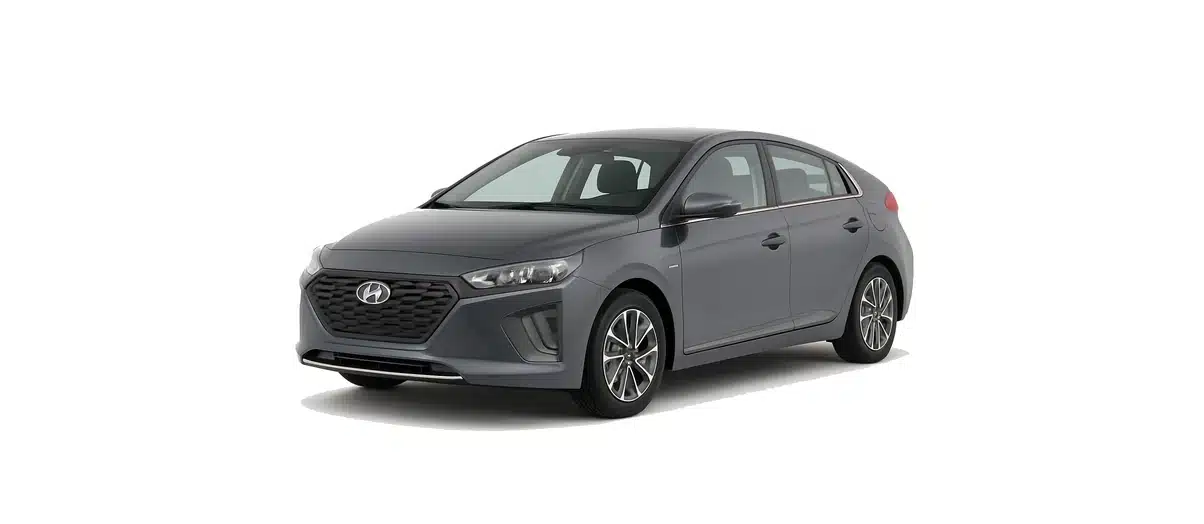
The Hyundai Ioniq PHEV is one of the original Ioniq models sold in the UK, alongside the Ioniq Hybrid and Ioniq Electric. That makes charging advice slightly more important than usual, because the name can be confused with both the fully electric Ioniq Electric and later IONIQ 5 and IONIQ 6 models. The Ioniq PHEV is a plug-in hybrid: it has a petrol engine, an electric motor and a mains-chargeable traction battery, but it is not a pure battery-electric vehicle.
For day-to-day ownership, the key point is simple. The Hyundai Ioniq PHEV uses a Type 2 AC charging connection and has a 3.3 kW on-board charger. It does not have CCS rapid charging, so it is best treated as a car to charge at home, at work or on slower destination chargers rather than at motorway rapid-charging hubs. Used in that way, it can cover many local journeys on electric power while keeping the petrol engine available for longer trips.
View Hyundai Ioniq PHEV Charging Cables
Hyundai Ioniq PHEV Battery and Charging Specifications
Hyundai UK and European technical information lists the Ioniq Plug-in Hybrid with an 8.9 kWh lithium-ion polymer battery, a 44.5 kW electric motor and a 1.6 GDi petrol engine. In UK form it was paired with a 6-speed dual-clutch transmission and front-wheel drive.
The charging hardware is AC-only. The car has a Type 2 inlet and a 3.3 kW on-board charger, so it can use common UK home wallboxes and public AC charging posts with the correct Type 2 cable. However, the car itself sets the charging limit. Plugging into a 7 kW, 11 kW or 22 kW AC post will not make the Ioniq PHEV charge above its approximate 3.3 kW maximum AC rate.
- Vehicle type: Plug-in hybrid electric vehicle (PHEV)
- Charging port: Type 2 AC
- On-board AC charger: 3.3 kW
- Battery capacity listed by Hyundai: 8.9 kWh
- DC rapid charging: Not available on the PHEV
- Typical wallbox charging time: Around 2 hours 15 minutes from a 7 kW home charger, limited by the car
- 3-pin charging time: Typically around 5 to 6 hours, depending on conditions and installation
Battery Options
The UK Ioniq PHEV range was not offered with multiple traction battery sizes in the way many modern full EVs are. Hyundai sources list the plug-in hybrid battery capacity at 8.9 kWh. A usable or net capacity figure is not consistently confirmed in the UK source material, so it is better not to rely on an assumed net figure when planning charging.
| Model | Battery capacity | Charging connection | AC charging limit |
|---|---|---|---|
| Hyundai Ioniq Plug-in Hybrid 1.6 GDi 141PS Blue Drive 6spd DCT 2WD | 8.9 kWh | Type 2 | 3.3 kW |
AC Charging Speed
AC charging is the main charging method for the Hyundai Ioniq PHEV. With a 3.3 kW on-board charger, the car is well suited to overnight top-ups, charging while parked at work, or using destination chargers at places such as supermarkets, hotels and public car parks.
Hyundai UK brochure data quotes a charging time of around 2 hours 15 minutes using a 7 kW wallbox. Although the wallbox may be capable of 7 kW, the Ioniq PHEV will only draw what its own on-board charger can accept. This is why a 22 kW AC post will not reduce the charging time compared with a suitable 7 kW unit.
For most owners, this is not a major drawback. The battery is relatively small compared with a full EV, so a full recharge is still short enough to fit into normal parking time at home or work. The practical benefit of a Type 2 cable is that it allows the car to connect to the majority of UK and European AC charging posts.
DC Rapid Charging Speed
The Hyundai Ioniq PHEV does not support DC rapid charging. This is one of the most important differences between the plug-in hybrid model and the Ioniq Electric. Hyundai UK technical data lists 50 kW CCS charging as not available for the Plug-in Hybrid, and the PHEV does not have a CCS rapid-charging port.
As a result, there is no meaningful 10-80% rapid-charge time to quote for this car. If you stop at a motorway service area with high-power CCS chargers, the Ioniq PHEV will not be able to use those rapid chargers for its traction battery. For longer journeys, the petrol engine provides flexibility, while charging is best planned around home, workplace and destination AC charging.
Range and Efficiency
Later UK brochure data for the Hyundai Ioniq PHEV lists a maximum potential electric driving range of around 32 miles, or about 52-53 km, on WLTP-type-approved figures. Earlier UK launch material referred to an electric-only figure of up to 39 miles, so owners of earlier cars may see different official wording in their handbook or sales documentation.
As with any plug-in hybrid, real-world electric range depends on temperature, driving speed, terrain, use of heating or air conditioning, tyre condition and how gently the car is driven. Short urban and suburban journeys are where the plug-in hybrid system is usually at its most useful, because more of the trip can be completed on stored electric energy before the petrol engine is needed.
The advantage of keeping the Ioniq PHEV charged is that local mileage can be shifted away from petrol use. The small battery also means it is often more effective to charge regularly than to wait for the battery to be empty.
Charging at Home
Home charging is usually the most convenient way to run a Hyundai Ioniq PHEV. A dedicated home wallbox gives a safer and more practical everyday solution than relying on a household socket, and it makes it easier to recharge during off-peak electricity periods if your tariff supports that.
A 7 kW home charger is a sensible match even though the Ioniq PHEV can only charge at around 3.3 kW. The wallbox will simply supply the rate the car can accept. This also gives useful future-proofing if you later change to a vehicle with a higher AC charging capability.
The car may also be supplied with, or compatible with, an emergency 3-pin ICCB charging cable. A 3-pin charger is generally best suited as a backup or occasional charging solution, but can be used regularly if a qualified electrician has confirmed the socket and electrical installation are suitable for sustained EV charging. Avoid using extension leads with the 3-pin ICCB cable, as Hyundai UK literature cautions against extension leads for the emergency cable.
Public Charging
For public charging, the Ioniq PHEV is best suited to Type 2 AC posts. These are commonly found in town-centre car parks, workplaces, hotels, supermarkets and leisure destinations. Because the car is limited to 3.3 kW AC, the most useful charging sessions are normally those where the car will be parked for at least a couple of hours.
It is worth checking whether a public post is tethered or untethered. Tethered AC chargers have their own cable attached. Untethered posts require you to use your own Type 2 charging cable. Many UK public AC posts are untethered, so keeping a Type 2 cable in the car is useful if you regularly charge away from home.
Public rapid chargers are less relevant for this model. The Ioniq PHEV cannot use CCS DC charging, and a short stop at a rapid hub will not provide the same benefit it would for a full EV. In practice, destination AC charging is a better fit for the car’s battery size and charging hardware.
Vehicle-Specific Features
The most important vehicle-specific feature is the Ioniq PHEV’s AC-only charging setup. The Type 2 socket makes it compatible with standard UK and European AC charging infrastructure, but the lack of CCS means it should not be treated like the Ioniq Electric or later high-power IONIQ models.
Later versions of the Ioniq range included connected services such as Bluelink support, and Hyundai material indicates that charging can be scheduled on later models. However, some pre-heating or temperature scheduling wording in UK brochure material is marked for the Ioniq Electric rather than the Plug-in Hybrid, so owners should check their specific car, trim and infotainment system before relying on remote climate or scheduling features.
The original Ioniq series ended production in July 2022, so used examples may vary by year, trim level and software version. When buying a used Ioniq PHEV, it is worth checking that the supplied charging cables are present, undamaged and appropriate for UK use.
Charging Tips
- Use a Type 2 cable for most charging. This is the correct cable type for home wallboxes and untethered public AC posts.
- Do not expect faster charging from higher-rated AC posts. The car is limited to around 3.3 kW, even on 7 kW, 11 kW or 22 kW chargers.
- Plan around destination charging. A couple of hours parked at home, work or a public AC post can be more useful than a short stop at a rapid hub.
- Charge little and often. Because the battery is small, regular top-ups help keep electric driving available for local journeys.
- Avoid extension leads. If using the emergency 3-pin cable, plug directly into a suitable socket that has been checked for sustained charging use.
- Check used-car accessories. Confirm whether the car comes with a Type 2 cable, 3-pin emergency cable, or both.
Frequently Asked Questions
What charging cable does the Hyundai Ioniq PHEV use?
It uses a Type 2 charging connection for AC charging. A Type 2 cable is the correct choice for most UK home wallboxes and untethered public AC charging posts.
Can the Hyundai Ioniq PHEV use rapid chargers?
No. The Plug-in Hybrid model does not support CCS/DC rapid charging. It is AC-only, unlike the Ioniq Electric.
Will a 7 kW wallbox charge the Ioniq PHEV at 7 kW?
No. A 7 kW wallbox is suitable, but the car’s on-board charger is limited to around 3.3 kW. The wallbox will not force the car to charge faster than it can accept.
How long does it take to charge at home?
Hyundai UK brochure data gives a typical wallbox charge time of around 2 hours 15 minutes. Charging from a 3-pin emergency cable is typically around 5 to 6 hours, depending on conditions and the electrical installation.
Is the Hyundai Ioniq PHEV a full electric car?
No. It is a plug-in hybrid. It can be charged from the mains and driven for short distances on electric power, but it also has a petrol engine for longer journeys and when the battery charge is low.
What This Means for Drivers
The Hyundai Ioniq PHEV is at its best when it is charged regularly and used for shorter everyday journeys. Its Type 2 AC charging setup is simple, widely compatible and quick enough for the size of its battery. The main limitation is that it cannot rapid charge, so public charging plans should focus on AC destination chargers rather than CCS rapid chargers.
For many UK owners, a home wallbox and a Type 2 cable will cover the majority of charging needs. The petrol engine then provides reassurance for longer trips without needing to plan routes around rapid charging stops.
Looking for a Charging Cable for Hyundai Ioniq PHEV?
We offer Hyundai Ioniq PHEV charging cables suitable for Type 2 AC charging at home and on compatible public charging posts, helping you choose the right cable for this plug-in hybrid’s 3.3 kW charging setup.
View Hyundai Ioniq PHEV Charging Cables
Please note that this information is intended as a guide. Charging specifications may change due to model and year of manufacture. For precise information, always refer to your vehicle user manual.

