
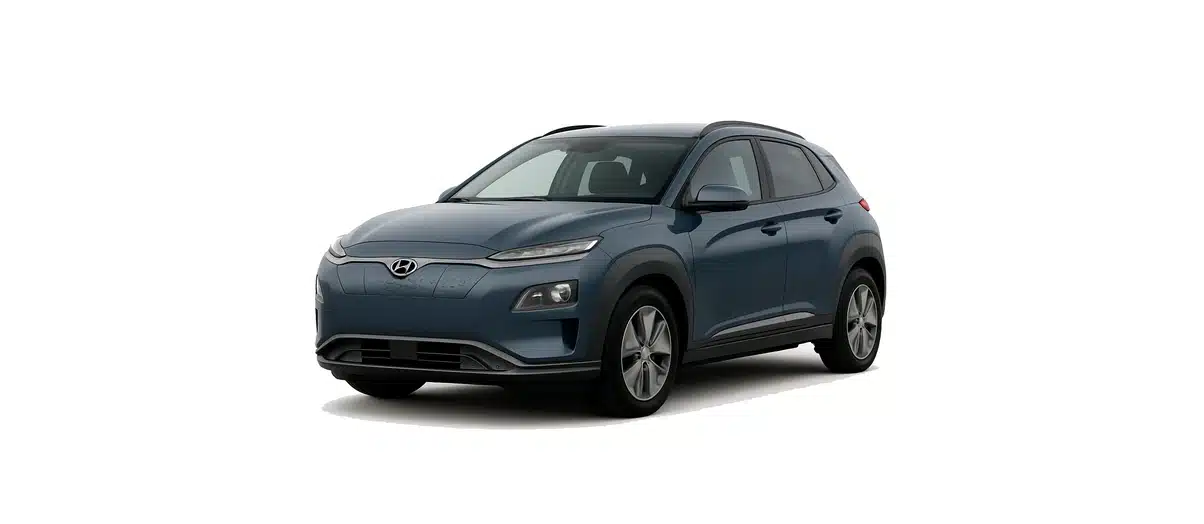
The Hyundai Ioniq Electric is a practical used electric car, but it needs a little care when discussing charging because there are two distinct battery versions. UK-market cars were sold as the original 28 kWh usable model from roughly 2016 to 2019, followed by the facelifted 38.3 kWh usable model from late 2019 until the original IONIQ series ended production in 2022.
This guide is specifically for the Hyundai Ioniq Electric battery-electric vehicle. It is not the same as the Ioniq Hybrid or Ioniq Plug-in Hybrid, which shared the Ioniq name and body style but have different charging needs. It is also separate from Hyundai’s later Ioniq 5, Ioniq 6 and Ioniq 9 models, which use a newer dedicated EV platform.
For most UK owners, the key points are simple: the Ioniq Electric uses a Type 2 connector for AC charging and CCS Combo 2 for DC rapid charging. A 32 amp single-phase home charge point is enough to reach the car’s maximum AC charging rate, but rapid charging behaviour differs noticeably between the early 28 kWh car and the later 38.3 kWh car.
View Hyundai Ioniq Electric Charging Cables
Hyundai Ioniq Electric Battery and Charging Specifications
| Specification | Hyundai Ioniq Electric |
|---|---|
| Vehicle type | Battery-electric 5-door liftback / saloon-style hatchback |
| UK production status | Discontinued; original IONIQ series ended production in 2022 |
| AC charging connector | Type 2 |
| DC rapid charging connector | CCS Combo 2 |
| Charging port location | Off-side rear quarter panel, in the fuel-flap position |
| Maximum AC charging | 6.6 kW on 28 kWh cars; 7.2 kW on 38.3 kWh cars |
| Maximum DC charging | Varies by version; around 69 kW peak on early 28 kWh cars and around 44 kW peak on later 38.3 kWh cars according to EV Database data |
| Three-phase AC charging | The car charges on single phase, so a 22 kW AC post will not charge it at 22 kW |
Battery Options
The Hyundai Ioniq Electric was sold in the UK in two main battery versions, and it is important not to treat them as one universal model.
2016-2019 pre-facelift Hyundai Ioniq Electric: this earlier car has a 28 kWh usable battery, with EV Database estimating around 30.5 kWh total capacity. Hyundai UK technical data from the period lists a 28 kWh battery. Its official 174-mile range figure was measured under the older NEDC test cycle, not WLTP, and EV Database estimates a real-world range of around 115 miles.
2019-2022 facelift Hyundai Ioniq Electric: the later car has a larger 38.3 kWh usable battery, with EV Database estimating around 40.4 kWh total capacity. Hyundai listed the battery at 38.3 kWh and quoted a WLTP range of 193 miles. EV Database estimates real-world range at around 155 miles.
If you are buying a used Ioniq or choosing a charging cable, check the exact version. Many listings simply say “Hyundai Ioniq”, which could mean the Electric, Plug-in Hybrid or Hybrid. For charging-cable guidance, you need to confirm that the car is the full battery-electric Ioniq Electric.
AC Charging Speed
For home and destination charging, the Hyundai Ioniq Electric uses the Type 2 AC connector. The pre-facelift 28 kWh model has a 6.6 kW onboard charger, while the facelifted 38.3 kWh model has a 7.2 kW single-phase onboard charger.
In practical terms, a standard UK 7 kW or 7.4 kW home wallbox is well matched to either version. The early 28 kWh car can charge from empty to full in roughly five hours on a suitable home charge point. The later 38.3 kWh model takes around six hours to a little over six hours from empty to full, depending on the source and charging conditions.
A common mistake is to assume that a 22 kW public AC post will charge the Ioniq Electric at 22 kW. It will not. The car’s onboard charger is the limiting factor, and it charges on single phase. You can still use a 22 kW Type 2 AC post, but the Ioniq Electric will draw only up to its own AC limit.
DC Rapid Charging Speed
For rapid charging, the Hyundai Ioniq Electric uses CCS Combo 2. The upper part of the socket is the Type 2 section used for AC charging, while the lower CCS pins are used for DC rapid charging.
This is where the two versions behave quite differently. The earlier 28 kWh Ioniq Electric is well known for rapid charging efficiently for its battery size. EV Database data lists a peak of up to around 69 kW, with 10-80% rapid charging often taking roughly 19-27 minutes depending on charger power and conditions.
The later 38.3 kWh model has more range, but its DC rapid charging peak is lower. EV Database and Fastned-style charging data indicate a vehicle-limited peak of around 44 kW, with 10-80% taking about 53-55 minutes. Hyundai quoted charging times at 50 kW and 100 kW chargers, but that does not mean the facelift car accepts 100 kW into the battery. The vehicle controls the charging rate.
For long journeys, this means the older car may need more frequent stops because of its smaller battery, but the stops can be shorter. The newer car can travel further between charges, but a 10-80% rapid charge will usually take longer.
Range and Efficiency
The Ioniq Electric has a reputation for strong efficiency, helped by its aerodynamic body shape and relatively modest weight compared with many newer EVs. However, the usable range depends heavily on which version you own.
The 28 kWh pre-facelift car is best viewed as a very efficient short-to-medium distance EV. Its NEDC official range was 174 miles, but real-world driving is typically much lower than that older test figure suggests. EV Database estimates around 115 miles in mixed conditions.
The 38.3 kWh facelift car offers a useful improvement. Hyundai quoted 193 miles under WLTP, and EV Database estimates around 155 miles of real-world range. As with any EV, motorway speed, cold weather, rain, tyres, cabin heating and load can all reduce range. Urban and steady A-road driving will usually be more favourable than extended high-speed motorway use.
Charging at Home
Home charging is usually the most convenient way to run a Hyundai Ioniq Electric. A dedicated 7 kW or 7.4 kW home charge point with a Type 2 connection is enough to access the car’s maximum AC charging capability. You do not need a higher-powered three-phase home unit for the Ioniq Electric unless it is being installed for another vehicle or future use.
If you have an untethered wallbox, you will need a Type 2 to Type 2 charging cable. A 32 amp single-phase Type 2 cable is the usual choice because it supports the car’s maximum AC rate and is also suitable for many public AC chargers. If you have a tethered Type 2 wallbox, the cable is attached to the unit, so you may still want a separate cable for untethered public AC charging.
A 3-pin portable charger can be useful, but it is generally best suited as a backup or occasional charging solution, but can be used regularly if a qualified electrician has confirmed the socket and electrical installation are suitable for sustained EV charging. Charging from a domestic socket is much slower than using a wallbox, so it is better suited to adding a small amount of range overnight rather than regular empty-to-full charging.
Public Charging
On public AC chargers, use a Type 2 cable. Many destination chargers at supermarkets, hotels, workplaces and town-centre car parks are untethered, meaning you provide your own cable. Even where the post is rated at 11 kW or 22 kW, the Ioniq Electric will charge only at its single-phase onboard charger limit.
On rapid chargers, use the tethered CCS connector provided by the charging unit. You do not need to bring your own DC cable for CCS rapid charging, as the cable is permanently attached to the charger.
When planning longer trips, choose charging stops with a realistic expectation of your car’s version. For the 28 kWh model, shorter, more frequent rapid stops may work well. For the 38.3 kWh model, allow more time for a 10-80% session, especially in cold weather or if the charger is shared, busy or not delivering full power.
Vehicle-Specific Features
The Hyundai Ioniq Electric sits on Hyundai’s original Ioniq multi-powertrain platform, rather than the later E-GMP 800 V architecture used by models such as the Ioniq 5 and Ioniq 6. This is why its charging behaviour is closer to earlier-generation EVs than Hyundai’s newer high-voltage models.
EV Database lists a heat pump as standard equipment for both the 28 kWh and 38.3 kWh UK Ioniq Electric entries. A heat pump can help reduce the energy used for cabin heating in suitable conditions, which may support winter efficiency compared with relying only on resistive heating.
The facelift model is also associated with a battery heating system in Hyundai technical information, but it should not be confused with modern navigation-linked charging preparation systems found on some newer EVs. Vehicle-to-load, vehicle-to-grid and vehicle-to-home functions are not supported on the Ioniq Electric according to EV Database data.
Charging Tips
- Check which Ioniq you own: confirm it is the full Electric model, not the Hybrid or Plug-in Hybrid.
- Identify the battery version: 28 kWh and 38.3 kWh cars have different range and charging characteristics.
- Use Type 2 for AC charging: this applies at home and on public destination chargers.
- Use CCS for rapid charging: CCS rapid chargers have their own tethered cable.
- Do not expect 22 kW AC charging: the Ioniq Electric’s onboard charger is single phase and limited to 6.6 kW or 7.2 kW depending on version.
- Plan rapid stops by version: the older 28 kWh model can rapid charge surprisingly quickly, while the later 38.3 kWh car usually takes longer from 10-80%.
- Keep a Type 2 cable in the boot: it is useful for untethered public AC posts and destination charging.
Frequently Asked Questions
What charging cable does the Hyundai Ioniq Electric use?
For AC charging, the Hyundai Ioniq Electric uses a Type 2 connector. For DC rapid charging, it uses CCS Combo 2. Most owners with an untethered home charger or who use public AC posts will want a Type 2 to Type 2 cable.
Can the Hyundai Ioniq Electric charge at 22 kW AC?
No. Although you can plug into a 22 kW Type 2 AC post, the car is limited by its onboard charger. Early 28 kWh cars charge at up to around 6.6 kW AC, while later 38.3 kWh cars charge at up to around 7.2 kW AC.
Which Hyundai Ioniq Electric charges faster on rapid chargers?
The early 28 kWh version can rapid charge faster in peak-power terms, with EV Database listing up to around 69 kW. The later 38.3 kWh version has more range but a lower rapid-charging peak of around 44 kW, so its 10-80% rapid charge normally takes longer.
Is the Hyundai Ioniq Electric the same as the Ioniq Plug-in Hybrid?
No. The Ioniq Electric is a full battery-electric vehicle. The Ioniq Plug-in Hybrid has a petrol engine and a much smaller plug-in battery, while the Ioniq Hybrid is not charged from an external plug. Always check the exact powertrain before choosing charging equipment.
Where is the charging port?
On UK and European Hyundai Ioniq Electric models, the charging inlet is on the off-side rear quarter panel in the same general position as a fuel flap.
What This Means for Drivers
The Hyundai Ioniq Electric remains a capable used EV, but the right charging advice depends on which version you have. The early 28 kWh model offers modest range but impressively quick rapid charging for its battery size. The later 38.3 kWh model improves everyday range but usually needs longer DC charging stops.
For day-to-day ownership, the simplest setup is a 7 kW home wallbox and a suitable Type 2 cable for untethered AC charging. A 32 amp single-phase cable is sufficient for the car’s maximum AC rate, and CCS rapid charging is available for longer journeys when you need to add range more quickly.
Looking for a Charging Cable for Hyundai Ioniq Electric?
We offer charging cables for the Hyundai Ioniq Electric, including Type 2 options suitable for home wallboxes and public AC charging points.
View Hyundai Ioniq Electric Charging Cables
Please note that this information is intended as a guide. Charging specifications may change due to model and year of manufacture. For precise information, always refer to your vehicle user manual.

