
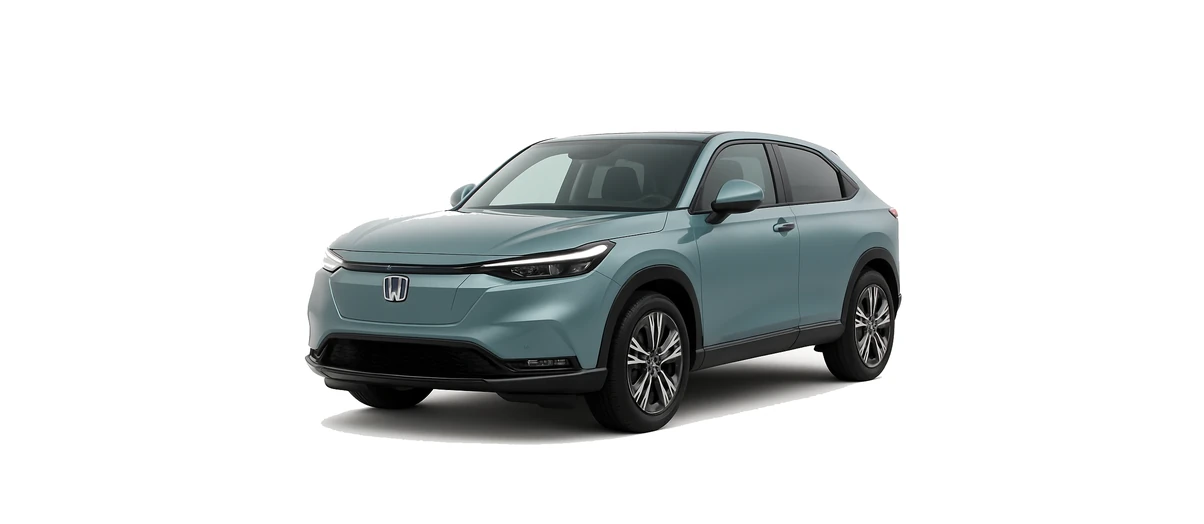
The Honda e:Ny1 is a compact fully electric SUV that brought Honda’s e:N electric platform to the UK market. Sold in the UK from late 2023 in Elegance and Advance trims, it used one battery and charging setup across the range. New UK ordering is reported to have ended, so many drivers will now be looking at the e:Ny1 as a used electric car rather than a factory-order model.
For charging, the e:Ny1 is straightforward: it has a front-centre charging inlet, uses Type 2 for AC charging and CCS Combo 2 for DC rapid charging. The key point for UK owners is that although the car has an 11 kW onboard AC charger, most domestic home charging on a standard single-phase supply will be limited to around 7.4 kW. Rapid charging is also more modest than some newer electric SUVs, with a quoted peak of 78 kW and around 45 minutes for a 10-80% charge under suitable conditions.
View Honda e:Ny1 Charging Cables
Honda e:Ny1 Battery and Charging Specifications
The UK-market Honda e:Ny1 is a battery-electric vehicle, not a plug-in hybrid or range extender. Honda offered the car with a 68.8 kWh gross lithium-ion battery pack. Independent data lists usable capacity at around 61.9 kWh, which is why some UK reviews refer to it as roughly a 62 kWh usable battery.
The charging port is positioned at the front centre of the car. This can be convenient at many chargers because it reduces the need to think about which side of the vehicle the socket is on, particularly when parking nose-in. The inlet combines a Type 2 connector for AC charging and a CCS Combo 2 connector for DC rapid charging.
- Vehicle type: fully electric compact SUV
- Battery: 68.8 kWh gross, approximately 61.9 kWh usable
- WLTP range: up to 256 miles
- Estimated real-world range: around 205 miles, depending on conditions
- AC charging: up to 11 kW on a suitable three-phase supply
- Typical UK home charging: up to around 7.4 kW on many single-phase wallboxes
- DC rapid charging: up to 78 kW
- Rapid charging time: around 45 minutes for 10-80% in favourable conditions
Battery Options
UK Honda e:Ny1 models used a single battery option, so buyers do not need to compare different pack sizes when choosing between Elegance and Advance trims. Both trims shared the same 68.8 kWh gross battery and the same Type 2 and CCS charging hardware.
That simplicity is helpful in the used market. If you are comparing cars, battery size and charging capability should be broadly the same across UK examples, although overall condition, mileage, service history, software updates and whether the original charging cables are present can still vary from car to car.
AC Charging Speed
The Honda e:Ny1 has an 11 kW onboard AC charger. This is useful when connected to a suitable three-phase AC charge point, such as some workplace, commercial or destination chargers. Honda has quoted approximately 6 hours for a 10-80% AC charge at 11 kW, while independent estimates suggest roughly 6 hours 45 minutes for 0-100% at the full 11 kW rate.
However, most UK homes have a single-phase electricity supply. On a typical 7.4 kW single-phase home wallbox, the e:Ny1 will not charge at the full 11 kW headline rate. In that situation, a low-to-full charge is more likely to be an overnight job, with estimates around 10 hours for 0-100% at 7.4 kW. For many owners, this is still more than adequate: plug in during the evening and the car can be ready by morning.
For AC charging, the relevant cable is a Type 2 charging cable. If using untethered home, workplace or public AC charge points, e:Ny1 owners should check that they have a suitable Type 2 cable with the correct current rating for the charger they intend to use.
DC Rapid Charging Speed
For longer journeys, the e:Ny1 uses the CCS Combo 2 part of its front charging inlet. Public DC rapid and ultra-rapid chargers have tethered cables, so owners do not need to buy a separate DC charging cable. You simply use the cable attached to the charger.
The maximum DC rapid charging rate is 78 kW. This means that even if you connect to a 150 kW, 250 kW or 350 kW public charger, the car will only take power up to its own limit and according to its charging curve. Honda quotes around 45 minutes for a 10-80% rapid charge, with independent sources giving a similar estimate depending on assumptions and conditions.
As with most EVs, charging is usually fastest in the middle part of the battery. For motorway driving, it is generally more efficient to arrive at a charger with a lower state of charge and charge to around 80%, rather than waiting for the final 20%. Above 80%, charging normally slows to protect the battery, and the e:Ny1’s modest 78 kW peak means long road-trip planning benefits from realistic stop times.
Range and Efficiency
The official WLTP range for the Honda e:Ny1 is up to 256 miles. A more realistic mixed-use estimate is around 205 miles, although the figure any driver sees will depend on speed, temperature, terrain, tyre condition, load, driving style and use of heating or air conditioning.
In urban and suburban driving, the e:Ny1 should generally be more efficient than it is at sustained motorway speeds. Like most electric cars, higher-speed motorway use has a noticeable effect on range. Cold weather can also reduce range, particularly because the e:Ny1 is not confirmed with a heat pump. In winter, drivers should allow more margin, especially on longer journeys.
The My Honda+ app supports remote charging management and cabin pre-conditioning. This can be useful for comfort and efficiency: warming or cooling the cabin while the car is still plugged in can reduce the amount of energy drawn from the battery at the start of a trip. This should not be confused with DC rapid-charge battery preconditioning, which is not listed as available for the e:Ny1.
Charging at Home
For most Honda e:Ny1 owners, home charging will be the cheapest and most convenient way to run the car. A dedicated home wallbox allows scheduled overnight charging, often making it easier to use off-peak electricity tariffs where available. On a typical UK single-phase wallbox, expect charging at up to around 7.4 kW rather than the full 11 kW AC capability.
If your home has three-phase electricity and an appropriate three-phase charge point, the e:Ny1 can make use of its 11 kW onboard charger. This is more common in some commercial, rural or larger properties than in standard domestic installations. Most owners should check their electricity supply and charger specification before assuming 11 kW home charging is possible.
A 3-pin EV charger is generally best suited as a backup or occasional charging solution, but can be used regularly if a qualified electrician has confirmed the socket and electrical installation are suitable for sustained EV charging. Because a domestic socket charges much more slowly than a wallbox, it is not the most practical solution for regularly replenishing a large battery from a low state of charge.
Used e:Ny1 buyers should check which cables come with the car. Do not assume every used example includes the original Type 2 cable or an emergency 3-pin charger. If either is missing, it is worth replacing it with a suitable cable before relying on public AC charging or occasional socket charging.
Public Charging
Public charging for the Honda e:Ny1 falls into two main categories: AC destination charging and DC rapid charging. AC chargers are common in car parks, hotels, workplaces, leisure centres and town centres. Many untethered AC chargers require you to use your own Type 2 cable. On three-phase AC points, the e:Ny1 can charge at up to 11 kW if the charger and cable support it.
DC rapid chargers are used for quicker stops on longer journeys. These chargers use tethered CCS cables, so you do not need to carry a DC cable. The e:Ny1’s 78 kW maximum rate means it is compatible with high-power charging sites, but it will not charge at the full speed advertised by faster chargers. This is normal: the charger offers power, but the vehicle decides how much it can accept.
For road trips, a practical approach is to plan charging stops at reliable rapid-charging hubs and aim for 10-80% sessions. If the weather is cold, the route is fast, or the car is heavily loaded, build in extra range margin and be prepared for charging to take longer than the best-case figure.
Vehicle-Specific Features
The e:Ny1’s front-centre charge port is one of its most useful charging-related design features. At many public bays, it can make the cable easier to reach than a rear-side inlet, particularly if the charger is positioned at the front of the bay.
The car uses a liquid-cooled, 400 V-class lithium-ion battery pack and Honda’s e:N Architecture F front-motor EV platform. It does not have confirmed vehicle-to-load, vehicle-to-grid or vehicle-to-home functionality, so owners should not buy the car expecting to power external appliances or export energy from the battery.
It is also worth noting the difference between cabin pre-conditioning and battery preconditioning. The e:Ny1 supports remote cabin pre-conditioning through the app, but rapid-charge battery preconditioning is not listed as available. In colder conditions, this may affect how quickly the battery can accept charge at the start of a rapid-charging session.
Charging Tips
- Use a Type 2 cable for everyday AC charging. This is the cable you are most likely to need for untethered home, workplace and public destination chargers.
- Do not expect 11 kW from a standard UK home supply. Most single-phase home wallboxes will charge at up to around 7.4 kW.
- Use rapid chargers strategically. On long trips, 10-80% charging is usually more time-efficient than charging to 100%.
- Allow for winter range loss. Pre-heat the cabin while plugged in where possible and plan more conservatively in cold weather.
- Check used-car cable inclusion. A missing Type 2 cable can make public AC charging inconvenient.
- Remember that DC chargers are tethered. You do not need to buy a CCS cable for rapid charging.
Frequently Asked Questions
What charging cable does the Honda e:Ny1 use?
The Honda e:Ny1 uses a Type 2 cable for AC charging. For DC rapid charging, it uses the CCS Combo 2 connector, but public DC rapid chargers have their own tethered cables.
Can the Honda e:Ny1 charge at 11 kW at home?
Only if the property has suitable three-phase electrical infrastructure and an appropriate three-phase charge point. Most UK homes are single-phase, where charging will typically be up to around 7.4 kW.
How long does the Honda e:Ny1 take to charge?
At 11 kW AC, a full charge is estimated at around 6 hours 45 minutes. At a typical 7.4 kW UK home wallbox, a low-to-full charge is closer to about 10 hours. DC rapid charging from 10-80% is quoted at around 45 minutes in suitable conditions.
Does the Honda e:Ny1 have a heat pump?
Reliable specification sources do not list a heat pump for the e:Ny1. Drivers should therefore plan for noticeable cold-weather range reduction, especially on longer motorway journeys.
Does the Honda e:Ny1 support V2L or V2G?
No confirmed vehicle-to-load, vehicle-to-grid or vehicle-to-home capability is listed for the Honda e:Ny1.
What This Means for Drivers
The Honda e:Ny1 is easy to understand from a charging point of view: one battery, Type 2 AC charging, CCS rapid charging and a useful front-centre port. For day-to-day ownership, the most important detail is that the 11 kW AC rating depends on three-phase infrastructure. Many UK drivers will charge at around 7.4 kW at home, which is still practical for overnight charging.
On longer journeys, the 78 kW DC peak means the e:Ny1 is not among the fastest-charging electric SUVs, so route planning matters. Treat 10-80% as the normal rapid-charging window, allow more time in winter, and avoid assuming that a higher-powered charger will make the car charge faster than its own limit.
Looking for a Charging Cable for Honda e:Ny1?
If you need a replacement or spare Type 2 charging cable for a Honda e:Ny1, We offer compatible options for home, workplace and public AC charging.
View Honda e:Ny1 Charging Cables
Please note that this information is intended as a guide. Charging specifications may change due to model and year of manufacture. For precise information, always refer to your vehicle user manual.

