
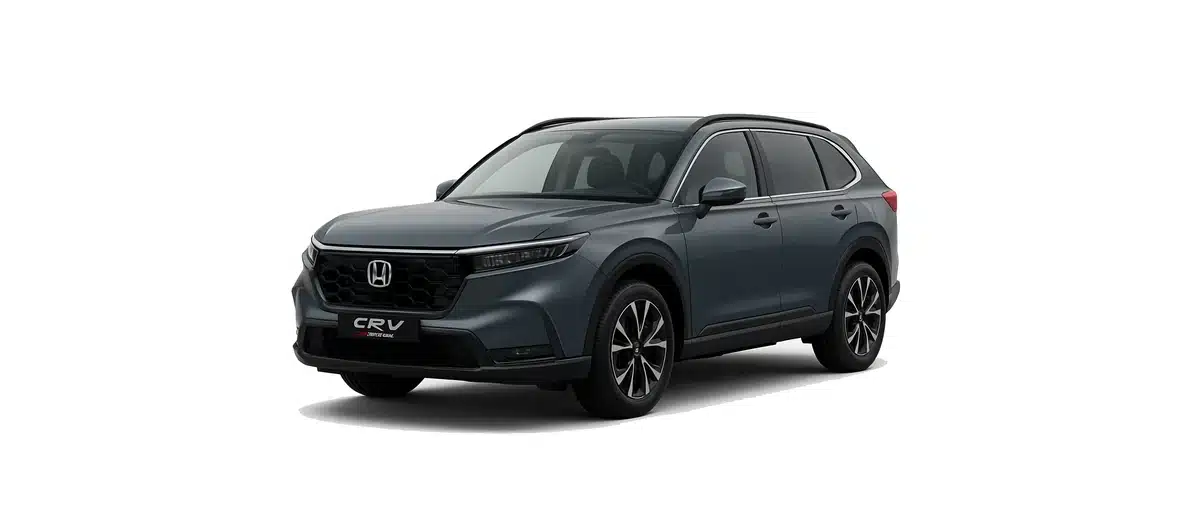
The Honda CR-V e:PHEV is the plug-in hybrid version of Honda’s large family SUV. Unlike the CR-V e:HEV full hybrid, the e:PHEV can be plugged in and charged from an external power source, allowing many shorter journeys to be completed using electric power when the high-voltage battery has enough charge. It is important, however, to treat it as a plug-in hybrid rather than a fully electric car: once the EV charge is depleted, the petrol engine and hybrid system take over.
For UK drivers, the key point is that the CR-V e:PHEV is an AC-charging vehicle with a Type 2 charging port. Honda UK lists a 6.8 kW single-phase onboard charger and quotes around 2.5 hours for a 0-100% charge when using a suitable 6.8 kW / 32 A AC charger. That makes cable choice fairly straightforward: a good Type 2 to Type 2 Mode 3 cable rated for 32 A single-phase charging is the practical match for most home wallboxes and untethered public AC charge points.
View Honda CR-V e:PHEV Charging Cables
Honda CR-V e:PHEV Battery and Charging Specifications
The UK-market Honda CR-V e:PHEV is a sixth-generation CR-V plug-in hybrid SUV, currently listed in the UK as the Advance Tech Plug-in 2WD model. Honda describes the powertrain as a 2.0-litre i-MMD plug-in hybrid system, using both electric motor and petrol engine propulsion. In everyday driving, this means the vehicle can operate in EV mode when there is sufficient charge, but it is not designed around the rapid-charging routines used by many battery electric vehicles.
For charging, the important confirmed figures are a Type 2 AC charging port and a single-phase onboard AC charger rated at up to 6.8 kW. Honda UK gives an official electric driving range of up to 50 miles on the WLTP/EAER test cycle. As with any plug-in hybrid, real-world electric range depends heavily on temperature, speed, terrain, driving style and accessory use.
Battery Options
Honda UK lists an “EV Battery Capacity” of 17.7 kWh for the CR-V e:PHEV. The published UK information does not clearly separate gross and usable capacity, so it is best to treat 17.7 kWh as Honda’s listed battery capacity rather than quoting it as a confirmed usable figure.
The battery is a lithium-ion pack, and Honda’s technical information identifies the CR-V PHEV as having both a petrol fuel system and a high-voltage electrical system. For owners, the practical point is simple: the battery is large enough to make regular charging worthwhile, especially if your daily mileage is within the vehicle’s EV range. Keeping the battery topped up allows the car to spend more time operating electrically and reduces the number of journeys where the petrol engine has to do most of the work.
AC Charging Speed
AC charging is the main charging method for the Honda CR-V e:PHEV. Honda UK quotes approximately 2.5 hours for a 0-100% charge using a minimum 6.8 kW / 32 A AC charger. This is the sort of output commonly associated with a dedicated home wallbox or a suitable public AC charge point.
The onboard charger is the limiting factor. Even if you plug the CR-V e:PHEV into an 11 kW or 22 kW public AC post, the car will not charge faster than its own single-phase 6.8 kW AC capability allows. A higher-rated three-phase Type 2 cable should generally work on AC posts, but it will not increase the car’s charging speed beyond the vehicle’s onboard charger limit.
For most UK owners, a 32 A single-phase Type 2 to Type 2 Mode 3 cable is sufficient to access the CR-V e:PHEV’s maximum AC charging rate. If you regularly use a mixture of public AC posts and want broader compatibility for future vehicles, a three-phase cable may still be a reasonable choice, but it should be bought for flexibility rather than for faster charging on this Honda.
DC Rapid Charging Speed
There is no confirmed DC rapid-charging capability for the UK Honda CR-V e:PHEV in the checked Honda UK information. Honda lists a Type 2 charging port, and UK review material also notes the absence of DC rapid charging. For that reason, owners should not plan around CCS rapid chargers or 10-80% rapid-charging sessions with this model.
This is not unusual for a plug-in hybrid with a battery intended for local electric driving rather than long-distance rapid-charging stops. On longer journeys, the CR-V e:PHEV uses its petrol engine and hybrid system once EV charge is low. The most effective charging routine is therefore to plug in at home, at work or at AC destination chargers whenever the car is parked for a useful period.
Range and Efficiency
Honda UK quotes an official electric range of up to 50 miles for the CR-V e:PHEV. This is a WLTP/EAER figure, so it should be viewed as a standardised comparison figure rather than a guarantee for every journey. Independent reviews suggest that everyday EV mileage may often be lower, with around 30-35 miles being a cautious real-world expectation in some conditions.
For many drivers, that is still enough to cover school runs, commuting, shopping trips and local errands without using much petrol, provided the vehicle is charged regularly. The advantage of a plug-in hybrid depends heavily on driver behaviour: a CR-V e:PHEV that is plugged in most nights can be very different in day-to-day fuel use from one that is treated like a normal petrol hybrid and rarely charged.
Charging at Home
Home charging is likely to be the most convenient way to run a Honda CR-V e:PHEV efficiently. With a suitable dedicated wallbox, the car can usually be recharged overnight with plenty of time to spare. Honda’s quoted 0-100% AC charging time of around 2.5 hours means many owners may not need a full night to replenish the battery after typical daily use.
A tethered home wallbox has its own cable attached, so you simply plug the connector into the car. An untethered wallbox requires a separate Type 2 to Type 2 cable, which can also be used at many public AC charge points. For the CR-V e:PHEV, a 32 A single-phase Type 2 cable is the key specification to look for if you want to match the vehicle’s maximum AC rate.
Honda also quotes approximately 7.7 hours from a 2.3 kW domestic socket. A 3-pin charger is generally best suited as a backup or occasional charging solution, but can be used regularly if a qualified electrician has confirmed the socket and electrical installation are suitable for sustained EV charging. For regular ownership, a properly installed wallbox is usually more convenient, faster and better suited to repeated EV charging.
Public Charging
When using public charging, focus on AC charge points with Type 2 sockets. Many workplace, supermarket, hotel, leisure centre and town-centre chargers are AC units, and untethered public AC posts typically require you to bring your own cable. A Type 2 to Type 2 Mode 3 cable is therefore the most useful public-charging cable for the CR-V e:PHEV.
Because the car is AC-only in the confirmed UK information, there is no need to seek out motorway-style CCS rapid chargers for charging the battery. If you are planning a longer trip, it is usually more realistic to start with a full charge from home, use the electric range where it makes sense, and let the hybrid system handle the rest of the journey. Destination AC charging can then top the battery back up while the vehicle is parked.
Vehicle-Specific Features
The CR-V e:PHEV’s most relevant charging-related feature is its plug-in hybrid operating style. It can drive using electric power when the battery has sufficient charge, but it retains petrol-powered flexibility for longer journeys. This suits drivers who have regular short trips but still want the practicality of a large SUV and the reassurance of a combustion engine for extended use.
Honda UK information also refers to My Honda+ app functions including remote charging status and charging routines. Depending on the services enabled for your vehicle and account, this can make it easier to check whether the car is charging and manage routine charging habits. Honda also lists active heating and cooling for the high-voltage battery in its specification information.
Tow mode is listed for the plug-in hybrid, and Honda material and reviews cite towing capability of up to 1,500 kg. If you tow, carry heavy loads or drive at higher speeds, expect electric range and fuel economy to vary more noticeably. Charging before such journeys can still help, but the petrol-hybrid system will play a larger role once energy demand increases.
Charging Tips
- Choose the right cable: a Type 2 to Type 2 Mode 3 cable is the correct format for most untethered home wallboxes and public AC charge points.
- Match the onboard charger: a 32 A single-phase cable is sufficient for the car’s 6.8 kW AC charging capability.
- Do not expect faster charging from 22 kW posts: the CR-V e:PHEV will still be limited by its onboard AC charger.
- Charge little and often: frequent top-ups help maximise electric driving and reduce petrol use on local journeys.
- Use scheduled charging where useful: if your home tariff offers cheaper off-peak electricity, timed charging can help reduce running costs.
- Keep a cable in the car: many public AC posts are untethered, so carrying your Type 2 cable improves your charging options.
- Be realistic about EV range: the official 50-mile figure is a WLTP result; weather, route and driving style can reduce it.
Frequently Asked Questions
What charging cable does the Honda CR-V e:PHEV use?
For UK AC charging, the Honda CR-V e:PHEV uses a Type 2 connection. A Type 2 to Type 2 Mode 3 cable is the usual choice for untethered home wallboxes and public AC charging posts.
Is a 32 A cable enough for the Honda CR-V e:PHEV?
Yes. Honda UK lists a 6.8 kW single-phase onboard charger, so a 32 A single-phase Type 2 cable is sufficient to access the vehicle’s maximum AC charging rate.
Can the Honda CR-V e:PHEV use DC rapid chargers?
There is no confirmed CCS or DC rapid-charging capability for the UK CR-V e:PHEV in the checked Honda UK information. Owners should plan around Type 2 AC charging instead.
How long does the Honda CR-V e:PHEV take to charge?
Honda UK quotes approximately 2.5 hours for a 0-100% charge from a suitable 6.8 kW / 32 A AC charger. From a 2.3 kW domestic socket, Honda quotes around 7.7 hours.
Is the Honda CR-V e:PHEV fully electric?
No. It is a plug-in hybrid. It can drive on electric power when the battery has enough charge, but it also has a petrol engine and hybrid system for longer journeys and when EV charge is low.
What This Means for Drivers
The Honda CR-V e:PHEV rewards regular charging. Its official electric range is high enough for many daily routines, but the benefit depends on keeping the battery topped up. For most owners, the best setup is a dedicated home wallbox, a dependable Type 2 cable for untethered charging, and a habit of plugging in whenever the car is parked for long enough.
Because the car does not have confirmed DC rapid charging, the charging strategy is different from a fully electric SUV. You are not trying to minimise motorway rapid-charge stops; instead, you are using AC charging to start everyday journeys with as much EV range as possible. A 32 A single-phase Type 2 cable is the practical fit for the vehicle’s 6.8 kW onboard charger and should cover the majority of home, workplace and destination charging needs.
Looking for a Charging Cable for Honda CR-V e:PHEV?
If you need a suitable cable for home wallboxes or untethered public AC charge points, choose a Type 2 to Type 2 charging cable that matches the Honda CR-V e:PHEV’s AC charging requirements.
View Honda CR-V e:PHEV Charging Cables
Please note that this information is intended as a guide. Charging specifications may change due to model and year of manufacture. For precise information, always refer to your vehicle user manual.

