
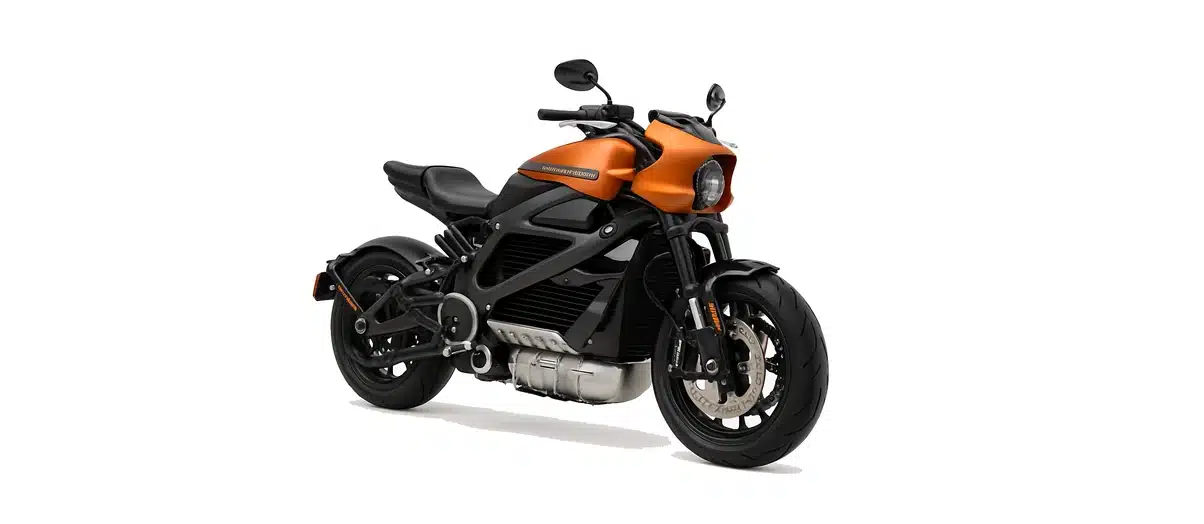
The Harley-Davidson LiveWire was one of the most distinctive early electric motorcycles sold in the UK. This guide covers the original Harley-Davidson-branded LiveWire, model code ELW, sold around the 2020 and 2021 model years. It should not be confused with later LiveWire ONE or LiveWire S2 models from the standalone LiveWire brand, as specifications and market details can differ.
For charging, the original LiveWire has an unusual mix of strengths and compromises. UK and European bikes use Type 2 AC charging and CCS2 rapid charging, so the connector layout is familiar to electric car drivers. However, the onboard AC charger is slow by car standards, while DC rapid charging is the practical option when you need a quick turnaround during a ride.
View Harley-Davidson LiveWire Charging Cables
Harley-Davidson LiveWire Battery and Charging Specifications
The original Harley-Davidson LiveWire is a fully electric motorcycle. It is not a plug-in hybrid, range-extender or petrol-assisted bike. Harley-Davidson described its battery as a lithium-ion Rechargeable Energy Storage System, or RESS, mounted within an aluminium frame and paired with the H-D Revelation permanent-magnet synchronous motor.
For the original ELW model, official Harley-Davidson media-kit data lists a 15.5 kWh total battery capacity, with 13.6 kWh minimum usable capacity. The bike uses a single-speed transmission, so charging behaviour is mainly determined by the battery, the onboard charger and the charging infrastructure rather than by drivetrain settings.
For UK and European examples, the charging port supports Type 2 AC and CCS2 DC rapid charging. North American bikes use different connector standards, typically J1772 for AC and CCS1 for DC, so grey imports need particular care before buying a cable or planning public charging stops.
Battery Options
The original Harley-Davidson LiveWire ELW was not offered with a range of battery sizes in the way many electric cars are. The key battery figure for this guide is the original LiveWire RESS specification: 15.5 kWh total and 13.6 kWh minimum usable.
Some later material for LiveWire ONE refers to a slightly different battery figure, but that belongs to the later LiveWire-branded model and should not be treated as a universal specification for the original Harley-Davidson LiveWire. If you are checking a used bike, it is sensible to confirm the model year, market origin and connector type rather than relying only on the LiveWire name.
AC Charging Speed
AC charging is the area where the LiveWire behaves very differently from most electric cars. Harley-Davidson’s official specifications and owner information list a 1400 W onboard charger, which is around 1.4 kW. The owner manual also indicates that even when AC Level 2 equipment is connected, the bike’s onboard charger still charges at Level 1 rate.
In practical terms, this means a 7 kW, 11 kW or 22 kW Type 2 post will not make the original LiveWire charge at those rates. The charge point may be capable of delivering far more power, but the motorcycle’s onboard charger is the limiting factor. A Type 2 cable is still useful because it lets UK riders connect to home wallboxes, workplace charge points and many public AC posts, but it should be chosen with realistic expectations.
Harley-Davidson’s official AC charge times are around 10 hours from 0-80% and about 12.5 hours from 0-100%. That makes AC charging well suited to overnight charging, workplace parking or long stops, rather than short coffee-break top-ups.
DC Rapid Charging Speed
DC rapid charging is one of the original LiveWire’s most important advantages over many electric motorcycles of its period. On UK and European bikes, the CCS2 Combo connector allows the bike to use compatible CCS rapid chargers, subject to charger availability and the bike’s charging limits.
Harley-Davidson quotes official DC fast-charge times of around 40 minutes from 0-80% and 60 minutes from 0-100%. A verified official 10-80% figure is not commonly published for this original model, so it is better to use Harley-Davidson’s stated 0-80% and 0-100% figures rather than inventing a car-style benchmark.
Some UK third-party charging guides list the LiveWire’s maximum DC rate at around 13 kW, while Harley-Davidson’s own material tends to focus on elapsed charging time rather than a headline peak kW figure. In real use, charge speed can vary with battery temperature, state of charge and charger conditions. As with most EVs, charging from low to mid battery percentage is usually more time-efficient than waiting for the final few percent.
Range and Efficiency
There is no widely used WLTP car-style range figure to quote for this original Harley-Davidson LiveWire. Instead, Harley-Davidson published motorcycle-specific figures, including 146 miles MIC city range, 70 miles sustained highway range, 95 miles combined range and 98 miles WMTC range.
For UK riders, the most useful real-world planning number is often around the combined figure, with the understanding that riding style and road type make a large difference. Urban riding, lower speeds and regular regenerative braking can help range. Fast dual carriageway or motorway riding is much more demanding, which is reflected in the lower sustained highway figure.
The relatively small battery compared with an electric car means the LiveWire does not need huge amounts of energy to refill. The trade-off is that AC charging is limited by the onboard charger, so the charging time is not as short as the battery size alone might suggest.
Charging at Home
Home charging is straightforward if expectations are set correctly. A dedicated home charge point with a Type 2 socket can be used with a suitable Type 2 cable, but the bike will still draw only around 1.4 kW according to official Harley-Davidson data. That is slow compared with a 7 kW electric car wallbox, but it can work well overnight because the LiveWire’s battery is much smaller than a car battery.
A full AC charge from empty is quoted at about 12.5 hours, while 0-80% is around 10 hours. Most riders will not arrive home at 0%, so daily top-ups may take less time. If the bike is used for commuting, plugging in during the evening or overnight can be a practical routine.
A 3-pin charger is generally best suited as a backup or occasional charging solution, but can be used regularly if a qualified electrician has confirmed the socket and electrical installation are suitable for sustained EV charging. Avoid using extension leads with a portable EVSE; Harley-Davidson’s owner information states that the EVSE is designed to plug directly into a wall outlet.
Public Charging
Public charging falls into two categories for the LiveWire: AC Type 2 charging and DC CCS2 rapid charging. AC charging is useful when the bike will be parked for a long period, such as at work, at a hotel, near a destination or during a long meal. The charge point may advertise 7 kW, 11 kW or 22 kW, but the LiveWire will not use that full AC capability.
For ride-day turnarounds, CCS2 rapid charging is the more useful option. If you are touring or planning a longer day ride, look for reliable CCS rapid chargers along the route and allow time for the 0-80% session quoted by Harley-Davidson. Because the battery is small by car standards, you may not need a very long stop to add useful range, but availability, charger location and connector access can matter more on a motorcycle than on a car.
Before relying on any public charger, check whether your motorcycle is a UK/EU bike or an imported North American example. A UK/EU original LiveWire should use Type 2 AC and CCS2 DC. An imported bike with J1772/CCS1 hardware will not match most UK public rapid-charging connectors without specialist considerations.
Vehicle-Specific Features
The LiveWire’s standout charging feature is the combination of slow AC charging with genuine DC rapid-charging capability. Many electric motorcycles prioritise lighter onboard charging hardware and may not support rapid charging at all, so the LiveWire’s CCS capability is valuable for riders who want to cover more distance in a day.
The charging port is located under a cap forward of the seat area, making it different from the side or rear charging positions found on many electric cars. When using public chargers, park so the cable can reach comfortably without being stretched or creating a trip hazard.
The bike also offers adjustable regenerative braking through ride modes, contributing to its engine-braking feel. Regeneration can help recover some energy during slowing and descending, but it should be seen as an efficiency aid rather than a replacement for planned charging stops.
Charging Tips
- Use a Type 2 cable for long stops. It is useful for home wallboxes, workplace charging and public AC posts, even though the bike’s onboard charger limits AC speed.
- Do not expect 7 kW AC charging. The supply may be rated at 7 kW, 11 kW or 22 kW, but the original LiveWire is officially listed with a 1.4 kW onboard charger.
- Use CCS2 for quick turnarounds. Harley-Davidson quotes 0-80% in around 40 minutes and 0-100% in around 60 minutes on DC fast charging.
- Avoid exclusive rapid charging where possible. Harley-Davidson’s owner guidance suggests Level 1 charging places the least stress on the RESS and gives a best-practice ratio of four Level 1 charges to one DC fast charge.
- Check connector type on used bikes. UK/EU and North American connector standards differ, which is especially important for imported motorcycles.
- Plan around riding style. Sustained high-speed riding uses more energy than urban riding, so leave extra margin for motorway or fast A-road journeys.
Frequently Asked Questions
Does the Harley-Davidson LiveWire use a Type 2 cable?
UK and European original LiveWire models use Type 2 for AC charging. A Type 2 cable is therefore useful for untethered home charge points, workplace chargers and many public AC posts.
Can the Harley-Davidson LiveWire charge at 7 kW on AC?
No, not according to the official original LiveWire data. Harley-Davidson lists a 1400 W onboard charger, and the owner manual indicates that AC Level 2 equipment still charges the bike at Level 1 rate.
Does the LiveWire support CCS rapid charging?
Yes, UK and European original LiveWire bikes support CCS2 rapid charging. Harley-Davidson quotes around 40 minutes from 0-80% and around 60 minutes from 0-100% using DC fast charging.
What range does the original Harley-Davidson LiveWire have?
Harley-Davidson published 146 miles MIC city, 70 miles sustained highway, 95 miles combined and 98 miles WMTC. There is no reliable WLTP car-style figure to use for this original model.
Is the LiveWire the same as the LiveWire ONE?
No. The original Harley-Davidson LiveWire ELW came before LiveWire became a standalone electric motorcycle brand. Later LiveWire ONE and S2 models should be checked separately because details may differ.
What This Means for Drivers
For riders, the original Harley-Davidson LiveWire is best understood as an electric motorcycle with two very different charging personalities. At home or work, it is simple but slow: plug into a suitable Type 2 AC point and allow plenty of time. On the road, CCS2 rapid charging is the key feature that makes longer ride days more realistic.
The main cable decision is therefore not about chasing the highest AC rating. A suitable Type 2 cable gives access to the infrastructure you need, but the motorcycle decides the AC charging speed. For faster charging, you will be using the tethered CCS cable attached to a rapid charger rather than your own Type 2 cable.
Looking for a Charging Cable for Harley-Davidson LiveWire?
We can help you choose a suitable charging cable for the original Harley-Davidson LiveWire, including Type 2 options for UK and European AC charging. Always confirm your bike’s connector type first, especially if it may be an imported model.
View Harley-Davidson LiveWire Charging Cables
Please note that this information is intended as a guide. Charging specifications may change due to model and year of manufacture. For precise information, always refer to your vehicle user manual.

