
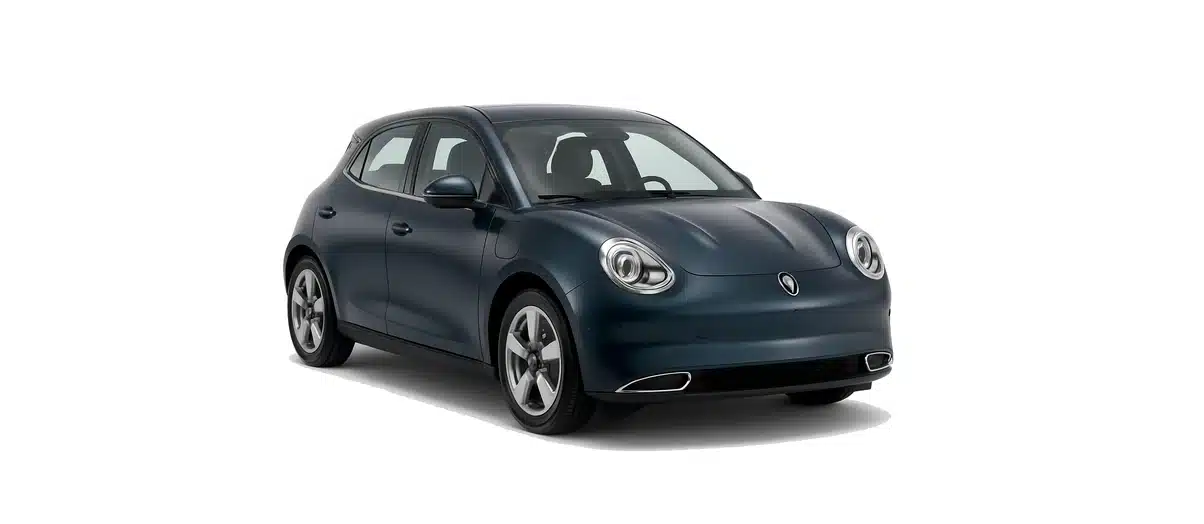
The GWM Ora 3, known in the UK as the GWM ORA 03 and originally launched as the ORA Funky Cat, is a fully electric 5-door hatchback from Great Wall Motor. Although the UK model has reportedly been withdrawn from factory-order availability, many cars remain in use and some examples may still appear as dealer stock or used vehicles. For owners, the important point is simple: the Ora 3 is a battery-electric vehicle, so choosing the right cable and understanding its charging limits will make day-to-day ownership much easier.
This guide explains the GWM Ora 3’s battery options, Type 2 AC charging, CCS rapid charging, realistic charging times, home charging considerations and public charging cable selection for UK drivers.
View GWM Ora 3 Charging Cables
GWM Ora 3 Battery and Charging Specifications
UK-market GWM Ora 3 / ORA 03 models use a Type 2 connection for AC charging and a CCS Combo 2 connection for DC rapid charging. The charge port is located on the left-front side of the car. For most UK drivers, this means you will use a Type 2 cable for home and public AC charging, while motorway and rapid-charging hubs use a tethered CCS connector that is already attached to the charger.
| Specification | GWM Ora 3 / ORA 03 |
|---|---|
| Vehicle type | Battery-electric vehicle |
| AC charging connector | Type 2 |
| DC rapid charging connector | CCS Combo 2 |
| Maximum AC charging | Up to 11 kW, where a suitable three-phase supply is available |
| Typical UK home wallbox charging | Up to 7.4 kW on most single-phase supplies |
| Maximum DC rapid charging | Approximately mid-60 kW range, depending on battery pack and source |
| Battery options | 48 kWh or 63 kWh, depending on trim |
Battery Options
The UK Ora 3 line-up has used two main battery sizes. Earlier and lower-trim cars are commonly associated with the smaller 48 kWh battery, while higher-specification Pro and GT versions use the larger 63 kWh battery. GWM UK material rounds these to 48 kWh and 63 kWh respectively.
The 48 kWh version has a gross capacity of around 47.8 kWh, with usable capacity listed at about 45.4 kWh. Official UK material quotes up to 193 miles WLTP for this version, while independent real-world estimates are closer to around 160 miles, depending on speed, temperature, tyres and driving style.
The 63 kWh version has a gross capacity of around 63.1 kWh, with usable capacity listed at about 59.3 kWh. Official UK material quotes up to around 260 miles WLTP, with independent real-world estimates around 210 miles. As with any EV, motorway driving in winter will usually reduce the range, while urban and mixed driving in mild weather should be more favourable.
AC Charging Speed
The GWM Ora 3 can accept up to 11 kW AC charging, but this headline figure needs some UK context. An 11 kW AC charge rate normally requires a three-phase electrical supply. Most UK homes have a single-phase supply, which means a typical home wallbox will usually charge the car at up to 7.4 kW.
On a 7.4 kW home charger, the smaller 48 kWh Ora 3 is estimated to take roughly 7 hours 15 minutes for a full charge from empty, while the larger 63 kWh version is estimated at about 9 hours 30 minutes. In real use, you will rarely charge from completely empty to completely full, so overnight charging is generally practical for both versions.
Where an 11 kW public AC charge point or three-phase home installation is available, the Ora 3 can charge more quickly than it would on a standard single-phase home wallbox. However, for most owners, it is better to plan around 7.4 kW home charging rather than assuming the maximum 11 kW rate will always be available.
DC Rapid Charging Speed
For rapid charging, the GWM Ora 3 uses a CCS connector. DC rapid chargers have their own tethered cable, so you do not need to bring your own cable for CCS charging. You simply plug the charger’s CCS connector into the car’s charging port.
Rapid charging performance is modest compared with some newer EVs. Available data places the peak DC rate at around 64 kW for the 48 kWh battery and around 69 kW for the 63 kWh battery, while GWM UK owner material refers to charging at up to 67 kW. In practical terms, using a 150 kW or 350 kW rapid charger will not make the Ora 3 charge beyond the car’s own limit.
Charging-time figures also vary depending on the source and the state-of-charge window being measured. For the 48 kWh version, a 10-80% rapid charge is estimated at around 45 minutes. For the 63 kWh version, a 10-80% rapid charge is estimated at about 49 minutes. GWM UK owner material gives a generic ORA 03 rapid-charge claim of around 42 minutes for 15-80% at up to 67 kW. When planning longer journeys, it is best to think in terms of roughly three-quarters of an hour for a substantial rapid-charge stop.
Range and Efficiency
The Ora 3’s range depends heavily on which battery you have. If you own a 48 kWh Pure or Pure+ car, the official WLTP figure is up to 193 miles, with real-world use often expected to be lower. For mixed UK driving, around 160 miles is a reasonable planning estimate, although your result will vary.
For the 63 kWh Pro or GT versions, the official WLTP figure is up to around 260 or 261 miles. A real-world estimate of around 210 miles is a useful reference point for everyday planning. Gentle urban use in mild weather can improve efficiency, while sustained motorway speeds, cold temperatures, heavy rain and cabin heating can reduce range.
For long-distance driving, the bigger battery is clearly more flexible, but the rapid-charging rate remains in the mid-60 kW region. That means the Ora 3 is at its best when most charging is done at home, work or slower public AC points, with CCS rapid charging used for longer trips rather than relied on every day.
Charging at Home
For most GWM Ora 3 owners, home charging will be the cheapest and most convenient way to run the car. A dedicated 7.4 kW home wallbox is usually the best fit for a UK single-phase household supply. It allows the car to be charged overnight and can often be paired with an off-peak EV electricity tariff.
If you choose an untethered wallbox, you will need a Type 2 to Type 2 charging cable. If you choose a tethered wallbox with a fixed Type 2 lead, you will not need to connect your own cable at home, but you should still keep a Type 2 cable in the car for untethered public AC charge points.
A 3-pin domestic charger can be useful in some situations, especially when visiting family, staying away from home or dealing with an unexpected charging need. However, a 3-pin charger is generally best suited as a backup or occasional charging solution, but can be used regularly if a qualified electrician has confirmed the socket and electrical installation are suitable for sustained EV charging. Standard domestic sockets were not primarily designed for repeated high-load EV charging over many hours, so professional electrical advice is important.
Public Charging
Public charging for the GWM Ora 3 falls into two main categories: AC destination charging and DC rapid charging.
Public AC chargers are common in car parks, hotels, workplaces, shopping centres and town-centre locations. Many of these units are untethered, meaning you need to bring your own Type 2 cable. The Ora 3’s 11 kW AC capability can be useful if the charger and electrical supply support it, although many public AC points deliver 7 kW or 22 kW. On a 22 kW AC post, the Ora 3 will not take 22 kW; it will charge at up to its own AC limit, where conditions allow.
DC rapid chargers are more common at motorway services, charging hubs and larger retail destinations. These use CCS connectors and are tethered, so the cable is attached to the charger. A higher-powered charger is safe to use, but the car will only draw the power it can accept. For the Ora 3, that means you should not expect ultra-rapid charging speeds, even when connected to a very high-powered unit.
Vehicle-Specific Features
The GWM Ora 3 includes a user-set charging limit through the car’s Power Assistant or Charging Management menu, according to GWM UK owner material. This is useful for everyday battery care and for avoiding unnecessary electricity use. For routine use, GWM owner guidance refers to charging to around 80% where possible, while charging to 100% can be reserved for longer journeys when the extra range is needed.
Some UK information indicates that a heat pump was available on certain specifications, with the 2025 UK GT trim being the clearest confirmed example. It should not be assumed that every Ora 3 has a heat pump, so owners should check their individual car’s specification.
The Ora 3 is not listed as supporting vehicle-to-load, vehicle-to-home or vehicle-to-grid functions in the checked data. In other words, it should be treated as a conventional EV for charging purposes rather than as a portable power source or home-energy backup system.
Charging Tips
- Use a Type 2 cable for public AC charging: Many UK destination chargers are untethered, so keeping a Type 2 cable in the boot is sensible.
- Expect 7.4 kW at most UK homes: The car can accept up to 11 kW AC, but most domestic installations are single-phase.
- Use the charge limit: For everyday use, setting a limit around 80% is a practical way to follow manufacturer-style battery-care advice.
- Plan rapid stops realistically: The Ora 3’s CCS charging is useful, but not ultra-fast. Allow around 45-49 minutes for a typical 10-80% stop, depending on battery version and conditions.
- Know your battery size: The 48 kWh and 63 kWh versions have different range and charging-time expectations.
- Pre-plan winter journeys: Cold weather can reduce range and may make charging stops more frequent, particularly in the 48 kWh version.
Frequently Asked Questions
What charging cable does the GWM Ora 3 use?
The GWM Ora 3 uses a Type 2 connector for AC charging. For UK public AC charge points, a Type 2 to Type 2 cable is the standard cable to carry. DC rapid charging uses the CCS connector attached to the rapid charger.
Can the GWM Ora 3 charge at 11 kW at home?
Only if the home has a suitable three-phase supply and compatible charger installation. Most UK homes are single-phase, so owners should normally expect up to 7.4 kW from a dedicated home wallbox.
How long does the GWM Ora 3 take to charge at home?
At up to 7.4 kW, the 48 kWh version is estimated at roughly 7 hours 15 minutes for a full charge, while the 63 kWh version is estimated at about 9 hours 30 minutes. Partial top-ups will be quicker.
How fast is GWM Ora 3 rapid charging?
The Ora 3’s DC charging peak is in the mid-60 kW range, depending on battery pack and source. A 10-80% charge is typically estimated at around 45 minutes for the 48 kWh car and about 49 minutes for the 63 kWh car.
Is the GWM Ora 3 the same as the ORA Funky Cat?
In the UK, the car was originally launched as the ORA Funky Cat and later renamed ORA 03. Many owners and used-car listings may still refer to the same model family by the earlier name.
What This Means for Drivers
The GWM Ora 3 is straightforward to charge once you understand its limits. For most UK owners, the ideal setup is a 7.4 kW home wallbox for overnight charging and a Type 2 cable kept in the car for public AC posts. The car’s 11 kW AC capability is useful where three-phase charging is available, but it should not be the default expectation for a typical UK home.
On longer journeys, CCS rapid charging gives the Ora 3 useful flexibility, but its mid-60 kW peak means charging stops are longer than in some newer EVs. The larger 63 kWh battery offers better range between stops, while the 48 kWh version is better suited to drivers with predictable daily mileage and convenient home charging.
Looking for a Charging Cable for GWM Ora 3?
If you need a compatible Type 2 cable for public AC charging or an untethered home wallbox, We offer charging cables for the GWM Ora 3 / ORA 03 to suit typical UK charging setups.
View GWM Ora 3 Charging Cables
Please note that this information is intended as a guide. Charging specifications may change due to model and year of manufacture. For precise information, always refer to your vehicle user manual.

