
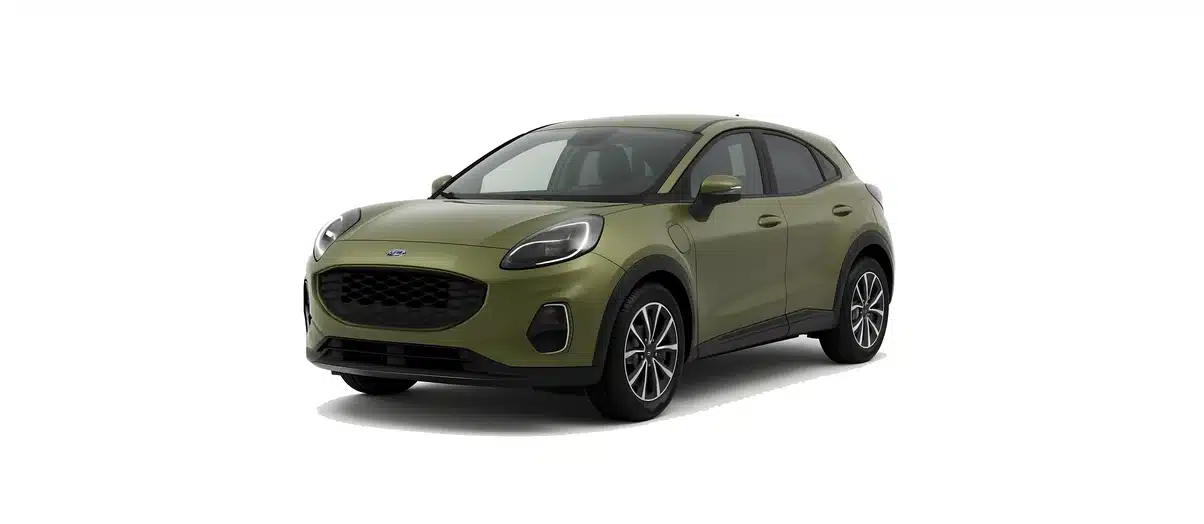
The Ford Puma name now covers two very different types of car in the UK: the petrol/EcoBoost hybrid Ford Puma and the all-electric Ford Puma Gen-E. This distinction matters for charging. The standard Puma EcoBoost hybrid is not a plug-in vehicle, so it does not use an external charging cable. If you are looking for Ford Puma charging cables, the vehicle you need to identify is the Ford Puma Gen-E.
The Puma Gen-E is Ford’s electric compact SUV/crossover, using a Type 2 connection for AC charging and CCS for DC rapid charging. Current UK information lists the Puma Gen-E with a 53 kWh installed battery and 46.8 kWh usable capacity, although earlier launch and MY24-25 information quoted a lower usable capacity. That is why some charging and range figures online may not match perfectly.
View Ford Puma Charging Cables
Ford Puma Battery and Charging Specifications
For UK charging purposes, the key model is the Ford Puma Gen-E. It is a battery-electric vehicle with an AC Type 2 inlet and CCS DC rapid-charging capability. According to current UK data, the Puma Gen-E can accept up to 11 kW on AC where a suitable three-phase supply is available, while most UK home charging will be limited to up to 7.4 kW on a single-phase wallbox.
| Specification | Ford Puma Gen-E |
|---|---|
| Vehicle type | Battery-electric compact SUV/crossover |
| AC charging connector | Type 2 |
| DC rapid charging connector | CCS |
| Current UK battery | 53 kWh installed, 46.8 kWh usable |
| Maximum AC charging | Up to 11 kW where supported |
| Typical UK home charging | Up to 7.4 kW on many single-phase home charge points |
| Maximum DC rapid charging | Up to 100 kW |
| DC 10-80% charging time | Around 26 minutes using a suitable 100 kW charger, based on current Ford UK information |
Battery Options
The Puma Gen-E battery figures need a little context because current UK cars and earlier launch information are not identical.
Current UK Puma Gen-E models: Ford’s UK price list effective 1 April 2026 lists Select, Premium and BlueCruise Edition versions with a 53 kWh installed battery and 46.8 kWh usable capacity. The Select is listed at up to 259 miles WLTP combined, while Premium and BlueCruise Edition versions are listed at up to 251 miles WLTP combined.
Earlier launch and MY24-25 cars: Launch material and EV Database UK information for earlier Puma Gen-E examples used a smaller usable battery figure of around 43.0 to 43.6 kWh. Official WLTP range figures were also lower than the latest UK figures. If you are buying used, or comparing an early test review with a current price list, check which model year and specification the information refers to.
The important point for cable selection is that both current and earlier Puma Gen-E cars use Type 2 AC charging and CCS rapid charging. The battery capacity affects range and charging time, but not the basic cable type needed for AC charging.
AC Charging Speed
The Ford Puma Gen-E uses a Type 2 connection for AC charging. EV Database UK lists an 11 kW onboard AC charger, which is useful if you have access to a three-phase charge point. In many UK homes, however, the practical charging rate will be up to 7.4 kW because domestic supplies are commonly single-phase.
At a 7.4 kW home wallbox, a current 46.8 kWh usable Puma Gen-E is listed by EV Database at around 7.5 hours for a full charge. In day-to-day use, most drivers will not charge from completely empty to completely full; topping up from a typical evening arrival state of charge is usually much quicker.
Ford UK states that the Puma Gen-E comes with a Type 2 Mode 3 public charging cable as standard. An optional Type 2 Mode 2 cable is intended for a 230 V domestic socket. A 3-pin charger is generally best suited as a backup or occasional charging solution, but can be used regularly if a qualified electrician has confirmed the socket and electrical installation are suitable for sustained EV charging.
DC Rapid Charging Speed
For longer journeys, the Puma Gen-E can use CCS DC rapid chargers. Ford’s current UK information states a maximum DC charging rate of 100 kW and a 10-80% charging time of around 26 minutes when using a suitable 100 kW fast charger.
You do not need to buy a separate DC charging cable for rapid charging. CCS rapid chargers have a tethered cable attached to the charging unit. You simply plug the charger’s CCS connector into the car’s charge port.
As with most electric cars, it is usually most efficient to plan motorway charging stops around the 10-80% window. Charging tends to slow as the battery fills, especially above 80%, so a shorter stop to reach your next destination or next charger can be more time-efficient than waiting for 100%.
Range and Efficiency
The current UK Puma Gen-E Select is listed at up to 259 miles WLTP combined, while Premium and BlueCruise Edition versions are listed at up to 251 miles WLTP combined. EV Database UK gives a real-world range estimate of around 185 miles for the MY26 Puma Gen-E. Real-world range will vary with temperature, speed, tyre choice, driving style, payload and use of heating or air conditioning.
For local driving and mixed commuting, the Puma Gen-E’s official range should be more than enough for many drivers to charge at home a few times per week rather than every day. For motorway-heavy use, expect energy consumption to rise and plan charging stops more carefully, particularly in winter.
If you see lower range figures in older reviews or brochures, they may refer to earlier launch or MY24-25 cars with the smaller usable battery figure. This does not mean the charging connector is different; it simply reflects the change in published battery and range data.
Charging at Home
For most Puma Gen-E owners, home charging will be the most convenient and predictable way to run the car. A dedicated Type 2 home wallbox is the right match for the vehicle. In the UK, many homes will use a 7.4 kW single-phase wallbox, which is generally the realistic maximum for a standard domestic installation unless three-phase power is available.
A tethered home charger has its cable permanently attached, while an untethered charger requires you to plug in your own Type 2 charging cable. Neither approach is universally better. Tethered units are convenient at home, while untethered units keep the installation tidier and allow you to use the same cable at public AC charge points.
If you have off-street parking, charging overnight can make the Puma Gen-E feel very easy to live with. Many owners use a routine of setting a charge limit, plugging in after the last journey of the day, and allowing the car or charger to schedule charging for lower-cost electricity periods where available.
Public Charging
Public charging for the Ford Puma Gen-E falls into two broad categories: AC destination charging and DC rapid charging.
Public AC charging usually uses a Type 2 connection. Many AC posts are untethered, meaning you need to bring your own Type 2 cable. These chargers are common in car parks, hotels, workplaces, town centres and some supermarkets. They are well suited to longer stops where the car can add range while parked.
Public DC rapid charging uses the CCS connector. The cable is attached to the charger, so there is no separate CCS cable to purchase. These chargers are designed for faster stops on longer journeys and are often found at motorway services, charging hubs and major routes.
Ford promotes access to the BlueOval Charge Network with Octopus Electroverse, and Plug & Charge is supported at participating stations according to Ford UK and EV Database UK. Availability depends on the charging network, account setup and charger compatibility, so it is still sensible to have a backup payment method or app when travelling.
Vehicle-Specific Features
The Puma Gen-E is best understood as an electric version of Ford’s compact Puma crossover rather than a dedicated ground-up EV platform. For charging, the important vehicle-specific details are straightforward: Type 2 for AC, CCS for DC, a maximum listed AC rate of 11 kW and a maximum listed DC rate of 100 kW.
EV Database UK lists battery preconditioning as standard, which can help the battery reach a more suitable temperature for charging in the right conditions. This is particularly relevant before rapid charging, where battery temperature can affect how quickly the car can accept power.
EV Database UK does not list a heat pump for the Puma Gen-E, and it also lists vehicle-to-load, vehicle-to-grid and vehicle-to-home capability as not supported. For owners, that means the Puma Gen-E should be treated as a conventional battery-electric car for charging and energy use, rather than as an external power source for appliances or a home energy system.
Charging Tips
- Check which Puma you have: only the Ford Puma Gen-E is externally rechargeable. The petrol/EcoBoost hybrid Puma does not use charging cables.
- Use Type 2 for AC charging: this applies to home wallboxes and most public destination chargers.
- Use CCS for rapid charging: the DC cable is tethered to the charger, so you do not need to carry one.
- Expect 7.4 kW at many UK homes: although the car can accept up to 11 kW AC, that higher figure usually requires a suitable three-phase supply.
- Plan long trips around 10-80% stops: this is normally faster than trying to rapid charge to 100%.
- Be careful with older range figures: launch and MY24-25 Puma Gen-E data used a smaller usable battery figure than current UK 2026 information.
- Keep a Type 2 cable available: even if you charge mostly at home, an untethered public AC post may require your own cable.
Frequently Asked Questions
Is every Ford Puma a plug-in car?
No. The all-electric model is the Ford Puma Gen-E. The regular petrol/EcoBoost hybrid Ford Puma is not externally rechargeable and does not need an EV charging cable.
What charging cable does the Ford Puma Gen-E use?
For AC charging, the Puma Gen-E uses a Type 2 cable. For DC rapid charging, it uses the CCS connector, but the rapid charger supplies the tethered cable.
Can the Ford Puma Gen-E charge at 22 kW AC?
No confirmed UK data supports 22 kW AC charging for the Puma Gen-E. EV Database UK lists an 11 kW onboard AC charger, and many UK home installations will be limited to up to 7.4 kW.
How long does the Ford Puma Gen-E take to rapid charge?
Ford’s current UK information states around 26 minutes for a 10-80% charge using a suitable 100 kW fast charger. Actual charging time can vary with battery temperature, starting charge level, charger performance and conditions.
Does the Puma Gen-E come with a charging cable?
Ford UK states that the Puma Gen-E comes with a Type 2 Mode 3 public charging cable as standard. A Type 2 Mode 2 cable for a 230 V domestic socket is listed as optional.
What This Means for Drivers
The Ford Puma Gen-E should be simple to charge once you separate it from the non-plug-in Puma EcoBoost hybrid. For most UK owners, the practical setup is a Type 2 home wallbox, usually charging at up to 7.4 kW on a single-phase supply, plus a Type 2 cable for untethered public AC chargers. On longer journeys, use CCS rapid chargers and plan around the 10-80% charging window.
If you are comparing current and used Puma Gen-E examples, pay attention to model year. Current UK 2026 information lists a 46.8 kWh usable battery and higher WLTP range than earlier launch or MY24-25 data. Cable choice remains the same, but range expectations and full-charge times may differ slightly.
Looking for a Charging Cable for Ford Puma?
If you drive the all-electric Ford Puma Gen-E, We can help you choose a suitable Type 2 charging cable for home and public AC charging. Remember that the petrol/EcoBoost hybrid Ford Puma is not a plug-in vehicle and does not require an EV charging cable.
View Ford Puma Charging Cables
Please note that this information is intended as a guide. Charging specifications may change due to model and year of manufacture. For precise information, always refer to your vehicle user manual.

