
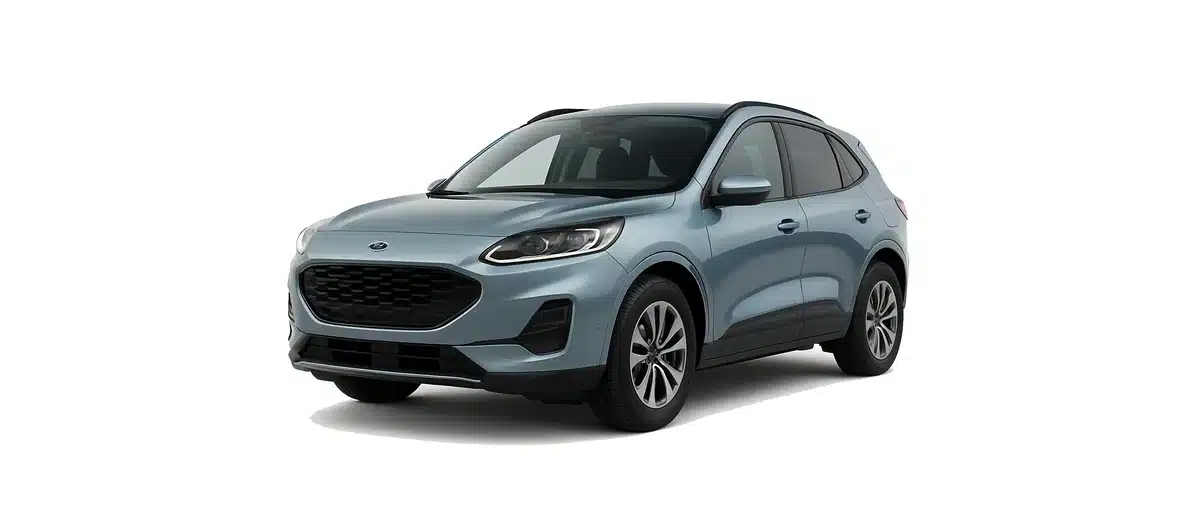
The Ford Kuga is a popular mid-size family SUV, but it is important to understand which version you own before buying a charging cable. In the current UK range, only the Ford Kuga Plug-In Hybrid can be externally charged. Petrol and self-charging hybrid Kuga models do not have a plug-in charging port and do not use an EV charging cable.
For the current Ford Kuga 2.5 Duratec 243PS Plug-In Hybrid FWD, the key message is simple: it uses Type 2 AC charging only. It is not a full battery-electric vehicle, it does not use CCS rapid charging, and it is designed around regular top-ups at home, work or public AC charge points. Used in this way, the Kuga PHEV can cover many shorter journeys on electric power while still having the petrol engine available for longer trips.
View Ford Kuga Charging Cables
Ford Kuga Battery and Charging Specifications
The current UK Ford Kuga Plug-In Hybrid uses a 2.5-litre Duratec petrol engine with Ford’s power-split hybrid system and a rechargeable high-voltage battery. Ford technical data lists the plug-in hybrid battery as a 14.4 kWh lithium-ion pack. The usable battery capacity is not stated in the official UK and European sources checked, so it is best not to treat the full 14.4 kWh figure as the amount available for everyday driving.
The charging port is a Type 2 AC inlet. According to the Ford owner information for 2026-built Kuga models, the charge port is located between the front left-hand side door and the front left wheel well. This is useful to know when choosing how to park near a home wallbox or public charging post.
Ford’s current price-list information shows the Kuga PHEV as having no DC fast charging capability. The owner manual also describes AC Type 2 charging rather than CCS rapid charging. In practical terms, Kuga PHEV drivers should plan to use home wallboxes, workplace chargers and public AC charge points rather than motorway-style rapid chargers.
Battery Options
For external charging, the relevant model is the Ford Kuga 2.5 Duratec 243PS Plug-In Hybrid FWD. Ford lists a 14.4 kWh gross lithium-ion high-voltage battery for this plug-in hybrid powertrain.
The wider Ford Kuga range also includes standard petrol and self-charging hybrid versions. These models may use electric assistance while driving, but they are not plugged in and cannot be charged from a wallbox or public charge point. If you are buying a charging cable for a Kuga, confirm that the car is definitely the Plug-In Hybrid version before ordering.
Some older UK Kuga Plug-In Hybrid material and reviews refer to earlier 225PS versions and different quoted electric range figures. Those figures should not be mixed with current 243PS facelifted Kuga PHEV data without context.
AC Charging Speed
The Ford Kuga Plug-In Hybrid charges using single-phase AC power through a Type 2 connection. Ford owner information lists the PHEV charging equipment specification as 230 V, 16 A maximum, single phase, with a maximum charging power of 3.5 kW.
This means that even if you plug into a typical UK 7 kW home wallbox, the Kuga PHEV is expected to charge at around the vehicle’s own AC limit rather than using the full 7 kW available from the charger. Ford’s current price-list data gives a charging time of around 3 hours 30 minutes from a standard 7 kW single-phase wallbox, which is consistent with a relatively small plug-in hybrid battery and a vehicle-side charging limit below 7 kW.
For cable selection, a Type 2 to Type 2 charging cable is the correct choice for untethered home wallboxes and most untethered UK public AC charge points. A higher-rated cable will not force the Kuga to charge faster than the car allows, but it can still be useful if you also plan to use the cable with other EVs in future.
DC Rapid Charging Speed
The Ford Kuga Plug-In Hybrid does not offer DC rapid charging in the current UK data checked. Ford’s 2026.75MY price list lists DC fast charge as not applicable for the Kuga PHEV, and the car uses a Type 2 AC charging port rather than a CCS rapid charging connector.
This is one of the most common areas of confusion for plug-in hybrid SUV owners. A Kuga PHEV should not be routed to CCS rapid chargers on the assumption that it will charge like a battery-electric vehicle. Rapid charging hubs are mainly designed for full EVs with larger batteries and DC charging hardware. For the Kuga Plug-In Hybrid, AC charging at home, work, hotels, supermarkets and public destination chargers is the right approach.
Range and Efficiency
Ford’s current Kuga PHEV price-list data gives a combined WLTP all-electric range of up to 41.6 miles on some trims, with other trims listed at around 40.4 miles. Ford also lists extra-high speed WLTP electric figures around 29.2 to 29.8 miles, which gives a more realistic indication of what sustained faster driving can do to EV-only range.
In everyday use, expect the electric range to vary noticeably. Temperature, route type, speed, tyre condition, load, driving style and heater use can all make a difference. For many drivers, a real-world EV-only figure around the high-20s to mid-30s miles is a sensible planning assumption, although gentle urban and suburban driving in favourable weather may do better.
The Kuga PHEV is at its most efficient when it is charged frequently and used for shorter local trips where the electric motor can do much of the work. On longer motorway journeys, the petrol engine is a normal part of the driving experience, and overall fuel economy will depend heavily on how much of the journey can be covered using charge from the battery.
Charging at Home
Home charging is the most convenient way to run a Ford Kuga Plug-In Hybrid efficiently. Because the battery is much smaller than that of a full EV, a complete recharge can usually be done within a few hours on a suitable wallbox. Ford quotes around 3 hours 30 minutes from a standard 7 kW single-phase wallbox, although the vehicle itself appears to be limited to around 3.5 kW AC charging.
A dedicated home wallbox is still useful even though the Kuga will not take the full 7 kW. It gives you a convenient parking-and-plug-in routine, supports safer long-duration charging than an ordinary household socket, and may allow scheduled charging if your installation and energy tariff support it. Many owners will simply plug in overnight or between journeys so the car starts each day with useful electric range.
A 3-pin charger is generally best suited as a backup or occasional charging solution, but can be used regularly if a qualified electrician has confirmed the socket and electrical installation are suitable for sustained EV charging. Ford lists around 6 hours from a 230 V/16 A domestic socket, so it is slower than a wallbox and should be treated with appropriate care.
When installing a home charge point, make sure the parking position works with the Kuga’s front-left charging port location. Cable length, wallbox position and how you normally park can all affect day-to-day convenience.
Public Charging
For public charging, the Ford Kuga Plug-In Hybrid is best suited to AC destination chargers. These include many chargers found at supermarkets, car parks, hotels, leisure centres, workplaces and town-centre parking locations. If the charge point is untethered, you will need your own Type 2 to Type 2 cable.
Public AC charging can be useful when you are parked for a few hours. For example, a shopping trip, office day, cinema visit or hotel stay may give enough time to add most or all of the Kuga’s plug-in hybrid battery capacity back into the car. Short stops of only a few minutes are less useful, because the car does not support DC rapid charging.
When using public charging apps or route planners, filter for Type 2 AC charging rather than CCS rapid charging. A rapid charger site may have Type 2 AC posts as well, but many modern hubs focus on DC charging for full EVs. Checking connector type before you arrive avoids wasted journeys.
Vehicle-Specific Features
The Kuga Plug-In Hybrid combines an externally rechargeable battery with a petrol engine, a permanent-magnet AC traction motor and a CVT-style power-split transmission. This makes it different from a full battery-electric SUV. It can drive on electric power for shorter journeys when there is charge in the battery, but it also has the petrol engine available when required.
The most vehicle-specific charging point is the AC-only Type 2 setup. The charge port is on the front-left side of the vehicle, and Ford’s current information points to a maximum AC charging rate of around 3.5 kW. The car should therefore be thought of as a small-battery daily top-up vehicle, not a rapid-charging long-distance EV.
No clear Ford confirmation was found in the checked UK sources for heat pump fitment, battery preconditioning, vehicle-to-load, vehicle-to-grid or vehicle-to-home support on the exact current UK Kuga PHEV model. For that reason, those features should not be assumed when comparing the Kuga with full EVs or newer plug-in models.
Charging Tips
- Check the powertrain first: only the Kuga Plug-In Hybrid uses a charging cable. Petrol and self-charging hybrid Kuga models cannot be plugged in.
- Choose Type 2 for AC charging: a Type 2 to Type 2 cable is the right choice for untethered UK public AC chargers and untethered home wallboxes.
- Do not plan around DC rapid charging: Ford lists DC fast charging as not applicable for the Kuga PHEV.
- Plug in little and often: frequent charging helps maximise electric running on commuting, school runs and local journeys.
- Use a wallbox for convenience: even though the car will not take the full 7 kW, a dedicated wallbox is usually the easiest home charging method.
- Expect range to vary: cold weather, higher speeds and cabin heating can reduce EV-only range.
- Park with the port in mind: the charging flap is on the front-left side, so cable reach matters.
Frequently Asked Questions
Does every Ford Kuga need a charging cable?
No. Only the Ford Kuga Plug-In Hybrid can be externally charged. Petrol and self-charging hybrid Kuga models do not have a plug-in charging socket, so they do not need an EV charging cable.
What charging cable does the Ford Kuga Plug-In Hybrid use?
The Kuga Plug-In Hybrid uses a Type 2 AC charging connection. For untethered home wallboxes and public AC charge points, a Type 2 to Type 2 charging cable is the appropriate cable type.
Can the Ford Kuga PHEV use rapid chargers?
No. The current Ford data checked lists DC fast charging as not applicable for the Kuga Plug-In Hybrid. It should be charged using Type 2 AC charging, not CCS rapid charging.
How long does the Ford Kuga Plug-In Hybrid take to charge?
Ford lists around 3 hours 30 minutes from a standard 7 kW single-phase wallbox and around 6 hours from a 230 V/16 A domestic socket. The vehicle-side AC charging limit is listed at about 3.5 kW.
How far can the Ford Kuga PHEV drive on electric power?
Current Ford UK price-list data gives a combined WLTP electric range of around 40.4 to 41.6 miles depending on trim. Real-world EV-only range can be lower, especially in cold weather or at motorway speeds.
What This Means for Drivers
The Ford Kuga Plug-In Hybrid is best understood as a practical family SUV that rewards regular charging. If your daily driving is mostly local, a charged Kuga PHEV can cover many trips using electric power, with the petrol engine ready for longer journeys. The small battery also means home charging is straightforward, with a full recharge taking only a few hours on a suitable wallbox.
The two mistakes to avoid are buying a cable for a non-plug-in Kuga and expecting the plug-in hybrid to charge like a full EV. If your Kuga is the PHEV, use Type 2 AC charging and plug in whenever convenient. If your Kuga is petrol or self-charging hybrid, it does not need a charging cable at all.
Looking for a Charging Cable for Ford Kuga?
If you have confirmed that your vehicle is the Ford Kuga Plug-In Hybrid, We offer compatible Ford Kuga Type 2 charging cables for home and public AC charging.
View Ford Kuga Charging Cables
Please note that this information is intended as a guide. Charging specifications may change due to model and year of manufacture. For precise information, always refer to your vehicle user manual.

