
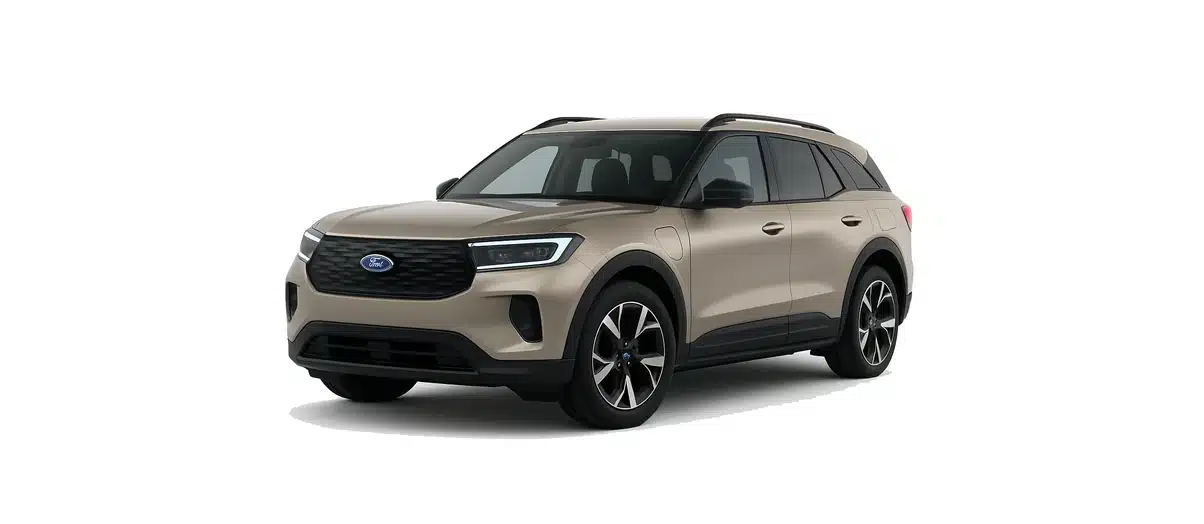
The current UK-market Ford Explorer is an all-electric SUV/crossover, not to be confused with the older Ford Explorer Plug-In Hybrid or the unrelated US-market petrol and hybrid Explorer models. For charging-cable selection, that distinction matters: the current Explorer EV uses a Type 2 socket for AC charging and a CCS Combo 2 connection for DC rapid charging.
This guide focuses on the current UK all-electric Ford Explorer EV, using MY26 UK ordering information. The Explorer range includes Standard Range RWD, Extended Range RWD and Extended Range AWD versions, and their battery sizes, driving range and rapid-charging figures are not identical. If you own an earlier MY24-25 Explorer EV, or the older Explorer Plug-In Hybrid, check your vehicle handbook or charging flap information before buying a cable.
View Ford Explorer Charging Cables
Ford Explorer Battery and Charging Specifications
Current UK Ford Explorer EV models use Type 2 AC charging and CCS Combo 2 DC rapid charging. All current MY26 Explorer EV variants are listed with an 11 kW AC onboard charger, although UK home charging is often limited by the property supply rather than the vehicle. A typical single-phase home wallbox will usually charge at up to 7.4 kW, while 11 kW AC charging generally requires a three-phase supply and a suitable charge point.
For DC rapid charging, the maximum charging rate depends on the battery and drivetrain. The Standard Range RWD is listed at around 105 kW peak DC charging, while the Extended Range RWD is listed at around 183 kW and the Extended Range AWD at around 185 kW. These are peak figures, not speeds you should expect for the whole charging session.
Battery Options
The Ford Explorer EV line-up is best understood by separating the three current UK battery and drivetrain combinations:
- Standard Range RWD: 58 kWh usable battery capacity, with Ford UK listing WLTP combined range figures of around 273 miles for Style and around 258 miles for Premium. EV Database estimates around 205 miles of real-world combined range.
- Extended Range RWD: 79 kWh usable battery capacity, with WLTP combined range varying by trim. Ford UK lists up to around 374 miles for Style/Select, around 362 miles for Collection and around 354 miles for Premium. EV Database estimates around 275 miles of real-world combined range.
- Extended Range AWD: 77 kWh usable battery capacity, with Ford UK listing around 321 miles WLTP combined range for the current UK Premium AWD model. EV Database estimates around 265 miles of real-world combined range.
The Standard Range version is the lower-capacity option and may suit drivers with regular access to home or workplace charging. The Extended Range RWD is the range-focused model, while the AWD version adds all-wheel-drive performance but does not have the longest listed range.
AC Charging Speed
AC charging is what you will normally use at home, at many workplaces and at slower public charge points. The current Ford Explorer EV has an 11 kW AC onboard charger. In practical UK terms, there are two common scenarios:
- 7.4 kW single-phase home charging: This is common for UK domestic wallboxes. It is usually the most convenient way to charge overnight.
- 11 kW three-phase AC charging: This may be available at some workplaces, commercial premises and public AC posts. It requires a three-phase supply and a suitable cable and charge point.
As a broad guide, a 7.4 kW home wallbox can add a substantial overnight charge to any Explorer EV variant. The 58 kWh Standard Range model will usually be easier to refill fully overnight than the larger Extended Range versions. On an 11 kW AC supply, charging times can be shorter, but this will only apply where the electrical supply and charge point support three-phase charging.
For cable choice, a Type 2-to-Type 2 cable is the correct AC public charging cable type for the current Ford Explorer EV. A 32A Type 2 cable is the safest general recommendation for public AC use because it will cover common 7 kW single-phase posts and, if the cable is three-phase rated, will also suit 11 kW three-phase AC charging where available.
DC Rapid Charging Speed
For motorway trips and longer journeys, the Ford Explorer EV uses CCS rapid charging. You do not normally use your own charging cable for DC rapid charging, because CCS rapid chargers have a tethered cable attached to the charger.
The current MY26 UK rapid-charging figures vary by version:
- Standard Range RWD: up to around 105 kW DC, with a 10-80% charge taking roughly 26-27 minutes depending on source and conditions.
- Extended Range RWD: up to around 183 kW DC, with a 10-80% charge taking around 29 minutes.
- Extended Range AWD: up to around 185 kW DC, with a 10-80% charge taking around 27 minutes.
These figures assume favourable conditions. Rapid charging slows as the battery fills, particularly above 80%, and a cold battery can also reduce charging speed. For efficient long-distance driving, it is usually better to arrive at a rapid charger with a lower state of charge, charge to around 80%, then continue your journey rather than waiting for the final 20%.
Range and Efficiency
The headline WLTP range for the current Ford Explorer EV reaches up to around 374 miles on certain Extended Range RWD versions. However, real-world range depends on speed, temperature, road conditions, wheel and tyre specification, heating use, payload and driving style.
As a cautious planning guide, EV Database estimates around 205 miles of real-world combined range for the Standard Range RWD, around 275 miles for the Extended Range RWD and around 265 miles for the Extended Range AWD. In winter motorway use, range may be lower. In mild weather on slower routes, it may be higher.
This matters for charging planning. A Standard Range Explorer EV can still work very well for daily driving, but it will need more frequent stops on longer trips than an Extended Range version. The Extended Range RWD is the strongest choice if maximum driving range is the priority, while the AWD model offers more power and traction but a shorter listed range than the longest-range RWD variant.
Charging at Home
For most Ford Explorer EV owners, home charging will be the cheapest and most convenient option, especially if paired with an EV-friendly electricity tariff. A dedicated home wallbox is generally preferable to relying on a domestic socket because it is faster, safer and designed for regular EV charging.
A 7.4 kW single-phase wallbox is the common UK home setup. Although the Explorer can accept up to 11 kW AC, you should not assume that 11 kW will be available at home unless the property has a three-phase supply and a compatible charger installation. Many UK homes are single-phase, so the car will typically charge at up to 7.4 kW on a suitable wallbox.
A 3-pin charger is generally best suited as a backup or occasional charging solution, but can be used regularly if a qualified electrician has confirmed the socket and electrical installation are suitable for sustained EV charging. Avoid using extension leads unless specifically rated and approved for the purpose, and never ignore heat, damage or warning signs around a socket or plug.
Ford UK states that the electric Explorer comes with a Mode 3 cable for AC public charge points. If you are replacing a cable, buying a spare or choosing a longer cable, make sure it is a Type 2-to-Type 2 cable with an appropriate current rating for the charge points you expect to use.
Public Charging
Public charging falls into two main categories: AC destination charging and DC rapid charging. AC destination chargers are commonly found in car parks, hotels, leisure centres, workplaces and town centres. These often require you to use your own Type 2 cable. For the Explorer EV, a 32A Type 2 cable is a practical choice for broad compatibility.
DC rapid and ultra-rapid chargers are the better option for long-distance travel. These use the CCS part of the Explorer’s charging port and provide their own tethered cable. You simply plug in the charger’s CCS connector, follow the payment or app instructions, and the vehicle and charger manage the charging session.
The Explorer EV is also listed with Plug & Charge support via ISO 15118-2 on current MY26 variants. Where the charging network, account and vehicle setup support it, Plug & Charge can simplify public rapid charging by allowing authentication through the vehicle rather than a separate card or app. Availability still depends on the charging network and account configuration.
Vehicle-Specific Features
The Ford Explorer EV is based on the Volkswagen Group MEB electric platform, with Ford-developed body and interior design for Europe. It includes several charging-related features that are useful for owners to understand.
- Battery and cabin pre-conditioning: Ford UK lists battery and cabin pre-conditioning for the Explorer EV, and EV Database also notes battery preconditioning, including navigation-based preconditioning. Using route planning to a rapid charger can help the battery reach a better temperature before arrival.
- Optional heat pump: Ford UK lists a heat pump as an option. A heat pump can help reduce heating-related energy use in colder conditions, but it should not be assumed to be fitted to every car.
- Vehicle-to-load: Ford confirms Pro Power Onboard / V2L at the charge port with an optional cable or adapter. This is intended for powering suitable external devices. Check Ford’s instructions and power limits before use.
- No confirmed V2G or V2H: Current data does not support claiming vehicle-to-grid or vehicle-to-home functionality for the Explorer EV.
Charging Tips
- Choose the right cable: For AC public charging, use a Type 2-to-Type 2 cable. A 32A cable gives the best flexibility for common UK AC posts.
- Do not expect 11 kW at every home: The car can accept 11 kW AC, but many UK homes are single-phase and will be limited to around 7.4 kW with a suitable wallbox.
- Use CCS for long journeys: Rapid chargers are the right choice for motorway and long-distance stops. They have their own tethered cables.
- Aim for 10-80% on rapid chargers: The fastest part of a rapid charge is usually in the middle of the battery. Charging beyond 80% can take disproportionately longer.
- Precondition when possible: If your Explorer is set up to precondition the battery before a rapid charger, use route planning to help improve charging performance.
- Know your variant: Standard Range, Extended Range RWD and Extended Range AWD models have different range and rapid-charging figures.
Frequently Asked Questions
What charging cable does the Ford Explorer EV use?
The current UK Ford Explorer EV uses a Type 2 connection for AC charging. For public AC posts, you need a Type 2-to-Type 2 cable. For DC rapid charging, the car uses CCS Combo 2, and the rapid charger provides the cable.
Can the Ford Explorer charge at 11 kW at home?
The Explorer EV has an 11 kW AC onboard charger, but 11 kW AC charging generally requires a three-phase supply. Many UK homes have single-phase electricity, where a suitable wallbox will usually charge at up to 7.4 kW.
How fast does the Ford Explorer rapid charge?
It depends on the version. Current UK MY26 figures list the Standard Range RWD at around 105 kW DC, the Extended Range RWD at around 183 kW and the Extended Range AWD at around 185 kW. These are peak rates, and the charging speed will taper during the session.
Is the Ford Explorer a plug-in hybrid?
The current UK Ford Explorer covered in this guide is the all-electric Explorer EV. Ford previously sold an Explorer Plug-In Hybrid in Europe/UK, but that is a different discontinued model with a much smaller battery and different charging requirements.
Does the Ford Explorer have vehicle-to-load?
Ford confirms Pro Power Onboard / V2L functionality for the Explorer EV using an optional cable or adapter. Vehicle-to-grid and vehicle-to-home support should not be assumed.
What This Means for Drivers
The current Ford Explorer EV is straightforward to charge once you identify which version you have. All current versions use Type 2 AC and CCS DC, so the basic cable and connector choice is simple. The main differences are battery capacity, range and DC rapid-charging peak speed.
For everyday UK use, a 7.4 kW home wallbox and a Type 2 public charging cable will suit many owners. If you regularly use three-phase workplace or public AC posts, a three-phase-rated Type 2 cable can help you make use of the Explorer’s 11 kW AC capability. For long trips, plan around CCS rapid charging, use preconditioning where available, and treat 10-80% as the most efficient rapid-charging window.
Looking for a Charging Cable for Ford Explorer?
If you need a replacement, spare or longer Type 2 cable for the current all-electric Ford Explorer, We sell compatible Ford Explorer charging cables for UK home, workplace and public AC charging use.
View Ford Explorer Charging Cables
Please note that this information is intended as a guide. Charging specifications may change due to model and year of manufacture. For precise information, always refer to your vehicle user manual.

