
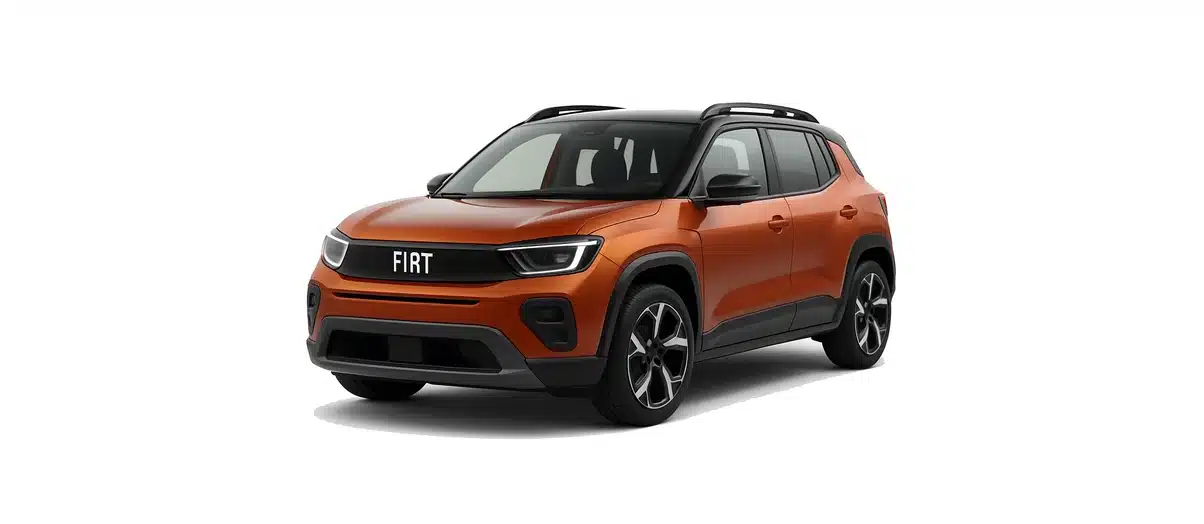
The Fiat Grande Panda Electric is a compact, characterful small hatchback designed for everyday UK driving. It sits in the wider Grande Panda range, but there is an important distinction for charging: the Grande Panda Electric is a battery-electric vehicle, while the Grande Panda Hybrid is a 48V mild hybrid and does not plug in. If you own or are ordering the Hybrid, you do not need an EV charging cable for that model.
For the electric version, the key charging points are straightforward: it uses a 44 kWh LFP battery, a Type 2 connector for AC charging and a CCS Combo 2 connector for DC rapid charging. Standard AC charging is around 7 kW, with 11 kW available as an option on some cars. Fiat also highlights an integrated 4.5 m spiral charging cable on the electric version, although available technical data suggests this may not be fitted when the optional 11 kW AC charger is specified. That makes it worth checking your exact vehicle specification before buying additional cables.
View Fiat Grande Panda Charging Cables
Fiat Grande Panda Battery and Charging Specifications
The current UK-market Fiat Grande Panda Electric is offered with a single electric battery and motor combination. Official UK data lists a 44 kWh battery and an 83 kW, or 113 hp, front-mounted electric motor. Stellantis technical information describes the battery as LFP chemistry and gives a net capacity of 43.8 kWh.
| Vehicle | Fiat Grande Panda Electric |
|---|---|
| Battery | 44 kWh gross, approximately 43.8 kWh usable/net |
| Battery chemistry | LFP |
| Official WLTP range | Up to 199 miles |
| Estimated real-world range | Around 160 miles, depending on conditions |
| AC charging connection | Type 2 |
| DC rapid charging connection | CCS Combo 2 |
| Standard AC charging | Around 7 kW / 7.4 kW |
| Optional AC charging | 11 kW on suitable three-phase AC supplies |
| DC rapid charging | Up to 100 kW |
Battery Options
At the time of writing, the Grande Panda Electric is listed with one main battery option in the UK: a 44 kWh LFP pack. LFP batteries are commonly chosen for durability and cost control, and in this car the pack size suits its role as a compact urban and suburban EV rather than a long-distance motorway cruiser.
The official WLTP combined range is up to 199 miles. As with any EV, that figure is a laboratory-based comparison number rather than a guarantee of what you will see every day. Independent estimates suggest around 160 miles is a more realistic mixed-use figure, with winter weather, motorway speeds, short journeys and heavy cabin heating all capable of reducing range.
AC Charging Speed
AC charging is what you will normally use at home, at many workplaces and at slower public charge points. The Fiat Grande Panda Electric uses a Type 2 AC inlet, which is the standard connection for modern UK and European EVs.
Fiat UK lists a 7 kW AC onboard charger as standard. Some sources describe this as 7.4 kW, which reflects the common single-phase charging rate available from many UK home wallboxes. In practical terms, a 7 kW home charger is a very good match for the standard Grande Panda Electric. From a low state of charge to full, you should expect a full charge to take roughly six to seven hours, depending on the starting percentage, charger output and charging losses.
An 11 kW AC onboard charger is available as an option. This can be useful if you regularly use three-phase AC charging at work or at certain destination chargers, because it allows the car to take more power than the standard single-phase setup. However, most UK homes have single-phase electricity, so a typical 7 kW home wallbox will still be the limiting factor. In other words, choosing the 11 kW option does not usually make home charging faster unless your property has a suitable three-phase supply and compatible charger.
DC Rapid Charging Speed
For longer journeys, the Grande Panda Electric supports DC rapid charging through the CCS Combo 2 part of its charge port. Official data lists DC charging at up to 100 kW. Stellantis technical data gives a 20-80% rapid-charge time of around 27 minutes, while EV Database estimates around 31 minutes for 10-80% under suitable conditions.
The important point is that rapid charging is fastest when the battery is in its mid-range. Like most EVs, charging speed slows as the battery gets fuller, especially above 80%. On a long journey, it is usually quicker to stop briefly, charge to around 70-80%, then continue, rather than waiting for the final 20% unless you really need it.
Range and Efficiency
The Grande Panda Electric’s official 199-mile WLTP range should be viewed as a best-case comparison figure. In mixed UK driving, around 160 miles is a sensible planning estimate, although your result may be higher or lower. Gentle urban driving, moderate speeds and mild weather can improve efficiency, while cold temperatures, strong headwinds, rain, roof loads and sustained motorway speeds can reduce it.
For daily use, many owners will not need to charge from empty to full. If your commute is 30 miles per day, for example, the car may only need topping up every few days. Many EV drivers prefer to keep the battery within a comfortable middle range for normal use, then charge higher before a longer trip.
Charging at Home
For most UK Grande Panda Electric owners, a dedicated 7 kW home wallbox will be the most convenient charging method. It allows the car to charge overnight, makes use of off-peak electricity tariffs if available, and avoids relying on public chargers for routine daily driving.
If your wallbox is tethered, it will have its own cable attached, so you simply plug it into the car. If your wallbox is untethered, you will need a separate Type 2 charging cable. The Grande Panda Electric uses a Type 2 AC connection, so a Type 2 to Type 2 cable is the correct cable for untethered home and public AC chargers.
Fiat’s integrated 4.5 m spiral charging cable is one of the car’s more unusual features. It may be very convenient for quick connection at compatible AC charge points, but owners should check their exact car’s specification. Available technical information suggests that the optional 11 kW AC onboard charger may be linked to cars without the integrated spiral cable. If you are ordering a car or buying used, it is worth confirming whether the integrated cable is fitted and whether an additional Type 2 cable would still be useful for your charging routine.
A 3-pin charging lead can be useful in limited circumstances. However, a 3-pin charger is generally best suited as a backup or occasional charging solution, but can be used regularly if a qualified electrician has confirmed the socket and electrical installation are suitable for sustained EV charging. For regular home charging, a properly installed wallbox is normally the safer, faster and more convenient choice.
Public Charging
Public charging falls into two main categories: AC destination charging and DC rapid charging. AC destination chargers are often found in car parks, hotels, workplaces, supermarkets and town centres. Many are untethered, which means you need to bring your own Type 2 cable. With the standard AC onboard charger, the Grande Panda Electric will charge at around 7 kW even if the post is rated higher. With the optional 11 kW onboard charger, the car may take up to 11 kW from a compatible three-phase AC post.
DC rapid chargers are different. These have a thick tethered CCS cable permanently attached to the charger, so you do not use your own charging cable. You simply plug the CCS connector into the car and follow the instructions on the charger or app. The Grande Panda Electric can accept up to 100 kW DC when conditions allow, although the actual rate will vary with battery state of charge, battery temperature, charger capability and site load.
Vehicle-Specific Features
The Grande Panda Electric’s most notable charging feature is the integrated spiral cable highlighted by Fiat. This is designed to make AC charging neater and more convenient, especially for drivers who do not want to unpack a separate cable for every charge. However, it should not be assumed that every Grande Panda Electric has the same cable arrangement, particularly where the 11 kW AC option is involved.
The other key point is the clear separation between the Electric and Hybrid versions. The Grande Panda Hybrid is a 48V mild hybrid, not a plug-in hybrid. It cannot be charged from the mains and does not use Type 2 or CCS charging cables. Cable advice in this guide applies only to the Grande Panda Electric.
Charging Tips
- Use Type 2 for AC charging: this applies to untethered home wallboxes and many slower public chargers.
- Use CCS for rapid charging: DC rapid chargers have their own tethered CCS connector, so no separate cable is required.
- Check your onboard charger: standard cars charge at around 7 kW AC, while the 11 kW option is mainly useful on three-phase AC supplies.
- Confirm the integrated cable specification: do not assume the spiral cable is fitted if the car has the optional 11 kW AC charger.
- Rapid charge in the efficient window: for long trips, plan around 10-80% or similar rather than waiting for 100%.
- Keep a suitable cable in the car: even if you mostly charge at home, a Type 2 cable can be useful for public AC charging.
Frequently Asked Questions
What charging cable does the Fiat Grande Panda Electric use?
For AC charging, it uses a Type 2 connection. For DC rapid charging, it uses CCS Combo 2. A Type 2 to Type 2 cable is the correct choice for untethered home and public AC charge points.
Does the Fiat Grande Panda Hybrid need a charging cable?
No. The Grande Panda Hybrid is a 48V mild hybrid, not a plug-in hybrid. It does not charge from the mains and does not need an EV charging cable.
Is 11 kW charging standard on the Fiat Grande Panda Electric?
No. Official UK information lists the standard AC onboard charger at around 7 kW, with 11 kW available as an option. The 11 kW option is most useful where three-phase AC charging is available.
How long does the Fiat Grande Panda Electric take to rapid charge?
Official Stellantis data gives around 27 minutes for 20-80% DC charging. For a broader 10-80% rapid-charge session, EV Database estimates about 31 minutes under suitable conditions on a sufficiently powerful CCS charger.
What is the real-world range of the Fiat Grande Panda Electric?
The official WLTP figure is up to 199 miles. A realistic mixed-use estimate is around 160 miles, although weather, speed, terrain and driving style can make a significant difference.
What This Means for Drivers
The Fiat Grande Panda Electric should be easy to live with for drivers who can charge at home or at work. A 7 kW wallbox is well matched to the standard onboard charger and should comfortably replenish the battery overnight. The optional 11 kW charger is worth considering if you regularly use three-phase AC charging, but it may not benefit a typical single-phase UK home setup.
Before choosing cable accessories, check whether your car has the integrated spiral cable and whether it has the standard or optional AC charger. For most owners, a Type 2 cable remains the practical all-round choice for untethered AC charging, while rapid charging is handled by tethered CCS cables at the charging site.
Looking for a Charging Cable for Fiat Grande Panda?
If you need a compatible Type 2 charging cable for the Fiat Grande Panda Electric, We offer charging cables suitable for UK home and public AC charge points; just make sure you are selecting accessories for the Electric model, not the non-plug-in Hybrid.
View Fiat Grande Panda Charging Cables
Please note that this information is intended as a guide. Charging specifications may change due to model and year of manufacture. For precise information, always refer to your vehicle user manual.

