
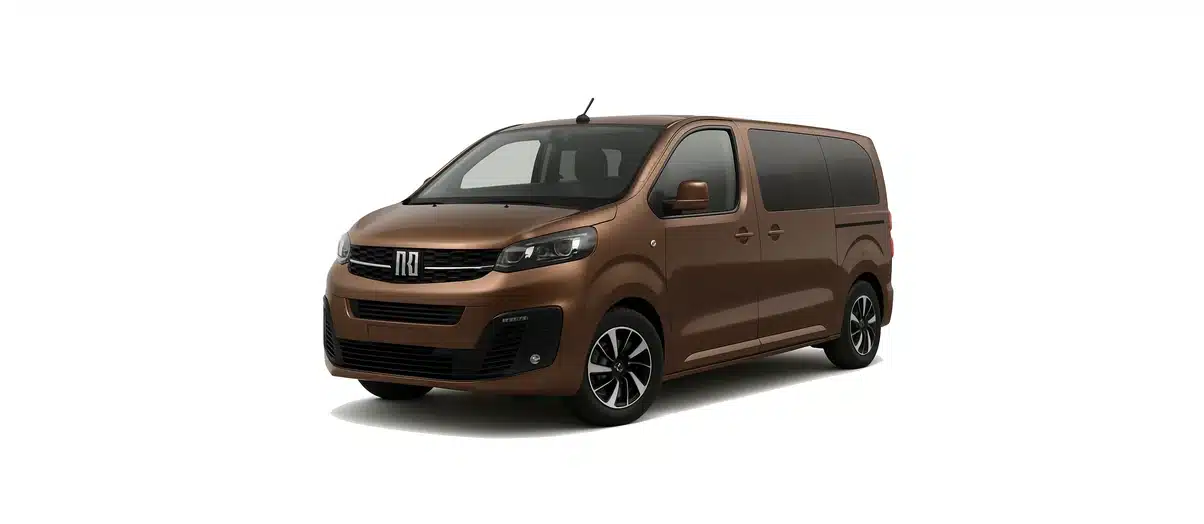
The Fiat E-Ulysse is a fully electric large MPV and passenger van, designed for families, hotels, airport transfer operators, taxi work and anyone who needs several seats without using petrol or diesel. It is closely related to other Stellantis electric passenger vans, and was offered in Europe with 50 kWh and 75 kWh battery options.
For UK drivers, it is important to treat the E-Ulysse as a used or imported-vehicle charging topic rather than assuming it is currently available new from Fiat UK. EV Database lists 2022-2024 Fiat E-Ulysse variants as no longer available to order in the UK, and Fiat UK’s current electric range does not list the model. However, the core charging information for the 2022-2024 E-Ulysse is clear: it uses a Type 2 connection for AC charging and CCS Combo 2 for DC rapid charging.
Because the E-Ulysse is a large, upright vehicle that may often carry passengers and luggage, realistic charging planning matters more than headline range figures. This guide explains home charging, public charging, cable choice and how to think about range for airport shuttle, private hire and large-family use.
View Fiat E-Ulysse Charging Cables
Fiat E-Ulysse Battery and Charging Specifications
The Fiat E-Ulysse is a battery electric vehicle, not a plug-in hybrid. In E-Ulysse form it has no combustion engine, so all driving depends on charging the traction battery.
| Vehicle type | Fully electric large MPV / passenger van |
|---|---|
| Charging port | Type 2 AC / CCS Combo 2 DC |
| Charge port location | Left-front side |
| Standard AC charging | 7.4 kW Type 2 onboard charger |
| Possible AC upgrade | Some cars may have 11 kW AC depending on market and specification |
| DC rapid charging | Up to around 100 kW on a suitable CCS rapid charger |
| Architecture | 400 V Stellantis EMP2-based platform |
The most important practical point is that a 22 kW public AC charging post will not make a standard 7.4 kW E-Ulysse charge at 22 kW. The onboard charger in the vehicle sets the maximum AC charging rate. If your car has the optional 11 kW onboard charger, it can use 11 kW AC where available, but this usually requires a three-phase AC supply.
Battery Options
EV Database and Stellantis launch information list two main E-Ulysse battery sizes for the 2022-2024 period: 50 kWh and 75 kWh. The 75 kWh version is the more suitable choice for regular long-distance passenger work, while the 50 kWh model is better suited to shorter routes and predictable daily mileage.
| Battery version | Usable battery estimate | WLTP range | Real-world range estimate |
|---|---|---|---|
| 50 kWh | About 46.3 kWh | Up to 143 miles | About 110 miles |
| 75 kWh | About 69 kWh | Up to 205 miles | About 165 miles |
There are also different body lengths in some listings, including L2 and L3/Long versions. Charging hardware and quoted 75 kWh range figures are broadly similar in the EV Database records, but real-life efficiency will depend on load, speed, temperature, tyres, driving style and route.
AC Charging Speed
For most UK owners, AC charging means using a home wallbox, workplace charger, hotel charger, car park post or destination charger. The Fiat E-Ulysse uses a Type 2 connector for this type of charging.
EV Database lists a 7.4 kW onboard AC charger as standard. On that basis, a 75 kWh E-Ulysse takes roughly 11 hours for a full AC charge from low to full, while the 50 kWh version takes around 7.5 hours. These figures are best viewed as typical planning estimates rather than exact promises, because charging can slow near full and the starting state of charge may vary.
Some E-Ulysse vehicles may have an 11 kW onboard charger, depending on the original market and specification. If fitted, this can reduce charging time to roughly 7.5 hours for the 75 kWh version or around 5 hours for the 50 kWh version. However, 11 kW AC charging normally needs a three-phase supply. A typical UK single-phase home wallbox will still charge at about 7 kW even if the vehicle is capable of 11 kW.
If you are buying a used or imported E-Ulysse, ask for confirmation of the onboard charger specification. Do not assume every car has 11 kW AC charging simply because some European data mentions it.
DC Rapid Charging Speed
For motorway stops and high-mileage working days, the Fiat E-Ulysse uses CCS Combo 2 rapid charging. DC rapid chargers have their own tethered cable, so you do not need to buy a separate CCS cable for rapid charging.
The 75 kWh version is listed with DC rapid charging up to around 100 kW, with a typical 10-80% charge taking about 40 minutes in EV Database data. Stellantis launch material quoted charging to 80% in about 45 minutes, depending on the battery and conditions. The 50 kWh version is listed at up to around 101 kW and around 28 minutes for a 10-80% rapid charge.
Actual rapid charging speed depends on charger output, battery temperature, battery state of charge, site reliability and how many other vehicles are sharing the charging hub. As the E-Ulysse is not listed with battery preconditioning in the 2022-2024 EV Database records, very cold weather may reduce rapid charging performance.
Range and Efficiency
The Fiat E-Ulysse has a large frontal area and a passenger-van body shape. That makes it useful and spacious, but it also means motorway efficiency can be noticeably lower than city or suburban driving. This is especially relevant for airport shuttle work, where trips may involve dual carriageways, motorways, heating or air conditioning, and several passengers with luggage.
For the 75 kWh version, the headline WLTP range is up to around 205 miles, while a more cautious real-world estimate is around 165 miles. For the 50 kWh version, WLTP is around 143 miles with a real-world estimate of around 110 miles. In winter, at sustained motorway speeds, or with a full passenger load, drivers should plan conservatively.
A sensible working approach is to build routes around dependable charging opportunities rather than using the full quoted range. For commercial use, it may be better to top up during breaks than to run the battery very low before looking for a rapid charger.
Charging at Home
A 7 kW Type 2 home wallbox is the most practical home charging option for most Fiat E-Ulysse owners in the UK. It will match the standard 7.4 kW onboard charger closely and can usually refill the vehicle overnight. For the 75 kWh battery, this is particularly useful if the vehicle returns home or to base each evening.
A tethered wallbox has the cable permanently attached, which is convenient for daily use. An untethered wallbox requires a separate Type 2 cable, but can be neater and more flexible if more than one EV uses the same charger. For public AC charging, a separate Type 2 cable is still useful because many destination chargers and workplace posts are untethered.
A 3-pin charger is generally best suited as a backup or occasional charging solution, but can be used regularly if a qualified electrician has confirmed the socket and electrical installation are suitable for sustained EV charging. Because the E-Ulysse has a relatively large battery, a 3-pin socket is slow and is unlikely to be practical as the main charging method for high-mileage use.
Public Charging
Public charging for the Fiat E-Ulysse falls into two main categories: AC destination charging and DC rapid charging.
AC destination charging is useful when the vehicle will be parked for several hours, such as at hotels, airports, workplaces, long-stay car parks, leisure venues or overnight accommodation. These chargers often require your own Type 2 cable. Even if the post is rated at 22 kW, a standard E-Ulysse will still charge at around 7.4 kW, while a car with the optional 11 kW onboard charger may use up to 11 kW on a suitable three-phase post.
DC rapid charging is the better choice during long journeys or between paid passenger runs. Use CCS rapid chargers, ideally at hubs with multiple units. A 10-80% stop is usually more time-efficient than charging all the way to 100%, because charging speed tends to slow as the battery fills.
Vehicle-Specific Features
The E-Ulysse is based on the Stellantis EMP2 platform rather than a dedicated ground-up EV platform. It uses familiar European charging standards: Type 2 for AC and CCS Combo 2 for DC rapid charging. That makes charging straightforward across the UK and Europe, provided the right cable and charging account or payment method are available.
EV Database records for the 2022-2024 E-Ulysse do not list a heat pump, battery preconditioning, vehicle-to-load or vehicle-to-grid capability. Owners should therefore plan winter range and rapid charging stops with some margin, particularly if the vehicle is being used for airport transfers, taxi work or family trips in colder weather.
Charging Tips
- Check the onboard charger: If buying used, confirm whether the car has the standard 7.4 kW AC charger or the optional 11 kW unit.
- Choose the right Type 2 cable: A Type 2 cable is needed for many untethered public AC chargers and untethered home wallboxes.
- Do not expect 22 kW AC charging: A 22 kW post cannot override the vehicle’s onboard AC charger limit.
- Use CCS for rapid charging: Rapid chargers have tethered CCS cables, so a separate rapid-charging cable is not required.
- Plan around real range: For the 75 kWh version, planning around roughly 165 miles in mixed use is more realistic than relying only on the WLTP figure.
- Leave winter margin: Cold weather, cabin heating and motorway speeds can reduce usable range.
- For shuttle use, charge opportunistically: Short top-ups during waiting time can be easier than one long charging stop at the end of the day.
Frequently Asked Questions
What charging cable does the Fiat E-Ulysse use?
The Fiat E-Ulysse uses a Type 2 cable for AC charging. For DC rapid charging it uses CCS Combo 2, but public rapid chargers have a tethered CCS cable attached.
Is the Fiat E-Ulysse a hybrid?
No. The E-Ulysse is a fully electric vehicle. It should not be confused with non-electric Fiat Ulysse diesel models sold in some markets.
How fast can the Fiat E-Ulysse charge at home?
Most UK home wallboxes charge at around 7 kW. The E-Ulysse is listed with a 7.4 kW standard onboard AC charger, so a 7 kW wallbox is appropriate for most owners.
Does the Fiat E-Ulysse support 11 kW AC charging?
Some cars may have 11 kW AC charging depending on market and specification, but it should not be assumed for every UK-used or imported vehicle. It also requires a suitable three-phase AC supply to be useful.
How long does rapid charging take?
The 75 kWh version typically takes about 40 minutes for a 10-80% charge on a suitable CCS rapid charger. The 50 kWh version is listed at around 28 minutes for 10-80%. Real charging times vary with conditions.
Is the 50 kWh or 75 kWh E-Ulysse better for long journeys?
The 75 kWh version is the better fit for long-distance family travel, taxi work and shuttle use because it has a significantly longer range. The 50 kWh version can work well for shorter, predictable routes.
What This Means for Drivers
The Fiat E-Ulysse can be a practical electric people carrier, but it rewards realistic charging habits. For most UK owners, the ideal setup is a 7 kW Type 2 home or base charger, a suitable Type 2 cable for public AC posts, and planned use of CCS rapid chargers on longer days.
The 75 kWh version gives the most flexibility, especially for large families, hotels, airport shuttles and private hire work. The 50 kWh version is best approached as a shorter-range vehicle where daily mileage is predictable. In both cases, the size and shape of the E-Ulysse mean motorway and winter range should be planned with care.
Looking for a Charging Cable for Fiat E-Ulysse?
We offer Fiat E-Ulysse Type 2 charging cables suitable for home wallboxes and public AC charging posts, helping owners keep the right cable in the vehicle for everyday charging and destination top-ups.
View Fiat E-Ulysse Charging Cables
Please note that this information is intended as a guide. Charging specifications may change due to model and year of manufacture. For precise information, always refer to your vehicle user manual.

