
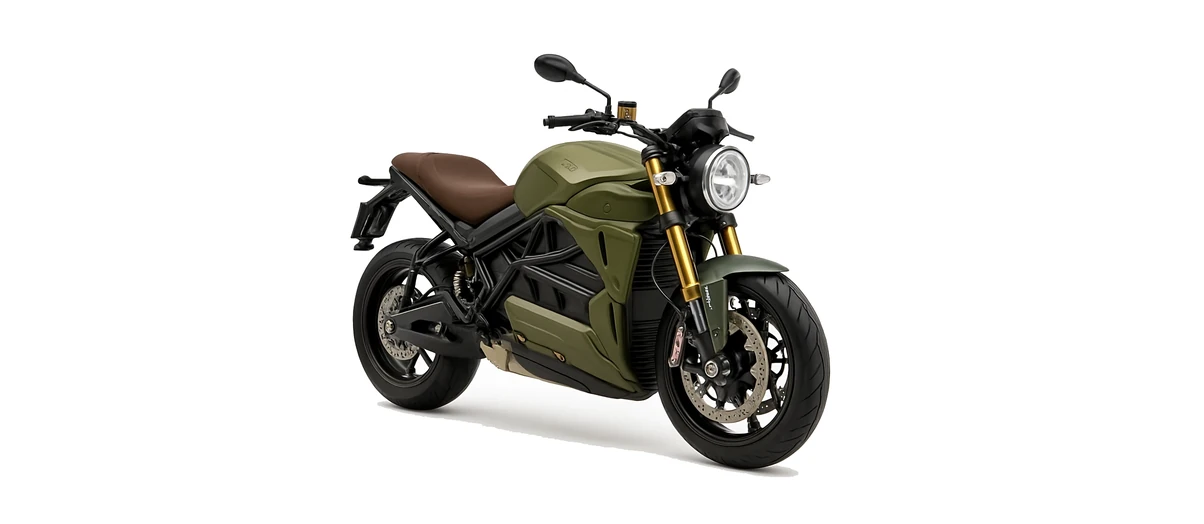
The Energica Eva EsseEsse9+ is an unusual electric motorcycle because it combines everyday Type 2 AC charging with CCS DC rapid charging capability. For UK riders, that makes it far more flexible than many smaller electric bikes, but it also means charging decisions need to be based on the motorcycle’s own limits rather than the headline output of the charger you plug into.
This guide focuses on the Eva EsseEsse9+ and the closely related EsseEsse9+ RS as used or remaining-stock motorcycles. Energica Motor Company entered bankruptcy judicial liquidation in October 2024, and current third-party listings generally treat the model as discontinued, so figures should be understood in that context rather than as current factory-order UK specifications.
View Energica Eva EsseEsse9+ Charging Cables
Energica Eva EsseEsse9+ Battery and Charging Specifications
The Eva EsseEsse9+ is a full battery-electric motorcycle, not a plug-in hybrid or range-extender vehicle. Energica technical material describes it as using a lithium-nickel-manganese-cobalt battery pack and a permanent-magnet AC, oil-cooled motor within a steel tubular trellis frame.
For UK and European examples, the bike is listed with Type 2 AC charging and CCS DC fast charging. In practical terms, UK/EU bikes should generally be treated as using a CCS2/Combo 2 style rapid-charging inlet, although owners should always check the physical inlet on their specific motorcycle before buying accessories or planning around a particular charger type.
The key point for day-to-day charging is that AC charging is limited by the bike’s onboard charger. Energica documentation lists the onboard AC charger at 3 kW, supporting Mode 2 and Mode 3 charging. That means a 7 kW home wallbox, an 11 kW destination charger or a 22 kW public AC post will not make the motorcycle charge at those higher speeds.
Battery Options
The Eva EsseEsse9+ is associated with Energica’s larger Plus battery pack. Energica UK lists the EsseEsse9+ / EsseEsse9+ RS battery as 21.5 kWh maximum capacity and 18.9 kWh nominal capacity. A clearly confirmed usable capacity figure was not found in the reviewed sources, so it is best to avoid assuming that the full maximum figure is available for driving range.
This distinction matters when estimating charge times. Battery manufacturers, vehicle makers and charging networks may use different reference points such as maximum, nominal or usable capacity. For owners, the most useful information is usually the real-world amount of energy added during a normal charging session, rather than the theoretical pack size.
AC Charging Speed
On AC power, the Energica Eva EsseEsse9+ is listed with a 3 kW onboard charger. Energica UK quotes an AC slow-charge time of around 5 to 6 hours for 20% to 80%. This makes home charging very manageable overnight, but it also means there is no benefit in choosing a higher-rated AC post purely for speed.
A Type 2 cable or suitable EVSE should therefore be selected for compatibility, durability, storage and parking practicality rather than chasing 7 kW, 11 kW or 22 kW charging performance. If the bike is connected to a 7 kW wallbox, it should simply draw what its onboard charger can accept, subject to the condition of the installation, charging equipment and bike.
Mode 2 charging is also listed in Energica technical material. In UK terms, that may include charging from a domestic 3-pin socket using an appropriate portable EV charger. However, a 3-pin charger is generally best suited as a backup or occasional charging solution, but can be used regularly if a qualified electrician has confirmed the socket and electrical installation are suitable for sustained EV charging.
DC Rapid Charging Speed
DC rapid charging is one of the Eva EsseEsse9+’s most distinctive features. Energica UK quotes 25 kW CCS charging and around 40 minutes for a 20% to 80% charge. A verified 10% to 80% time was not found in the reviewed sources, so it is better to use the manufacturer’s 20% to 80% figure when planning stops.
Because DC charging bypasses the onboard AC charger, it is the better choice when short stops matter. This is particularly useful on longer rides, where waiting several hours at an AC post may not be practical. Even so, motorcycle charging has its own ergonomics: CCS plugs and cables can be heavy, the connector is physically large, and charger layouts are often designed around cars. Riders should check parking position, cable reach and whether the bike can be safely supported before committing to a rapid-charging session.
Range and Efficiency
No robust official WLTP range figure was confirmed in the reviewed sources. Instead, Energica materials give manufacturer-stated real-world style figures: 400 km in city use, 230 km combined and 180 km extra-urban. The combined figure is approximately 143 miles.
As with any electric motorcycle, actual range can vary significantly. Speed, temperature, rider weight, luggage, wind, road type and riding style all have a large effect. Motorcycles are also more exposed to aerodynamic drag than many drivers expect, so sustained high-speed riding can reduce range more noticeably than slower urban or mixed riding.
For planning, it is sensible to treat the quoted combined figure as a guide rather than a guarantee. If you are riding in poor weather, at motorway speeds or with luggage, build in extra charging margin. For urban riding, the bike may be able to make better use of lower speeds and regenerative braking, but real-world results will still depend on conditions.
Charging at Home
Home charging is likely to be the easiest and most predictable way to run an Energica Eva EsseEsse9+. With a 3 kW onboard AC charger, the motorcycle can be replenished comfortably during longer parking periods, especially overnight. A dedicated home charge point can offer improved convenience, weather resistance and safer long-duration charging compared with relying on an ordinary household socket.
When choosing home equipment, the important point is not maximum AC output. A 7 kW wallbox is common in UK homes, but the Eva EsseEsse9+ will still be limited to around 3 kW AC by its onboard charger. The wallbox may be useful for future vehicles or other household EVs, but it will not turn the Energica into a 7 kW AC charging motorcycle.
If you use a tethered home charger, check that the cable and connector can comfortably reach the bike’s charge port when parked securely. If you use an untethered charger, a suitable Type 2 cable gives more flexibility. For a motorcycle, cable length and ease of handling can matter as much as rating, because parking positions are often different from car charging positions.
Public Charging
Public charging falls into two broad categories for the Eva EsseEsse9+: AC destination charging and DC rapid charging. AC posts at hotels, workplaces, supermarkets or town centres can be useful when the bike will be parked for several hours. However, the bike’s 3 kW AC limit means a high-output AC post will not deliver faster charging than the onboard charger can accept.
For time-sensitive charging, look for CCS DC rapid chargers. These are more likely to be found at motorway services, charging hubs and larger public charging sites. The UK source reviewed quotes 25 kW CCS and around 40 minutes for 20% to 80%, so the bike does not need an ultra-high-power charger to reach its own stated rapid-charge rate.
Motorcycle riders should also think about the physical layout of charging bays. Some rapid chargers have short, stiff or heavy cables, and the bay markings may be arranged for cars. It is worth arriving with enough charge to move to another unit if the first one is awkward, blocked or positioned so that the cable cannot comfortably reach.
Vehicle-Specific Features
Energica technical material lists a dashboard-configurable charge interruption or charge limit function. This can be useful if you regularly charge overnight or only need a partial charge before your next ride. Setting an appropriate stop point can also reduce the need to leave the battery sitting at a high state of charge when full range is not required.
The documentation also refers to a Long Period Rest function for maintaining and balancing the battery during extended periods of non-use. This is particularly relevant for motorcycle ownership, where winter storage or seasonal gaps in riding are common. Rather than leaving the bike unused for months without attention, owners should follow Energica’s storage and Long Period Rest guidance for their specific model year.
Charging Tips
- Do not overspec AC charging for speed: the Eva EsseEsse9+ is listed with a 3 kW onboard AC charger, so faster AC posts will not make it charge at 7 kW, 11 kW or 22 kW.
- Use CCS for shorter stops: if you need a meaningful top-up during a ride, a CCS rapid charger is usually the more practical option than an AC destination post.
- Check the inlet before buying accessories: UK/EU examples are associated with Type 2 AC and CCS charging, but it is wise to confirm the connector on your individual motorcycle.
- Think about cable reach: motorcycle charge-port position and parking angle can make a big difference, especially with heavy rapid-charger cables.
- Use charge limits where suitable: the listed charge interruption function can help when you do not need a full charge.
- Follow storage guidance: use Energica’s Long Period Rest instructions during extended periods off the road.
Frequently Asked Questions
What charging connector does the Energica Eva EsseEsse9+ use?
Reviewed UK and Energica sources list Type 2 AC charging and CCS DC fast charging. UK/EU bikes should generally be treated as CCS2/Combo 2 for rapid charging, but owners should verify the physical inlet on their specific motorcycle before purchasing charging accessories.
How fast does the Energica Eva EsseEsse9+ charge at home?
The onboard AC charger is listed at 3 kW. Energica UK quotes around 5 to 6 hours for a 20% to 80% AC slow charge. A higher-rated AC wallbox will not override the bike’s onboard AC limit.
Can the Eva EsseEsse9+ use rapid chargers?
Yes. DC fast charging is supported via CCS, with Energica UK quoting 25 kW and around 40 minutes for a 20% to 80% charge. A verified 10% to 80% time was not confirmed in the reviewed sources.
What is the range of the Energica Eva EsseEsse9+?
Energica’s stated real-world style figures include 400 km city, 230 km combined and 180 km extra-urban. The combined figure is about 143 miles. These figures were not confirmed as official WLTP values in the reviewed material.
Is the Energica Eva EsseEsse9+ still available new in the UK?
The model should be treated primarily as a used or remaining-stock motorcycle. Energica Motor Company entered bankruptcy judicial liquidation in October 2024, and current third-party listings generally mark the model as discontinued.
What This Means for Drivers
For riders, the Energica Eva EsseEsse9+ is best understood as a CCS-capable electric motorcycle with modest AC charging. At home or at destinations, it is a 3 kW AC vehicle, so cable choice is about fit, reliability and convenience. On longer journeys, its CCS capability is the feature that makes shorter charging stops possible.
The most practical approach is to charge slowly when the bike is parked for long periods and use CCS rapid charging when time matters. Plan around real-world range, leave extra margin in poor weather or at higher speeds, and pay close attention to charger layout because motorcycle charging is not always as straightforward as car charging.
Looking for a Charging Cable for Energica Eva EsseEsse9+?
We offer charging cable options for the Energica Eva EsseEsse9+, helping owners choose a compatible Type 2 charging solution for home and destination charging.
View Energica Eva EsseEsse9+ Charging Cables
Please note that this information is intended as a guide. Charging specifications may change due to model and year of manufacture. For precise information, always refer to your vehicle user manual.

