
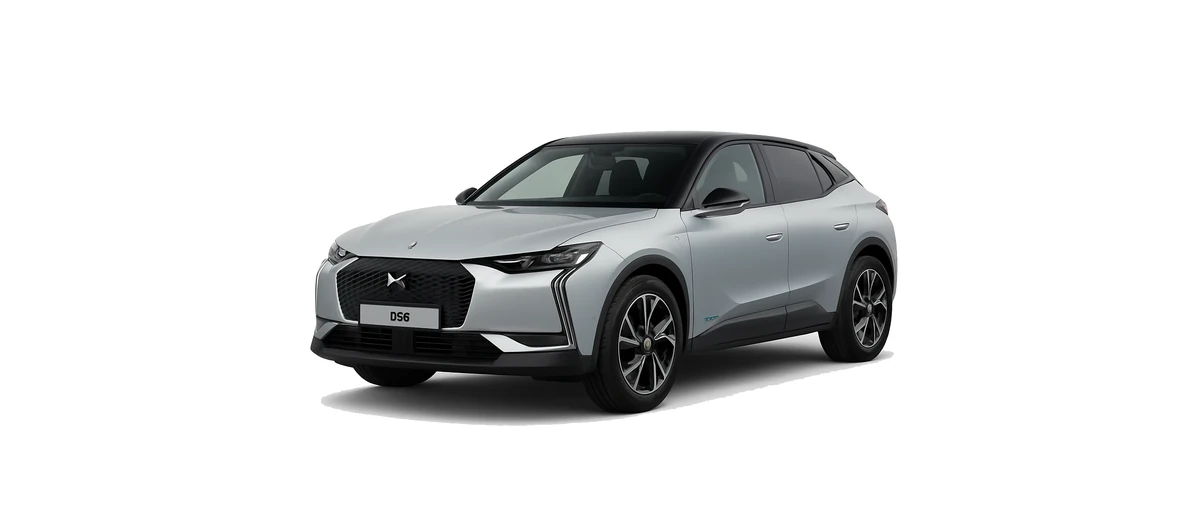
The DS N°8, sometimes written as DS No8, is a battery-electric SUV coupé from DS Automobiles. For the UK market, the researched N°8 range is fully electric, with front-wheel-drive and all-wheel-drive versions, long-range battery options and a comfort-led character aimed at longer journeys as well as everyday driving.
Charging the DS N°8 is straightforward once you understand the difference between its Type 2 AC charging for home and destination use, and CCS rapid charging for motorway and longer-distance trips. The car is listed with an 11 kW three-phase on-board AC charger as standard, but most UK homes are single-phase, so real-world home charging will usually be up to 7.4 kW from a dedicated wallbox. Rapid charging is available at up to 160 kW DC, although that figure is a peak rather than a speed maintained for the whole session.
DS N°8 Battery and Charging Specifications
The DS N°8 uses a Type 2 charging connection for AC charging and a CCS Combo 2 connection for DC rapid charging. This is the standard arrangement for modern European-market electric cars, so the N°8 is compatible with typical UK home wallboxes, untethered public AC chargers and CCS rapid chargers.
- Vehicle type: battery-electric SUV coupé / large liftback SUV
- Charging port: Type 2 for AC, CCS Combo 2 for DC rapid charging
- Standard AC charging: 11 kW three-phase on-board charger
- Typical UK home charging: up to 7.4 kW on a single-phase wallbox
- DC rapid charging: up to 160 kW peak
- Battery architecture: 400 V platform
- Confirmed features: heat pump, battery preconditioning, Plug & Charge support and V2L up to 3 kW / 16 A
DS also promotes a 22 kW on-board AC charger in some material, and independent data lists it as optional. Before relying on 22 kW AC charging, check the exact UK trim, option pack and order specification for the individual car.
Battery Options
The DS N°8 is not fitted with one universal battery across the whole UK range. Battery capacity depends on the version chosen, and official range figures also vary by trim, equipment and configuration.
- FWD / 230 hp: listed with a 74 kWh net battery in official UK material, with independent data showing 79.9 kWh total and 73.7 kWh usable. UK WLTP figures vary by configuration, with the price guide giving a broad range of 281–364 miles, while DS headline material quotes up to 341 miles.
- FWD Long Range / 245 hp: listed with a 97.2 kWh usable battery. DS quotes up to 466 miles WLTP, while the UK price guide gives a configuration-dependent range band of 374–471 miles.
- AWD Long Range / 350 hp: also listed with a 97.2 kWh usable battery. DS quotes up to 427 miles WLTP, while the UK price guide gives a range band of 357–431 miles depending on configuration.
For buyers and owners, the key point is that the Long Range versions have a much larger usable battery than the standard FWD model, which affects both driving range and the amount of energy needed for a full charge.
AC Charging Speed
AC charging is what you will use at home, at many workplaces and at slower public charging points. The DS N°8 has an 11 kW three-phase on-board charger listed as standard in UK specifications. This means it can make good use of three-phase AC posts where available.
However, most UK domestic properties have a single-phase electricity supply. On a typical 7.4 kW home wallbox, the DS N°8 will charge at up to around 7.4 kW rather than 11 kW. This is normal and is limited by the home electrical supply and wallbox, not by a fault with the vehicle.
As a broad guide, a 7.4 kW wallbox can add useful overnight range for either battery option. The larger Long Range battery will naturally take longer to charge from a low state of charge than the smaller FWD battery, but most owners will not regularly charge from empty to full. In day-to-day use, plugging in overnight or during lower-cost tariff periods is usually enough to replace the energy used that day.
If the car is equipped with an optional or availability-dependent 22 kW AC charger, it may charge faster on suitable three-phase AC points. This is most relevant at commercial premises, hotels, some public destination chargers and homes with a suitable three-phase installation. It will not turn a normal single-phase 7.4 kW home wallbox into a 22 kW charger.
DC Rapid Charging Speed
For longer journeys, the DS N°8 uses CCS rapid charging. The official peak DC charging figure is up to 160 kW. This should be treated as a peak capability rather than a constant charging speed, because rapid-charging performance depends on battery temperature, state of charge, charger output, site conditions and the vehicle’s charging curve.
Official UK information quotes rapid-charging times mainly for a 20–80% charging window, with figures around 26–27 minutes depending on version. Independent estimates for a 10–80% rapid charge are in the low-to-mid 30-minute region, with around 32 minutes quoted for some versions. In practice, the fastest stops are usually made by arriving at a low state of charge, charging to around 70–80%, then continuing the journey rather than waiting for the final few percent.
The N°8 includes battery preconditioning, which is especially useful before rapid charging in cold weather. DS states that preconditioning can be triggered automatically through EV route planning, manually from the centre screen, or remotely before departure via the MyDS app. Using this feature before a planned rapid charge can help the battery reach a more suitable temperature and improve charging consistency.
Range and Efficiency
The headline range figure for the DS N°8 is up to 466 miles WLTP for the FWD Long Range version. That is an impressive official figure, but it should not be treated as a guaranteed motorway range in all conditions. UK specification data gives different WLTP ranges across the line-up and across configurations, with the standard FWD version generally lower and the AWD Long Range version slightly below the longest-range front-wheel-drive model.
Real-world range depends on speed, temperature, tyres, wheel size, cabin heating or cooling, terrain and payload. Independent real-world estimates suggest that the Long Range versions may achieve around the mid-300-mile region in mixed use, although individual results will vary. On cold motorway trips, range may be lower; in mild weather and efficient driving conditions, it may be higher.
The standard heat pump should help reduce the energy used for cabin heating compared with relying solely on resistance heating, particularly in cooler weather. It is still sensible to precondition the cabin while plugged in where possible, as this uses mains energy rather than drawing solely from the battery once you are on the road.
Charging at Home
For most DS N°8 owners, a dedicated home wallbox will be the most convenient way to charge. A 7.4 kW single-phase wallbox suits the majority of UK homes and can replenish typical daily mileage overnight. If you have solar panels, a smart tariff or scheduled off-peak electricity, the car can be charged when energy is cheaper or cleaner, depending on your setup.
If your wallbox is untethered, you will need a Type 2 charging cable. A suitable Type 2 cable can also be useful for public AC charging, as many destination chargers are socketed rather than tethered. Choosing the correct cable rating matters: for a typical single-phase 7.4 kW home wallbox, a compatible Type 2 cable is sufficient; for drivers who regularly use 11 kW three-phase AC posts, a three-phase Type 2 cable is the more appropriate choice.
A 3-pin domestic charger is generally best suited as a backup or occasional charging solution, but can be used regularly if a qualified electrician has confirmed the socket and electrical installation are suitable for sustained EV charging. Because the DS N°8 has a large battery, a 3-pin connection will be slow and is not the most practical main charging method for most owners.
Public Charging
Public charging for the DS N°8 falls into two main categories: AC destination charging and DC rapid charging. AC destination chargers are common at hotels, car parks, workplaces and shopping locations. These usually require a Type 2 cable unless the unit is tethered. Charging speeds vary, with 7 kW, 11 kW and 22 kW posts all found in the UK.
DC rapid and ultra-rapid chargers use a tethered CCS connector, so you do not need to bring your own cable for rapid charging. The N°8’s peak DC rate of up to 160 kW means it can take advantage of many modern rapid chargers, although charging speed will taper as the battery fills.
Plug & Charge support is promoted for the DS N°8. Where supported by the charging network and correctly set up, this can make public rapid charging simpler by allowing the car and charger to handle authentication automatically. Availability still depends on the charging provider, account setup and compatibility.
Vehicle-Specific Features
The DS N°8 includes several features that are particularly relevant to charging and EV ownership. Battery preconditioning is one of the most important for long-distance drivers, as it helps prepare the battery before a rapid-charging stop. The standard heat pump should also support efficiency in cooler weather.
Vehicle-to-Load is confirmed, with DS quoting output of up to 3 kW and 16 A. This can allow the car to power suitable external electrical equipment, subject to the correct accessories and usage limits. No reliable UK information confirms vehicle-to-grid or vehicle-to-home export capability, so it is best not to assume the N°8 can power a house or export energy to the grid.
The car also offers adjustable regenerative braking using steering-wheel paddles, and DS lists a one-pedal mode. These features can help drivers recover energy when slowing down and make urban driving smoother, although they do not replace the need for efficient route planning and sensible charging habits.
Charging Tips
- Use a wallbox for regular home charging: it is faster, safer and more convenient than relying on a 3-pin plug.
- Choose the right Type 2 cable: a three-phase cable is useful if you plan to use 11 kW public or workplace AC charging regularly.
- Precondition before rapid charging: especially in cold weather or before long motorway journeys.
- Do not chase 100% on rapid chargers: charging slows at higher states of charge, so 10–80% or 20–80% stops are usually more efficient on long trips.
- Use the 80% limit for daily care: DS press information refers to intelligent battery management that can stop charging at 80% to help cell durability.
- Plan around real-world range: WLTP figures are useful for comparison, but weather, speed and route type make a noticeable difference.
Frequently Asked Questions
Is the DS N°8 a plug-in hybrid?
No. The UK DS N°8 range found in the research is battery-electric only. It should not be described as a plug-in hybrid or PHEV.
What charging cable does the DS N°8 use?
For AC charging, the DS N°8 uses a Type 2 cable. For DC rapid charging, it uses a CCS connector attached to the rapid charger.
Can the DS N°8 charge at 11 kW at home?
Only if the home has a suitable three-phase supply and compatible wallbox. Most UK homes are single-phase, so the practical home charging rate is usually up to 7.4 kW.
How fast can the DS N°8 rapid charge?
It can rapid charge at up to 160 kW DC peak. Official UK information quotes around 26–27 minutes for a 20–80% charge, while independent 10–80% estimates are typically in the low-to-mid 30-minute region, depending on version and conditions.
Does the DS N°8 have battery preconditioning?
Yes. DS confirms battery preconditioning, with automatic activation through EV route planning, manual activation from the centre screen and remote activation before departure via MyDS.
What This Means for Drivers
The DS N°8 is best understood as a long-range, comfort-focused electric car where charging strategy matters more than simply quoting the highest WLTP figure. The Long Range models offer substantial usable battery capacity, but that also means home charging speed, public charging planning and 80% charge management become important parts of ownership.
For most UK drivers, the ideal setup will be a 7.4 kW home wallbox, a suitable Type 2 cable for AC charging, and use of CCS rapid chargers for longer journeys. Drivers with access to three-phase AC charging may benefit from the standard 11 kW capability, and those considering 22 kW AC should verify the exact specification of their car before purchase.
Looking for a Charging Cable for DS N°8?
We offer charging cables for the DS N°8, including Type 2 options for home wallboxes and public AC charging points. Choose a cable that matches how and where you plan to charge, particularly if you expect to use three-phase AC charging regularly.
Please note that this information is intended as a guide. Charging specifications may change due to model and year of manufacture. For precise information, always refer to your vehicle user manual.

