
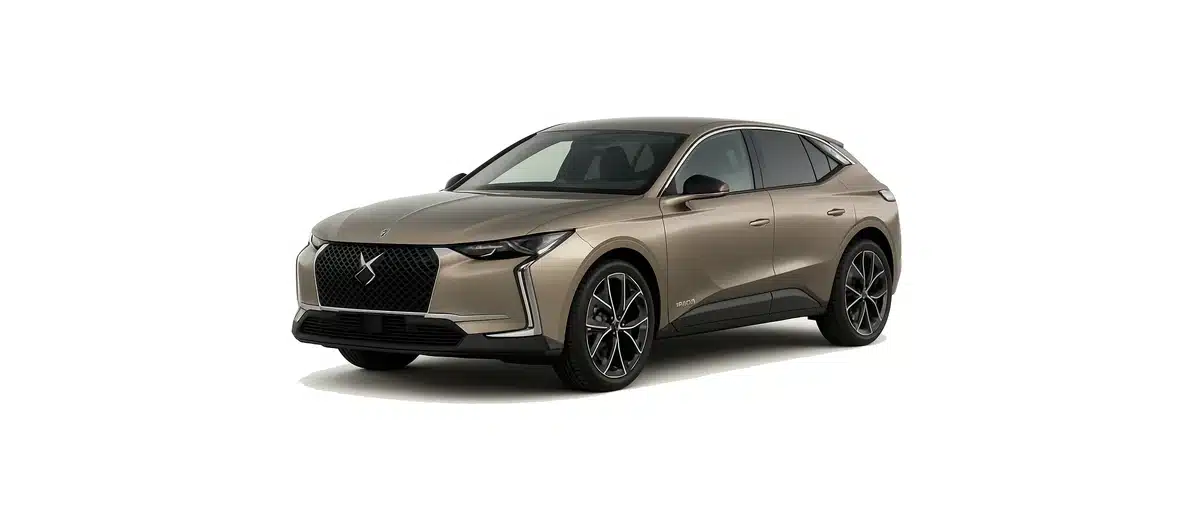
The DS 4 E-Tense name needs a little care, because it has been used across different electrified versions of DS Automobiles’ premium 5-door hatchback. In the UK, many earlier DS 4 E-TENSE 225 and DS 4 Plug-in Hybrid cars are plug-in hybrids with a petrol engine and a small traction battery. The newer DS N°4 E-TENSE, introduced in the current range, is a fully electric battery-electric vehicle. There is also a current DS N°4 Plug-in Hybrid, which is separate from the fully electric E-TENSE model.
That distinction matters when choosing a charging cable and when planning public charging. The older DS 4 E-TENSE plug-in hybrid uses Type 2 AC charging and should not be treated as a rapid-charging electric car. The current DS N°4 E-TENSE BEV uses Type 2 AC for home and destination charging, plus CCS DC rapid charging for longer journeys. Before buying accessories or relying on rapid charging, confirm which version you own by checking the handbook, charging flap, vehicle documents and whether the car has a petrol filler flap.
View DS 4 E-Tense Charging Cables
DS 4 E-Tense Battery and Charging Specifications
There is no single universal charging specification for every DS 4 E-Tense. The key UK versions are:
- Older DS 4 E-TENSE 225 / DS 4 Plug-in Hybrid 225: plug-in hybrid with a 12.4 kWh battery, Type 2 AC charging and no confirmed CCS rapid charging.
- Current DS N°4 Plug-in Hybrid: plug-in hybrid with a larger 14.6 kWh battery and Type 2 AC charging.
- Current DS N°4 E-TENSE: fully electric model with a 58.3 kWh usable/net battery, Type 2 AC charging and CCS DC rapid charging.
For cable selection, most UK owners will be dealing with a Type 2 charging connection. The difference is that the plug-in hybrids use Type 2 AC only, while the fully electric DS N°4 E-TENSE also has a CCS inlet for rapid DC charging.
Battery Options
The legacy DS 4 E-TENSE 225 plug-in hybrid was listed in the April 2025 UK price guide with a 12.4 kWh lithium-ion battery. Its official electric-only WLTP range was around 34–35 miles depending on vehicle configuration. Some earlier references cite a slightly higher figure for previous versions, so it is sensible to treat the exact range as model-year dependent.
The current DS N°4 Plug-in Hybrid is a newer PHEV and should not be confused with the fully electric E-TENSE. DS UK describes it with a 14.6 kWh battery and up to 50 miles of WLTP electric range. It is designed for short electric trips with petrol back-up for longer journeys.
The current DS N°4 E-TENSE BEV is the fully electric version. Official Stellantis UK information gives a 58.3 kWh net battery capacity, while EV Database UK lists 61.9 kWh total and 58.3 kWh usable. Its official WLTP combined range is up to 279 miles.
AC Charging Speed
AC charging is the everyday charging method used by home wallboxes, many workplace chargers and kerbside or destination posts. The DS 4 E-Tense family uses a Type 2 connection for this kind of charging, but charging speed depends on the version and onboard charger.
For the older DS 4 E-TENSE 225 / DS 4 Plug-in Hybrid, the April 2025 UK price guide lists a standard 3.7 kW onboard charger. It also gives a 0–100% charging time of around 3 hours 50 minutes using a 7.4 kW wallbox. This means a 7.4 kW home charger is still suitable, but the car may only draw up to its onboard AC limit.
For the current DS N°4 Plug-in Hybrid, Stellantis UK press material describes a 3.7 kW in-car charger as standard, with an optional 7.4 kW upgrade. If you are buying a used or nearly new car, check the exact specification because the optional charger can affect how quickly the battery fills on an AC post.
For the fully electric DS N°4 E-TENSE BEV, the headline AC figure is 11 kW. This generally requires a suitable three-phase AC supply. A typical UK single-phase 7.4 kW home charger will work with the car, but it will not reach the vehicle’s 11 kW maximum.
DC Rapid Charging Speed
DC rapid charging is where the biggest difference appears. The older DS 4 E-TENSE 225 plug-in hybrid is not a CCS rapid-charging car, so owners should not expect to use motorway rapid chargers in the same way as a full EV. It is charged through Type 2 AC and then driven in electric, hybrid or petrol mode depending on journey length and battery state.
The current DS N°4 E-TENSE BEV supports CCS DC rapid charging at up to 120 kW under suitable conditions. DS and Stellantis sources state that a 20–80% charge can take around 30 minutes, while EV Database UK estimates a 10–80% rapid charge at about 35 minutes. Actual rapid charging speed will depend on battery temperature, charger output, state of charge, vehicle settings and site conditions.
As a general rule, rapid charging is most efficient when used for the middle part of the battery, rather than repeatedly charging to 100% on a public rapid charger. For long trips, plan short, well-timed rapid stops rather than waiting for the battery to fill completely.
Range and Efficiency
For the older plug-in hybrid DS 4 E-TENSE, electric range is best understood as a daily commuting and local-journey benefit. The April 2025 UK guide lists around 34–35 miles WLTP electric range for the 12.4 kWh PHEV. In real UK use, cold weather, higher speeds, heating, short trips and driving style can reduce the electric distance before the petrol engine is needed.
The current DS N°4 Plug-in Hybrid improves the PHEV battery capacity to 14.6 kWh and is quoted by DS UK at up to 50 miles WLTP electric range. This can be useful for drivers who can charge regularly at home or work and cover many shorter trips on electric power.
The fully electric DS N°4 E-TENSE has an official WLTP combined range of up to 279 miles. EV Database UK gives a real-world estimate of around 215 miles. That estimate is not a guarantee, but it is a useful planning figure for mixed UK use. Motorway speeds, winter temperatures, heavy rain, hills and cabin heating can reduce range, while urban driving and mild weather can improve it.
Charging at Home
Home charging is usually the most convenient way to run either a DS 4 plug-in hybrid or the fully electric DS N°4 E-TENSE. For PHEV owners, regular overnight charging allows more short journeys to be completed on electric power. For BEV owners, home charging reduces reliance on public chargers and makes it easier to start each day with the battery level you want.
A 7.4 kW single-phase wallbox is common in UK homes and is suitable for the DS 4 plug-in hybrid models and the DS N°4 E-TENSE BEV. However, it is important to understand that the car controls the maximum charging rate. An older PHEV with a 3.7 kW onboard charger will not charge at 7.4 kW simply because the wallbox can supply it. Similarly, the fully electric DS N°4 E-TENSE can accept up to 11 kW AC, but that higher rate generally needs an appropriate three-phase installation.
A 3-pin charger is generally best suited as a backup or occasional charging solution, but can be used regularly if a qualified electrician has confirmed the socket and electrical installation are suitable for sustained EV charging. For day-to-day use, a properly installed dedicated wallbox is usually safer, faster and more convenient.
Public Charging
For public AC charging, both plug-in hybrid and fully electric versions can use suitable Type 2 AC posts. Many UK public AC chargers are untethered, meaning you need to bring your own Type 2 cable. A Type 2 to Type 2 cable is therefore the most useful public charging cable for DS 4 E-Tense PHEV owners and remains useful for the DS N°4 E-TENSE BEV at destination chargers.
If you have the older DS 4 E-TENSE 225 or DS 4 Plug-in Hybrid, public charging is normally about topping up while parked rather than making rapid long-distance stops. Use AC chargers at workplaces, hotels, supermarkets, town centres and car parks where the car can sit for a few hours.
If you have the current fully electric DS N°4 E-TENSE, public charging includes both AC destination charging and CCS rapid charging. For long journeys, choose CCS rapid chargers and use the car’s navigation and charging information where available to plan sensible stops. When you arrive at a rapid charger, check the connector, charger status and pricing before plugging in.
Vehicle-Specific Features
The current DS N°4 E-TENSE BEV has several features that can affect charging and ownership. DS and Stellantis sources confirm battery preconditioning linked to EV Routing, which can help prepare the battery for rapid charging when a charger is set as a destination. This is particularly useful in colder weather, when battery temperature can limit rapid charging performance.
A heat pump is listed as available for the current DS N°4 E-TENSE, but availability can depend on trim, market and specification, so check the exact car. Vehicle-to-load functionality is also confirmed for the current DS N°4 E-TENSE, but it appears to require an adapter or accessory, so it is best treated as optional unless your car’s specification confirms otherwise.
These features should not be assumed for older DS 4 E-TENSE plug-in hybrid models. There is also no reliable UK confirmation of vehicle-to-grid or vehicle-to-home capability for the DS 4/N°4 range, so owners should not plan around V2G or V2H operation.
Charging Tips
- Identify your model first: if it has a petrol engine and fuel filler, treat it as a plug-in hybrid, not a rapid-charging EV.
- Use the right cable: a Type 2 cable is the key cable for home wallboxes and public AC posts.
- Do not expect PHEV rapid charging: the legacy DS 4 E-TENSE PHEV uses AC charging only.
- For the BEV, rapid charge in the efficient window: on long journeys, charging from around 10–20% up to 80% is usually quicker than waiting for 100%.
- Check onboard charger specification: PHEV charging speed may be 3.7 kW as standard, with some newer plug-in hybrid versions offering an optional 7.4 kW charger.
- Consider cable length: a longer Type 2 cable can make public AC charging easier where bays and charge points are awkwardly positioned.
Frequently Asked Questions
Is the DS 4 E-Tense fully electric?
Not always. Older UK DS 4 E-TENSE 225 and DS 4 Plug-in Hybrid models are plug-in hybrids. The current DS N°4 E-TENSE is the fully electric version. Always check the exact model year and specification.
What charging cable does a DS 4 E-Tense need?
For AC charging, DS 4 E-Tense plug-in hybrid models and the current DS N°4 E-TENSE BEV use a Type 2 connection. A Type 2 to Type 2 cable is the usual choice for untethered UK public AC chargers and many home wallboxes.
Can the DS 4 E-Tense use rapid chargers?
The older DS 4 E-TENSE plug-in hybrid does not have confirmed CCS rapid charging. The current fully electric DS N°4 E-TENSE BEV supports CCS rapid charging at up to 120 kW under suitable conditions.
How long does the DS 4 plug-in hybrid take to charge?
The April 2025 UK guide lists the older DS 4 Plug-in Hybrid 225 with a standard 3.7 kW onboard charger and a 0–100% time of around 3 hours 50 minutes using a 7.4 kW wallbox.
How far can the fully electric DS N°4 E-TENSE go?
The current DS N°4 E-TENSE BEV has an official WLTP combined range of up to 279 miles. EV Database UK gives a real-world estimate of around 215 miles, depending on conditions and driving style.
What This Means for Drivers
The most important charging advice for DS 4 E-Tense drivers is to avoid assuming that every car with the E-Tense badge has the same charging capability. If you own the older DS 4 E-TENSE 225 plug-in hybrid, your priority is a Type 2 cable and regular AC charging at home, work or destination chargers. A rapid CCS charging plan is not relevant to that version.
If you own the current DS N°4 E-TENSE BEV, you have a more conventional full-EV charging setup: Type 2 AC for home and destination charging, plus CCS rapid charging for longer journeys. A 7.4 kW home charger is practical for most UK households, while 11 kW AC requires a suitable three-phase supply. For motorway travel, the car’s 120 kW DC capability and battery preconditioning can make well-planned rapid stops more convenient.
Looking for a Charging Cable for DS 4 E-Tense?
Choose your cable based on the exact DS 4 or DS N°4 version you drive: plug-in hybrid owners generally need Type 2 AC charging support, while fully electric DS N°4 E-TENSE owners can use Type 2 AC cables for home and destination charging alongside CCS rapid chargers on compatible public networks.
View DS 4 E-Tense Charging Cables
Please note that this information is intended as a guide. Charging specifications may change due to model and year of manufacture. For precise information, always refer to your vehicle user manual.

