
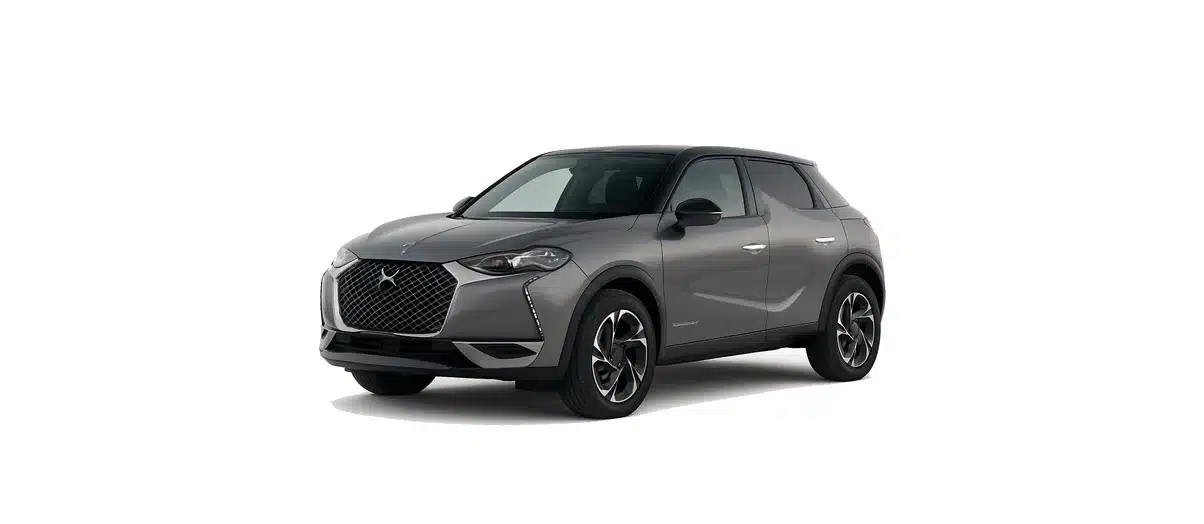
The DS 3 Crossback E-Tense is the fully electric version of DS Automobiles’ compact crossover SUV. It is worth being precise about the name: DS has used the E-Tense badge on other electrified models, including plug-in hybrids, but the DS 3 Crossback E-Tense covered in this guide is a battery electric vehicle, not a plug-in hybrid.
This guide focuses on the UK-market, Crossback-badged DS 3 Crossback E-Tense sold before the facelifted and renamed DS 3 E-Tense arrived. That distinction matters for charging and battery information. The Crossback-badged car used a 50 kWh gross battery, while the later DS 3 E-Tense successor used different figures, including a larger 54 kWh gross pack. If you are buying used, checking the registration year, handbook and exact model description is sensible.
View DS 3 Crossback E-Tense Charging Cables
DS 3 Crossback E-Tense Battery and Charging Specifications
The DS 3 Crossback E-Tense uses a Type 2 connection for AC charging and a CCS Combo 2 connection for DC rapid charging. The charging flap is positioned on the left-hand rear quarter of the car, which is useful to remember when approaching public charge points with short tethered cables.
| Vehicle type | Fully electric compact crossover SUV |
|---|---|
| Battery | 50 kWh gross lithium-ion battery, around 46.3 kWh usable |
| AC charging port | Type 2 |
| DC rapid charging port | CCS Combo 2 |
| Typical UK home charging | Up to about 7.4 kW on a single-phase home charge point |
| Three-phase AC charging | Some sources list up to 11 kW where the car, charger and site supply support it |
| DC rapid charging peak | About 100–101 kW under suitable conditions |
Battery Options
For the DS 3 Crossback E-Tense, the key battery figure to use is the 50 kWh gross pack, with approximately 46.3 kWh usable capacity. This applies to the Crossback-badged electric model sold in the UK from around 2020 to late 2022.
Later facelifted DS 3 E-Tense models are not the same specification. Those later cars are often listed with a 54 kWh gross battery and different range figures. If you are comparing used listings, be careful not to mix the pre-facelift DS 3 Crossback E-Tense data with the later DS 3 E-Tense data.
AC Charging Speed
AC charging is the area where DS 3 Crossback E-Tense information can appear confusing. Some public data for early cars lists a 7.4 kW on-board charger as standard, with 11 kW AC as an option. Later Crossback data may list 11 kW AC charging, but this requires a three-phase supply and a suitable charge point.
For most UK drivers charging at home, the practical figure to work with is up to 7.4 kW. Most UK domestic properties have a single-phase electrical supply, and a typical dedicated home charge point will deliver around 7.4 kW if the installation and vehicle allow it. DS UK material also quotes a 0–100% home charging time of about 7 hours 30 minutes using a 7.4 kW home charging unit.
For cable choice, the safe and simple recommendation is a Type 2 to Type 2 cable rated for at least 32A single-phase. This suits typical untethered home wallboxes, many workplace charge points and a large number of public AC posts. If you know your specific car has 11 kW AC capability and you regularly use three-phase AC charge points, a three-phase Type 2 cable may be worth considering.
DC Rapid Charging Speed
For longer journeys, the DS 3 Crossback E-Tense can use CCS rapid chargers. The car’s peak rapid charging rate is about 100–101 kW where charger output, battery temperature, state of charge and site conditions allow. DS also quoted an 80% rapid charge in around 30 minutes from a 100 kW charger, while EV charging data for later Crossback cars gives approximately 28 minutes for a 10–80% session.
As with most EVs, the peak figure is not held for the whole charging session. Charging speed tapers as the battery fills, particularly above 80%. On a motorway journey, it is usually quicker to stop for a shorter 10–80% rapid charge and continue driving than to wait for the final 20% unless you genuinely need the extra range.
You do not use your own Type 2 cable for DC rapid charging. CCS rapid and ultra-rapid chargers have tethered cables attached to the unit. You plug the charger’s CCS connector into the car’s combined inlet.
Range and Efficiency
Range varies depending on model year, conditions and driving style. Early DS 3 Crossback E-Tense cars were generally quoted at around 199–200 miles WLTP, while later efficiency-updated Crossback versions reached up to 212 miles WLTP. Those later improvements included updates such as revised heat pump control, gearing and tyres.
In everyday UK use, a real-world range of roughly 160 miles is a reasonable planning figure, though winter weather, motorway speeds, short trips and cabin heating use can reduce this. Urban and suburban driving in mild weather is usually more efficient than sustained high-speed motorway driving.
The car has a standard heat pump, which can help with heating efficiency compared with a simple resistive heater. However, battery preconditioning for rapid charging is not listed as available, so the fastest DC charging speeds are more likely when the battery is already at a suitable temperature after driving.
Charging at Home
For most DS 3 Crossback E-Tense owners, home charging will be the easiest and lowest-effort way to keep the battery topped up. A dedicated 7.4 kW home charge point can usually add a substantial amount of range overnight and is the normal benchmark for UK single-phase domestic charging.
If your home charger is untethered, you will need a Type 2 to Type 2 cable. A 32A single-phase cable is the practical choice for most UK owners because it supports the normal 7.4 kW home charging rate. It can also be used at many public AC posts, making it a useful cable to keep in the boot.
A 3-pin portable charger is generally best suited as a backup or occasional charging solution, but can be used regularly if a qualified electrician has confirmed the socket and electrical installation are suitable for sustained EV charging. Charging from a domestic socket is much slower than using a dedicated wallbox, so it is less convenient if you regularly need to replenish a large part of the battery.
Public Charging
Public charging falls into two main categories: AC destination charging and DC rapid charging. AC destination chargers are common in car parks, hotels, leisure centres, workplaces and town centres. Many of these are untethered, so you use your own Type 2 cable. Speeds vary by charger and by the car’s on-board charger capability.
DC rapid chargers are designed for quicker stops on longer journeys. These units have their own tethered CCS cable, and the DS 3 Crossback E-Tense can accept up to around 100–101 kW at peak. Using a charger rated above 100 kW is still fine; the car and charger will negotiate the appropriate rate, and the vehicle will only draw what it can accept.
When planning a trip, it is sensible to arrive at a rapid charger with a reasonably low state of charge, if comfortable to do so, and aim to leave around 70–80%. This helps you use the faster part of the charging curve and reduces time spent waiting while the final percentage points slow down.
Vehicle-Specific Features
The DS 3 Crossback E-Tense is based on the Stellantis e-CMP multi-energy platform and uses a front-mounted electric motor producing 100 kW, or 136 hp. Its charging hardware is conventional for a European EV of this age: Type 2 for AC and CCS Combo 2 for rapid charging.
The standard heat pump is a useful feature for UK conditions, especially in colder weather. However, the car should not be assumed to have battery preconditioning for rapid charging. It is also not listed as supporting vehicle-to-load, vehicle-to-grid or vehicle-to-home power export functions.
Because this is now a discontinued used EV, specification checking is important. If you are trying to confirm whether a particular car has 7.4 kW or 11 kW AC capability, check the owner’s handbook, original build specification or ask a DS dealer to confirm using the registration or VIN.
Charging Tips
- Use a 32A Type 2 to Type 2 cable for typical UK home, workplace and public AC charging.
- Treat 7.4 kW as the normal UK home charging maximum unless you know you have a three-phase supply and suitable equipment.
- Use the charger’s tethered CCS connector for rapid charging; your own Type 2 cable is for AC charging only.
- On long trips, plan rapid charging stops around the 10–80% window for better time efficiency.
- Expect winter range to be lower than mild-weather range, especially on motorways.
- Check whether the car is the Crossback-badged 50 kWh model rather than the later DS 3 E-Tense with different specifications.
Frequently Asked Questions
Is the DS 3 Crossback E-Tense fully electric?
Yes. The DS 3 Crossback E-Tense covered here is the fully electric version of the DS 3 Crossback. DS uses the E-Tense name on some plug-in hybrid models elsewhere, but this particular Crossback E-Tense is a BEV.
What charging cable does the DS 3 Crossback E-Tense need?
For untethered AC chargers, it uses a Type 2 to Type 2 cable. For most UK owners, a 32A single-phase Type 2 cable is the most practical recommendation. Three-phase cable choice only becomes important if your car and charging locations can make use of 11 kW AC charging.
Can the DS 3 Crossback E-Tense charge at 11 kW at home?
Usually not on a standard UK home installation. Some DS 3 Crossback E-Tense data lists 11 kW AC charging, but that requires a three-phase supply and suitable charge point. Most UK homes are single-phase, where the practical maximum is typically around 7.4 kW.
How long does home charging take?
Using a 7.4 kW home charging unit, DS UK material quotes around 7 hours 30 minutes for a 0–100% charge. In daily use, you may only be topping up part of the battery, so the charging session may be much shorter.
How fast can it rapid charge?
The DS 3 Crossback E-Tense can rapid charge using CCS at a peak of about 100–101 kW under suitable conditions. A 10–80% rapid charge can take around 28–30 minutes, but the rate will taper as the battery fills.
Does the DS 3 Crossback E-Tense have the later 54 kWh battery?
No, not in the Crossback-badged UK model covered by this guide. The DS 3 Crossback E-Tense used a 50 kWh gross battery. The later facelifted DS 3 E-Tense successor has different battery and range figures.
What This Means for Drivers
The DS 3 Crossback E-Tense is straightforward to charge once you separate the different model-year details. For most UK owners, the key points are simple: it is a fully electric Crossback model with a 50 kWh gross battery, it uses Type 2 for AC charging and CCS for rapid charging, and normal home charging is best understood as up to about 7.4 kW on a single-phase wallbox.
The 11 kW AC figure is useful if you have access to three-phase charging, but it should not be treated as the default for ordinary UK home charging. For longer journeys, the car’s roughly 100 kW peak CCS capability makes rapid charging practical, especially if you plan stops around the faster middle section of the battery.
Looking for a Charging Cable for DS 3 Crossback E-Tense?
If you need a suitable Type 2 cable for home, workplace or public AC charging, We offer charging cables matched to the DS 3 Crossback E-Tense, including practical options for typical UK single-phase charging.
View DS 3 Crossback E-Tense Charging Cables
Please note that this information is intended as a guide. Charging specifications may change due to model and year of manufacture. For precise information, always refer to your vehicle user manual.

