
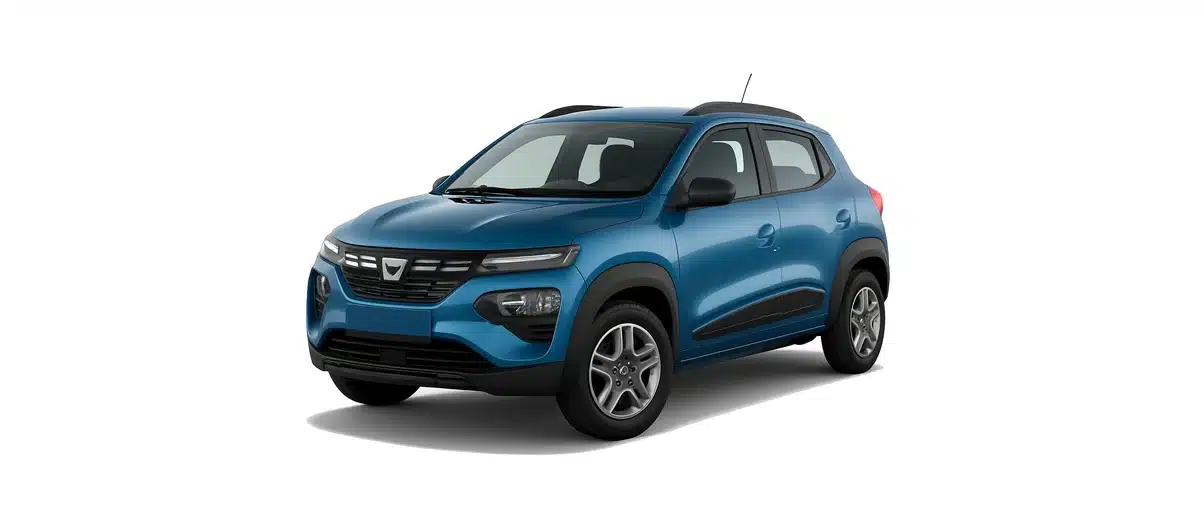
The Dacia Spring is a compact, fully electric city car designed around low running costs, simple charging and everyday urban use. In the UK, the current updated 2026 Spring is offered with 70 hp and 100 hp electric motors, a 24.3 kWh lithium-iron-phosphate battery and an official WLTP combined range of up to 140 miles. It is not a plug-in hybrid or range-extender vehicle; it is a battery electric vehicle, so all driving energy comes from charging the battery.
For most Spring owners, the best charging setup is straightforward: a 7 kW Type 2 home wallbox for routine charging, a suitable Type 2 cable for untethered wallboxes and public AC posts, and the CCS rapid charging port for occasional faster top-ups. The Spring’s small battery makes it particularly well suited to overnight home charging, short commutes and local journeys, rather than repeated long-distance motorway charging.
View Dacia Spring Charging Cables
Dacia Spring Battery and Charging Specifications
The current UK Dacia Spring uses a front-mounted charging port and supports Type 2 AC charging for home and public destination charging. Current UK Expression and Extreme versions are also listed with a CCS Combo 2 / DC combination socket for rapid charging. This is an important point because earlier UK Spring versions differ: used 2024–2025 Spring 45 and Spring 65 models used a different battery, and rapid charging availability was not the same across all versions.
For the current 2026 car, Dacia lists a 24.3 kWh battery using lithium-iron technology, with AC charging from around 2 kW to up to 7 kW and DC rapid charging at up to 40 kW. In practical terms, this means a normal 7 kW home wallbox is effectively the fastest AC charging option the car can use. Higher-powered 11 kW or 22 kW AC posts may be available in public, but the Spring will still be limited by its single-phase onboard charger.
Battery Options
For the current UK 2026 Dacia Spring Electric 70 and Electric 100, the key battery figure is 24.3 kWh. Dacia’s UK brochure describes this as usable capacity, while EV Database lists 24.3 kWh nominal with an estimated usable capacity of around 24.0 kWh. For owner guidance, it is safest to refer to the current car as having a 24.3 kWh LFP battery.
The discontinued UK 2024–2025 Spring 45 and Spring 65 models are different. They are listed with a 26.8 kWh total battery and about 25.0 kWh usable capacity. If you are buying a used Spring, do not assume that specifications from the current 2026 car apply to an earlier 45 or 65 model. Check the exact version, model year and charging socket fitted to the vehicle before relying on rapid charging compatibility.
AC Charging Speed
AC charging is the method most Spring owners will use day to day. The car uses a Type 2 connection for AC charging, which is the UK and European standard for modern electric vehicles. Dacia states that the current Spring has a single-phase onboard charger operating from around 2 kW to 7 kW, with a 7.4 kW wallbox charging from 20% to 100% in about 3 hours 20 minutes. EV Database treats the onboard charger limit as around 6.6 kW and estimates a full 0–100% charge at about 4 hours 30 minutes. Real times will vary depending on starting charge, charger output, temperature and the charging curve near the top of the battery.
A 7 kW home wallbox is therefore the natural match for the Spring. It is fast enough to recharge the small battery overnight and does not require the car to support three-phase AC charging. If you plug into an 11 kW or 22 kW public AC unit, the car will not charge at 11 kW or 22 kW; it will charge at up to its own AC limit.
DC Rapid Charging Speed
Current UK Dacia Spring models with the DC Combo socket can use CCS rapid chargers. Dacia lists a 40 kW DC rapid charging capability and quotes a 20–80% charge in around 29 minutes. EV Database gives a similar typical rapid charging estimate of roughly 30 minutes for a 10–80% session. These figures make the Spring useful for occasional rapid top-ups, especially if you need to extend a local journey or recover range quickly during a busy day.
However, it is important to understand the car’s rapid charging limit. A 150 kW or 350 kW ultra-rapid charger will not make the Spring charge at those speeds. The car’s peak DC rate is up to 40 kW, so a standard 50 kW rapid charger is usually enough to reach the vehicle’s maximum charging capability. On long trips, the modest battery size and 40 kW peak mean charging stops need to be planned more carefully than in larger long-range EVs.
Range and Efficiency
The current UK Dacia Spring is quoted at up to 140 miles WLTP combined range. Both the 70 hp and 100 hp versions are listed with the same headline WLTP range. As with any EV, real-world range depends on speed, temperature, load, driving style, road type and use of heating or air conditioning. Independent estimates suggest a more typical mixed real-world range of around 95–100 miles, with urban use often being more favourable than fast motorway driving.
This range profile suits the Spring’s purpose well. It is best viewed as a city and suburban EV for commuting, shopping, school runs and local business use. If your daily mileage is modest, you may not need to charge every night. If you regularly drive long motorway distances, a larger-battery EV with faster DC charging may be more convenient.
Charging at Home
Home charging is where the Dacia Spring makes the most sense. With a small battery and modest AC charging requirement, a 7 kW Type 2 wallbox can comfortably refill the car during off-peak hours. For many drivers, plugging in overnight once or twice a week may be enough, depending on mileage.
You can choose either a tethered or untethered home charger. A tethered unit has the cable permanently attached, which is convenient if you always charge the same vehicle at home. An untethered wallbox has a Type 2 socket, so you use your own Type 2 charging cable. Untethered setups can look neater and may be useful if you want flexibility for different vehicles or cable lengths.
A 3-pin portable charger can be useful, but it is slower and should be treated carefully. A 3-pin charger is generally best suited as a backup or occasional charging solution, but can be used regularly if a qualified electrician has confirmed the socket and electrical installation are suitable for sustained EV charging. Avoid relying on old, damaged or unknown sockets, and do not use unsuitable extension leads for EV charging.
Public Charging
For public AC charging, the Dacia Spring uses a Type 2 cable. Many destination chargers at supermarkets, car parks, hotels, workplaces and town centres are untethered, meaning you need to bring your own cable. Even if the post is rated at 7 kW, 11 kW or 22 kW, the Spring will charge only up to its onboard AC limit.
For faster charging, current 2026 Spring models with the CCS Combo 2 socket can use public DC rapid chargers. Most rapid and ultra-rapid chargers have the cable attached, so you do not need your own DC cable. Simply select a compatible CCS connector and start the session using the network’s app, RFID card or contactless payment where available.
Used-car buyers should take extra care. Not every earlier Spring has the same rapid charging capability. The discontinued Spring 45 is listed by EV Database as having no rapid charging, while the Spring 65 had rapid charging available as an option. Before planning journeys around rapid charging, physically check that the car has the CCS lower pins beneath the Type 2 section and confirm the specification from the vehicle documents or manufacturer information.
Vehicle-Specific Features
The current Dacia Spring is offered as a 5-door A-segment city hatchback, and the UK has also referenced a 2-seat Cargo version. The updated 2026 car is available with 70 hp and 100 hp electric motors, but both use the same headline 24.3 kWh battery and 140-mile WLTP range figure.
Vehicle-to-load, described by Dacia as power-to-object, is available on higher versions rather than every Spring. Dacia confirms V2L as standard on Extreme, and UK material also describes it for Extreme and Cargo. It should not be assumed to be present on all trims unless confirmed against the live vehicle specification.
EV Database lists the 2026 Spring as having no heat pump, no battery preconditioning and no V2G or V2H capability. That reinforces the Spring’s role as a simple, lightweight and cost-conscious EV rather than a technology-heavy long-distance model. In cold weather, charging and range may be less efficient, so it is sensible to allow extra margin.
Charging Tips
- Use a 7 kW home wallbox where possible: this is the most convenient and cost-effective setup for regular Spring charging.
- Do not pay extra expecting faster AC charging: the car will not benefit from 11 kW or 22 kW AC charging beyond its single-phase onboard limit.
- Use CCS rapid charging strategically: the current car’s 40 kW DC limit is useful, but ultra-rapid chargers will not deliver ultra-rapid speeds to the Spring.
- Check used models carefully: earlier 45 and 65 versions differ from the current 70 and 100 models, especially around rapid charging.
- Plan winter journeys with margin: colder weather, higher speeds and cabin heating can reduce range.
- Keep a Type 2 cable in the car: it is useful for untethered public AC chargers and untethered home wallboxes.
Frequently Asked Questions
What charging cable does the Dacia Spring use?
The Dacia Spring uses a Type 2 connection for AC charging. Current UK models with rapid charging use a CCS Combo 2 socket for DC rapid charging.
How fast can the Dacia Spring charge at home?
On the current UK car, Dacia quotes AC charging at up to 7 kW. A 7.4 kW wallbox is stated to charge the battery from 20% to 100% in about 3 hours 20 minutes, although full-session times vary.
Can the Dacia Spring use rapid chargers?
Current UK 2026 Spring versions are listed with a 40 kW CCS DC rapid charging capability. Earlier used Spring 45 and 65 versions need checking carefully because rapid charging availability differs by version and specification.
Will a 150 kW rapid charger charge the Dacia Spring faster?
No, not beyond the car’s own limit. The current Spring peaks at up to 40 kW DC, so an ultra-rapid charger will not make it charge at 150 kW.
Is the Dacia Spring suitable for long motorway journeys?
It can make longer journeys with planning, but it is primarily designed as a city and suburban EV. Its small battery and 40 kW DC limit mean frequent motorway rapid charging is not its strongest use case.
What This Means for Drivers
The Dacia Spring is at its best when treated as a simple, efficient and affordable electric city car. Its charging requirements are modest, which is a strength: you do not need a high-power home setup, and you will not gain much from expensive high-speed AC infrastructure. A Type 2 7 kW home wallbox, sensible off-peak charging and occasional CCS rapid charging should cover most ownership needs.
The main caution is model-year accuracy. The current 2026 Spring Electric 70 and 100 specifications should not be mixed with the discontinued 2024–2025 Spring 45 and 65 specifications. If you own or are buying a used car, confirm the battery, charging socket and rapid charging capability before choosing cables or planning journeys.
Looking for a Charging Cable for Dacia Spring?
We offer Dacia Spring charging cables for Type 2 home and public AC charging, helping you choose a suitable cable for your wallbox, public charging needs and vehicle specification.
View Dacia Spring Charging Cables
Please note that this information is intended as a guide. Charging specifications may change due to model and year of manufacture. For precise information, always refer to your vehicle user manual.

