
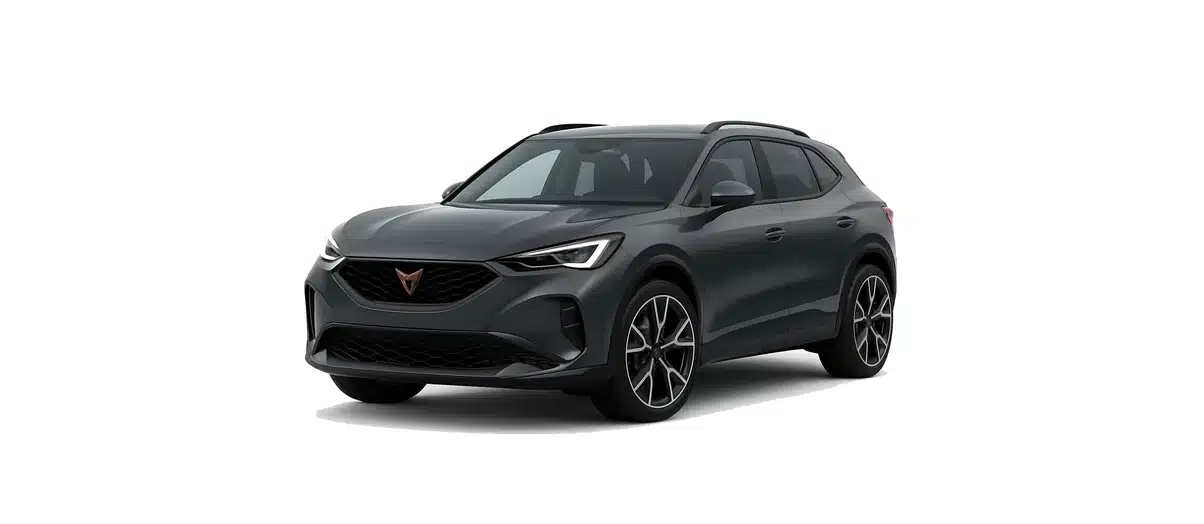
The Cupra Terramar is a compact SUV/crossover available in the UK with petrol, eTSI and e-HYBRID plug-in hybrid powertrains. This guide focuses specifically on the Terramar e-HYBRID models, because these are the versions that can be plugged in and charged externally. It should not be treated as a guide for the petrol-only or eTSI Terramar variants.
For UK buyers and owners, the key point is that the Terramar e-HYBRID is a plug-in hybrid rather than a pure battery-electric vehicle. It combines a 1.5 TSI petrol engine with an electric motor and a sizeable high-voltage battery, allowing many daily journeys to be completed on electric power while retaining petrol flexibility for longer trips. Unusually for a PHEV, the Terramar e-HYBRID also supports DC rapid charging at up to 50 kW, which makes it more versatile than many plug-in hybrids when you need a quick top-up away from home.
View Cupra Terramar Charging Cables
Cupra Terramar Battery and Charging Specifications
UK e-HYBRID versions of the Cupra Terramar are offered in 204PS and 272PS forms, including trims such as V1, V2, Tribe Edition, VZ1 and VZ2 depending on the chosen power output. Charging specifications are broadly the same across the e-HYBRID versions in the official data: a 25.8 kWh gross battery, Type 2 AC charging, and CCS/Combo 2 DC rapid charging capability.
| Vehicle type | Plug-in hybrid electric vehicle (PHEV) |
|---|---|
| Battery capacity | 25.8 kWh gross; around 19.7–20 kWh usable/net reported |
| AC charging | Up to 11 kW |
| AC connector | Type 2 |
| DC rapid charging | Up to 50 kW |
| DC connector | CCS / Combo 2 |
| Official electric range | Up to 73 miles WLTP, with figures varying by version and specification |
The charging socket is described in Cupra owner information as being on the front left-hand side for AC charging, with the DC socket section used when connecting to compatible rapid charging infrastructure.
Battery Options
The Terramar e-HYBRID uses the newer large-battery plug-in hybrid system from the Volkswagen Group family. Both the 204PS and 272PS VZ versions are listed with a 25.8 kWh battery capacity in official technical information. Usable capacity is reported at about 19.7 kWh, while Cupra media information refers to approximately 20 kWh net capacity.
That is a relatively large battery for a plug-in hybrid. In practical terms, it gives the Terramar e-HYBRID enough electric range for regular commuting, school runs and local driving, provided it is charged frequently. However, it is still a PHEV rather than a long-range BEV, so its electric-only use depends heavily on driver charging habits. If you rarely plug it in, it will behave much more like a petrol hybrid and you will miss much of the benefit of the larger battery.
AC Charging Speed
The official AC charging figure for the Cupra Terramar e-HYBRID is up to 11 kW, with a quoted 0–100% charging time of around 150 minutes. This is a strong AC figure for a plug-in hybrid, but it is important to understand when that maximum is achievable.
To reach the full 11 kW AC charging rate, the supply and charge point need to support it. In the UK, most domestic properties have single-phase electricity and most home wallboxes are rated at around 7 kW. On a typical 7 kW single-phase home charger, the Terramar will charge more slowly than the headline 11 kW figure; a full charge is likely to be closer to around four hours in typical home charging conditions.
Some homes and many commercial premises have three-phase electricity, where an 11 kW wallbox may be possible. If your property supports this and the installation is suitable, an 11 kW Type 2 wallbox can make better use of the Terramar’s onboard AC charging capability.
DC Rapid Charging Speed
One of the most notable charging features of the Cupra Terramar e-HYBRID is its ability to use DC rapid chargers. Many plug-in hybrids are limited to AC charging only, but the Terramar e-HYBRID can charge at up to 50 kW DC using a CCS/Combo 2 rapid charger. Cupra’s UK information quotes a 10–80% rapid charging time of about 26 minutes on a suitable 50 kW charger.
This is useful if you are on a longer journey and want to restore electric range without waiting several hours. For example, a motorway services stop or a short shopping break could add a meaningful amount of electric driving range. That said, DC rapid charging should not be treated as the default everyday charging method for this car. Cupra owner guidance advises that frequent DC fast charging can permanently reduce high-voltage battery charging capacity, so AC charging at home, work or a destination should be the normal choice where practical.
For DC rapid charging, you do not need to bring your own cable. Public rapid chargers have a tethered CCS connector attached to the unit. Your own Type 2 cable is used for untethered AC posts, not for DC rapid charging.
Range and Efficiency
The UK headline electric range for the Cupra Terramar e-HYBRID is up to 73 miles WLTP. Official figures vary slightly by version, trim and specification, with comparable data sitting in roughly the high-60s to low-70s mile range. As with any WLTP figure, real-world range will depend on temperature, route type, speed, wheel and tyre specification, load, use of heating or air conditioning, and driving style.
For everyday mixed UK driving, a realistic expectation is often around 50–60 miles of electric range from a full battery. Gentle urban driving in mild weather may do better, while winter motorway driving will reduce the electric distance available. Because the Terramar is a plug-in hybrid, once the usable battery charge is depleted it can continue using its petrol engine, so journey planning is less critical than it would be in a pure electric vehicle.
The best efficiency comes from using electric power for the short and medium trips where combustion engines are least efficient, then relying on petrol for longer journeys when needed. Regular charging is what makes the e-HYBRID system worthwhile.
Charging at Home
Home charging is likely to be the most convenient and cost-effective way to run a Cupra Terramar e-HYBRID. If you can park off-street and install a dedicated wallbox, you can start most mornings with a full battery and use electric driving for a large share of local journeys.
A 7 kW home wallbox is the common UK setup and is well matched to overnight charging. It will not reach the Terramar’s maximum 11 kW AC rate, but it is still fast enough to fully recharge the battery comfortably between evening and morning. If your home has a suitable three-phase supply, an 11 kW wallbox may reduce charging time closer to the official 150-minute figure.
Cupra UK materials indicate that e-HYBRID models include both a Mode 2 3-pin cable and a Mode 3 charging-station cable as standard. A 3-pin charger is generally best suited as a backup or occasional charging solution, but can be used regularly if a qualified electrician has confirmed the socket and electrical installation are suitable for sustained EV charging. For routine home charging, a professionally installed wallbox is usually the safer, faster and more convenient solution.
Public Charging
For public AC charging, the Cupra Terramar e-HYBRID uses a Type 2 connection. Many UK public AC charge points are untethered, so you connect your own Type 2 Mode 3 charging cable between the post and the vehicle. This is the same cable type used for many home wallboxes and workplace chargers.
Public AC posts commonly offer 7 kW, 11 kW or 22 kW, but the car will only draw up to its own AC limit. Where an 11 kW AC supply is available and compatible, the Terramar can make use of its higher AC capability. On a 7 kW post, it will charge more slowly. On a 22 kW AC post, the car will not charge at 22 kW; it will be limited by the Terramar’s onboard AC charger.
For faster charging, use a DC rapid charger with a CCS/Combo 2 connector. The cable is attached to the charger, and the Terramar can charge at up to 50 kW in suitable conditions. This is most useful for quick top-ups rather than routine daily charging.
Vehicle-Specific Features
The Terramar’s key charging feature is its combination of long PHEV electric range and DC rapid charging. A 25.8 kWh gross battery gives it more electric-only capability than older, smaller-battery plug-in hybrids, while 50 kW CCS charging makes it more flexible on longer days out.
The Terramar is based on a Volkswagen Group MQB/MQB Evo-derived platform and is produced in Győr on an Audi Q3 family production line. For owners, the more relevant point is that it follows familiar European charging standards: Type 2 for AC charging and CCS/Combo 2 for DC rapid charging.
The vehicle is not intended to be used as a stationary power supply, and V2L, V2G or V2H capability should not be assumed. Treat the high-voltage battery as a traction battery for driving rather than as a home or appliance power source.
Charging Tips
- Charge little and often: A PHEV works best when you plug in regularly, especially after local trips.
- Use AC as your default: Home, workplace and destination Type 2 charging is usually cheaper and gentler on the battery than frequent rapid charging.
- Keep DC charging for convenience: The 50 kW CCS capability is very useful, but it is best used when you genuinely need a faster top-up.
- Choose the right cable: Use a Type 2 Mode 3 cable for untethered AC posts and wallboxes. DC rapid chargers have their own tethered CCS cables.
- Understand UK home charging limits: Most UK homes use 7 kW single-phase wallboxes, so do not expect the full 11 kW AC speed unless your installation supports it.
- Plan around real range: Use the official WLTP figure as a guide, but expect around 50–60 miles in mixed real-world driving.
Frequently Asked Questions
Is the Cupra Terramar a fully electric car?
No. The charging-relevant Terramar models are e-HYBRID plug-in hybrids. They can drive on electric power when charged, but they also have a petrol engine for longer journeys. Petrol and eTSI Terramar versions are also sold and are not externally rechargeable.
What charging cable does the Cupra Terramar e-HYBRID use?
For AC charging, the Terramar e-HYBRID uses a Type 2 connection. A Type 2 Mode 3 cable is used with untethered public AC chargers and some wallboxes. For DC rapid charging, it uses a CCS/Combo 2 connector and the cable is attached to the rapid charger.
How long does the Cupra Terramar take to charge at home?
Official data quotes around 150 minutes from 0–100% using 11 kW AC charging. On a typical UK 7 kW home wallbox, expect a slower full charge, commonly around four hours depending on conditions and starting charge level.
Can the Cupra Terramar use rapid chargers?
Yes, the Terramar e-HYBRID can use CCS DC rapid chargers at up to 50 kW. Cupra quotes about 26 minutes for a 10–80% charge on a suitable charger. This is unusual and useful for a plug-in hybrid, but AC charging should still be the normal day-to-day method where possible.
What electric range should I expect?
The official UK figure is up to 73 miles WLTP, with variation by version and specification. In mixed real-world UK driving, around 50–60 miles is a sensible expectation, depending on weather, speed, route and driving style.
What This Means for Drivers
The Cupra Terramar e-HYBRID is best understood as a rapid-charge-capable plug-in hybrid. It offers enough electric range to cover many daily journeys without using petrol, while its engine removes the need to plan longer trips around charging stops. The 50 kW CCS capability is a genuine advantage over many PHEVs, especially if you occasionally need a quick top-up away from home.
For most UK owners, the smartest routine will still be simple: charge at home or work using Type 2 AC charging, use the petrol engine when longer journeys demand it, and reserve DC rapid charging for the occasions when speed and convenience matter. If you can plug in consistently, the Terramar e-HYBRID can deliver much of the everyday convenience of electric driving without requiring you to treat it like a full BEV.
Looking for a Charging Cable for Cupra Terramar?
If you need a compatible cable for home, workplace or public AC charging, choose a Type 2 charging cable suitable for the Cupra Terramar e-HYBRID and your charging setup.
View Cupra Terramar Charging Cables
Please note that this information is intended as a guide. Charging specifications may change due to model and year of manufacture. For precise information, always refer to your vehicle user manual.

