
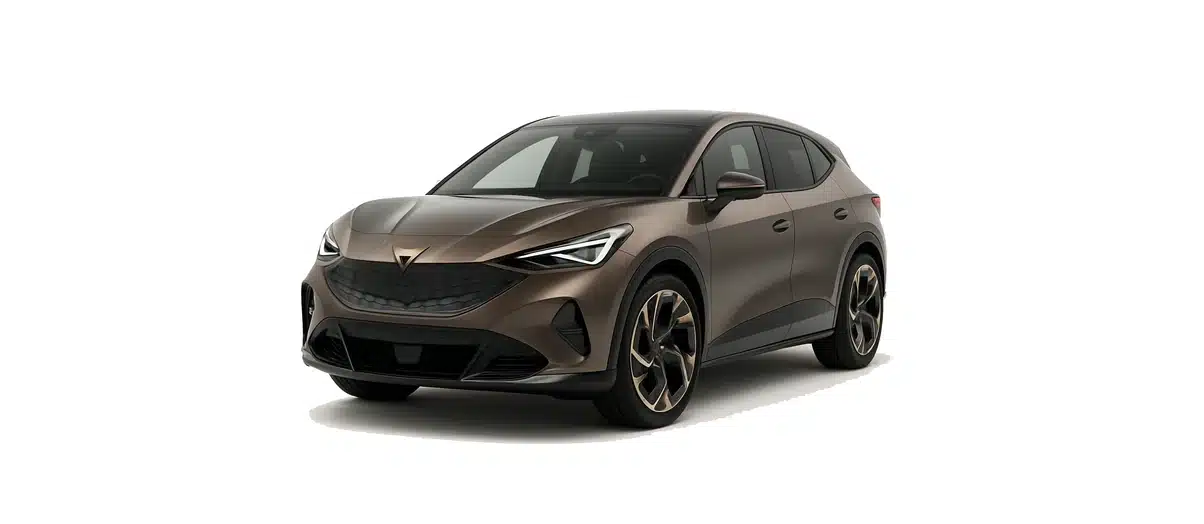
The Cupra Tavascan is a fully electric coupe-SUV designed for drivers who want strong performance, distinctive styling and practical long-distance capability. In the UK, current public information shows the Tavascan as a battery electric vehicle with Type 2 AC charging and CCS rapid charging, using a 77 kWh usable battery in the main listed variants.
This guide explains what Cupra Tavascan owners need to know about charging at home, using public chargers, choosing the right cable and understanding how range differs between trims. A Tavascan V1 driver and a Tavascan VZ2 driver use the same Type 2 and CCS charging standards, but they should not expect identical range or journey-planning margins because drivetrain, wheels, trim and efficiency all affect how far the car will travel between charges.
View Cupra Tavascan Charging Cables
Cupra Tavascan Battery and Charging Specifications
The Cupra Tavascan is a battery electric vehicle, not a plug-in hybrid. UK data currently lists rear-wheel-drive and all-wheel-drive versions, both using a 77 kWh usable battery. The charging connection is the European standard Type 2 socket for AC charging and CCS Combo 2 for DC rapid charging.
| Specification | Cupra Tavascan UK charging data |
|---|---|
| Vehicle type | Battery electric vehicle |
| Charging port | Type 2 AC / CCS Combo 2 DC |
| Usable battery capacity | 77 kWh on current UK variants found |
| Nominal battery capacity | Approximately 82 kWh |
| Maximum AC charging | 11 kW |
| Typical UK home wallbox charging | Up to 7.4 kW on most single-phase homes |
| Maximum DC rapid charging | 135 kW peak |
| Quoted DC 10-80% time | About 28 minutes |
| Heat pump | Optional as part of the Winter Pack |
| Battery preconditioning | Listed as available, with navigation-based operation indicated by EV data sources |
The Tavascan uses Volkswagen Group’s MEB platform and a 400 V-class battery architecture. Its 135 kW DC rapid-charging figure is a peak capability rather than a charging speed it will hold for an entire session. Real charging speed depends on factors such as battery temperature, current state of charge, charger output and how busy the charging site is.
Battery Options
Current UK information found for the Cupra Tavascan centres on a 77 kWh usable battery. The main distinction is not the battery size, but the drivetrain and trim level.
| Variant | Drivetrain and power | Published UK WLTP range context |
|---|---|---|
| V1 | 77 kWh RWD, 286 PS | Up to 353 miles in CUPRA UK trim/pricing data |
| V2 | 77 kWh RWD, 286 PS | Up to 339 miles in CUPRA UK trim/pricing data |
| VZ1 | 77 kWh AWD, 340 PS | Up to 320 miles in CUPRA UK trim/pricing data |
| VZ2 | 77 kWh AWD, 340 PS | Up to 299 miles in CUPRA UK trim/pricing data |
Some published technical tables give slightly different summary WLTP figures, so it is sensible to check the exact specification of the car you are buying or already own. The key point for charging is straightforward: the V1, V2, VZ1 and VZ2 use the same Type 2 / CCS charging standards, but the higher-powered AWD versions and equipment differences can reduce range compared with the most efficient RWD trim.
AC Charging Speed
The Cupra Tavascan has an 11 kW onboard AC charger. This means it can accept up to 11 kW from a suitable three-phase AC supply. In the UK, however, most homes have single-phase electricity, so a standard home wallbox will usually provide up to 7.4 kW rather than the car’s full 11 kW AC capability.
On a typical 7.4 kW home charger, a large battery such as the Tavascan’s 77 kWh usable pack is well suited to overnight charging. You do not normally need to arrive home nearly empty and charge to 100% every night. Many owners simply top up a percentage of the battery each evening, especially if they can use an off-peak EV tariff.
If you have access to a three-phase home, workplace or commercial AC charge point, the Tavascan may be able to charge at up to 11 kW. A three-phase Type 2 cable is recommended if you want to make use of that maximum AC rate where available. A single-phase cable will still charge the car, but it will not provide the same AC charging potential at three-phase charge points.
DC Rapid Charging Speed
For motorway journeys and longer trips, the Cupra Tavascan uses CCS rapid charging. CUPRA UK quotes a maximum DC charging rate of 135 kW and a 10-80% rapid-charge time of around 28 minutes in suitable conditions.
To access the Tavascan’s best rapid-charging performance, choose a public rapid or ultra-rapid charger rated at 150 kW or above where possible. A 50 kW charger will still work, but it will take much longer and may be better used as a fall-back option rather than the first choice on a long route.
As with most electric cars, charging from 10-80% is usually the most time-efficient window. Above 80%, the car progressively slows charging to protect the battery and manage heat, so charging to 100% at a rapid charger is normally only worthwhile if you need the extra range to reach your destination or the next reliable charging stop.
Range and Efficiency
The longest published UK WLTP figure found for the Cupra Tavascan is up to 353 miles for the V1. Other trims are lower, with the VZ2 listed at up to 299 miles in CUPRA UK trim/pricing data. This does not mean the charging hardware changes; it means the car’s efficiency and specification affect how far it can travel from the same usable battery capacity.
In real-world UK driving, range will vary with speed, temperature, road type, tyre choice, load and driving style. Independent EV data sources suggest a real-world estimate of around 260 miles for the Tavascan VZ, which is a useful planning figure for mixed conditions rather than a guarantee.
Motorway driving in winter will usually reduce range compared with gentle summer driving around town. If you own a VZ1 or VZ2 with all-wheel drive and larger or more performance-oriented equipment, it is sensible to plan with a larger safety margin than a V1 owner chasing the best range figure.
Charging at Home
For most UK owners, a dedicated 7.4 kW Type 2 home wallbox will be the everyday charging solution for the Cupra Tavascan. It is faster, safer and more convenient than relying on a domestic socket, and it allows you to schedule charging during cheaper overnight electricity periods if your tariff supports it.
A Mode 3 Type 2 charging cable is the cable used with untethered home chargers and many public AC posts. CUPRA UK’s price list references a Mode 3 Type 2 charging cable as an accessory offered at no extra cost in the relevant UK documentation, but owners should check what is supplied with their specific car, especially when buying used or from stock.
A 3-pin charger is generally best suited as a backup or occasional charging solution, but can be used regularly if a qualified electrician has confirmed the socket and electrical installation are suitable for sustained EV charging. Because the Tavascan has a large battery, a domestic socket will be much slower than a wallbox and is not the most practical option for regular high-mileage use.
Home charging is also where battery-friendly habits are easiest. For normal commuting and local use, many owners avoid charging to 100% every day unless they need the full range for a trip. Setting a charging limit and using scheduled charging can help reduce cost and avoid the car sitting at a very high state of charge for longer than necessary.
Public Charging
The Cupra Tavascan can use two broad types of public charger: AC destination chargers and DC rapid chargers. AC destination chargers are commonly found in town centres, hotels, car parks, workplaces and leisure sites. These usually require your own Type 2 cable unless the unit is tethered.
DC rapid and ultra-rapid chargers have their own tethered CCS cable, so you do not use your Type 2 cable for the rapid part of the session. These are the chargers to prioritise for long-distance journeys, especially when you want to charge from around 10% to 80% and continue driving.
When planning longer trips, it is worth checking charger power, availability, payment method and backup options before setting off. The Tavascan’s 135 kW peak capability makes a 150 kW-plus charger ideal, but route planning should also consider reliability and location. A slightly slower but dependable charger at a convenient stop can sometimes be better than a faster unit with poor availability.
Vehicle-Specific Features
The Tavascan is listed with battery preconditioning, and EV data sources indicate navigation-based automatic preconditioning may be available. In practical terms, this means that when you route to a rapid charger through the car’s built-in navigation, the vehicle may prepare the battery temperature before arrival to support better rapid-charging performance.
This matters most in cold weather, when a battery that is too cold may charge more slowly. If you are relying on a fast charging stop, use the car’s navigation system to route to the charger rather than only navigating via a phone app, provided your car’s software and navigation data support that behaviour.
The heat pump should be treated as an optional feature, not a standard feature across every UK Tavascan. CUPRA UK lists it as part of the Winter Pack, alongside other cold-weather equipment. A heat pump can help reduce heating energy use in some conditions, but its presence depends on the individual car’s specification.
UK-focused data checked does not support describing the Tavascan as having vehicle-to-load, vehicle-to-grid or vehicle-to-home capability. Owners should therefore not buy the car or charging equipment on the assumption that V2L, V2G or V2H functions are available in the UK.
Charging Tips
- Use a 7.4 kW home wallbox for daily charging: this is the most practical setup for most UK homes, even though the car can accept up to 11 kW AC on suitable three-phase supplies.
- Choose the right Type 2 cable: a 32 amp Type 2 cable is appropriate for common UK home and public AC charging. A three-phase cable gives the best flexibility where 11 kW AC is available.
- Rapid charge in the efficient window: plan long journeys around 10-80% charging stops rather than waiting for the final 20% unless you genuinely need it.
- Use 150 kW-plus CCS chargers when possible: this gives the Tavascan the best chance of reaching its 135 kW peak charging capability.
- Plan by trim, not just model name: a V1 may have more range margin than a VZ2, even though both use the same charging connector and battery capacity.
- Route to rapid chargers through the built-in navigation: where battery preconditioning is active, this can help prepare the battery before arrival.
- Keep a winter buffer: cold weather, rain, wind and motorway speeds can all reduce range, so avoid arriving at chargers with too little charge remaining.
Frequently Asked Questions
What charging cable does the Cupra Tavascan use?
The Cupra Tavascan uses a Type 2 cable for AC charging. For DC rapid charging, it uses the CCS Combo 2 connector, with the cable attached to the rapid charger.
Can the Cupra Tavascan charge at 22 kW AC?
No published UK data checked here lists 22 kW AC charging for the Tavascan. The onboard AC charging limit is 11 kW, and most UK home wallboxes will provide up to 7.4 kW on single-phase electricity.
How fast can the Cupra Tavascan rapid charge?
The maximum DC rapid charging figure is 135 kW, with CUPRA quoting around 28 minutes for a 10-80% charge in suitable conditions. This is a peak figure and depends on charger capability, battery temperature and state of charge.
Does every Cupra Tavascan have the same range?
No. UK figures vary by trim and drivetrain. Published trim data shows up to 353 miles for V1 and lower figures for V2, VZ1 and VZ2. The AWD VZ models should be planned with different range expectations from the most efficient RWD version.
Is the Cupra Tavascan a plug-in hybrid?
No. The Cupra Tavascan is a battery electric vehicle. UK data checked does not show a plug-in hybrid version.
What This Means for Drivers
The Cupra Tavascan is straightforward to live with from a charging perspective. It uses the standard UK and European Type 2 AC and CCS DC setup, supports 11 kW AC charging where three-phase power is available, and offers 135 kW peak DC rapid charging for longer journeys.
The main thing owners need to understand is the difference between charging capability and driving range. A V1 and a VZ2 can use the same cable and the same rapid chargers, but their range figures are not the same. For daily use, a 7.4 kW home wallbox and a good Type 2 cable will cover most needs. For road trips, plan around reliable CCS chargers, aim for the 10-80% charging window and allow extra margin in poor weather or in the AWD versions.
Looking for a Charging Cable for Cupra Tavascan?
We offer Cupra Tavascan charging cables suitable for UK home and public AC charging, including Type 2 options for owners who want a practical cable for untethered wallboxes, workplace chargers and destination charging posts.
View Cupra Tavascan Charging Cables
Please note that this information is intended as a guide. Charging specifications may change due to model and year of manufacture. For precise information, always refer to your vehicle user manual.

