
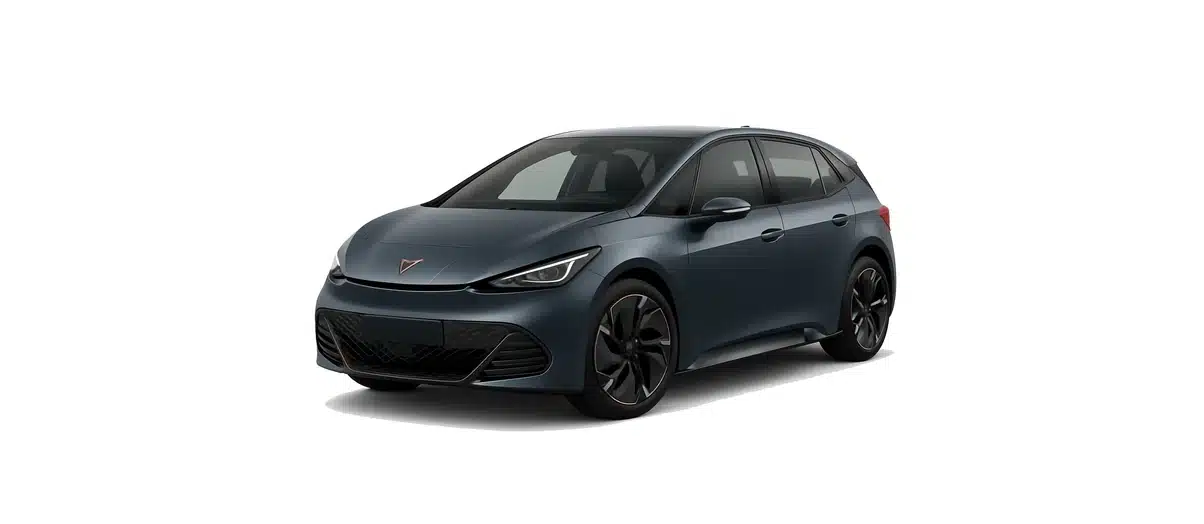
The Cupra Leon e-HYBRID is a plug-in hybrid, not a fully electric car. That distinction matters when choosing charging cables, planning home charging and using public chargers. The current UK facelift Cupra Leon 1.5 e-HYBRID is also quite different from earlier 1.4 e-HYBRID models, so it is worth identifying which version you own before relying on charging times or connector advice.
Current facelift Cupra Leon e-HYBRID models use a larger plug-in hybrid battery and, unusually for a PHEV, can charge from both AC and DC rapid chargers. Earlier pre-facelift Cupra Leon e-HYBRID cars, sold from around 2021 to early 2024, used a smaller 12.8 kWh battery and are generally listed as Type 2 AC-only. This guide explains the key differences, how to charge at home and in public, and which cable approach makes sense for UK drivers.
View Cupra Leon Charging Cables
Cupra Leon Battery and Charging Specifications
The most important starting point is model year. For the current UK facelift Cupra Leon 1.5 e-HYBRID, CUPRA lists both 204PS and 272PS plug-in hybrid versions. Both use the same headline charging figures in current UK data: up to 11 kW AC charging and up to 50 kW DC rapid charging.
By contrast, older Cupra Leon 1.4 e-HYBRID models used a smaller battery and slower AC charging. Owners of those cars should not assume they can use CCS rapid chargers, because many earlier cars have a Type 2 AC charging inlet only. If you have a used Leon e-HYBRID, check the charging flap, handbook and vehicle specification before planning around rapid charging.
| Version | Battery | AC charging | DC rapid charging | Connector guidance |
|---|---|---|---|---|
| Current facelift Cupra Leon 1.5 e-HYBRID 204PS / 272PS | 25.8 kWh gross, around 19.7 kWh usable | Up to 11 kW AC | Up to 50 kW DC, 10-80% quoted at 26 minutes | Type 2 for AC; CCS/Combo 2 for DC rapid charging |
| Pre-facelift Cupra Leon 1.4 e-HYBRID, approx. 2021 to early 2024 | 12.8 kWh gross | Commonly listed at up to 3.6 kW AC | Not generally supported | Type 2 AC only on many cars; check your vehicle |
Battery Options
The current facelift Cupra Leon 1.5 e-HYBRID has a 25.8 kWh gross battery, with independent testing and commentary commonly quoting around 19.7 kWh usable capacity. For a plug-in hybrid, this is a sizeable battery, giving the current Leon e-HYBRID a much longer electric-only range than earlier versions.
Older pre-facelift 1.4 e-HYBRID models used a 12.8 kWh battery. These cars can still be very useful for short commutes and local journeys, but their charging capability and electric range are not the same as the current facelift model. When buying a used Cupra Leon e-HYBRID, avoid judging the car solely by the latest brochure figures unless you are certain it is the newer 1.5 e-HYBRID.
AC Charging Speed
For the current facelift Cupra Leon 1.5 e-HYBRID, CUPRA lists AC charging at up to 11 kW, with a 0-100% AC charging time of around 2 hours 30 minutes under suitable conditions. That 11 kW figure normally requires a compatible three-phase AC supply, which is more common at some workplaces and public destinations than at typical UK homes.
Most UK domestic wallboxes are single-phase and rated at up to 7.4 kW. On this kind of home charger, a full recharge of the current Leon e-HYBRID will typically take longer than the 11 kW figure, with around four hours often cited as a realistic expectation. This is still easily manageable for overnight charging or topping up between journeys.
Older 1.4 e-HYBRID cars are commonly listed with slower AC charging, often around 3.6 kW. That means a home wallbox may not charge the car at 7.4 kW simply because the car’s onboard charger is the limiting factor. A 22 kW AC public post will also not make the current Leon charge faster than its listed 11 kW AC limit, and it will not overcome the lower onboard charging limit of older models.
DC Rapid Charging Speed
The current facelift Cupra Leon 1.5 e-HYBRID supports DC rapid charging at up to 50 kW, with CUPRA quoting a 10-80% time of 26 minutes. That is a useful feature for a plug-in hybrid and is relatively uncommon in this class. It means that if you are travelling and want to restore a useful amount of electric range, the car can use a rapid charger fitted with a tethered CCS/Combo 2 connector.
However, this should be treated as a convenience rather than the main way to run the car. The battery is much smaller than a full battery-electric vehicle battery, and the 50 kW peak is not intended to compete with modern BEV rapid-charging speeds. Rapid charging can be helpful on longer days out, but regular low-cost home charging will usually be the better ownership strategy.
Do not assume all Cupra Leon e-HYBRID models can rapid charge. Earlier 12.8 kWh 1.4 e-HYBRID cars are generally Type 2 AC-only, so owners should not plan journeys around CCS charging unless their specific vehicle clearly has the correct connector and the handbook confirms DC capability.
Range and Efficiency
Current UK figures list the facelift Cupra Leon e-HYBRID hatchback at up to 78-81 miles of WLTP electric range for the 204PS version, while the 272PS hatch is listed at around 76-77 miles depending on specification. The closely related estate body style has slightly lower figures in some versions, typically around the mid-to-high 70-mile range.
WLTP figures are useful for comparing cars, but they are not a guarantee of real-world range. Temperature, road speed, tyre choice, cabin heating or cooling, gradients, payload and driving style can all affect how far the Leon travels on electric power. Short urban trips in mild weather are likely to suit the e-HYBRID system best, while sustained motorway speeds and cold winter conditions will reduce electric range.
Because the Cupra Leon e-HYBRID is a plug-in hybrid, charging regularly is central to getting the best from it. If it is driven without being charged, it effectively becomes a petrol hybrid carrying a relatively heavy battery. The fuel-saving benefit is strongest when you start everyday journeys with a charged battery and use petrol mainly for longer trips.
Charging at Home
For most UK Cupra Leon e-HYBRID owners, home charging will be the most convenient and cost-effective option. A dedicated home wallbox allows the car to be plugged in overnight or during off-peak tariff windows, so the battery is ready for the next day. Even though the current model can charge at up to 11 kW AC, a typical 7.4 kW single-phase home wallbox should still comfortably refill the battery during normal parking time.
For home and workplace AC charging, use a Type 2 charging cable of suitable rating and length. The current UK price list states that the Leon e-HYBRID includes Mode 2 3-pin and Mode 3 charging-station cables as standard, but used cars may not always come with their original cables. It is sensible to check what is in the boot before relying on a cable being included.
A 3-pin charger is generally best suited as a backup or occasional charging solution, but can be used regularly if a qualified electrician has confirmed the socket and electrical installation are suitable for sustained EV charging. Avoid using damaged sockets, extension leads or unknown outdoor electrical points. A properly installed wallbox is normally the better long-term solution for safety, convenience and charging control.
Public Charging
Public AC charging is straightforward for both current and older Leon e-HYBRID models, provided you have the correct Type 2 cable or the post has a tethered lead. At supermarkets, leisure centres, hotels and workplace car parks, AC destination charging can be ideal because the car can add range while parked for an hour or more.
For the current facelift 1.5 e-HYBRID only, DC rapid charging can also be used where available. The rapid charger will have a tethered CCS/Combo 2 connector, so you do not need to provide your own DC cable. Plug in, follow the network’s instructions and be aware that the car’s small battery means charging sessions may be short. Once the car has reached the required level, moving on promptly helps keep the charger available for other drivers.
Owners of older 1.4 e-HYBRID cars should focus on AC charging. If your charging flap has only a Type 2 inlet and no lower CCS pins, it is not suitable for CCS rapid charging. When in doubt, use the handbook, registration-specific charging data or a CUPRA retailer to confirm the car’s charging specification.
Vehicle-Specific Features
The current Cupra Leon e-HYBRID stands out because it combines a relatively large PHEV battery with both AC and DC charging. This makes it more flexible than many plug-in hybrids: it can be charged at home overnight, topped up at a workplace AC post, or given a quicker boost at a compatible DC rapid charger.
Two plug-in hybrid outputs are listed in the UK for the current car: 204PS e-HYBRID and 272PS e-HYBRID or VZ e-HYBRID, depending on trim and market wording. The charging headline figures are broadly shared across the current UK plug-in versions, but range varies slightly by output, body style and specification.
CUPRA also lists remote temperature control through My CUPRA/CUPRA CONNECT for e-HYBRID and fully electric models. This can be useful for cabin comfort before a journey, especially when the car is plugged in. It should not be confused with a confirmed heat pump, as that is not established from the supplied UK charging data.
Charging Tips
- Identify your version first: current 1.5 e-HYBRID models have different charging capability from earlier 1.4 e-HYBRID cars.
- Use Type 2 for AC charging: this is the standard cable approach for home, workplace and many public AC posts.
- Do not expect 22 kW AC charging: the current car is listed at up to 11 kW AC, and older cars are slower.
- Use CCS rapid charging only if your car supports it: current facelift cars can use DC rapid charging; many older cars cannot.
- Charge regularly: a PHEV gives its best running-cost benefits when the battery is topped up for everyday driving.
- Keep rapid charging occasional: DC charging is useful, but home charging will usually be cheaper and more convenient.
- Check used-car cables: a second-hand Leon may be missing its original Mode 2 or Mode 3 cable.
Frequently Asked Questions
Is the Cupra Leon e-HYBRID fully electric?
No. The Cupra Leon e-HYBRID is a plug-in hybrid with a petrol engine and an electric drive system. It can drive on electric power for local journeys when charged, but it is not a battery-electric vehicle.
What charging cable does the Cupra Leon use?
For AC charging, the Cupra Leon e-HYBRID uses a Type 2 cable. Current facelift cars with DC rapid charging use the tethered CCS/Combo 2 connector at the rapid charger. Older 1.4 e-HYBRID cars are commonly Type 2 AC-only.
Can every Cupra Leon e-HYBRID use rapid chargers?
No. Current facelift 1.5 e-HYBRID models are listed with up to 50 kW DC charging, but older 12.8 kWh 1.4 e-HYBRID models are generally AC-only. Always check the socket and handbook for your specific car.
How long does the current Cupra Leon e-HYBRID take to charge?
CUPRA lists the current facelift model at around 2 hours 30 minutes for a 0-100% AC charge at up to 11 kW. On a typical 7.4 kW UK home wallbox, allow longer, often around four hours. DC rapid charging from 10-80% is quoted at 26 minutes where the car and charger conditions allow.
Should I charge a plug-in hybrid every day?
If you want the best efficiency and lowest running costs, regular charging is strongly recommended. Daily or near-daily charging means more local journeys can be completed using electric power rather than petrol.
What This Means for Drivers
The Cupra Leon e-HYBRID is at its best when treated as a car to plug in often. For the current facelift model, the larger battery and DC charging capability make it unusually flexible for a PHEV, while the 11 kW AC capability is useful at suitable workplace and public chargers. For most owners, however, a home wallbox and a good Type 2 cable will remain the core charging setup.
The main caution is not to mix up generations. A current 1.5 e-HYBRID and an earlier 1.4 e-HYBRID may look closely related, but their charging hardware and battery sizes are different. Before buying cables or planning public charging, confirm the exact version of your Leon and whether it has AC-only Type 2 charging or the newer AC/DC charging arrangement.
Looking for a Charging Cable for Cupra Leon?
If you need a replacement or spare Type 2 cable for home, workplace or public AC charging, choose one that suits your Cupra Leon e-HYBRID model, charger rating and preferred cable length. We sell Cupra Leon charging cable options to help you match the right cable to your vehicle.
View Cupra Leon Charging Cables
Please note that this information is intended as a guide. Charging specifications may change due to model and year of manufacture. For precise information, always refer to your vehicle user manual.

