
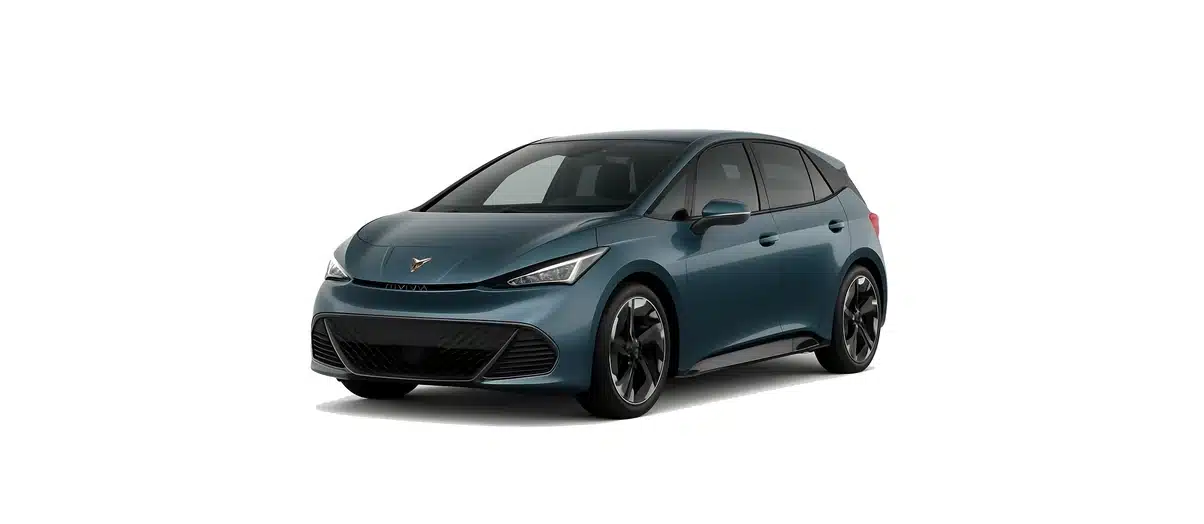
The Cupra Born is a 5-door battery-electric hatchback and one of the sportier choices in the Volkswagen Group MEB family. For UK drivers, it uses the familiar Type 2 connection for AC charging and CCS Combo 2 for DC rapid charging, making it compatible with home wallboxes, workplace chargers, destination chargers and most UK rapid-charging networks.
This guide explains what Cupra Born owners need to know about charging cables, home charging speeds, public charging and the differences between the main battery versions. CUPRA UK’s April 2026 Model Year 2026 data lists 59 kWh, 79 kWh 230PS and VZ 79 kWh 326PS variants, but model-year availability and some specifications can change, so it is always worth checking the exact derivative and build year of your own car.
View Cupra Born Charging Cables
Cupra Born Battery and Charging Specifications
All current UK MY2026 Cupra Born variants are fully electric, not plug-in hybrids. The charging socket is positioned at the rear right-hand side of the car and combines a Type 2 AC inlet with the lower CCS pins used for DC rapid charging.
| Item | Cupra Born specification |
|---|---|
| Vehicle type | Battery electric vehicle |
| AC charging connector | Type 2 |
| DC rapid charging connector | CCS Combo 2 |
| Maximum AC charging rate | Up to 11 kW where a suitable three-phase AC supply is available |
| Typical UK home wallbox charging | Usually around 7.2 / 7.4 kW on single-phase domestic supplies |
| Maximum DC charging rate | Up to 185 kW on the VZ, with lower official peak figures for some variants |
| Vehicle-to-load / vehicle-to-grid | Not listed as available for current UK MY2026 Born models |
Battery Options
The Cupra Born range should be considered variant by variant, because battery size, range and rapid-charging performance differ. CUPRA’s UK documentation uses marketing battery names such as 59 kWh and 79 kWh, while the detailed technical table may quote net and gross capacities separately.
| Variant | Battery capacity | Official WLTP range | Official charging notes |
|---|---|---|---|
| 59 kWh 230PS e-Boost | 59 kWh net / 63 kWh gross | About 235.5 to 265.3 miles, depending on configuration | 11 kW AC; up to 165 kW DC; 10-80% in around 24 minutes |
| 79 kWh 230PS e-Boost | CUPRA UK technical table lists 77 kWh net / 82 kWh gross | About 308.8 to 354.8 miles, depending on configuration | 11 kW AC; official detailed table lists up to 175 kW DC; 10-80% in around 28 minutes |
| VZ 79 kWh 326PS e-Boost | 79 kWh net / 84 kWh gross | About 329.3 to 369.7 miles, depending on configuration | 11 kW AC; up to 185 kW DC; 10-80% in around 26 minutes |
The 59 kWh model has the shortest official range, but also a short official 10-80% rapid-charge time. The larger-battery models offer longer driving range, while the VZ adds the highest quoted peak DC charging power in the current UK technical data.
AC Charging Speed
AC charging is the charging you will use at home, at many workplaces and at many slower public charging points. The Cupra Born’s Type 2 AC system is rated at up to 11 kW across the current UK MY2026 range, but that figure needs a little UK context.
Most UK homes have a single-phase electricity supply. With a typical dedicated home wallbox, that usually means charging at around 7.2 or 7.4 kW rather than the car’s full 11 kW AC capability. To see 11 kW AC, you normally need access to a suitable three-phase supply and a compatible 11 kW or 22 kW AC charge point. The car will only take the power it can accept, so a 22 kW public AC post will not make the Born charge faster than its own onboard AC limit.
CUPRA’s UK charging table also references 2.3 kW three-pin charging times of roughly 29 hours for the 59 kWh battery and 39 hours for the larger-battery versions. A 3-pin charger is generally best suited as a backup or occasional charging solution, but can be used regularly if a qualified electrician has confirmed the socket and electrical installation are suitable for sustained EV charging.
DC Rapid Charging Speed
DC rapid charging is used for longer journeys and motorway stops. With DC charging, the public charger’s tethered CCS cable plugs directly into the lower part of the Born’s charging inlet, so you do not need to buy or carry a separate DC rapid-charging cable.
Official UK MY2026 rapid-charging figures vary by derivative. The 59 kWh 230PS version is listed at up to 165 kW with a 10-80% time of around 24 minutes. The 79 kWh 230PS version is listed in CUPRA’s detailed technical table at up to 175 kW with a 10-80% time of around 28 minutes. The VZ 79 kWh 326PS version is listed at up to 185 kW with a 10-80% time of around 26 minutes.
These are best-case figures under suitable conditions. Battery temperature, charger capability, state of charge, network load and weather all affect the speed you actually see. Like most EVs, the Born charges fastest when the battery is at a lower state of charge and then slows down as it approaches higher percentages. For road trips, it is usually quicker to charge to around 70-80% and continue driving than to wait for the final 20% unless you genuinely need the extra range.
Range and Efficiency
The Cupra Born’s official WLTP range is not one fixed number. CUPRA UK’s MY2026 figures span from the mid-200-mile region for some 59 kWh configurations to just under 370 miles for the most efficient VZ configuration. Wheels, tyres, trim level, optional equipment, driving style, temperature and road speed all influence the final figure.
In everyday UK driving, real-world range will usually be lower than the highest WLTP number, especially in cold weather or during sustained motorway use. EV Database estimates around 220 miles of real-world range for the 59 kWh e-Boost and around 285 miles for the VZ MY25-26 derivative. Treat these as useful planning estimates rather than guaranteed outcomes.
For commuting and local use, many Born drivers will not need to charge every day. For longer journeys, planning charging stops around the battery version you have makes a noticeable difference: the 59 kWh car may need more frequent stops, while the 79 kWh and VZ versions give more flexibility between chargers.
Charging at Home
For most Cupra Born owners, a dedicated home wallbox is the most convenient way to charge. Plug in overnight, set a charging schedule if your tariff rewards off-peak use, and start each day with the charge level you need.
A 7 kW home wallbox will typically add around 7 kWh of energy per hour, before normal charging losses. CUPRA’s official table lists 0-100% AC charging times of around 6 hours 30 minutes for the 59 kWh model, around 8 hours for the 79 kWh 230PS model and around 8 hours 30 minutes for the VZ when using the relevant AC capability. On a typical single-phase UK wallbox, actual full-charge times may be longer than the headline 11 kW figures, but overnight charging is still realistic for most routines.
For cable selection, the Born uses a Type 2 charging cable for untethered AC charge points. If your home wallbox is tethered, it already has a cable attached. If it is untethered, or if you regularly use public AC posts, you will need a Type 2 to Type 2 cable. A 32 amp Type 2 cable is the common choice for UK AC charging and gives broad compatibility with 7 kW home charge points and many public AC chargers.
Public Charging
Public charging falls into two broad categories: AC destination charging and DC rapid charging. AC destination chargers are often found in town centres, hotels, car parks, workplaces and leisure locations. Many are untethered, so you use your own Type 2 cable. They are useful when the car will be parked for a few hours.
DC rapid and ultra-rapid chargers are used when you want to add range quickly. These units have their own tethered CCS cables, so your Type 2 cable is not used for rapid charging. The Born supports CCS rapid charging, with the maximum accepted power depending on your variant and conditions.
CUPRA CONNECT features may include charging stations, route planning, CUPRA Charging map functions and Plug & Charge support, depending on vehicle equipment, software and service availability. Plug & Charge can make compatible public charging easier by allowing authentication through the vehicle rather than a separate card or app, but availability depends on the charging network and account setup.
Vehicle-Specific Features
The Born is built on the Volkswagen Group’s MEB dedicated EV platform and is closely related to other MEB hatchbacks, but CUPRA positions it with a more performance-focused character. It is rear-wheel drive in the listed UK versions, with a rear-mounted charging port on the right-hand side.
Battery preconditioning is listed for Born derivatives in EV Database data, which can help the battery reach a more suitable temperature before rapid charging. In practice, battery temperature is one of the reasons rapid-charging speeds vary, especially in winter.
A heat pump appears in CUPRA UK’s April 2026 price list as a paid option, with availability caveats in the footnote. It should not be assumed to be fitted to every UK Born. If buying used or from stock, check the individual vehicle specification.
Current UK MY2026 Born information does not confirm vehicle-to-load, vehicle-to-grid or vehicle-to-home functionality. Owners should therefore not buy the car expecting those features unless they are explicitly confirmed for the exact model year and specification.
Charging Tips
- Use a Type 2 cable for AC charging. This is the cable you need for untethered home wallboxes and many public destination chargers.
- Do not buy a separate DC cable. CCS rapid chargers have tethered cables already attached.
- Set an everyday charge limit. Use Battery Care mode or charge-limit settings where appropriate, and reserve 100% charging for longer trips when you need the range.
- Rapid charge in the efficient window. On longer journeys, aim to arrive at a rapid charger with a lower state of charge and avoid routinely charging beyond 80% because charging power tapers.
- Know your home supply. The Born can accept up to 11 kW AC, but most UK homes charge nearer 7 kW unless a suitable three-phase supply is available.
- Check your exact variant. Battery capacity, WLTP range and DC charging speed differ between the 59 kWh, 79 kWh 230PS and VZ versions.
Frequently Asked Questions
What charging cable does the Cupra Born use?
The Cupra Born uses a Type 2 cable for AC charging. For DC rapid charging, it uses the CCS Combo 2 connector on the car, but the rapid charger provides the tethered CCS cable.
Can the Cupra Born charge at 11 kW at home?
The car’s onboard AC charger is rated at up to 11 kW, but many UK homes have single-phase supplies and will usually charge at around 7.2 / 7.4 kW with a typical home wallbox. 11 kW AC normally requires a suitable three-phase supply.
How long does the Cupra Born take to rapid charge?
Official UK figures vary by derivative. CUPRA lists around 24 minutes from 10-80% for the 59 kWh version, around 28 minutes for the 79 kWh 230PS version in the detailed technical table, and around 26 minutes for the VZ 79 kWh version, under suitable conditions.
Should I charge my Cupra Born to 100% every day?
For everyday use, it is generally better to use the car’s charge-limit or Battery Care settings and charge to a lower level that covers your normal driving. Charging to 100% is useful before longer journeys when you need maximum range.
Is the Cupra Born a plug-in hybrid?
No. The Cupra Born is a battery electric vehicle. It has no petrol engine and is not a plug-in hybrid or range-extender.
What This Means for Drivers
The Cupra Born is straightforward to charge in the UK, provided you match expectations to the version you own. A Type 2 cable covers untethered AC charging at home, work and destination chargers, while CCS rapid charging is handled by tethered public charging cables. The key practical point is that the Born’s 11 kW AC capability is not the same as saying every UK home will charge at 11 kW; many owners will see around 7 kW from a normal single-phase wallbox.
If you choose the 59 kWh Born, expect a lower range but short official rapid-charge stops. If you choose a 79 kWh or VZ model, expect more range between chargers, with the VZ carrying the highest official peak DC charging figure in current UK MY2026 data. In all cases, sensible charge limits, route planning and using rapid chargers mainly up to around 80% will make ownership easier and more efficient.
Looking for a Charging Cable for Cupra Born?
If you need a compatible Type 2 cable for home, workplace or public AC charging, We offer Cupra Born charging cables suitable for UK charging setups.
View Cupra Born Charging Cables
Please note that this information is intended as a guide. Charging specifications may change due to model and year of manufacture. For precise information, always refer to your vehicle user manual.

