
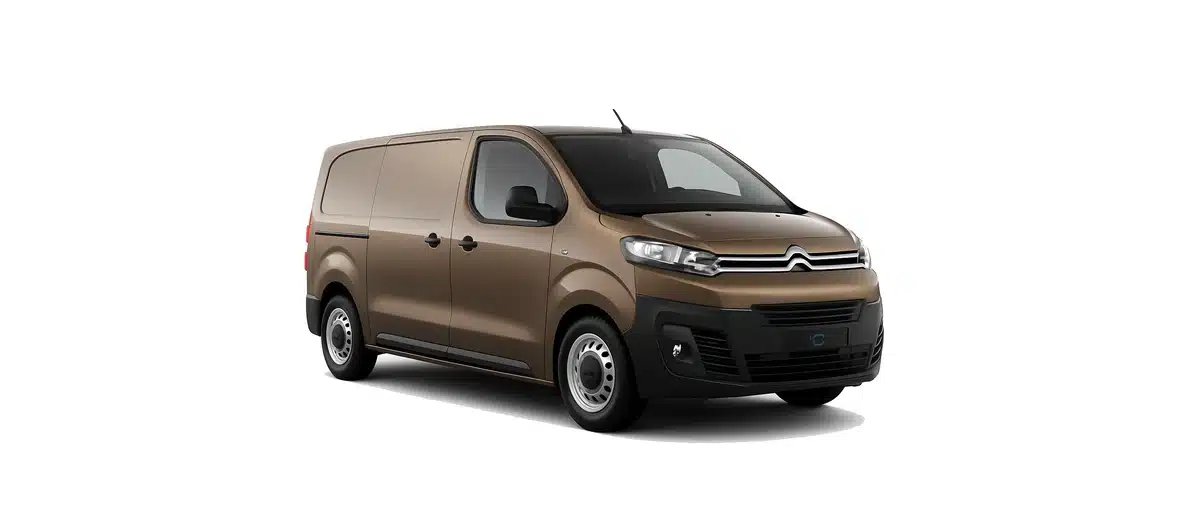
The Citroen e-Dispatch, also written as Citroën ë-Dispatch, is a battery-electric medium van designed for businesses, trades and fleet users that need familiar Dispatch practicality with zero tailpipe emissions. In the UK, the current new-van line-up is centred on the 75kWh battery, Type 2 AC charging and CCS rapid charging, while older used examples may differ depending on model year and specification.
For van drivers, charging is not just about the headline battery size. Daily mileage, payload, motorway speed, charging access at a depot, and whether the van is parked overnight all have a major effect on the best charging routine. This guide explains the key UK charging points for the Citroen e-Dispatch, including home charging, workplace charging, public rapid charging and cable selection.
View Citroen e-Dispatch Charging Cables
Citroen e-Dispatch Battery and Charging Specifications
Current UK MY26.5 Citroen documentation lists the electric e-Dispatch with a 75kWh gross battery, of which around 69kWh is usable. Citroen lists this battery across current electric Panel Van and Crew Van versions in M and XL lengths. The van uses a 100kW / 136hp electric motor with 270Nm of torque.
| Vehicle type | Battery-electric medium van |
|---|---|
| Current UK battery | 75kWh gross / 69kWh usable |
| AC charging connector | Type 2 |
| DC rapid charging connector | CCS / Combo 2 |
| Maximum AC charging | Up to 11kW where supported by vehicle and charger |
| Maximum DC charging | Up to 100kW |
| Quoted current rapid charging time | About 45 minutes from 5% to 80% on a 100kW DC charger |
The charging inlet is positioned on the nearside/front wing area. For AC charging at home, work or many public charge points, the e-Dispatch uses a Type 2 connection. For high-power public rapid charging, it uses a tethered CCS connector, so you do not use your own charging cable on those DC chargers.
Battery Options
It is important to separate current UK new-van information from older and used e-Dispatch models. Current UK MY26.5 price and specification data lists the electric e-Dispatch with the 75kWh battery only. This is the most relevant figure if you are ordering or operating a new current UK van.
However, earlier UK e-Dispatch material and used examples may include either a 50kWh or 75kWh battery. Older 50kWh vans will have a shorter driving range and may suit local delivery or urban work, while 75kWh vans are better suited to longer days and more motorway mileage. If you are buying used, check the exact vehicle specification rather than relying on model name alone.
Citroen’s current UK technical data lists lithium-ion NMC battery chemistry and an 8-year/100,000-mile battery warranty to 70% battery capacity. Warranty cover and remaining battery warranty on a used vehicle should always be checked against the individual van’s age, mileage and service record.
AC Charging Speed
AC charging is the type of charging most e-Dispatch drivers will use at home, at a depot, or on slower public charge points. The current UK guide lists Type 2 Mode 3 charging equipment and gives charging times of approximately 11 hours 20 minutes to 100% on a 7.4kW single-phase wallbox, or around 7 hours 30 minutes to 100% on an 11kW three-phase wallbox.
A 7.4kW wallbox is the most common domestic EV charging setup in the UK because most homes have a single-phase electricity supply. For many van users, this is enough: plug in at the end of the working day, charge overnight and start the next morning with the required range.
To benefit from 11kW AC charging, you need three things: a van with 11kW AC capability, a suitable 11kW three-phase charge point, and a three-phase electrical supply. Many homes cannot provide this without major electrical work, but some commercial premises and depots can. If you operate several vans from one site, a three-phase workplace charging setup may significantly improve turnaround times.
Earlier e-Dispatch material commonly referred to 7.4kW AC charging as standard with 11kW optional on some versions, so used-van buyers should confirm the onboard charger fitted to the specific vehicle.
DC Rapid Charging Speed
For longer journeys, public rapid and ultra-rapid chargers use the e-Dispatch’s CCS connection. Citroen’s current UK figure is about 45 minutes from 5% to 80% on a 100kW DC charger. This is a useful planning figure, but it should not be treated as a guaranteed charging time at every charger.
Actual rapid charging speed depends on the charger’s output, charger availability, battery state of charge, battery temperature, outside temperature and how many vehicles are using the site. A 150kW or 350kW charger will not necessarily make the e-Dispatch charge above its stated maximum; the vehicle, charger and conditions decide the real charging rate.
For working vans, the most efficient rapid charging strategy is often to charge to around 80% rather than waiting for 100%. Charging typically slows at higher states of charge, so a shorter stop to reach the next job, depot or overnight charger can be more time-efficient than filling the battery completely during the day.
Range and Efficiency
Current UK range information for the e-Dispatch varies by version and presentation. Citroen’s current UK documents show version-dependent WLTP figures, with the price table indicating around 194 to 230 miles depending on version and options, while other current material may use slightly different headline wording. For practical ownership, it is best to treat the maximum WLTP figure as an official laboratory comparison figure rather than a guaranteed daily range.
A realistic working range of around 180 miles is a sensible planning reference for many users of the current 75kWh van, but this can vary considerably. Electric vans are especially sensitive to payload, speed, driving style, weather, route profile and cabin heating or cooling. A lightly loaded van on urban roads may perform very differently from a fully loaded van travelling at motorway speeds in winter.
Fleet managers should build routes around realistic loaded-van range rather than the best advertised figure. If the van is expected to complete long motorway routes, carry heavy equipment, run multiple driver shifts or operate in cold conditions, it is worth adding a larger range buffer and identifying reliable rapid chargers along the route.
Charging at Home
Home charging is usually the most convenient and cost-effective option for owner-drivers who can park off-street. A 7.4kW dedicated wallbox can recharge the current 75kWh e-Dispatch overnight from a low state of charge, based on Citroen’s quoted time of around 11 hours 20 minutes to 100%.
For most drivers, it is not necessary to charge from empty to full every night. If the van covers 40 to 80 miles on a typical day, a few hours of overnight charging may be enough to restore the energy used. Many owners set a routine where the van is plugged in when parked and charged during cheaper overnight electricity periods where their tariff supports this.
A Type 2 charging cable is used for untethered home wallboxes and many workplace or public AC charge points. If your wallbox is tethered, the cable is permanently attached to the charger. If it is untethered, you will need a separate Type 2 cable that suits the e-Dispatch and the power rating of the charger.
A 3-pin charger is generally best suited as a backup or occasional charging solution, but can be used regularly if a qualified electrician has confirmed the socket and electrical installation are suitable for sustained EV charging. Because the e-Dispatch has a large van battery, a domestic 3-pin plug will be very slow compared with a dedicated wallbox and is not usually the best primary charging method for business use.
Public Charging
Public charging for the e-Dispatch falls into two main categories: AC destination charging and DC rapid charging. AC destination chargers are often found in town centres, hotels, car parks, supermarkets and workplaces. These typically require your own Type 2 cable unless the unit is tethered. They are useful when the van will be parked for several hours.
DC rapid chargers are the better option for mid-route top-ups. They have their own CCS cable attached, so you simply connect the charger’s CCS plug to the van. These chargers are commonly found at motorway service areas, charging hubs and some retail parks.
Because the e-Dispatch is a working van, charger location matters. Check bay sizes, height restrictions, access routes and whether a loaded van can comfortably park and connect. Some charging sites are designed around cars and may be awkward for vans, especially if you need to avoid reversing across tight spaces or blocking adjacent bays.
Vehicle-Specific Features
The current e-Dispatch is available in Panel Van and Crew Van formats, with M and XL lengths listed in the UK range. This makes it suitable for a broad mix of business use, from trades and service fleets to passenger-and-load applications in Crew Van form.
Current MY26.5 equipment includes regenerative braking selection paddles with three levels: light, medium and strong. In urban work, stronger regeneration can help recover energy during frequent slowing and stopping, while lighter settings may feel more natural on faster roads. Regeneration does not replace charging, but it can improve efficiency when used smoothly.
The e-Dispatch retains the general load-space concept of diesel Dispatch versions, which is useful for fleets transitioning from combustion vans. The key operational difference is planning charging time and range around the day’s work pattern rather than refuelling only when the tank is low.
Charging Tips
- Use Type 2 for AC charging: Home wallboxes, workplace chargers and many public AC units use a Type 2 connection.
- Use CCS for rapid charging: Public DC rapid chargers have a tethered CCS cable, so your own Type 2 cable is not used.
- Match the cable to your charger: For 11kW AC charging, ensure the cable, vehicle and charge point are suitable for three-phase charging.
- Plan around payload: Heavy loads, roof equipment and motorway speeds can reduce range more than many drivers expect.
- Do not rely on maximum WLTP range: Use realistic route planning based on your own driving, load and weather conditions.
- Rapid charge strategically: On long journeys, shorter stops to around 80% are often more efficient than waiting for 100%.
- Check used-van specifications: Older e-Dispatch models may have a 50kWh or 75kWh battery and may differ in AC charging capability.
Frequently Asked Questions
What charging cable does the Citroen e-Dispatch use?
The Citroen e-Dispatch uses a Type 2 connector for AC charging. For DC rapid charging it uses a CCS / Combo 2 connector, with the cable attached to the rapid charger.
How long does the Citroen e-Dispatch take to charge at home?
For the current 75kWh UK van, Citroen quotes around 11 hours 20 minutes to charge to 100% on a 7.4kW single-phase wallbox. Actual time depends on the starting battery percentage and charging conditions.
Can the Citroen e-Dispatch charge at 11kW?
Current UK information lists 11kW AC charging capability with a quoted time of around 7 hours 30 minutes to 100% on a suitable three-phase wallbox. To use this speed, the vehicle, charge point, cable and electrical supply must all support 11kW three-phase charging.
How fast can the Citroen e-Dispatch rapid charge?
The current UK figure is up to 100kW DC, with Citroen quoting about 45 minutes from 5% to 80% on a 100kW DC charger. Real-world rapid charging times vary by charger and conditions.
Do all Citroen e-Dispatch vans have the same battery?
No. Current UK MY26.5 new-van documentation lists the electric e-Dispatch with a 75kWh battery, but older used vehicles may have either 50kWh or 75kWh batteries. Always check the individual van’s specification.
What This Means for Drivers
The Citroen e-Dispatch is most straightforward to run when charging is built into the working routine. For many operators, that means a 7.4kW home or depot wallbox for overnight charging, backed up by CCS rapid charging for longer routes. Businesses with three-phase power may benefit from 11kW AC charging, particularly when vans return to base between shifts.
The most important ownership habit is realistic planning. A current 75kWh e-Dispatch offers useful range for a medium electric van, but payload, speed and weather can have a large effect. Choose the right cable, confirm the exact model-year specification, and plan charging around how the van is actually used.
Looking for a Charging Cable for Citroen e-Dispatch?
If you need a Type 2 charging cable for home, workplace or public AC charging, We offer charging cables suitable for the Citroen e-Dispatch. Choose a cable that matches your charging setup, especially if you plan to use 11kW three-phase AC charging.
View Citroen e-Dispatch Charging Cables
Please note that this information is intended as a guide. Charging specifications may change due to model and year of manufacture. For precise information, always refer to your vehicle user manual.

