
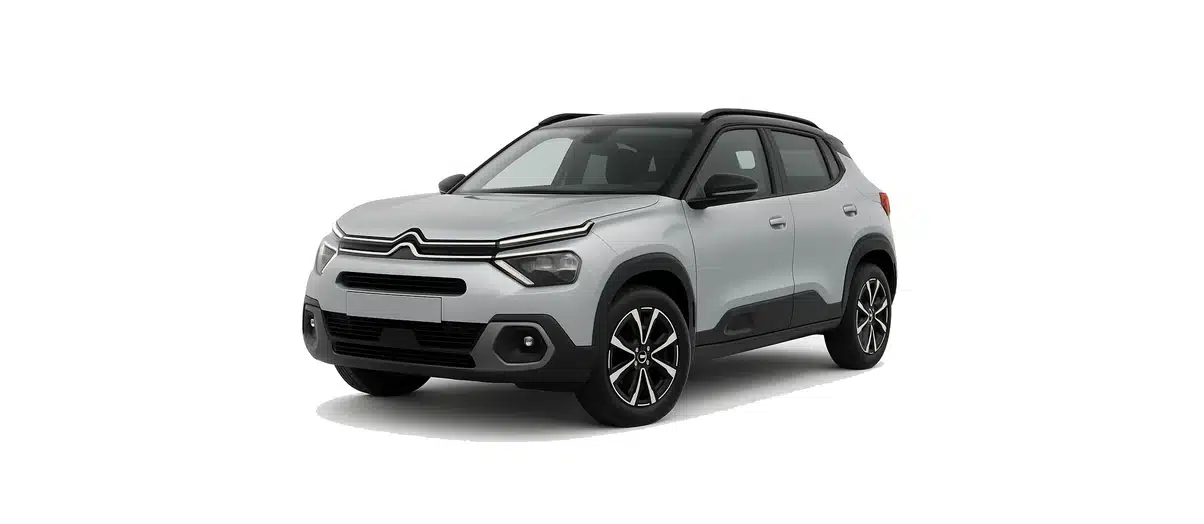
The Citroën ë-C3 is a fully electric compact hatchback designed for everyday UK driving, with simple home charging and a choice of battery sizes. For charging advice, the key point is that not every ë-C3 has the same charging capability. Cable choice is broadly straightforward because the car uses Type 2 AC charging, but rapid-charging expectations differ significantly between the 30 kWh Urban Range and 44 kWh Standard Range versions.
This guide focuses only on the 100% electric Citroën ë-C3, not the petrol or hybrid C3 models. It explains the battery options, AC and DC charging speeds, home charging, public charging and what cable setup makes sense for UK owners.
View Citroen e-C3 Charging Cables
Citroen e-C3 Battery and Charging Specifications
The UK-market Citroën ë-C3 is available with two battery options. The 44 kWh Standard Range version has been available since 2024, while the lower-cost 30 kWh Urban Range is listed in UK sources as available or orderable in 2026. Both are LFP battery models according to EV Database data, and both use Type 2 AC charging.
| Specification | 30 kWh Urban Range | 44 kWh Standard Range |
|---|---|---|
| Battery size | 30 kWh gross, around 29.8 kWh usable estimate | 44 kWh gross, around 43.8 kWh usable estimate |
| WLTP combined range | Up to around 130 miles | Up to around 201-202 miles, depending on trim/configuration |
| AC charging | 7.4 kW single-phase standard; 11 kW three-phase optional | 7.4 kW single-phase standard; 11 kW three-phase optional |
| DC rapid charging | Up to 30 kW where CCS/DC rapid charging is fitted | Up to 100 kW |
| Charging port | Type 2 AC; CCS rapid charging appears optional in UK price/spec data | Type 2 AC and CCS Combo 2 DC |
Because of the differences above, it is worth checking the exact version before planning long-distance charging. If you have the 44 kWh car, you can generally plan around CCS rapid charging. If you have the 30 kWh Urban Range, confirm whether the individual vehicle has CCS rapid-charging capability fitted.
Battery Options
The 30 kWh Urban Range version is aimed at lower-mileage urban and local driving. UK specification data lists a 30 kWh battery with a WLTP combined range of around 130 miles. Some Citroën website wording has referred to a higher “up to” figure, but the more cautious interpretation is that this is likely a city or best-case figure rather than the combined WLTP figure most drivers should use for planning.
The 44 kWh Standard Range version is the more flexible option for mixed driving, with a WLTP combined range of up to around 201-202 miles depending on trim and configuration. EV Database estimates real-world range at around 155 miles for the 44 kWh model, which is a useful planning figure for UK use across seasons and road types.
In practical ownership terms, the 30 kWh car will suit drivers who can charge regularly and mainly cover shorter journeys. The 44 kWh car is better suited to longer commutes, motorway use and drivers who want fewer charging stops.
AC Charging Speed
AC charging is what you use at home, at many workplace chargers and at many destination chargers. The Citroën ë-C3 has a 7.4 kW single-phase onboard charger as standard. This matches the most common UK home wallbox power rating, so for most owners there is no need for anything more complicated.
Citroën claims 20-80% AC charging times of around 2 hours 50 minutes for the 30 kWh Urban Range and around 4 hours 10 minutes for the 44 kWh Standard Range when using a 7.4 kW wallbox. For full 0-100% charging, EV Database estimates roughly 4 hours 45 minutes for the 30 kWh battery and around 7 hours for the 44 kWh battery at 7.4 kW.
An 11 kW three-phase onboard charger is listed as an option. This can reduce AC charging time on a suitable three-phase supply, with estimates of about 3 hours 15 minutes for the 30 kWh pack and about 4 hours 45 minutes for the 44 kWh pack. However, most UK homes have single-phase electricity, so the 11 kW option is mainly useful if you regularly use three-phase workplace, commercial or public AC charging.
DC Rapid Charging Speed
DC rapid charging is where the two ë-C3 battery versions differ most. The 44 kWh Standard Range is listed with CCS Combo 2 rapid charging at up to 100 kW. Citroën quotes a 20-80% rapid charge time of around 26 minutes, while EV Database estimates roughly 31 minutes for a 10-80% session. As with most EVs, the peak charging rate is not held throughout the session, and charging will slow noticeably as the battery approaches 80%.
The 30 kWh Urban Range should be treated differently. UK price/specification data lists DC rapid charging at up to 30 kW, and indicates that CCS/DC rapid charging may be optional on this version. That means owners should check the physical charging port and the vehicle specification before assuming it can use CCS rapid chargers.
For the 44 kWh model, a 100 kW or higher public rapid charger is enough to access the car’s best quoted rapid-charging performance. For the 30 kWh model, a higher-powered rapid charger will not make the car charge at 100 kW; the car’s own maximum charging rate is the limiting factor.
Range and Efficiency
The headline WLTP range for the Citroën ë-C3 depends on the battery. The 30 kWh Urban Range is listed at around 130 miles WLTP combined, while the 44 kWh Standard Range reaches up to about 202 miles WLTP combined. Real-world range will vary with speed, temperature, load, tyre condition, use of heating or air conditioning and driving style.
For UK motorway driving in cold or wet conditions, it is sensible to plan with a margin rather than relying on the maximum WLTP figure. The 44 kWh car’s estimated real-world range of around 155 miles is a useful guide for mixed driving. The 30 kWh version will generally need more frequent charging on longer trips, so home charging or dependable local charging becomes especially important.
Charging at Home
For most UK ë-C3 owners, a dedicated 7.4 kW home wallbox is the most convenient charging option. It matches the standard onboard charger and can comfortably replenish either battery overnight. If you drive modest daily mileage, you may not need to charge every night, but plugging in regularly helps keep the car ready and reduces reliance on public chargers.
A tethered wallbox has a built-in cable, while an untethered wallbox requires a separate Type 2 charging cable. If you use public AC posts as well, keeping a Type 2 to Type 2 cable in the boot is useful because many UK destination chargers and on-street AC chargers are untethered.
A 3-pin charger is generally best suited as a backup or occasional charging solution, but can be used regularly if a qualified electrician has confirmed the socket and electrical installation are suitable for sustained EV charging. It will charge much more slowly than a wallbox, so it is less convenient for drivers covering higher daily mileage.
Public Charging
Public AC charging uses the ë-C3’s Type 2 connection and the car’s onboard AC charger. On the standard 7.4 kW onboard charger, a 22 kW AC post will not make the car charge at 22 kW; the car will take up to its own AC limit. If the optional 11 kW onboard charger is fitted and the post supports three-phase AC, charging can be faster than on the standard setup.
For DC rapid charging, the cable is normally attached to the charger, so you do not need to carry your own CCS cable. The important point is compatibility. The 44 kWh Standard Range supports CCS rapid charging up to 100 kW. The 30 kWh Urban Range may have more limited DC charging and may require the CCS option to be fitted, so check your specific vehicle before planning around rapid chargers.
Citroën’s connected services, including MyCitroën and e-Routes support where available, can help with journey planning and charger location. It is still worth checking live charger availability, payment methods and charger speed before a longer trip.
Vehicle-Specific Features
The ë-C3 is built as an affordable electric city car and supermini-sized hatchback, with Citroën Advanced Comfort suspension and comfort-focused seating depending on trim. These features do not change how the car charges, but they support its role as a practical everyday EV for commuting, school runs and local journeys.
Current research data does not indicate support for a heat pump, battery preconditioning, vehicle-to-load or vehicle-to-grid/vehicle-to-home capability on the UK ë-C3. Citroën may refer to cabin preconditioning through app functions, but that should not be confused with battery preconditioning for rapid charging.
Charging Tips
- Identify your battery version first: the 30 kWh Urban Range and 44 kWh Standard Range have different range and rapid-charging expectations.
- Use a 7.4 kW wallbox at home: it suits the standard onboard charger and is enough for overnight charging.
- Check before relying on 11 kW AC: the 11 kW onboard charger is optional and only useful on suitable three-phase charging supplies.
- Rapid charge to around 80% on longer trips: charging typically slows above this point, so it is often quicker to continue the journey and charge again later.
- Confirm CCS on the 30 kWh model: do not assume every Urban Range car has the same rapid-charging capability.
- Carry a Type 2 cable: it is useful for untethered public AC chargers and untethered home wallboxes.
Frequently Asked Questions
What charging cable does the Citroen e-C3 use?
The Citroën ë-C3 uses a Type 2 connector for AC charging. For home wallboxes, workplace chargers and public AC posts, a Type 2 to Type 2 cable is the appropriate cable where the charger is untethered.
Does every Citroen e-C3 have 100 kW rapid charging?
No. The 44 kWh Standard Range is listed with up to 100 kW DC rapid charging. The 30 kWh Urban Range is listed at up to 30 kW DC where CCS rapid charging is fitted, and UK specification data suggests CCS/DC rapid charging may be optional on that version.
Can the Citroen e-C3 charge at 11 kW AC?
Only if the optional 11 kW three-phase onboard charger is fitted and the charger supply supports it. The standard AC charging capability is 7.4 kW single-phase, which is what most UK home wallboxes provide.
How long does the Citroen e-C3 take to charge at home?
At 7.4 kW, a full charge is estimated at around 4 hours 45 minutes for the 30 kWh battery and around 7 hours for the 44 kWh battery. Citroën’s 20-80% wallbox figures are shorter: around 2 hours 50 minutes for the 30 kWh car and around 4 hours 10 minutes for the 44 kWh car.
Is the Citroen e-C3 hybrid a plug-in vehicle?
No. This guide covers the fully electric Citroën ë-C3 only. UK petrol and hybrid C3 models are separate non-plug-in vehicles and do not use EV charging cables.
What This Means for Drivers
The Citroën ë-C3 should be simple to live with if you match your charging expectations to the version you own. A 7.4 kW home wallbox and a Type 2 cable will suit most drivers, while the optional 11 kW AC charger only matters if you regularly use three-phase charging. The 44 kWh Standard Range is the stronger choice for longer journeys because it offers more range and up to 100 kW DC rapid charging. The 30 kWh Urban Range can still work well for local use, but owners should confirm its CCS capability and plan more carefully for longer trips.
Looking for a Charging Cable for Citroen e-C3?
Choose a Type 2 charging cable that suits your home wallbox, workplace charging and public AC charging needs, and make sure your selection matches how you use your Citroen e-C3 day to day.
View Citroen e-C3 Charging Cables
Please note that this information is intended as a guide. Charging specifications may change due to model and year of manufacture. For precise information, always refer to your vehicle user manual.

