
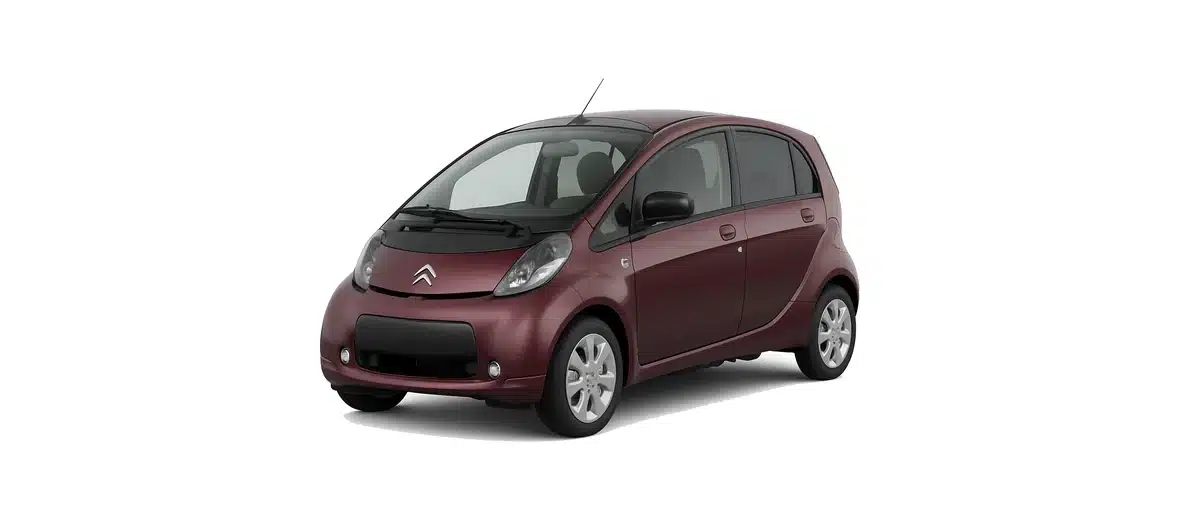
The Citroen C-Zero is an early-generation battery-electric city car that is now best viewed as a used or legacy EV rather than a current Citroën model. Sold in the UK and Europe from around 2010 and discontinued by 2020, it shares much of its layout with the Mitsubishi i-MiEV and Peugeot iOn. Its compact size, small battery and simple electric drivetrain make it well suited to short urban journeys, commuting and local errands.
Charging a C-Zero is straightforward once you understand one important point: it does not use the same Type 2 and CCS connector arrangement found on most newer UK and European EVs. For AC charging, the C-Zero uses a Type 1 vehicle inlet. For DC rapid charging, it uses CHAdeMO. That means cable choice and public charger filtering matter more than they do with many modern electric cars.
View Citroen C-Zero Charging Cables
Citroen C-Zero Battery and Charging Specifications
The Citroen C-Zero is a full battery-electric vehicle, not a plug-in hybrid, mild hybrid or range-extender. It has no petrol engine and relies entirely on its high-voltage lithium-ion battery and electric motor. The car was designed as a compact city EV, so its battery and charging system are modest by modern standards but still practical for the sort of driving it was built to do.
- Vehicle type: battery-electric 5-door city-car hatchback
- Battery: around 16.0 kWh nominal, with about 14.5 kWh usable listed for later 2016-2020 examples
- AC charging connector: Type 1
- DC rapid charging connector: CHAdeMO
- Maximum AC charging rate: about 3.7 kW
- Maximum DC rapid charging rate: up to around 40 kW in suitable conditions
- WLTP range: around 62 miles for later listed models
- Practical real-world range: commonly around 50 miles, with condition and weather making a noticeable difference
Battery Options
The C-Zero was not offered with the multiple battery choices common on newer EVs. The key battery figure most UK drivers will encounter is the 16 kWh pack, with EV Database UK listing 14.5 kWh as usable capacity for the 2016-2020 car. Some sources refer simply to a 14.5 kWh battery, which is likely describing the usable energy rather than a separate larger battery option.
Because the C-Zero is now an older used EV, battery condition is just as important as the original specification. Two cars of the same age can deliver different usable range depending on mileage, charging history, storage, temperature exposure and general condition. If you are buying a used C-Zero, range in everyday use is a better indicator than relying only on brochure figures.
AC Charging Speed
For normal home and public AC charging, the Citroen C-Zero uses a Type 1 inlet and is limited by its onboard charger to about 3.7 kW. This is an important limitation: connecting the car to a 7 kW, 11 kW or 22 kW AC charge point will not make it charge at those speeds. The charge point may be capable of more, but the car will only draw what its onboard charger can accept.
In practical terms, a full AC charge from low to full takes around 4 hours 45 minutes when using a suitable 3.7 kW wallbox or AC charge point. Charging from a domestic plug is slower, with figures around 7 to 8 hours often quoted depending on the source and conditions. Older Citroën brochure material described a full charge as taking approximately eight hours, which aligns more closely with slow domestic charging than with the car’s maximum AC wallbox rate.
For UK public AC posts, C-Zero owners typically need a Type 2-to-Type 1 charging cable. The post will usually have a Type 2 socket, but the car’s AC inlet is Type 1, so a standard Type 2-to-Type 2 cable for newer EVs will not fit the vehicle.
DC Rapid Charging Speed
The C-Zero can rapid charge using its separate CHAdeMO connector. This was common on several early EVs, but most newer UK rapid chargers now prioritise CCS, so checking connector availability before a journey is essential.
Rapid charging performance is modest compared with current EVs, but the C-Zero’s small battery means charging sessions can still be short. Older manufacturer-style figures often quote around 30 minutes to reach 80% using a compatible quick charger. EV Database UK lists up to around 40 kW DC charging, with ideal-condition 10-80% charging estimated at roughly the 20-30 minute mark depending on charger output, battery temperature and state of charge.
As with any older EV, rapid charging speed can vary. The car may charge more slowly if the battery is cold, already at a high state of charge, or if the charger is unable to provide the expected output.
Range and Efficiency
Range figures for the Citroen C-Zero need careful interpretation because different sources use different test cycles. Older Citroën brochure and review material commonly quoted around 93 miles, but that is an older NEDC-style figure and should not be treated as a modern WLTP or everyday UK range estimate.
EV Database UK lists a WLTP range of around 62 miles and a real-world estimate of about 50 miles. DrivingElectric has also suggested that around 65 miles may be possible in some everyday conditions. For most UK drivers considering a used C-Zero, a practical expectation of roughly 50-65 miles is more realistic than the old 93-mile headline, and winter weather or sustained faster roads can reduce that further.
The car is at its best on short urban and suburban journeys where speeds are lower and charging can be planned easily. It is not designed for frequent long-distance motorway travel, although CHAdeMO rapid charging can help on occasional longer trips where compatible chargers are available.
Charging at Home
Home charging is usually the most convenient way to run a Citroen C-Zero. Because the battery is small, even a relatively low charging rate can refill the car overnight. A dedicated home EV charge point with the correct Type 1 lead arrangement is the preferred regular charging solution, offering safer and more convenient charging than relying on a domestic socket.
A 3-pin charger is generally best suited as a backup or occasional charging solution, but can be used regularly if a qualified electrician has confirmed the socket and electrical installation are suitable for sustained EV charging. This is particularly important with older properties, outdoor sockets or circuits that were not originally designed for repeated high-load use over several hours.
If you install or use a home wallbox, remember that the C-Zero will still only charge at around 3.7 kW on AC. Paying extra purely for higher AC output will not reduce the car’s charging time, although a higher-rated wallbox may still be useful if you plan to charge a newer EV in future.
Public Charging
Public charging requires more planning in a C-Zero than in a modern Type 2/CCS-equipped EV. For slower and fast AC public charging, look for posts with Type 2 sockets and bring a Type 2-to-Type 1 cable. Many destination chargers at supermarkets, car parks, hotels and workplaces use this arrangement.
For rapid charging, filter charging apps for CHAdeMO. Do not assume that every rapid charger will have a connector for the C-Zero. Many newer hubs are CCS-heavy, and some sites have removed or reduced CHAdeMO provision. Before setting off on a longer journey, check both the connector type and recent charger status in a live charging app if possible.
The C-Zero has separate charging connections on opposite sides of the vehicle. Period Citroën documentation identifies the regular AC charging port on the right-hand/driver side and the quick-charge connector on the left-hand/passenger side. This can affect how you position the car at public chargers, especially where cable reach is limited.
Vehicle-Specific Features
The most important vehicle-specific charging feature is the C-Zero’s legacy connector setup. Type 1 for AC and CHAdeMO for DC were normal for many early EVs, but they are no longer the dominant UK public charging standard. This does not make the car difficult to charge at home, but it does mean you need the right cable and realistic expectations when using public infrastructure.
The car’s small battery is also a defining feature. It limits outright driving range, but it also means charging from low to full does not take especially long. For a driver covering short daily distances, the C-Zero can be topped up easily and may not need daily charging at all.
EV Database UK does not list battery preconditioning, vehicle-to-load, vehicle-to-home or vehicle-to-grid capability for the C-Zero. It should therefore be treated as a simple early EV rather than a modern connected energy device.
Charging Tips
- Buy the correct cable: for most UK public AC posts, you need a Type 2-to-Type 1 cable, not a Type 2-to-Type 2 cable.
- Do not chase unused AC speed: the car is limited to about 3.7 kW on AC, even on more powerful posts.
- Plan CHAdeMO stops carefully: rapid charging depends on finding a compatible CHAdeMO charger, not just any rapid charger.
- Use conservative range planning: for used examples, winter trips and faster roads, plan around the lower end of the real-world range.
- Check cable reach: the AC and rapid charging ports are on different sides, so parking position can matter.
- Consider battery condition: on an older EV, actual usable range may vary between cars.
Frequently Asked Questions
Is the Citroen C-Zero a fully electric car?
Yes. The Citroen C-Zero is a full battery-electric vehicle. It is not a plug-in hybrid and does not have a petrol engine.
What charging cable does the Citroen C-Zero need?
For UK public AC charging posts, the usual cable is a Type 2-to-Type 1 charging cable. The charge point side connects to the Type 2 socket on the post, while the vehicle side connects to the C-Zero’s Type 1 inlet.
Can the Citroen C-Zero use a Type 2 charging cable?
It can use a public Type 2 AC post only with the correct Type 2-to-Type 1 cable. A Type 2-to-Type 2 cable will not fit the C-Zero’s AC inlet.
Can the Citroen C-Zero use CCS rapid chargers?
No. UK and European C-Zero models use CHAdeMO for DC rapid charging, not CCS. You need to find a rapid charger with a CHAdeMO connector.
How long does the Citroen C-Zero take to charge?
On AC, a full charge is roughly 4 hours 45 minutes at about 3.7 kW, or around 7-8 hours from a domestic plug under typical slow-charging conditions. CHAdeMO rapid charging is often quoted at around 30 minutes to 80%, although real results depend on the charger and battery conditions.
Will a 7 kW wallbox charge the C-Zero faster?
Not beyond the car’s own limit. A 7 kW wallbox can be used if compatible, but the C-Zero’s onboard AC charger is limited to about 3.7 kW.
What This Means for Drivers
The Citroen C-Zero can still make sense as a simple, low-range electric city car, especially where most journeys are local and home charging is available. Its key limitation is not complicated technology but legacy compatibility: Type 1 for AC, CHAdeMO for rapid charging, and a small battery that requires realistic range planning.
If you choose the correct Type 1 cable and understand that higher-powered AC posts will not make the car charge faster, day-to-day charging can be very straightforward. The bigger consideration is public rapid charging, where CHAdeMO availability is less widespread than it once was. For short commutes, school runs and urban use, however, the C-Zero’s small battery can be replenished conveniently and cheaply from home.
Looking for a Charging Cable for Citroen C-Zero?
We offer charging cables for the Citroen C-Zero, including options suited to its Type 1 AC charging inlet for home and UK public AC charging.
View Citroen C-Zero Charging Cables
Please note that this information is intended as a guide. Charging specifications may change due to model and year of manufacture. For precise information, always refer to your vehicle user manual.

