
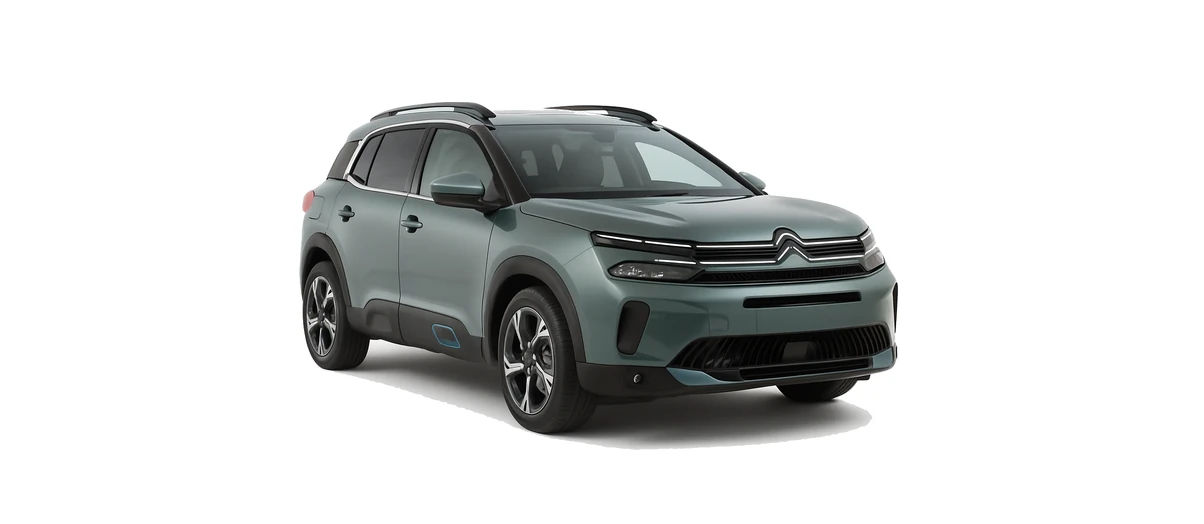
The Citroën C5 Aircross name can be confusing from a charging point of view because it does not refer to just one type of electrified vehicle. In the UK, the wider C5 Aircross family includes non-plug-in hybrid, plug-in hybrid and fully electric versions. That means the right charging advice depends entirely on which version you own or are considering.
The current New C5 Aircross Plug-in Hybrid is a petrol-electric PHEV that charges from a Type 2 AC connection and is designed for regular home and destination charging. It does not use CCS rapid charging. The fully electric ë-C5 Aircross is a separate battery-electric SUV with Type 2 AC charging and CCS DC rapid charging. Meanwhile, the C5 Aircross Hybrid 145 is not externally charged at all, so it does not need an EV charging cable.
This guide explains the practical differences, the charging speeds you can expect, and which cable type is appropriate for each plug-in version of the Citroën C5 Aircross.
View Citroën C5 Aircross Charging Cables
Citroën C5 Aircross Battery and Charging Specifications
Before choosing a cable, identify your version:
- C5 Aircross Hybrid 145: a non-plug-in hybrid. It does not have an external charging port and does not require a charging cable.
- C5 Aircross Plug-in Hybrid 225: a PHEV with a petrol engine, electric motor and rechargeable battery. It uses a Type 2 AC charging connection.
- ë-C5 Aircross: the fully electric version. It uses Type 2 for AC charging and CCS Combo 2 for DC rapid charging.
For the current UK New C5 Aircross Plug-in Hybrid, Citroën’s UK price and specification information lists a 21 kWh gross battery, with 17.8 kWh usable capacity, and a 7.4 kW single-phase onboard charger. The official WLTP combined electric range is around 50 miles, with a higher city figure quoted in some Citroën material.
The fully electric ë-C5 Aircross has a much larger battery and different charging hardware. The Comfort Range electric version is listed with a 79.9 kWh gross battery and 73.7 kWh usable capacity, 11 kW AC charging and DC rapid charging up to 160 kW. Citroën has also advertised a Long Range version with a larger battery and up to 421 miles WLTP combined range, although UK availability should be checked before relying on it as a current orderable model.
Battery Options
The C5 Aircross battery picture depends strongly on age and version. Current and older PHEV models should not be treated as identical.
- Current New C5 Aircross Plug-in Hybrid 225: 21 kWh gross / 17.8 kWh usable battery, with up to around 50 miles WLTP combined electric range.
- Older C5 Aircross Plug-in Hybrid models: earlier UK cars were commonly listed with a 13.2 kWh battery and a lower official electric range, while some later first-generation European-market material referenced 14.2 kWh. Check the model year and handbook if buying used.
- ë-C5 Aircross Comfort Range: 79.9 kWh gross / 73.7 kWh usable battery according to UK specification data.
- ë-C5 Aircross Long Range: Citroën consumer material has advertised a larger 101 kWh gross battery and up to 421 miles WLTP combined range, but UK availability has been inconsistent across sources and should be confirmed.
For cable choice, the important point is simpler: C5 Aircross plug-in hybrid models need Type 2 AC charging only, while the ë-C5 Aircross uses Type 2 AC plus CCS rapid charging.
AC Charging Speed
The current C5 Aircross Plug-in Hybrid supports AC charging at up to 7.4 kW. Citroën lists a full charge from a 7.4 kW wallbox in about 2 hours 55 minutes. This makes a typical UK 7 kW home charge point a good match for the vehicle’s onboard charger.
A standard Type 2 charging cable is the key cable for the plug-in hybrid. It can be used at untethered home chargers and many public AC charge points. Older UK C5 Aircross PHEV models were also Type 2 AC vehicles and were listed with a 7 kW onboard charger, though their smaller batteries mean their charging times and electric ranges differ from the current car.
The ë-C5 Aircross supports 11 kW AC charging. In practice, most UK homes have single-phase electricity and commonly use a 7.4 kW home charger, so the electric ë-C5 Aircross will often charge below its maximum 11 kW AC capability at home. To use 11 kW AC, a suitable three-phase supply and compatible charge point are normally required.
DC Rapid Charging Speed
The C5 Aircross Plug-in Hybrid does not have DC rapid charging. It does not use a CCS connector, and there is no need to look for a DC charging cable for it. Its battery is intended to be charged via AC at home, work, hotels, supermarkets or public AC points.
DC rapid charging applies to the fully electric ë-C5 Aircross only. The electric version uses a CCS Combo 2 inlet for rapid charging and is listed with peak DC charging of up to 160 kW. Official information quotes 20–80% rapid-charging times of around 30 minutes for the Comfort Range and around 27 minutes for the Long Range version, where available.
At UK rapid and ultra-rapid chargers, the CCS cable is normally tethered to the charging unit, so ë-C5 Aircross drivers do not usually need to carry their own CCS cable. Your own cable is for AC charging, not for DC rapid charging.
Range and Efficiency
The current C5 Aircross Plug-in Hybrid is best understood as a car that rewards frequent charging. With an official WLTP combined electric range of about 50 miles, many local journeys can be completed mostly on electricity if the battery is charged regularly. If it is not plugged in, it will operate more like a petrol hybrid, but with the added weight of a plug-in battery system.
Real-world electric range will depend on speed, weather, route, tyre condition, cabin heating and driving style. Short urban trips tend to suit a PHEV well, while sustained motorway use will deplete the battery more quickly.
The fully electric ë-C5 Aircross offers a much longer electric driving range. Citroën’s UK consumer information quotes up to 322 miles WLTP combined for the Comfort Range version. Independent estimates are usually lower for real-world mixed driving, particularly in winter or at motorway speeds. As with all EVs, WLTP figures are useful for comparison but should not be treated as a guaranteed day-to-day range.
Charging at Home
For most C5 Aircross Plug-in Hybrid owners, home charging is the most convenient way to get the benefit of the car. Plugging in overnight, or whenever the car is parked for a few hours, should allow the battery to be replenished without relying heavily on public charging.
A 7 kW home wallbox is well matched to the current PHEV’s 7.4 kW onboard charger. If your wallbox is untethered, you will need a Type 2 to Type 2 charging cable. If your home charger is tethered, the cable is permanently attached to the charger, so you may still want a separate Type 2 cable for public AC charging.
A 3-pin portable charger can be useful in some circumstances, but it is generally best suited as a backup or occasional charging solution. It can be used regularly if a qualified electrician has confirmed the socket and electrical installation are suitable for sustained EV charging. Standard domestic sockets were not primarily designed for repeated high-load EV charging over long periods, so professional checking is important.
For the ë-C5 Aircross, a home wallbox is even more valuable because of the larger battery. A 7.4 kW single-phase charger will be slower than the car’s maximum 11 kW AC capability, but it is still a practical overnight charging option for many drivers.
Public Charging
Public AC charging is useful for both the C5 Aircross Plug-in Hybrid and the ë-C5 Aircross. Many town-centre, workplace, hotel and destination chargers are untethered Type 2 units, meaning you need to bring your own Type 2 cable.
For the plug-in hybrid, public AC charging can be worthwhile when the car will be parked for a couple of hours. Because the current PHEV can charge in just under three hours from a suitable 7.4 kW point, it can often regain a useful amount of electric range during a shopping trip, work meeting or meal stop.
For the ë-C5 Aircross, public charging splits into two categories. Use your Type 2 cable for AC destination charging, and use tethered CCS rapid chargers for faster motorway or long-distance top-ups. The car’s 160 kW peak DC figure is a maximum, not a constant rate; charging speed varies with battery temperature, state of charge, charger capability and other conditions.
Vehicle-Specific Features
The most important vehicle-specific feature is the difference between PHEV and BEV hardware. The C5 Aircross Plug-in Hybrid has a Type 2 AC charging port and no CCS rapid-charging capability. The ë-C5 Aircross has Type 2 AC and CCS DC charging.
Citroën UK specification information for the electric ë-C5 Aircross also refers to an 11 kW tri-phase bi-directional onboard charger compatible with vehicle-to-load charging. This V2L function requires an accessory adapter that is not supplied as standard. Available information does not support describing the car as V2G or V2H compatible.
Heat pump availability is shown for electric versions or trims, not for the C5 Aircross Plug-in Hybrid. Battery preconditioning is also confirmed in available electric ë-C5 Aircross data, but it should not be assumed for the plug-in hybrid unless your specific vehicle documentation confirms it.
Charging Tips
- Check the badge and charging port: Hybrid 145 does not plug in; Plug-in Hybrid uses Type 2 AC; ë-C5 Aircross uses Type 2 and CCS.
- Choose the right Type 2 cable: a Type 2 cable is the everyday cable for the C5 Aircross Plug-in Hybrid and for AC charging the ë-C5 Aircross.
- Do not expect rapid charging on the PHEV: CCS rapid charging is only for the fully electric ë-C5 Aircross.
- Charge the PHEV regularly: regular charging is what allows the plug-in hybrid to deliver meaningful electric running.
- Check used-car specifications: older C5 Aircross PHEVs had smaller batteries, so range and charging-time figures may not match the current model.
- Carry a public AC cable: many UK destination chargers are untethered, so a cable in the boot can prevent inconvenience.
Frequently Asked Questions
Does every Citroën C5 Aircross need a charging cable?
No. The non-plug-in C5 Aircross Hybrid 145 does not charge from an external socket and does not need an EV charging cable. Only the C5 Aircross Plug-in Hybrid and the fully electric ë-C5 Aircross require charging equipment.
What cable does the C5 Aircross Plug-in Hybrid use?
The C5 Aircross Plug-in Hybrid uses a Type 2 AC charging connection. A Type 2 to Type 2 cable is suitable for untethered home chargers and public AC charge points.
Can the C5 Aircross Plug-in Hybrid use rapid chargers?
No. The plug-in hybrid does not support CCS or DC rapid charging. It charges from AC only, at up to 7.4 kW on the current UK model.
What cable does the ë-C5 Aircross use?
The fully electric ë-C5 Aircross uses a Type 2 cable for AC charging. For DC rapid charging it uses a CCS Combo 2 connector, but the cable is normally attached to the rapid charger itself.
How long does the current C5 Aircross Plug-in Hybrid take to charge?
Citroën lists a full charge from a 7.4 kW wallbox in about 2 hours 55 minutes for the current New C5 Aircross Plug-in Hybrid.
What This Means for Drivers
If you drive a Citroën C5 Aircross Plug-in Hybrid, the practical answer is straightforward: use a Type 2 cable and charge regularly from home or public AC points. You do not need a CCS cable, and you should not plan around rapid charging.
If you drive the fully electric ë-C5 Aircross, you still need a Type 2 cable for home and destination charging, but you can also use CCS rapid chargers for longer journeys. If you drive the Hybrid 145, you do not need a charging cable at all.
Because the C5 Aircross name covers several powertrains and different model years, it is worth checking your vehicle’s handbook, charging port and registration-specific specification before buying accessories.
Looking for a Charging Cable for Citroën C5 Aircross?
We offer charging cables suitable for Citroën C5 Aircross plug-in models, including Type 2 cables for the C5 Aircross Plug-in Hybrid and AC charging for the ë-C5 Aircross. Always choose a cable that matches your vehicle version, charger type and intended charging setup.
View Citroën C5 Aircross Charging Cables
Please note that this information is intended as a guide. Charging specifications may change due to model and year of manufacture. For precise information, always refer to your vehicle user manual.

