
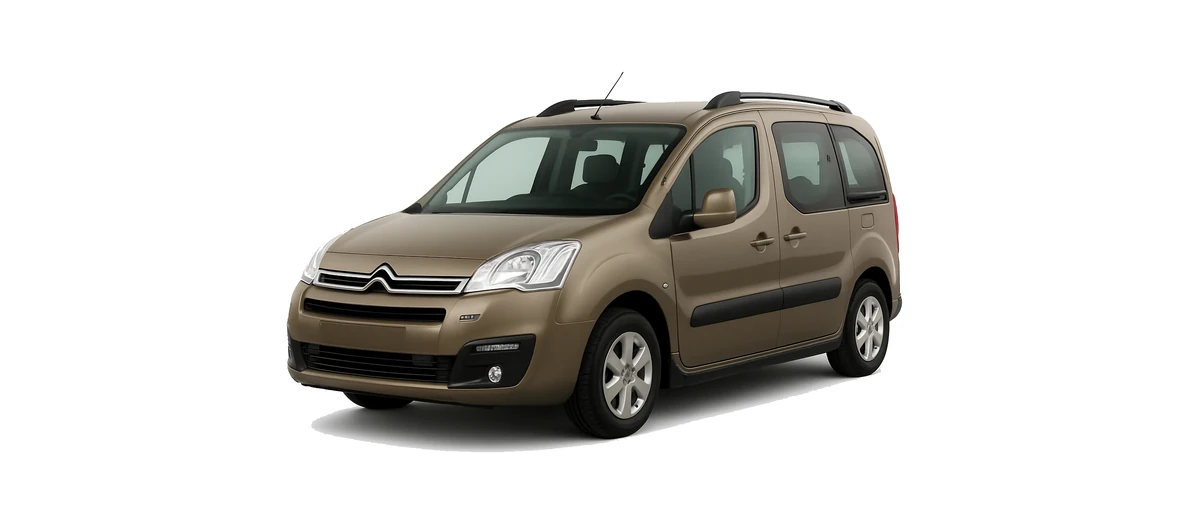
The Citroën Berlingo Electric and E-Berlingo Multispace models covered here are the older pre-2021 electric Berlingo generation. They are very different from the later 50 kWh Citroën ë-Berlingo, especially when it comes to charging connectors. If you own or are buying one of these earlier vehicles, the most important point is that they normally use a Type 1 inlet for AC charging, rather than the Type 2 inlet found on most newer UK and European electric vehicles.
This guide focuses on the discontinued Berlingo Electric van and E-Berlingo Multispace passenger versions sold before the newer-generation ë-Berlingo arrived. It explains the battery, likely charging speeds, what cable you need for home and public AC charging, and how to identify whether your vehicle has CHAdeMO rapid charging. Because these older models sit in a transition period of EV connector standards, checking the physical charging sockets on the vehicle is especially important.
View Citroën Berlingo Electric / E-Berlingo Multispace (models up to 2019) Charging Cables
Citroën Berlingo Electric / E-Berlingo Multispace (models up to 2019) Battery and Charging Specifications
The older Berlingo Electric is a battery-electric vehicle based on the Berlingo II/B9-era platform. It was offered as a small electric van, including L1 and L2 body lengths in the UK, and as the E-Berlingo Multispace passenger/leisure-activity variant in some markets. It uses a 49 kW permanent-magnet synchronous motor and underfloor battery packs, giving the vehicle a practical layout for local delivery work, urban driving and short family journeys.
Charging hardware is where this generation differs most clearly from later models. For AC charging, the relevant connector is Type 1. For rapid charging, where fitted, the vehicle uses CHAdeMO, not CCS. This means owners should not assume that a modern Type 2-to-Type 2 cable or a CCS rapid charger will be suitable for this vehicle.
| Vehicle type | Older-generation battery-electric Berlingo van / Multispace |
| Production status | Discontinued in the UK |
| Battery size | 22.5 kWh gross; around 20.5 kWh usable listed for the 2017-2019 Multispace |
| AC connector | Type 1 vehicle inlet |
| AC charging cable normally required | Type 2-to-Type 1 cable for most UK home/work/public AC charge points |
| Rapid charging connector | CHAdeMO where fitted |
| Rapid charging | Around 40 kW DC, with 10-80% or 0-80% style rapid-charge figures commonly around 30 minutes depending on source and conditions |
| Range context | Official older van figure often quoted as 106 miles NEDC; EV Database lists 66 miles WLTP and about 60 miles real-world for the passenger Multispace |
Battery Options
These older electric Berlingo models are generally associated with a 22.5 kWh lithium-ion battery pack. EV Database UK lists the 2017-2019 passenger E-Berlingo Multispace with around 20.5 kWh usable capacity, although usable capacity is not separately confirmed for every van derivative.
That battery size places the vehicle in a different category from modern electric vans and MPVs. It is best understood as a local-use EV rather than a long-distance electric family car. For drivers using the Berlingo Electric for predictable daily mileage, trades, site work, local deliveries or school-run style use, the smaller battery can still be practical provided charging is planned around the vehicle’s real-world range.
It is also important not to confuse this older battery system with the later 2021-on Citroën ë-Berlingo, which uses a different 50 kWh battery and different Type 2/CCS charging hardware. If you are shopping for charging cables, the model year and connector type matter more than the Berlingo name alone.
AC Charging Speed
AC charging speed is the area where owners should be particularly cautious, because public information differs by variant and source. Citroën UK van material refers to a 16 A public charging cable and an eight-hour standard charge, which points towards roughly 3.6 kW AC charging for many van versions. DEFA also lists 3.6 kW AC charging for the Berlingo. However, EV Database UK lists the 2017-2019 E-Berlingo Multispace at up to 7.4 kW AC.
For that reason, it is safest to treat AC charging capability as variant-dependent. A van may be limited to 16 A / around 3.6 kW, while some passenger Multispace examples may be capable of higher single-phase AC charging. If you need a precise charging-speed answer, check the vehicle handbook, data plate, charging flap information, or ask a Citroën dealer or EV specialist to confirm by VIN.
For cable selection, the practical advice is straightforward: most UK untethered AC charge points have a Type 2 socket, while this vehicle has a Type 1 inlet. That means the normal cable is a Type 2-to-Type 1 charging cable. If your van is limited to 16 A, a 16 A Type 1 cable is sufficient for the vehicle’s maximum AC draw. A 32 A Type 2-to-Type 1 cable can still be used safely with a lower-power vehicle and may be preferable for durability or if you have a Multispace variant capable of drawing more power.
DC Rapid Charging Speed
Where fitted, rapid charging on this generation is through a separate CHAdeMO inlet. Citroën UK van material describes DC rapid charging as standard on Citroën electric vans and gives a rapid-charge time of around 30 minutes to 80%. Other material for the E-Berlingo Multispace describes rapid charging as optional, so used buyers should not assume every vehicle has it.
The easiest check is physical: look for a CHAdeMO socket, usually separate from the AC Type 1 inlet. Some used vehicles may have both charging flaps, while others may not have rapid charging hardware. If there is no CHAdeMO inlet, the vehicle cannot use DC rapid chargers and will rely on AC charging only.
On a compatible CHAdeMO rapid charger, sources list charging at around 40 kW, with a typical rapid-charge session to 80% taking about 30 minutes under suitable conditions. As with all EVs, the actual speed depends on battery temperature, state of charge, charger output and vehicle condition.
Range and Efficiency
The older Berlingo Electric was often advertised with an official range of around 106 miles on the NEDC cycle. That figure should not be read as a modern WLTP range. For the passenger E-Berlingo Multispace, EV Database UK lists 66 miles WLTP and around 60 miles real-world range.
In day-to-day use, range will vary substantially. Payload, roof racks, motorway speed, cold weather, heater use and hilly routes can all reduce distance between charges. For van users, carrying weight is especially relevant: an empty vehicle on local roads will be easier on energy than a fully loaded van travelling at higher speeds.
For planning purposes, many owners will find it more realistic to think in terms of local-route mileage rather than the original headline NEDC figure. If your daily route is predictable and comfortably below the vehicle’s real-world range, the Berlingo Electric can be simple to live with. If your driving regularly involves longer trips, CHAdeMO availability and charging stops become much more important.
Charging at Home
For most owners, home charging will be the most convenient way to run an older Berlingo Electric. If your home charge point is untethered, you will normally need a Type 2-to-Type 1 cable. The Type 2 end plugs into the wallbox and the Type 1 end plugs into the vehicle.
If you have a tethered home charger, check the plug type before relying on it. Many modern tethered UK home chargers have a Type 2 plug permanently attached, which will not plug directly into a Type 1 Berlingo inlet. In that case, an untethered unit with the correct Type 2-to-Type 1 cable is usually the more flexible solution.
A 7 kW home charge point will not necessarily mean the vehicle charges at 7 kW. The car or van controls how much AC power it can accept. If your Berlingo is a 16 A version, it may charge at around 3.6 kW even when connected to a higher-rated wallbox. This is normal and does not indicate a fault.
A 3-pin charger is generally best suited as a backup or occasional charging solution, but can be used regularly if a qualified electrician has confirmed the socket and electrical installation are suitable for sustained EV charging. Avoid using extension leads, damaged sockets or unknown outdoor supplies for EV charging.
Public Charging
Public charging requires a little more planning with this vehicle than with a newer Type 2/CCS EV. For AC public posts, look for an untethered Type 2 socket and use your own Type 2-to-Type 1 cable. Many destination chargers, workplace chargers and supermarket posts are suitable in this way, provided you have the correct cable.
For rapid charging, filter charger maps specifically for CHAdeMO. Do not rely on a site simply because it says “rapid” or “ultra-rapid”; many newer rapid hubs focus on CCS and may have limited or no CHAdeMO provision. CHAdeMO availability is still present across parts of the UK network, but it is less universal than it once was, particularly at newer high-power charging sites.
Before a longer trip, check the charger operator app, recent user reports and connector status. A single out-of-service CHAdeMO connector can make a large difference when driving a shorter-range EV, so it is sensible to identify backup locations along the route.
Vehicle-Specific Features
The defining charging feature of the older Berlingo Electric is its legacy connector setup. It uses Type 1 for AC charging, which was common on some earlier EVs but is no longer the dominant UK and European standard. Most modern AC infrastructure is Type 2 at the charger side, so the bridge between the two standards is a Type 2-to-Type 1 cable.
The second key feature is CHAdeMO rapid charging, where fitted. This connector was widely used by earlier EVs from several manufacturers, but the UK rapid-charging market has increasingly moved towards CCS. That does not make the Berlingo unusable, but it does mean route planning is more important than it would be in a newer CCS-equipped vehicle.
Used buyers should check both sides of the vehicle carefully. The AC Type 1 charging inlet is normally separate from the CHAdeMO rapid-charging inlet. If rapid charging matters to you, do not rely only on the model name or advert wording; confirm the socket is physically present.
Charging Tips
- Check the inlet before buying a cable: older Berlingo Electric models use Type 1 AC, while later ë-Berlingo models use a different arrangement.
- Choose the right AC cable: for most UK untethered AC posts, you need Type 2-to-Type 1, not Type 2-to-Type 2.
- Consider 16 A versus 32 A: a 16 A cable may be enough for many van versions, but a 32 A cable can be useful for durability or for variants capable of higher AC charging.
- Do not expect CCS: if your vehicle has rapid charging, it will be CHAdeMO rather than CCS.
- Plan CHAdeMO stops in advance: filter maps by connector type and check recent charger status before travelling.
- Base range planning on real use: payload, speed and winter weather can reduce range noticeably.
- Inspect used vehicles carefully: confirm both the AC inlet and the presence or absence of the CHAdeMO rapid socket.
Frequently Asked Questions
Does the older Citroën Berlingo Electric use Type 2 charging?
Not at the vehicle inlet for AC charging. These older models normally use a Type 1 AC inlet. To connect to most UK untethered Type 2 public or home charge points, you use a Type 2-to-Type 1 cable.
Can it use CCS rapid chargers?
No. This older Berlingo Electric generation is not a CCS vehicle. Where rapid charging is fitted, it uses CHAdeMO. The later 2021-on ë-Berlingo is different and should not be confused with this model.
Do all models have CHAdeMO rapid charging?
Not necessarily. UK van information indicates rapid charging was fitted on Citroën electric vans, but some Multispace material describes rapid charging as optional. Always check the individual vehicle for a CHAdeMO inlet.
What cable should I buy for public AC charging?
For most UK public AC charge points with a Type 2 socket, the usual cable is Type 2-to-Type 1. A 16 A cable may suit vehicles limited to around 3.6 kW, while a 32 A cable is also safe to use and may be a better all-round choice for some owners.
How long does it take to charge?
Many van sources point to a standard AC charge taking around eight hours, likely linked to 16 A charging. Some passenger Multispace data suggests higher AC capability on certain versions. Rapid charging, where CHAdeMO is fitted, is commonly quoted at around 30 minutes to 80% in suitable conditions.
What This Means for Drivers
The Citroën Berlingo Electric and E-Berlingo Multispace models up to 2019 can still make sense for local driving, trades, deliveries and short family journeys, but they need to be understood as older-generation EVs. Their range is modest by current standards, and their charging connectors differ from the newer Type 2/CCS pattern now common across the UK market.
For everyday ownership, the main task is simple: identify your vehicle’s sockets and match your cable accordingly. If you have the older Type 1 AC inlet, a Type 2-to-Type 1 cable is the key accessory for most home, workplace and public AC charging. If you also have CHAdeMO, rapid charging is possible, but you should plan routes around chargers that still provide that connector.
Looking for a Charging Cable for Citroën Berlingo Electric / E-Berlingo Multispace (models up to 2019)?
We provide charging cables for older Citroën Berlingo Electric and E-Berlingo Multispace models, including Type 2-to-Type 1 options for UK home, workplace and public AC charging; before ordering, check your vehicle’s inlet and whether you need a 16 A or 32 A cable.
View Citroën Berlingo Electric / E-Berlingo Multispace (models up to 2019) Charging Cables
Please note that this information is intended as a guide. Charging specifications may change due to model and year of manufacture. For precise information, always refer to your vehicle user manual.

