
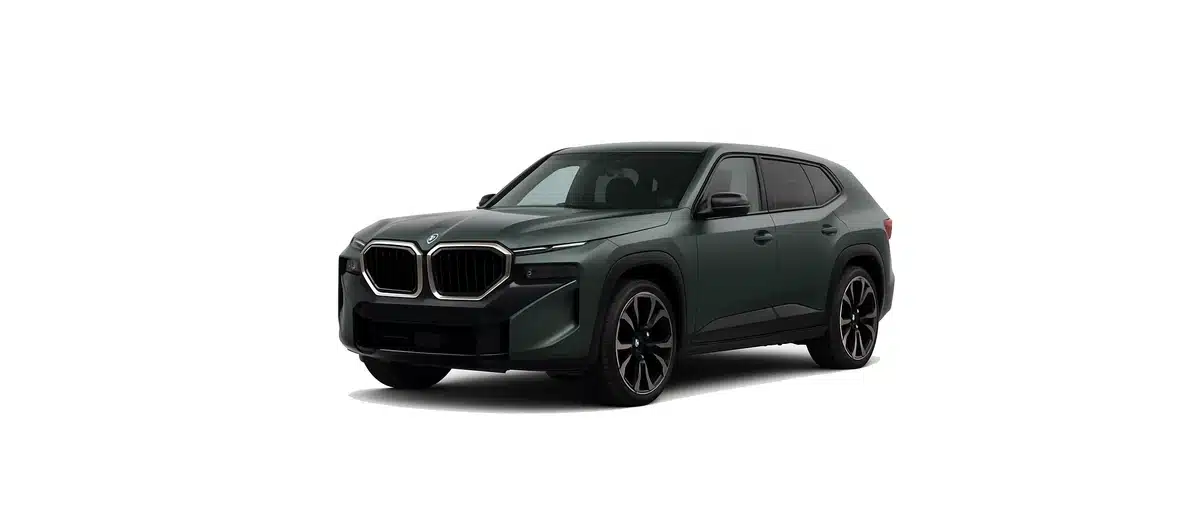
The BMW XM is an unusual plug-in hybrid. It is a large performance SUV with a petrol engine, a powerful electric motor and a high-voltage battery that is larger than you will find in many older PHEVs. In current UK form, the XM range includes the BMW XM 50e and BMW XM Label, both of which are petrol plug-in hybrids rather than fully electric cars.
That distinction matters when planning how to charge it. The BMW XM is best thought of as a large-battery PHEV designed for regular AC charging at home, work or destination charge points. It is not currently supported by evidence as a DC rapid-charging vehicle, so the right Type 2 cable and a sensible home charging routine are more important than motorway rapid charger access.
BMW XM Battery and Charging Specifications
Current BMW UK technical data lists both the BMW XM 50e and BMW XM Label with a 25.7 kWh high-voltage battery capacity. BMW Group technical material for the XM 50e describes the battery as 29.5 kWh gross and 25.7 kWh net, which is consistent with the usable figure quoted for the current UK range.
For charging, current BMW UK data lists a maximum AC charging power of 11 kW and a minimum 0-100% AC charging time of 2 hours 45 minutes for both current UK variants. However, some older global BMW material and third-party charging databases still show 7.4 kW AC charging. If you own a used, imported or earlier XM, it is worth checking the vehicle handbook, VIN-specific documentation or BMW dealer information before assuming the 11 kW figure applies to your exact car.
The charging connection used for normal AC charging is a Type 2 inlet, with charging-reference sources placing the socket on the front left side panel. There is no confirmed CCS/DC rapid-charging port for the current UK BMW XM PHEV.
Battery Options
The current UK BMW XM line-up is relatively straightforward from a charging perspective. The XM 50e and XM Label use the same quoted usable battery capacity of 25.7 kWh, even though their petrol engines and overall performance positioning differ.
BMW quotes WLTP electric range of 49-52 miles for the XM 50e and 47-51 miles for the XM Label. These figures make the XM one of the longer-range plug-in hybrids on the UK market, but they are still laboratory test figures. Real-world electric range will vary with temperature, speed, driving style, route, load, tyre choice, cabin heating or cooling use and how the vehicle has been pre-conditioned before departure.
For many owners, the practical benefit of the XM’s battery size is that shorter daily journeys may be possible mainly on electric power if the car is charged regularly. Once the battery is depleted, the XM continues as a petrol hybrid SUV, but it will no longer deliver the same plug-in hybrid efficiency benefits as it does when you start journeys with useful charge in the battery.
AC Charging Speed
AC charging is the main charging method for the BMW XM. Current BMW UK technical data lists up to 11 kW AC charging, with a quoted 0-100% time of 2 hours 45 minutes. To approach that maximum rate, you would normally need a suitable three-phase AC supply and compatible charging equipment.
Most UK homes have single-phase electricity, and many home wallboxes are rated at around 7 kW or 7.4 kW. A 7 kW home charger is still suitable for the BMW XM, but it will not deliver the current UK car’s quoted 11 kW maximum. In practical terms, that means charging from empty to full will take longer than BMW’s best-case 11 kW figure, but it should still be very manageable for overnight charging.
At home or at an untethered public AC charge point, you will need a Type 2 charging cable. If your home charger is tethered, the cable is attached to the unit; if it is untethered, you plug your own Type 2 cable into both the wallbox and the vehicle.
DC Rapid Charging Speed
No DC rapid-charging capability is confirmed for the current UK BMW XM plug-in hybrid. BMW UK technical data provides AC charging information, but does not list a DC charging rate or 10-80% rapid-charge time for the XM. The available evidence supports treating the car as AC-only for charging purposes.
This means you should not buy a CCS rapid-charging cable for the BMW XM. CCS rapid chargers use fixed, tethered cables at the charging station, and the current UK XM is not confirmed as having a CCS rapid-charging inlet. For everyday charging, focus on Type 2 AC charging at home, at work and at destination locations such as hotels, gyms, car parks and shopping centres.
Range and Efficiency
The BMW XM’s quoted electric range is strong for a plug-in hybrid of this size. BMW UK lists 49-52 miles WLTP electric range for the XM 50e and 47-51 miles for the XM Label. The car’s electric motor output is listed at 145 kW in current BMW data, giving the XM useful electric performance for local driving when the battery has charge available.
As with any PHEV, the difference between official test figures and day-to-day use can be significant. Cold weather, high-speed driving and heavy use of climate control can reduce electric range. Urban and suburban trips are usually more favourable for electric running than long motorway journeys.
The key ownership point is that the BMW XM rewards regular charging. If you plug in overnight and begin most days with a charged battery, you are more likely to use the electric side of the powertrain. If you rarely charge it, the car effectively becomes a large petrol hybrid carrying a sizeable battery that is not being used to its full benefit.
Charging at Home
Home charging is likely to be the most convenient way to run a BMW XM as intended. A dedicated home wallbox is generally the best solution, provided it is installed by a qualified professional and matched to your property’s electrical supply. For many UK drivers, a single-phase 7 kW or 7.4 kW wallbox will be the realistic option. It will not match the 11 kW maximum listed for current UK cars, but it should still suit overnight charging well.
If your property has a suitable three-phase supply, an 11 kW AC charger may allow the current UK XM to charge closer to BMW’s quoted maximum. This is more common in some commercial premises and certain larger properties than in typical UK homes, so it should not be assumed.
A 3-pin charger is generally best suited as a backup or occasional charging solution, but can be used regularly if a qualified electrician has confirmed the socket and electrical installation are suitable for sustained EV charging. Because the XM has a relatively large PHEV battery, charging from a domestic plug will be much slower than from a wallbox and may require a long overnight session from a low state of charge.
For the most predictable results, use the car’s charging schedule if available, align charging with your home energy tariff where suitable, and avoid relying on public charging for every top-up unless your routine genuinely supports it.
Public Charging
Public charging for the BMW XM is mainly about AC destination charging. Look for Type 2 AC charge points at workplaces, hotels, long-stay car parks, leisure centres and retail destinations. Many of these are untethered, so carrying a suitable Type 2 cable is important.
Fast AC charge points in the UK commonly provide 7 kW, 11 kW or 22 kW, but the car will only draw up to the limit supported by its onboard charger and the supply. If your current UK XM supports 11 kW AC and the charge point can provide it over a suitable connection, charging may be quicker than on a typical 7 kW home unit. If your specific car is an earlier or non-UK example with a lower onboard charger rating, the car will limit the charging speed accordingly.
Rapid and ultra-rapid DC hubs are less relevant for the XM than they are for a fully electric car. Even where a site has several rapid chargers, the BMW XM should be planned around Type 2 AC charging unless your vehicle documentation confirms otherwise for a specific later variant.
Vehicle-Specific Features
BMW Group technical material describes the XM’s M HYBRID system as using fifth-generation BMW eDrive components, combining petrol power with a rechargeable high-voltage battery and electric drive. The current UK range is PHEV-only, so both the XM 50e and XM Label require mains charging to make the most of their electric capability.
BMW Group material also describes predictive battery heat management for charging. In simple terms, the vehicle can warm or cool the high-voltage battery to help reduce charging time under certain conditions. This should not be confused with a confirmed cabin heat pump specification; no reliable UK XM heat pump confirmation is included in the available data.
The charge socket is referenced in BMW Group and charging-reference material as being on the front left side panel. If you are installing a home charger, this is worth considering when choosing where to place the wallbox and how long your cable needs to be.
Charging Tips
- Use a Type 2 cable: The BMW XM is an AC-charging PHEV, so a Type 2 cable is the key cable for untethered home and public AC charging.
- Do not buy for CCS rapid charging: No DC rapid-charging capability is confirmed for the current UK XM PHEV.
- Check your exact model year: Current BMW UK data lists 11 kW AC, but older or global information may show 7.4 kW.
- Charge regularly: The XM’s plug-in hybrid benefits are strongest when you start journeys with charge in the battery.
- Match the cable to your use: Consider cable length, storage space and whether you will often use untethered public AC charge points.
- Plan around AC charging: Destination charging is more useful for this car than short stops at DC rapid-charging hubs.
Frequently Asked Questions
Is the BMW XM fully electric?
No. The BMW XM is a petrol plug-in hybrid. It has a rechargeable high-voltage battery and can drive on electric power, but it also has a petrol engine.
What charging cable does the BMW XM use?
For AC charging, the BMW XM uses a Type 2 connection. A Type 2 cable is used with untethered home wallboxes and many UK public AC charge points.
Can the BMW XM use DC rapid chargers?
No DC rapid-charging capability is confirmed for the current UK BMW XM PHEV. There is no confirmed CCS charging rate or 10-80% rapid-charge time, so owners should plan around AC charging.
How fast can the BMW XM charge at home?
Current BMW UK data lists up to 11 kW AC charging, but many UK homes use a 7 kW or 7.4 kW single-phase wallbox. That is still suitable, although it will be slower than the quoted 11 kW maximum. Earlier or imported cars should be checked individually, as some sources list 7.4 kW charging.
How far can the BMW XM drive on electric power?
BMW UK quotes 49-52 miles WLTP electric range for the XM 50e and 47-51 miles for the XM Label. Real-world range will depend on weather, route, speed, load, driving style and use of vehicle systems.
What This Means for Drivers
The BMW XM is best approached as a high-performance plug-in hybrid with a relatively large usable battery and AC-focused charging. If you can charge at home or at regular destinations, the car’s electric range can be genuinely useful for daily driving. If you cannot charge regularly, you are unlikely to get the full benefit of the plug-in hybrid system.
For most UK drivers, the practical setup is simple: a dedicated home wallbox where possible, a Type 2 cable for untethered charging, and realistic expectations around AC charging speeds. Current UK cars list 11 kW AC capability, but a typical 7 kW home charger remains a sensible and compatible option. For used or imported examples, confirm the onboard charger rating before choosing equipment based purely on headline figures.
Looking for a Charging Cable for BMW XM?
Choose a Type 2 charging cable suitable for BMW XM AC charging, and check your exact vehicle specification if you are unsure whether your car supports 11 kW or a lower AC charging rate.
Please note that this information is intended as a guide. Charging specifications may change due to model and year of manufacture. For precise information, always refer to your vehicle user manual.

