
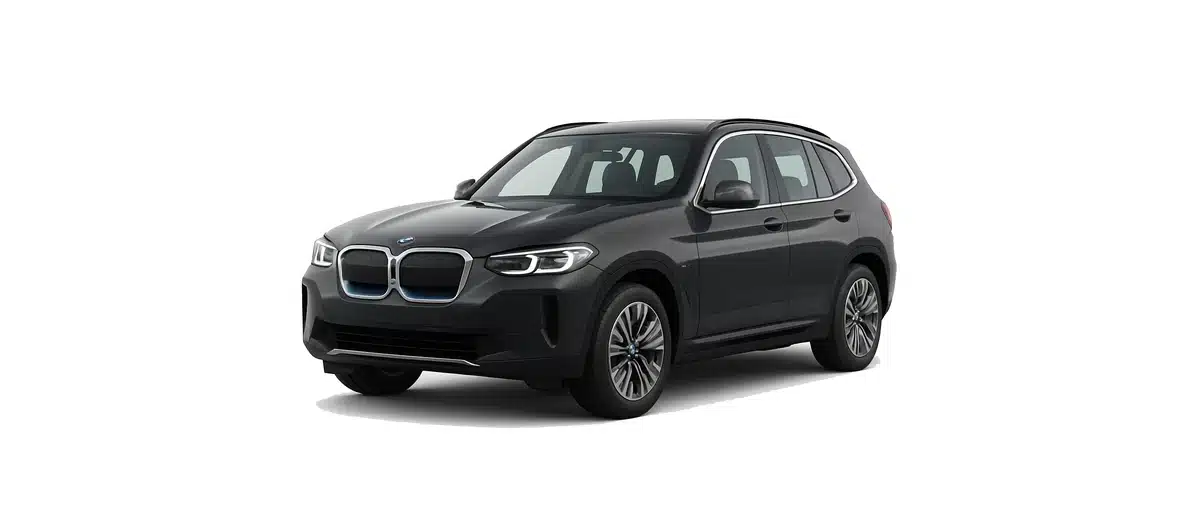
The BMW X3 is a popular mid-size SUV, but charging advice depends heavily on which plug-in hybrid version you own. The current UK plug-in model is the fourth-generation BMW X3 30e xDrive PHEV, part of the G45 X3 range for 2025/2026. It has a much larger battery and significantly faster AC charging than earlier BMW X3 xDrive30e plug-in hybrids from the previous G01 generation.
That model-year difference matters when choosing a charging cable, planning home charging, or estimating how long a public AC top-up will take. The current X3 30e xDrive supports up to 11 kW AC charging, where the electrical supply and charge point allow it. Older G01 X3 xDrive30e models are typically limited to around 3.7 kW AC, so a faster wallbox or public post will not necessarily make the car charge at that faster rate.
This guide focuses on UK BMW X3 plug-in hybrid charging. It does not cover the BMW iX3, which is a separate fully electric model with different battery, cable and rapid-charging requirements.
BMW X3 Battery and Charging Specifications
For the current G45 BMW X3 30e xDrive plug-in hybrid, BMW UK lists a 19.7 kWh battery capacity and a WLTP electric range of 52–54 miles. BMW Group’s vehicle footprint data gives the same 19.7 kWh net figure, with 22.7 kWh gross capacity. BMW also quotes a maximum AC charging power of 11 kW and a minimum 0–100% AC charge time of 2 hours 15 minutes.
The key point is that these figures apply to the latest G45 X3 30e xDrive. They should not be assumed for every BMW X3 plug-in hybrid. Earlier G01 X3 xDrive30e cars, sold from around 2020 to 2024, generally have a much smaller battery in the 12–13 kWh class and are typically limited to around 3.7 kW AC charging.
| Model | Battery | AC charging | Official electric range |
|---|---|---|---|
| Current G45 BMW X3 30e xDrive PHEV | 22.7 kWh gross / 19.7 kWh usable | Up to 11 kW AC | 52–54 miles WLTP |
| Earlier G01 BMW X3 xDrive30e PHEV | Approximately 12–13 kWh class | Typically around 3.7 kW AC | Roughly 28–31 miles official electric range, depending on version |
Battery Options
The current UK X3 plug-in hybrid battery is a major improvement over the previous X3 PHEV. With 19.7 kWh usable capacity, the G45 X3 30e xDrive can cover many local journeys on electric power if it is charged regularly. BMW UK quotes up to 52–54 miles of electric range, while BMW Group data gives 86 km, equivalent to around 53 miles, for the assessed X3 30e xDrive.
By contrast, the earlier G01 X3 xDrive30e was designed around a smaller plug-in hybrid battery. It can still be a useful electric commuter for shorter trips, but owners should expect different charging times and less electric range than the latest version. If you are buying a cable for a used X3, check the model year and charging capability before assuming it matches the new 11 kW car.
The plug-in hybrid battery also affects practicality. As with many PHEVs, the high-voltage battery takes up packaging space compared with non-plug-in X3 versions, so boot capacity may be reduced versus petrol or diesel models. For charging purposes, however, the important distinction is not boot space but which generation of X3 PHEV you have.
AC Charging Speed
The current G45 BMW X3 30e xDrive supports up to 11 kW AC charging. BMW press information indicates that this AC charging supports both single-phase and three-phase AC, while BMW UK quotes a minimum 0–100% charge time of 2 hours 15 minutes. To see that maximum rate in practice, you need a compatible charge point and electrical supply.
Many UK homes have a single-phase electricity supply, often paired with a 7 kW class home wallbox. In that situation, the current X3 30e may charge below its 11 kW maximum because the property supply and charger are the limiting factors. At workplaces, commercial sites or homes with a suitable three-phase installation, an 11 kW-capable AC charge point may allow the latest X3 30e to use its full AC charging capability.
For earlier G01 X3 xDrive30e owners, the picture is different. A 7 kW wallbox or 22 kW public AC post will not necessarily deliver those speeds into the car, because the vehicle’s onboard charger is typically around 3.7 kW. The charge point can offer more power, but the car decides how much AC power it can accept.
DC Rapid Charging Speed
The BMW X3 30e xDrive plug-in hybrid should be treated as an AC-only charging vehicle based on the confirmed UK and EU information available. No CCS DC rapid-charging capability or 10–80% DC rapid-charge time is confirmed for the X3 30e PHEV, and EU technical data lists AC charging information without a DC rapid-charging figure.
This means you should not plan journeys around motorway rapid chargers in the same way you would with a fully electric car. The X3 30e has a petrol engine as well as an electric motor, so long-distance flexibility comes from its hybrid powertrain rather than from high-speed DC charging. For electric driving, the practical approach is to charge at home, at work, or at public AC posts when parked for a useful period.
Range and Efficiency
BMW UK quotes 52–54 miles WLTP electric range for the current X3 30e xDrive. In a UK road test, Auto Express reported 53.5 miles achieved on electric power in mixed real-world driving for the latest X3 30e, which is close to the official figure. As always, real-world range will depend on temperature, route, speed, driving style, load and use of heating or air conditioning.
For many owners, the X3 30e will be at its most efficient when short and medium-length journeys are completed mainly on electric power. That depends on regular charging. BMW Group’s lifecycle information also highlights an important point for plug-in hybrid ownership: a PHEV needs to be externally charged to deliver its intended efficiency and emissions benefits. If it is rarely plugged in, it effectively carries the weight and complexity of a battery system without using its electric capability properly.
Older G01 X3 xDrive30e models have a shorter official electric range, typically around 28–31 miles depending on version and conditions. They can still suit drivers with short commutes or local school runs, but the charging and range expectations are not the same as the latest G45 X3 30e.
Charging at Home
Home charging is usually the most convenient way to run a BMW X3 plug-in hybrid. If you can park off-street, a dedicated home wallbox gives controlled charging, weather-resistant hardware and better everyday usability than relying on a domestic socket. It also allows you to make use of off-peak electricity tariffs where available.
For the current G45 X3 30e, a three-phase 11 kW-capable AC installation can make use of the car’s maximum AC rate where the site supply supports it. However, many UK domestic properties are single-phase, so a typical home wallbox may charge at a lower rate. That is still likely to be more than adequate for overnight charging of a plug-in hybrid battery.
A 3-pin portable charger is generally best suited as a backup or occasional charging solution, but can be used regularly if a qualified electrician has confirmed the socket and electrical installation are suitable for sustained EV charging. Standard domestic sockets were not primarily designed for repeated long-duration EV charging loads, so professional assessment is important.
If you have an older G01 X3 xDrive30e, a 7 kW wallbox remains useful for convenience and safety, but the car may only accept around 3.7 kW. That is normal and does not usually indicate a fault with the wallbox or cable.
Public Charging
For public charging in the UK, the BMW X3 30e uses AC charging rather than DC rapid charging. You will normally use a Type 2-to-Type 2 Mode 3 cable at untethered public AC posts. Some public chargers are tethered, meaning the cable is attached to the charger, but many destination chargers require you to bring your own cable.
BMW press material states that the current X3 30e is supplied in Europe with a Mode 3 cable for public AC charging stations. Even so, used-car buyers should check what is actually supplied with the vehicle, especially if buying from a previous owner or non-franchised dealer.
At public AC posts, remember that the displayed charger rating is only one part of the equation. A 22 kW public AC post will not make an older 3.7 kW-limited X3 charge at 22 kW. Similarly, the current 11 kW X3 30e needs compatible AC supply and vehicle settings to achieve its maximum rate.
Vehicle-Specific Features
The most important vehicle-specific feature for charging is the generation split. The current G45 BMW X3 30e xDrive has a 19.7 kWh usable battery and up to 11 kW AC charging. The earlier G01 BMW X3 xDrive30e is a different charging proposition, with a smaller battery and typically slower AC charging.
It is also important not to confuse the X3 30e with the BMW iX3. The X3 30e is a petrol plug-in hybrid SUV. The iX3 is a separate battery-electric model with different charging hardware and different long-distance charging expectations.
The current X3 30e’s 11 kW AC capability is particularly useful for drivers who can access three-phase AC charging at home, work or destination locations. For many UK home users, the benefit will be less about rapid top-ups and more about having a flexible plug-in hybrid that can be fully recharged between daily journeys.
Charging Tips
- Check your generation first: Current G45 X3 30e and older G01 X3 xDrive30e models have very different charging limits.
- Use the right cable: A Type 2-to-Type 2 Mode 3 cable is the correct style for untethered UK public AC posts and compatible untethered wallboxes.
- Do not expect DC rapid charging: The X3 30e PHEV should be planned around AC charging, not CCS rapid chargers.
- Charge regularly: A plug-in hybrid is most efficient when you actually plug it in and use its electric range.
- Match cable choice to real use: If you regularly use public AC posts, a robust Type 2 cable stored in the boot is useful, even if you mostly charge at home.
- Do not worry if an older car charges slowly: If a G01 X3 xDrive30e only accepts around 3.7 kW, that is consistent with the vehicle’s onboard charging limit.
Frequently Asked Questions
Is the BMW X3 a fully electric car?
No. The current UK BMW X3 plug-in model is the X3 30e xDrive plug-in hybrid, combining a petrol engine with an electric motor and rechargeable battery. The fully electric SUV is the separate BMW iX3.
What charging cable does the BMW X3 30e use?
For UK and European AC charging, the X3 30e uses Type 2 AC charging. A Type 2-to-Type 2 Mode 3 cable is used for untethered public AC chargers and compatible untethered home wallboxes.
How fast does the current BMW X3 30e charge?
BMW UK lists up to 11 kW AC charging for the current G45 X3 30e xDrive, with a minimum 0–100% AC charging time of 2 hours 15 minutes. Actual charging speed depends on the charge point, electrical supply and installation.
Will an older BMW X3 xDrive30e charge at 11 kW?
Generally, no. Earlier G01 X3 xDrive30e models are typically limited to around 3.7 kW AC charging, even if connected to a faster wallbox or public AC post.
Can the BMW X3 30e use DC rapid chargers?
No confirmed DC rapid-charging capability is listed for the X3 30e PHEV in the charging data used for this guide. Owners should plan around AC charging rather than CCS rapid charging.
What This Means for Drivers
The BMW X3 30e can be an efficient and convenient plug-in hybrid if it is charged regularly. The latest G45 model is especially capable for a PHEV, with a sizeable 19.7 kWh usable battery, WLTP electric range of 52–54 miles and up to 11 kW AC charging. For drivers with suitable home, workplace or destination charging, that makes daily electric driving a realistic prospect.
The main buying and ownership lesson is to check the model year before setting expectations. A current X3 30e and an earlier X3 xDrive30e may look similar in purpose, but they differ substantially in battery size, range and AC charging speed. Cable choice remains centred on Type 2 AC charging, but charge-time expectations should be matched to the car’s onboard charger.
Looking for a Charging Cable for BMW X3?
If you need a replacement or spare Type 2 charging cable for a current BMW X3 30e or an earlier BMW X3 xDrive30e, We offer BMW X3 charging cable options for home wallboxes and UK public AC charging posts.
Please note that this information is intended as a guide. Charging specifications may change due to model and year of manufacture. For precise information, always refer to your vehicle user manual.

