
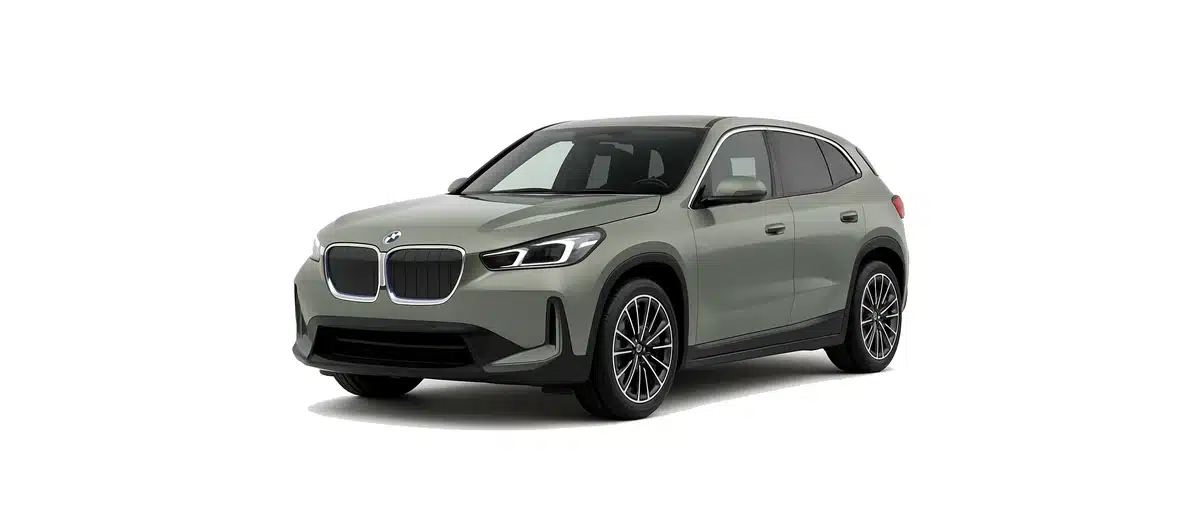
The BMW X2 name can be slightly confusing when it comes to charging. In the current UK range, the plug-in electric member of the X2 family is the BMW iX2, available in electric variants such as eDrive20 and xDrive30. BMW also sells X2 petrol and 48V mild-hybrid versions that do not plug in and therefore do not need a charging cable. There is also an older, previous-generation BMW X2 xDrive25e plug-in hybrid, which is now a used-market model and has very different charging requirements from the current iX2.
This guide is designed to help UK drivers check the badge, understand which connector they need, and choose the right Type 2 charging cable without assuming that every X2 is the same. For current BMW iX2 models, AC charging is via a Type 2 connection and DC rapid charging is via CCS. For the older X2 xDrive25e PHEV, charging is Type 2 AC only, with no CCS rapid charging.
BMW X2 Battery and Charging Specifications
For current UK electric X2-family models, the key vehicle to look at is the BMW iX2. Current UK iX2 variants use a Type 2 socket for AC charging and a CCS2 connection for DC rapid charging. The charge port is listed on the right rear side of the car in UK specification data.
The current iX2 has an 11 kW AC onboard charger as standard. This is useful at three-phase workplace or destination chargers, but many UK homes have single-phase electricity and will normally charge at up to around 7 kW or 7.4 kW from a home wallbox. BMW and independent specification sources also list optional 22 kW AC charging for some iX2 configurations, but it should not be assumed that every car has it.
For rapid charging, the iX2 supports up to 130 kW DC in suitable conditions. BMW’s published rapid charging information and independent UK listings indicate a typical 10-80% rapid charge time of around 30 minutes when the charger, battery temperature and state of charge are favourable.
The discontinued BMW X2 xDrive25e PHEV is a separate case. It has a much smaller plug-in hybrid battery, uses Type 2 AC charging only, and is rated at around 3.7 kW AC. It cannot use CCS DC rapid chargers.
Battery Options
Battery figures vary slightly depending on source and model-year context, so it is best to treat them as a guide rather than one universal figure for every X2-badged vehicle.
- Current BMW iX2 eDrive20 / xDrive30 MY26: EV Database UK lists a 66.5 kWh nominal battery and around 65.2 kWh usable capacity. BMW UK rounds the battery capacity to 65 kWh on its technical-data page.
- Earlier iX2 launch and MY23-25 context: BMW launch material and earlier data sources list usable capacity at around 64.7-64.8 kWh. This small difference is mainly a model-year and source context issue.
- Previous BMW X2 xDrive25e PHEV: BMW technical data lists a 10.0 kWh gross battery and around 8.8 kWh net/usable capacity. This is a plug-in hybrid battery, not a full BEV battery.
If you are buying a cable, the battery size is less important than the charging connector and onboard charger. A current iX2 needs a Type 2 cable for AC charging and uses tethered CCS plugs at rapid chargers. The older X2 xDrive25e PHEV needs a Type 2 cable for AC charging only.
AC Charging Speed
AC charging is what you will use at home wallboxes, many workplace chargers, hotel chargers, supermarket chargers and other destination charging points.
For the current BMW iX2, the standard AC charging capability is 11 kW. To achieve 11 kW, the car needs to be connected to a suitable three-phase AC charger. This is common at some workplaces and public destination chargers, but it is not the usual setup for most UK domestic properties.
On a typical UK single-phase home wallbox, the iX2 will usually charge at up to around 7 kW or 7.4 kW, depending on the charger, installation and supply. Independent UK data suggests an empty-to-full home charging time in the region of 10 hours 30 minutes at 7.4 kW, which makes overnight charging realistic for most drivers.
If your iX2 has the optional 22 kW AC onboard charger and you regularly use three-phase AC charging at work or public destinations, a 22 kW three-phase Type 2 cable may be worthwhile. If you mainly charge at home on single-phase power, a 7 kW/7.4 kW Type 2 cable will usually match the practical charging limit of the installation.
For the older BMW X2 xDrive25e plug-in hybrid, AC charging is much slower at around 3.7 kW. That is normal for many plug-in hybrids of its generation. A higher-rated Type 2 cable can still be used safely with a lower-powered car, but the car will only draw what its onboard charger allows.
DC Rapid Charging Speed
DC rapid charging applies to the current BMW iX2, not to the older X2 xDrive25e PHEV. The iX2 uses the CCS2 standard for rapid charging, which combines the Type 2 upper section with two larger DC pins below. In the UK and Europe, CCS rapid chargers are normally tethered, so you use the cable attached to the charging unit rather than your own Type 2 cable.
The iX2 supports up to 130 kW DC rapid charging. In good conditions, a 10-80% charging stop is typically around 30 minutes. As with all EVs, the maximum speed is not held for the whole session. Charging is usually fastest at a lower state of charge and slows as the battery fills, especially above 80%.
Real-world rapid charging speed depends on several factors, including charger capability, battery temperature, battery state of charge, site load sharing and whether the car has prepared the battery for rapid charging. The iX2 includes battery preconditioning, which can help the car reach stronger rapid charging performance when a rapid charger is set as a destination or when preconditioning is activated as supported by the vehicle.
Range and Efficiency
BMW UK lists WLTP range bands for the iX2 that vary by variant, trim and equipment. Current eDrive20-related entries are listed at up to around 296-320 miles WLTP, while xDrive30-related entries are generally around 277-296 miles WLTP, depending on specification. These are official laboratory figures and are useful for comparison, but they are not a guaranteed everyday range.
Independent UK estimates place real-world range for current iX2 models at roughly the mid-200-mile mark, with around 250 miles a sensible planning figure for the eDrive20 and slightly less for the xDrive30 in comparable data. Actual range will vary with temperature, speed, tyres, wheel size, terrain, driving style and use of heating or air conditioning.
The older X2 xDrive25e PHEV has a much shorter electric-only range because it is a plug-in hybrid with a small battery. It is best understood as a petrol vehicle with useful local electric driving capability, rather than as a long-range EV.
Charging at Home
For most BMW iX2 owners, home charging will be the cheapest and most convenient way to run the car. A dedicated home wallbox on a suitable off-street parking space lets you plug in overnight and start each day with the charge level you need.
Because many UK homes are single-phase, a 7 kW or 7.4 kW wallbox is usually the practical home charging limit. Even though the iX2 has 11 kW AC charging as standard, that higher figure requires three-phase power. This is why a standard single-phase Type 2 cable is sufficient for many home users.
If you have access to three-phase electricity at home, or you regularly use three-phase workplace chargers, you may want to consider whether a three-phase cable makes sense. A 22 kW Type 2 cable can be useful for maximum flexibility, but the car and charger must both support the higher rate, and optional 22 kW AC capability should be checked on the specific vehicle.
A 3-pin charging cable is generally best suited as a backup or occasional charging solution, but can be used regularly if a qualified electrician has confirmed the socket and electrical installation are suitable for sustained EV charging. For a full EV such as the iX2, a dedicated wallbox is normally a more practical long-term solution because it charges faster and is designed for regular EV use.
Public Charging
For public AC charging, the current BMW iX2 uses a Type 2 cable. Many untethered AC public chargers require you to bring your own cable, so keeping a suitable Type 2 cable in the car is useful for workplaces, public car parks, hotels and destination chargers.
For motorway and en-route charging, the iX2 uses CCS rapid chargers. These chargers have their own tethered cable, so you do not need to bring a separate rapid charging cable. Plan rapid stops around the 10-80% window where possible, as charging beyond 80% on DC is usually slower and often less time-efficient on a long journey.
Owners of the older BMW X2 xDrive25e PHEV should use public AC Type 2 chargers only. The PHEV does not support CCS rapid charging, so it should not be routed to rapid chargers with the expectation of a DC charging session.
Vehicle-Specific Features
The BMW iX2 includes several features that can make EV ownership easier. A heat pump is listed as standard, helping the car manage cabin heating more efficiently than a purely resistive heating system in many conditions. This can be particularly useful in colder UK weather, where heating demand can otherwise reduce range.
Battery preconditioning is also confirmed for the iX2. When used correctly, it can help bring the battery closer to an ideal temperature before DC rapid charging. This is especially helpful in winter or before a planned rapid charging stop, where a cold battery may otherwise charge more slowly.
UK specification data does not list vehicle-to-load, vehicle-to-grid or vehicle-to-home support for current iX2 models, so owners should not assume the car can power external appliances or supply a home. Likewise, any overseas-market announcements should not be applied to UK cars unless confirmed for the UK specification.
Charging Tips
- Check the badge first: iX2 is the current full electric model; current petrol and mild-hybrid X2 models do not plug in; the older X2 xDrive25e is a PHEV.
- Choose Type 2 for AC: both the current iX2 and older X2 xDrive25e use Type 2 for AC charging.
- Use CCS only for the iX2: the current iX2 supports CCS rapid charging, but the older xDrive25e PHEV does not.
- Match the cable to your charging habits: a 7 kW/7.4 kW Type 2 cable is enough for many UK home wallboxes; a 22 kW three-phase cable may be useful for regular three-phase charging.
- Rapid charge efficiently: on long trips, aim for shorter 10-80% CCS stops rather than waiting for 100% unless you genuinely need the extra range.
- Use preconditioning: when heading to a rapid charger in the iX2, use the car’s route guidance or preconditioning function where available to improve charging consistency.
Frequently Asked Questions
Is every BMW X2 electric?
No. The BMW X2 name is used across different powertrains. Current UK X2 petrol and 48V mild-hybrid models do not use charging cables. The current electric X2-family model is the BMW iX2, while the older X2 xDrive25e is a discontinued plug-in hybrid.
What charging cable does the BMW iX2 need?
The BMW iX2 uses a Type 2 cable for AC home and destination charging. For DC rapid charging, it uses CCS rapid chargers, which normally have tethered cables attached to the charger.
Does the BMW X2 xDrive25e PHEV use the same charging setup?
Not exactly. The older X2 xDrive25e PHEV uses Type 2 AC charging only and charges at around 3.7 kW. It does not support CCS rapid charging.
Should I buy a 7 kW or 22 kW Type 2 cable for the BMW iX2?
For most UK home charging on a single-phase wallbox, a 7 kW/7.4 kW Type 2 cable is usually sufficient. A 22 kW three-phase cable may be worthwhile if your car has the optional 22 kW AC onboard charger and you regularly use three-phase AC charge points.
How long does the BMW iX2 take to rapid charge?
In suitable conditions, the iX2 can charge from 10-80% in around 30 minutes on a capable CCS rapid charger. The actual time will depend on temperature, state of charge, charger output and battery preconditioning.
What This Means for Drivers
The most important step is to identify which X2-family vehicle you have. A current BMW iX2 is a full electric vehicle with Type 2 AC charging, CCS rapid charging, 11 kW AC capability as standard and up to 130 kW DC rapid charging. A current petrol or mild-hybrid X2 does not need a charging cable. An older BMW X2 xDrive25e PHEV needs a Type 2 cable for slower AC charging and cannot rapid charge on CCS.
For typical UK iX2 ownership, a home wallbox and a good Type 2 cable will cover most everyday charging. Drivers who frequently use three-phase workplace or destination chargers should check whether their specific car has optional 22 kW AC charging before choosing a higher-rated cable. For long journeys, the iX2’s CCS rapid charging and battery preconditioning make regular en-route charging straightforward when planned around suitable rapid charging stops.
Looking for a Charging Cable for BMW X2?
We offer BMW X2 charging cables for drivers who have checked their vehicle type and need a suitable Type 2 charging cable for home, workplace or public AC charging.
Please note that this information is intended as a guide. Charging specifications may change due to model and year of manufacture. For precise information, always refer to your vehicle user manual.

