
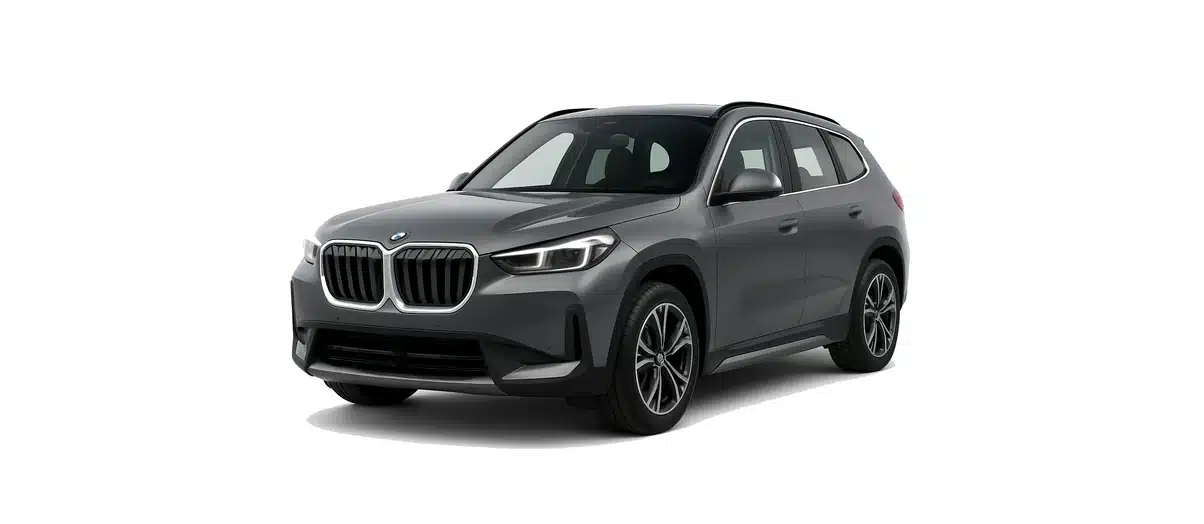
The BMW X1 name covers more than one type of electrified SUV, so choosing the right charging cable starts with knowing which model you own. In the UK, BMW X1 plug-in hybrid models include the earlier F48 X1 xDrive25e and the current U11 X1 xDrive25e and xDrive30e. These are petrol-electric plug-in hybrids, not fully electric cars. The all-electric version is called the BMW iX1 and should be treated separately when checking charging specifications.
For X1 plug-in hybrid drivers, the key point is that charging is AC-based using a Type 2 connection. The X1 PHEV is designed around regular home, workplace and destination charging rather than rapid motorway charging. The exact charging speed depends heavily on the generation of the car, because older and newer X1 PHEV models have different onboard AC charging limits.
BMW X1 Battery and Charging Specifications
The BMW X1 plug-in hybrid combines a petrol engine with an electric motor and a rechargeable high-voltage battery. It can be driven on electric power for shorter journeys when charged, while the petrol engine provides longer-distance flexibility. This makes the X1 PHEV well suited to drivers who can charge at home or work and want to complete local trips on electric power where possible.
UK and European X1 PHEV models use a Type 2 AC charging inlet. This is the standard connector used by most UK home wallboxes and many public AC charge points. For an untethered home charger or public AC post, you will normally use a Type 2 to Type 2 Mode 3 charging cable.
The current BMW UK technical data lists the latest X1 plug-in hybrid battery capacity at 14.2 kWh and gives AC charging of up to 11 kW, with a minimum 0-100% charge time of around 1 hour 45 minutes where the appropriate power supply is available. However, this should not be applied to all BMW X1 plug-in hybrids. Earlier F48 xDrive25e models have a smaller battery and lower AC charging capability.
Battery Options
There are two main BMW X1 plug-in hybrid generations to be aware of when discussing batteries and charging.
F48 BMW X1 xDrive25e, approximately 2020-2022: BMW technical data for the earlier X1 xDrive25e lists a 10.0 kWh gross battery capacity and 8.8 kWh net usable capacity. BMW UK launch material quoted up to 35 miles of electric-only range, while global technical data listed WLTP electric range of around 49-52 km, approximately 30-32 miles. This earlier model is now generally encountered as a used car.
U11 BMW X1 xDrive25e and xDrive30e, current generation: BMW launch information and current UK technical data describe a 14.2 kWh usable battery for current X1 plug-in hybrid models. Current BMW UK figures typically show WLTP electric range of up to around 47-52 miles depending on version and trim. Earlier launch material for the U11 generation quoted higher figures under the data published at the time, so it is best to check the specification for the exact vehicle.
This difference matters because the newer U11 PHEV has a larger usable battery and can generally cover more electric-only miles than the earlier F48 xDrive25e. It also affects how long the car takes to charge from empty to full.
AC Charging Speed
AC charging is the main charging method for the BMW X1 plug-in hybrid. The important detail is that the charging speed is limited by the car’s onboard charger, not just by the charge point or cable.
For the earlier F48 BMW X1 xDrive25e, BMW technical data lists 3.7 kW AC charging and an approximate 0-100% wallbox charge time of around 3.2 hours. Plugging this version into a 7 kW, 11 kW or 22 kW AC charger will not make it charge at those higher speeds, because the car itself is limited to around 3.7 kW.
For the current U11 X1 plug-in hybrid, BMW’s figures have varied by publication date. U11 launch material referred to 7.4 kW AC charging and a 0-100% charge time of around 2.5 hours. Current BMW UK technical data lists 11 kW AC charging with a minimum 0-100% charging time of around 1 hour 45 minutes. Because of this generation and model-year sensitivity, owners should confirm their exact car’s charging specification using the handbook, BMW app, vehicle data plate information or BMW UK technical data for that model.
For cable selection, a 32A single-phase Type 2 cable is sufficient for the older 3.7 kW F48 X1 xDrive25e and is suitable for many UK home wallboxes. Current U11 cars may benefit from a cable and charging location that support three-phase 11 kW AC charging, where that supply is actually available. Many UK homes are single-phase, so an 11 kW result is more commonly associated with compatible three-phase installations or certain workplace and destination chargers.
DC Rapid Charging Speed
For the BMW X1 plug-in hybrid, owners should not plan around DC rapid charging. The public information used for this guide confirms Type 2 AC charging for the X1 PHEV, but does not confirm a CCS/DC rapid-charging specification for these plug-in hybrid models.
This is a common difference between many plug-in hybrids and fully electric cars. A PHEV battery is smaller than a full EV battery and is intended to be topped up regularly from AC charging at home, work or destinations. If you are looking at DC rapid-charging figures for a BMW compact SUV, make sure you are not accidentally reading BMW iX1 figures. The iX1 is the fully electric model and is separate from the BMW X1 xDrive25e and xDrive30e plug-in hybrids.
Range and Efficiency
BMW’s current UK figures for the U11 X1 plug-in hybrid show electric range of up to around 47-52 miles depending on version and trim. The earlier F48 xDrive25e was quoted at around 30-32 miles WLTP in global technical data, with BMW UK launch material referring to up to 35 miles of electric-only range.
As with any plug-in hybrid, real-world electric range will vary. Cold weather, higher speeds, hills, short winter journeys, tyre condition, cabin heating demand and driving style can all reduce the distance covered on electric power. Urban and suburban trips are usually where a PHEV can make the best use of its electric range, particularly if you can recharge between journeys.
The most efficient way to use a BMW X1 PHEV is generally to charge little and often. Waiting until the battery is empty and treating charging like a rapid-charge stop is less useful, because the car is designed for regular AC top-ups. If you can start each day with a full battery, many short commutes, school runs and local errands can be completed with minimal petrol engine use.
Charging at Home
Home charging is usually the most convenient option for BMW X1 plug-in hybrid owners. A dedicated home wallbox provides a safer and more practical long-term charging arrangement than relying on a domestic socket. If the wallbox is untethered, you will need a Type 2 to Type 2 Mode 3 cable. If it is tethered, the cable is already attached to the unit, but you may still want a separate cable for public charging.
For an older F48 X1 xDrive25e, a typical 7.4 kW home wallbox has more power available than the vehicle can use, because the car is limited to 3.7 kW AC. For current U11 X1 PHEV models, charging may be quicker where the vehicle, charger and electrical supply support the higher AC rate stated for that model. On a standard UK single-phase home installation, the available power may still be lower than the maximum listed in BMW’s current data.
A 3-pin domestic charging lead is generally best suited as a backup or occasional charging solution, but can be used regularly if a qualified electrician has confirmed the socket and electrical installation are suitable for sustained EV charging. Avoid using extension leads, damaged sockets or unknown outdoor sockets, and follow the charging equipment manufacturer’s safety guidance.
Public Charging
Public charging for the BMW X1 PHEV is mainly about AC destination charging rather than rapid charging. Useful locations include workplaces, hotels, supermarkets, leisure centres, town-centre car parks and long-stay parking. These are the places where the car can be plugged in while you are doing something else.
Many UK public AC posts are untethered, meaning you need to bring your own Type 2 to Type 2 cable. A suitable cable lets you use a wider range of destination chargers instead of relying only on tethered units. If you regularly use public AC charging, consider cable length as well as electrical rating. A longer cable can make parking easier when the charge point is awkwardly positioned, although it is also bulkier to store.
The charging flap location may also affect how you park. UK charging guidance for the X1 xDrive25e places the port on the rear passenger side. Always check your own vehicle before relying on a particular bay layout, especially if you are using short public cables or tight parking spaces.
Vehicle-Specific Features
The most important vehicle-specific feature for charging is the distinction between BMW X1 PHEV models and the BMW iX1. The X1 xDrive25e and xDrive30e are plug-in hybrids with petrol and electric drive. The iX1 is the fully electric model. Charging times, connectors and rapid-charging expectations should not be transferred from one to the other.
The X1 PHEV’s xDrive layout is also distinctive. BMW describes the plug-in hybrid system as using the petrol engine to drive the front wheels while the electric motor drives the rear wheels. From a charging perspective, this does not change the cable you need, but it helps explain why the car behaves differently from a conventional petrol X1 and from the fully electric iX1.
BMW’s U11 launch information also indicated that X1 plug-in hybrid models were supplied with a Mode 3 charging cable as part of the package. Used cars may not always come with their original cables, so it is worth checking what is included before buying a replacement or spare.
Charging Tips
- Identify your exact X1 first: check whether you have the older F48 xDrive25e or the current U11 xDrive25e/xDrive30e before choosing a cable or estimating charging time.
- Use Type 2 for AC charging: a Type 2 to Type 2 Mode 3 cable is the relevant choice for most untethered UK home and public AC charging.
- Do not expect 22 kW charging: a higher-rated post or cable will not override the car’s onboard charger limit.
- Charge little and often: topping up at home, work or destinations helps maximise electric running in a plug-in hybrid.
- Keep a public cable in the car: many AC posts are untethered, so carrying a cable gives you more charging options.
- Check the cable rating: older F48 models do not need more than a cable suitable for their 3.7 kW limit, while current U11 models may benefit from three-phase capability where available.
Frequently Asked Questions
Is the BMW X1 a fully electric car?
The BMW X1 xDrive25e and xDrive30e are plug-in hybrids. They have a petrol engine, an electric motor and a rechargeable battery. The fully electric version is the BMW iX1, which is a separate model for charging purposes.
What charging cable does a BMW X1 plug-in hybrid use?
For UK and European AC charging, the BMW X1 PHEV uses a Type 2 connection. For untethered home wallboxes and public AC posts, you will normally need a Type 2 to Type 2 Mode 3 cable.
How fast does the BMW X1 PHEV charge?
It depends on the generation. The earlier F48 xDrive25e is listed at 3.7 kW AC. U11 launch information referred to 7.4 kW AC, while current BMW UK data lists 11 kW AC for current X1 plug-in hybrid models. Always check your exact vehicle specification.
Can the BMW X1 plug-in hybrid use rapid chargers?
The X1 PHEV should be treated as an AC-charging plug-in hybrid. No confirmed CCS/DC rapid-charging specification was identified for the X1 PHEV in the data used for this guide.
Will a 22 kW cable make my BMW X1 charge faster?
Not beyond the car’s onboard charging limit. A higher-rated cable can be useful for compatibility or future flexibility, but it will not make an older 3.7 kW X1 charge at 22 kW.
What This Means for Drivers
The BMW X1 plug-in hybrid is at its best when you can make charging part of your normal routine. For the earlier F48 xDrive25e, expect modest AC charging speeds and a shorter electric range. For the current U11 xDrive25e and xDrive30e, the larger battery and higher quoted AC charging capability make electric driving more useful day to day, provided you have access to suitable charging.
The safest approach is to confirm your exact model before selecting a cable. If you own an X1 PHEV, focus on Type 2 AC charging and do not base your expectations on BMW iX1 rapid-charging figures. A well-matched cable will help you make the most of home, workplace and destination charging without overbuying for a speed your vehicle cannot use.
Looking for a Charging Cable for BMW X1?
If you need a replacement, spare or public charging cable for your BMW X1 plug-in hybrid, We offer BMW X1 charging cable options for UK Type 2 AC charging.
Please note that this information is intended as a guide. Charging specifications may change due to model and year of manufacture. For precise information, always refer to your vehicle user manual.

