
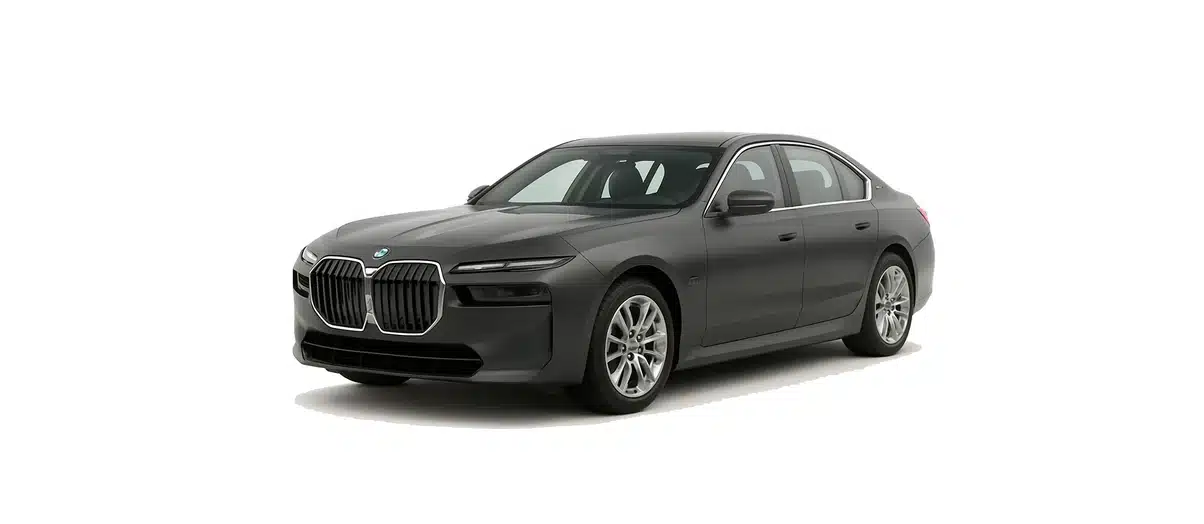
The BMW 750e is a luxury plug-in hybrid saloon in the 7 Series family. It is important to separate it from the fully electric BMW i7: the 750e has a petrol engine as well as a high-voltage battery and electric motor. That means it can be driven on electric power for local journeys when charged regularly, but it is not a battery-electric vehicle designed around DC rapid charging.
For UK drivers, the key point is simple: the BMW 750e is best treated as a car to charge little and often using Type 2 AC charging at home, at work or at destination charge points. There is also a model-year detail to be aware of. Earlier G70 BMW 750e xDrive cars use a 7.4 kW AC charging setup, while BMW’s 2026 plug-in hybrid material indicates an increase to 11 kW AC charging on the updated model. In practice, most UK home charging will still be via a single-phase 7.4 kW wallbox.
BMW 750e Battery and Charging Specifications
The BMW 750e xDrive is part of the G70 7 Series generation and uses BMW’s plug-in hybrid system with a lithium-ion battery mounted within the vehicle structure. Official BMW material for earlier G70 plug-in hybrid versions states a usable battery capacity of 18.7 kWh. Some UK technical data sources list a 22.1 kWh gross battery capacity, but usable capacity is the more helpful figure for everyday charging and range expectations.
The charging connector for the BMW 750e is Type 2 for AC charging. This is the standard connector used by most UK and European AC charge points, including home wallboxes, workplace chargers and many public destination chargers. No reliable source checked for this guide confirmed DC rapid charging for the BMW 750e plug-in hybrid, so owners should not plan around CCS rapid chargers or 10–80% rapid-charge sessions in the way they would with a fully electric i7.
Battery Options
For 2023–2025 G70 BMW 750e xDrive models, the best-supported figure is an 18.7 kWh usable battery capacity, with some sources listing 22.1 kWh gross. This size is large for a plug-in hybrid and is intended to give meaningful electric-only use for daily driving when the car is charged consistently.
For the updated BMW 750e xDrive expected for UK ordering from 30 September 2026, BMW Group material again refers to an 18.7 kWh usable battery capacity. The gross battery capacity for that 2026 version was not confirmed in the checked official material, so it is better not to assume it is identical in every detail. For drivers, the practical takeaway is that both earlier and updated cars have enough usable battery capacity to make regular charging worthwhile.
AC Charging Speed
AC charging is the main charging method for the BMW 750e. Earlier G70 BMW 750e xDrive plug-in hybrid models are supported by BMW material at up to 7.4 kW AC, with a full charge from empty taking under or around three hours from a suitable wallbox. This makes a normal UK single-phase 7.4 kW home charger a good match for most existing cars.
The 2026 update needs separate treatment. BMW Group material for the newer 750e plug-in hybrid states that AC charging capacity rises to 11 kW, with a full charge taking about 2 hours 15 minutes where the right charging supply is available. However, 11 kW AC charging normally requires a compatible three-phase supply and charger. Most UK homes are single-phase, so even if the car can accept 11 kW, many owners will still charge at around 7.4 kW at home.
For cable selection, a 32A single-phase Type 2 cable is suitable for 7.4 kW charging on earlier cars and remains appropriate for most UK home wallboxes. If you have, or expect to use, three-phase AC charging with a compatible 2026-on car, a three-phase Type 2 cable may be worth considering.
DC Rapid Charging Speed
The BMW 750e should not be approached like a fully electric BMW i7 when it comes to rapid charging. The checked sources support Type 2 AC charging only for the 750e plug-in hybrid, and no reliable confirmation was found for CCS/DC rapid charging on this model.
This means figures such as 10–80% rapid-charging times, 150 kW-plus charging rates or motorway rapid-charge planning should not be applied to the BMW 750e. Those sorts of figures relate to battery-electric vehicles, not this petrol-electric plug-in hybrid saloon. If you are using public charging, look for AC charge points with a Type 2 connection rather than relying on DC rapid chargers.
Range and Efficiency
The BMW 750e has an official electric range of around 50 miles WLTP, with 2026 material stating up to 82 km, which is about 51 miles. WLTP figures are useful for comparing vehicles, but real-world electric range can be lower depending on conditions. A practical estimate of around 31 miles is a sensible expectation for some UK use, especially in colder weather or on faster roads.
Electric range in a plug-in hybrid is affected by many factors: outside temperature, journey speed, tyre choice, driving style, cabin heating, heated seats, demisting and the use of onboard electrical systems. The 750e is also a large luxury saloon, so motorway driving and winter use can reduce how far it travels before the petrol engine becomes more involved.
The best way to make the most of the 750e is to start regular journeys with a charged battery. If the car is only charged occasionally, it will spend more time operating as a conventional hybrid and less time using its electric-only capability.
Charging at Home
Home charging is likely to be the most convenient and cost-effective way to run a BMW 750e as intended. A dedicated 7.4 kW home wallbox is a strong match for existing 2023–2025 cars and will also work well for many 2026-on owners, even if the car’s maximum AC capability is higher.
Because the battery is much smaller than that of a fully electric car, the 750e can usually be recharged overnight with ease. On earlier cars, a full charge from empty is around three hours from a suitable 7.4 kW wallbox. In normal daily use you may not be charging from empty, so top-ups can be much shorter.
A 3-pin charger is generally best suited as a backup or occasional charging solution, but can be used regularly if a qualified electrician has confirmed the socket and electrical installation are suitable for sustained EV charging. A domestic socket will charge more slowly than a dedicated wallbox, and long charging sessions through unsuitable wiring or old sockets should be avoided.
Public Charging
Public charging for the BMW 750e is mainly about destination AC charging. Useful locations include hotels, offices, car parks, restaurants, supermarkets and town-centre chargers where the vehicle can be parked for a couple of hours. These stops fit the charging profile of a plug-in hybrid much better than a short motorway rapid-charge stop.
Many public AC charge points are untethered, meaning you need to bring your own Type 2 cable. A Type 2 cable is therefore a practical item to keep in the boot, particularly if you regularly use workplace or destination chargers. If a public AC charger is rated higher than your car can accept, the vehicle will only draw power up to its own onboard charging limit.
On longer motorway journeys, it may be more practical to use the petrol engine and save public charging for destinations where the car can sit for longer. Unlike a fully electric vehicle, the 750e does not require public rapid charging to complete long trips.
Vehicle-Specific Features
The BMW 750e combines a 3.0-litre six-cylinder petrol engine with an electric drive system. Earlier official BMW material quotes a combined output of 360 kW / 490 hp and 700 Nm of system torque for the 750e xDrive plug-in hybrid. The result is a luxury saloon with strong performance and the ability to cover many local trips on electric power when charged.
The high-voltage battery is integrated into the vehicle’s underbody area, helping preserve the character of the 7 Series while giving it a useful plug-in hybrid electric range. The car’s charging behaviour is centred on AC charging rather than rapid charging, which is why cable choice and regular access to a wallbox or AC charge point matter more than motorway charging speed.
BMW UK currently distinguishes the fully electric i7 from the plug-in hybrid 7 Series models. If you are checking specifications, make sure you are looking at data for the BMW 750e xDrive and not the i7, as the battery size, range and charging figures are very different.
Charging Tips
- Charge regularly: Plug in overnight or at work so local journeys can be completed on electric power more often.
- Check your model year: Earlier G70 cars are associated with 7.4 kW AC charging, while the 2026 update is listed with up to 11 kW AC.
- Use the right cable: A 32A single-phase Type 2 cable suits most UK home and destination charging. Consider three-phase only if your vehicle and charging location support it.
- Do not rely on DC rapid charging: The 750e is a plug-in hybrid and the checked information supports AC charging guidance.
- Expect winter variation: Cold weather, heating and higher speeds can reduce electric-only range compared with WLTP figures.
- Top up rather than waiting for empty: Short, regular charging sessions are often the easiest way to get the most from a PHEV.
Frequently Asked Questions
Is the BMW 750e fully electric?
No. The BMW 750e is a plug-in hybrid petrol-electric saloon. It can drive on electric power when the battery is charged, but it also has a 3.0-litre petrol engine.
What charging cable does the BMW 750e use?
The BMW 750e uses a Type 2 connector for AC charging. For most UK drivers, a 32A single-phase Type 2 cable is the practical choice for home, workplace and public AC charging.
How fast does the BMW 750e charge?
Earlier G70 BMW 750e xDrive models support up to 7.4 kW AC charging, giving a full charge in around three hours from a suitable wallbox. The 2026 update is listed with up to 11 kW AC charging, reducing the full-charge time to about 2 hours 15 minutes where compatible three-phase charging is available.
Can the BMW 750e use DC rapid chargers?
No reliable confirmation was found for DC rapid charging on the BMW 750e plug-in hybrid. Owners should plan around Type 2 AC charging rather than CCS rapid charging.
What electric range should I expect?
Official figures are around 50 miles WLTP, depending on version and specification. In real UK driving, especially in winter or at motorway speeds, the electric range may be noticeably lower.
What This Means for Drivers
The BMW 750e makes the most sense when it is charged frequently. If you have off-street parking and a home wallbox, it can cover many short journeys using electric power while still offering petrol flexibility for longer trips. The car’s charging needs are modest compared with a fully electric vehicle, but regular charging is essential if you want to benefit from the plug-in hybrid system.
The main detail to check is which version you own or are ordering. Existing 2023–2025 G70 cars are best understood as 7.4 kW AC plug-in hybrids, while the 2026 update is expected to support up to 11 kW AC where the charging supply allows. Either way, a Type 2 cable and access to reliable AC charging are the key requirements.
Looking for a Charging Cable for BMW 750e?
If you need a suitable Type 2 cable for home, workplace or public AC charging, choose a BMW 750e charging cable that matches how and where you charge most often.
Please note that this information is intended as a guide. Charging specifications may change due to model and year of manufacture. For precise information, always refer to your vehicle user manual.

