
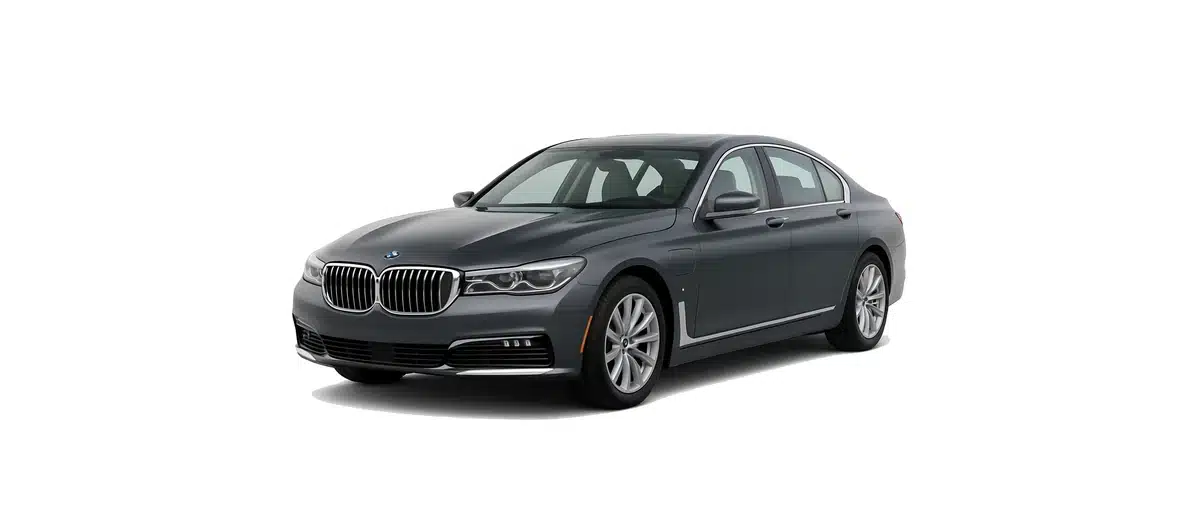
The BMW 740e is a plug-in hybrid version of the G11/G12 7 Series, sold in the UK and Europe from the 2016-era iPerformance range before being superseded by the later 745e and 745Le models. It is important not to confuse the 740e with a fully electric BMW, or with the later facelift plug-in hybrid, because the charging hardware, battery size and range expectations are different.
As a luxury saloon PHEV, the BMW 740e is designed to cover shorter journeys on electric power where possible, while retaining a petrol engine for longer trips. Charging is straightforward: the car uses a Type 2 AC charging connection and charges at up to around 3.7 kW. There is no confirmed DC rapid charging capability, so the best ownership experience comes from regular home, workplace or destination charging rather than trying to use motorway rapid chargers.
BMW 740e Battery and Charging Specifications
The BMW 740e iPerformance, 740Le iPerformance and 740Le xDrive iPerformance used BMW’s plug-in hybrid eDrive system, combining a 2.0-litre petrol engine with an electric motor integrated into the automatic transmission. The charging inlet is described in BMW European press material as being on the front left side of the vehicle.
For UK and European 2016-era models, BMW material lists the high-voltage lithium-ion battery at 9.2 kWh gross and 7.4 kWh net usable capacity. That makes the 740e very different from a modern long-range battery-electric vehicle: the battery is relatively small, so it charges quickly on AC power, but the electric-only range is intended mainly for local driving.
Key charging points for the BMW 740e are:
- Vehicle type: plug-in hybrid petrol-electric luxury saloon
- Charging port: Type 2 AC
- Maximum AC charging rate: around 3.7 kW
- Typical wallbox charging time: around 2.5 to 3 hours for a full charge
- DC rapid charging: no confirmed DC rapid charging capability
- Real-world electric range guide: around 20 miles, depending on conditions and battery health
Battery Options
The relevant UK/EU BMW 740e plug-in hybrid battery specification is the 9.2 kWh gross, 7.4 kWh usable pack used in the 740e, 740Le and 740Le xDrive iPerformance models. Some markets and later BMW plug-in hybrids may be associated with different figures, but those should not be applied to the 740e without checking the exact vehicle.
This distinction matters when buying a used BMW 740e. The later BMW 745e and 745Le models introduced for the 2019 facelift used different plug-in hybrid hardware with a larger battery, so their range and charging details are not the correct reference point for a 740e. If you are comparing used 7 Series plug-in hybrids, check the badge, registration year, VIN details and handbook information rather than assuming all 7 Series PHEVs are the same.
AC Charging Speed
The BMW 740e charges on AC power using a Type 2 connection at up to around 3.7 kW. In practical UK terms, this means it is effectively a single-phase 16 amp charging car. A 7.4 kW home wallbox is compatible, but the car will only draw what its onboard charger can accept, so it will not charge at the full 7.4 kW rate.
BMW quoted a full charge in under three hours from a BMW i Wallbox and under four hours from a domestic socket. In everyday use, a sensible guide is around 2.5 to 3 hours from a suitable home wallbox, depending on the starting battery level, temperature and the charge point being used.
For cable selection, a 16 amp Type 2 cable is sufficient for the car’s approximate 3.7 kW maximum AC charging rate. A 32 amp Type 2 cable is also compatible and may be useful if you want a cable that can be used with another EV in future, but it will not make the BMW 740e charge faster.
DC Rapid Charging Speed
The BMW 740e should be treated as an AC-only plug-in hybrid for charging purposes. There is no confirmed CCS or DC rapid charging capability for the 740e, and there is no meaningful 10-80% rapid charging time to quote.
This is a common source of confusion for drivers coming from modern battery-electric cars. A motorway rapid charger may have high-power DC connectors, but that does not mean the 740e can use them. Instead, look for AC Type 2 charging at home, work, hotels, car parks or destination charging locations. For longer journeys, the petrol engine remains the main range extender.
Range and Efficiency
When launched, the BMW 740e was quoted using the older EU/NEDC test cycle rather than today’s WLTP figures. BMW’s launch information gave official electric range figures of around 27 to 30 miles for the 740e and 740Le, and around 25 to 28 miles for the 740Le xDrive, depending on specification and tyres.
In real UK driving, an electric range of around 20 miles is a more cautious expectation. Short urban trips, gentle driving and mild weather will usually produce the best results. Cold weather, motorway speeds, heavy cabin heating or air conditioning use, larger wheels and an older battery can reduce the distance available on electric power.
Because the usable battery capacity is modest, the 740e rewards frequent charging. If you plug in at home overnight and top up at work where available, many local journeys can be completed with a useful amount of electric running. If the car is rarely charged, it behaves more like a conventional petrol luxury saloon carrying additional hybrid hardware.
Charging at Home
Home charging is the most convenient way to run a BMW 740e as intended. A standard UK 7.4 kW home wallbox is more than adequate, even though the car will charge at only around 3.7 kW. This means you do not need a higher-powered home charge point specifically for the 740e, although many households choose a 7.4 kW unit because it is the common UK single-phase wallbox standard and may suit future vehicles.
For most owners, plugging in when the car is parked overnight is the easiest routine. Even if the battery is nearly empty, it should usually be back to full within a few hours on a suitable wallbox. If you have an off-peak electricity tariff, the small battery makes it easy to schedule charging within a low-cost overnight window.
A 3-pin portable charger is generally best suited as a backup or occasional charging solution, but can be used regularly if a qualified electrician has confirmed the socket and electrical installation are suitable for sustained EV charging. Avoid relying on old, damaged or unknown sockets, and do not use extension leads unless the equipment manufacturer and a qualified professional confirm that the setup is safe and suitable.
If you are buying a used BMW 740e, check that the correct charging equipment is included. A Mode 3 Type 2 cable is the main cable you will use with untethered home wallboxes and many public AC charge points. If a portable 3-pin charger is included, inspect it carefully for damage and make sure it is appropriate for UK sockets.
Public Charging
Public charging can be useful for a BMW 740e, especially at workplaces, hotels, shopping centres and town-centre car parks where the car will be parked for a couple of hours. Look for AC Type 2 charging rather than DC rapid charging. Many public AC posts are rated at 7 kW, 11 kW or 22 kW, but the BMW 740e will still be limited to around 3.7 kW by its onboard charger.
At an untethered public AC post, you will usually need your own Type 2 charging cable. A 16 amp Type 2 cable matches the car’s charging capability, while a 32 amp cable is also fine and gives more flexibility for future vehicles. If the public charger has a tethered Type 2 lead, you can plug that directly into the car.
Because the battery is small, public charging is most worthwhile when it fits naturally into your parking time. It is usually not worth making a special stop purely to add a few electric miles, unless you particularly want to maximise electric driving in a city or low-speed area. For long motorway journeys, simply use petrol power and save AC charging for destinations.
Vehicle-Specific Features
The BMW 740e includes driving modes designed to make better use of the plug-in hybrid system. One useful function is Battery Control, which allows the driver to preserve or build a chosen battery state of charge for later use. For example, you may choose to save electric range for urban driving at the end of a journey.
The car can also support cabin auxiliary heating or air conditioning, allowing the interior to be prepared before departure. When the vehicle is plugged in, this can help reduce the immediate load on the battery at the start of a journey and improve comfort. As with all used luxury cars, exact equipment and behaviour can vary by model year, market specification and software, so the owner’s handbook for the specific vehicle should be the final reference.
Charging Tips
- Use a Type 2 cable: the BMW 740e uses Type 2 AC charging for home and public AC posts.
- Do not overbuy for speed alone: a 7.4 kW, 11 kW or 22 kW charger will not make the car exceed its approximate 3.7 kW onboard limit.
- Charge little and often: frequent top-ups make the most of the small PHEV battery.
- Check used-car accessories: make sure any supplied cable is undamaged, correctly rated and suitable for UK use.
- Plan public charging realistically: AC destination charging is useful; rapid charging is not part of the 740e ownership pattern.
- Do not use 745e figures: the later 745e and 745Le have different hardware and should not be used as a charging guide for the 740e.
Frequently Asked Questions
What charging cable does the BMW 740e use?
The BMW 740e uses a Type 2 AC charging cable. For the car’s approximate 3.7 kW maximum charging rate, a 16 amp Type 2 cable is sufficient, although a 32 amp Type 2 cable is also compatible.
Can the BMW 740e use a 7.4 kW home charger?
Yes. A 7.4 kW UK home wallbox is suitable, but the car will not charge at 7.4 kW. The onboard charger limits AC charging to around 3.7 kW, so a full charge is still typically around 2.5 to 3 hours.
Can the BMW 740e rapid charge?
No confirmed DC rapid charging capability is available for the BMW 740e. It should be treated as an AC Type 2 plug-in hybrid, not a rapid-charging electric car.
How far can the BMW 740e drive on electric power?
The original official figures were quoted on the older NEDC cycle, with around 27 to 30 miles for 740e and 740Le models and slightly less for the xDrive version. In real-world UK use, around 20 miles is a more cautious guide, depending on driving conditions, temperature and battery condition.
Is the BMW 740e the same as the BMW 745e?
No. The 745e and 745Le were later facelift plug-in hybrid models with different hardware. Do not use 745e battery, range or charging figures when planning charging for a 740e.
What This Means for Drivers
The BMW 740e is at its best when treated as a luxury plug-in hybrid for regular short electric trips, not as a pure EV. Its Type 2 AC charging setup is simple, and the small battery means a full charge can be achieved in a few hours from a suitable home wallbox. However, the car’s onboard charger is the limiting factor, so more powerful AC posts will not significantly shorten charging times.
For most UK owners, the ideal setup is a home wallbox, a suitable Type 2 cable, and a routine of plugging in whenever the car is parked for a few hours. That approach gives the best chance of using electric power for commuting, school runs, errands and city driving, while the petrol engine remains available for longer journeys.
Looking for a Charging Cable for BMW 740e?
If you need a suitable Type 2 charging cable for your BMW 740e, We offer BMW 740e charging cables for home wallboxes and public AC charge points.
Please note that this information is intended as a guide. Charging specifications may change due to model and year of manufacture. For precise information, always refer to your vehicle user manual.

